2019 to 2024 problems
Suzuki Swift 2019 to 2024: common problems and what to know
What goes wrong on a 2019 to 2024 Suzuki Swift, what the DVSA MOT record shows for cars of that age, and what to check before you buy one.
Updated 5th November 2026 MOT record: Honest Car Check counted 133,413 DVSA MOT tests for the Suzuki Swift, and 20.5% failed.
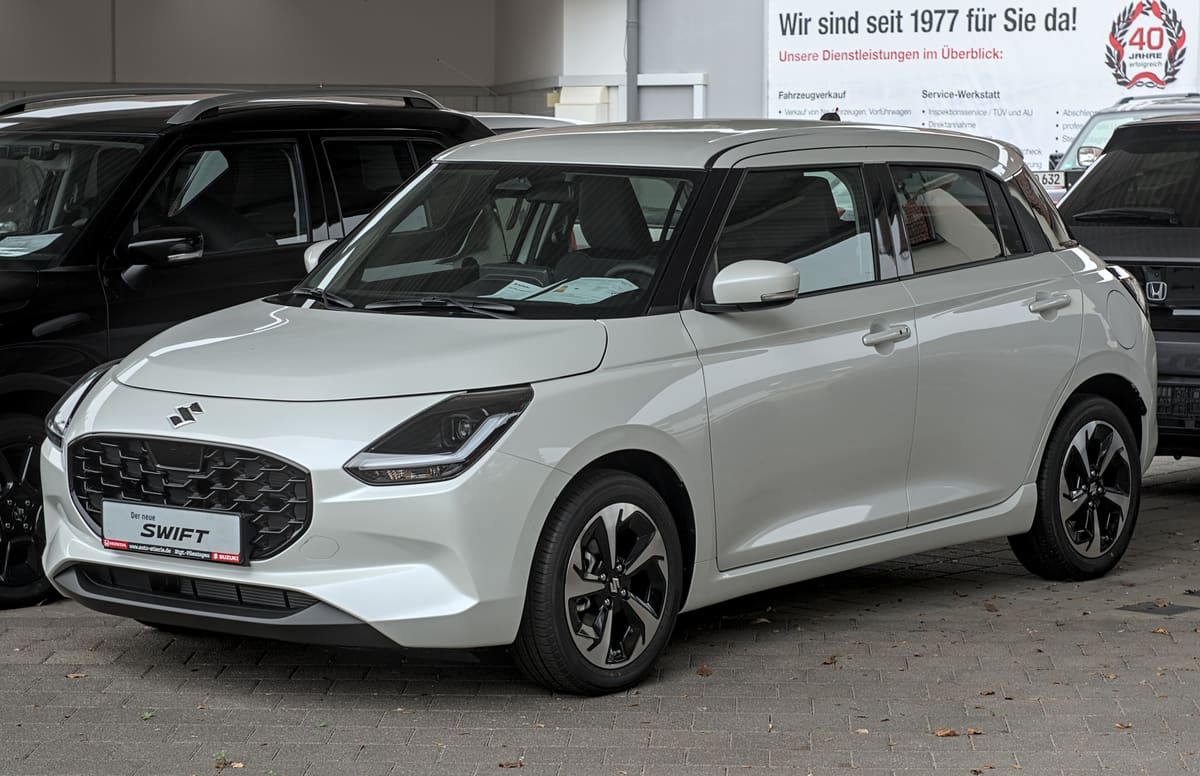
Known electronics and wheel finish issues appear on some examples; check the touchscreen connectivity, immobiliser and any wheel lacquer closely and carry out a thorough test drive and paperwork check before you buy.
Which Swift a car registered from 2019 to 2024 is
If a Suzuki Swift was first registered in the UK between 2019 and 2023, it is the car launched in the UK in 2017, which was all-new then; the facelift is the same car. If a car was first registered in 2024, it is either that 2017 launch car or the all-new car that went on UK sale in 2024.
These are years of first UK registration, not statements about when a generation went on or off sale. When you look at a listing, use the registration to confirm which of the two possible physical cars you are inspecting and check the specification for that exact example.
What drives it
On any car this age, check the handbook to confirm the service and maintenance items for the fuel and hybrid system and the listed gearbox in the specific car.
Electrics and electronics
Apple CarPlay and Android Auto can disconnect at random on 2019 to 2024 cars with the touchscreen. Software updates or a different phone may help.
Do the touchscreen connectivity tests yourself during the viewing. Check that all interior switches, lighting, wipers and electrically operated items work, and confirm any software or infotainment updates are recorded in the service history if shown.
Check for any outstanding warning lights on the dash and ask the seller for a diagnostic readout if possible. If the car has an electronic immobiliser fault note it in the paperwork and consider a professional scan or inspection before purchase; also check what warranty, if any, covers electrical components.
Suspension, steering, brakes and body
On the test drive, assess steering feel for play or pull and listen for knocks over kerbs or poor surfaces. Visually check brake discs and pads for heavy scoring and uneven pad wear and inspect suspension bushes and visible joints for damage, per the handbook recommendations for inspections and servicing.
What to check on one this age
Start with paperwork: full service history, the handbook and any records of software updates or dealer work. Confirm whether any warranty remains and what it covers. Use the registration to check vehicle tax and basic registration details and remember that gov.uk publishes current tax rules and a registration check shows whether a car is taxed.
On the viewing and test drive, try a cold start and a warm start, listen for any starting hesitation, check for immobiliser starting problems and listen for the ESP hydraulic noises when pulling away. Test the touchscreen with your phone for Apple CarPlay and Android Auto connectivity. Walk around the car and inspect diamond-cut alloy wheels for lacquer damage and corrosion; check tyres for even wear and correct type for that trim.
If you can, get a professional pre-purchase inspection or an independent dealer to scan for stored fault codes. Ask the seller about any past software updates, infotainment repairs or wheel refinishing, and verify any work claimed in invoices or the service book.
Whether to buy one
Decide on a specific car on its own merits. If the example you are looking at has the infotainment touchscreen, check the CarPlay and Android Auto behaviour before committing. If diamond-cut wheels are fitted inspect their lacquer and look for corrosion. If there are notes of immobiliser or ESP unit issues in the paperwork, weigh those against the asking price and warranty coverage.
A thorough test drive, a check of service history and a professional scan where doubts exist will give the clearest picture. Check what warranty, if any, remains on the car you are considering and, if needed, factor the cost of resolving any documented issues into your offer.
DVSA MOT results for 2019 to 2024 cars
How Suzuki Swift cars first registered in each of these years fared at their MOT, from DVSA’s anonymised MOT test results (Open Government Licence v3.0). The figures cover every car of the model tested, not any one car, and older cars have covered more miles.
| Registered | MOT tests | Failed | Median mileage |
|---|---|---|---|
| 2019 | 10,782 | 9.3% | 35,599 miles |
| 2020 | 7,848 | 7.2% | 29,139 miles |
| 2021 | 7,327 | 6.4% | 23,259 miles |
| 2022 | 4,488 | 4.8% | 17,931 miles |
| 2023 | 290 | 1.7% | 16,738 miles |
No figures are shown for 2024: there are not enough matched tests for those years to report.
To see how one car has done, enter its registration for its own MOT history.
Suzuki Swift recall record
19 recalls have been issued for the Suzuki Swift, between 2000 and 2025.
Measures Against Loosening of Steering Shaft Nut
R/2025/050Issued 17 February 2025
Steering wheel fastening insufficient the mounting nut may loosen resulting in an abnormal sound or rattling if the use is continued the fitting may become disengaged in the worst case the steering wheel operation may not be possible.
Remedy: Check and clean the installation condition of the steering wheel in all vehicles install the steering wheel correctly and tighten the nut to the revised specified torque of 43Nm (before: 33Nm).
Affects cars built Jun 2022 to Jan 2023
Some vehicles have an inappropriate design and material on check valve of vacuum pump
R/2022/267Issued 1 December 2022
Some vehicles have an inappropriate design and material on the check valve of brake vacuum pump.
Remedy: Replace the vacuum pump check valve.
Affects cars built Oct 2017 to Jun 2019
UNINTENDED ACTIVATION OF THE SIDE AIR BAG CURTAIN AIR BAG AND SEAT PRE TENSIONER MAY OCCUR WHEN REAR DOOR IS SLAMMED SHUT.
R/2019/186Issued 12 June 2019
Unintended activation of side and curtain air bags and seat belt pre-tensioner.
Remedy: Software update to Airbag Controle Module.
Affects cars built Feb 2017 to Feb 2019
INTEGRATED STARTER GENERATOR BELT BELT MAY FAIL
R/2018/078Issued 26 March 2018
Due to a lack of strength in the Integrated Starter Generator (ISG) Belt may break during usage. If this happens the water pump will become inoperative and the charging light will illuminate. The coolant temperature warning light will also light due to an increase in coolant temperature. In the worst case scenario the engine may stall and not restart.
Remedy: On affected vehicles replace the ISG belt.
Affects cars built Feb 2017 to Mar 2017
15 older recalls not shown.
A recall applies to a build range, not to every car of this model. Check a registration to see whether one specific vehicle has an outstanding recall.
Suzuki Swift MOT record
Honest Car Check counted 133,413 DVSA MOT tests for the Suzuki Swift, and 20.5% failed.
| Registered | Tests | Failed | Median mileage |
|---|---|---|---|
| 2023 | 290 | 1.7% | 16,738 mi |
| 2022 | 4,488 | 4.8% | 17,931 mi |
| 2021 | 7,327 | 6.4% | 23,259 mi |
| 2020 | 7,848 | 7.2% | 29,139 mi |
| 2019 | 10,782 | 9.3% | 35,599 mi |
| 2018 | 9,971 | 12.5% | 42,817 mi |
| 2017 | 7,980 | 14.6% | 47,656 mi |
| 2016 | 10,293 | 15.4% | 54,763 mi |
Most common reasons for failure
- Brake pipe damaged or excessively corroded27.0%
- A suspension pin, bush or joint excessively worn23.7%
- Tyre tread depth not in accordance with the requirements21.5%
- A tyre seriously damaged17.5%
- A spring or spring component fractured or seriously weakened10.3%
Figures cover every car recorded under this model name in the DVSA dataset, retests left out. They describe the model, not this specific car. Check a registration for the actual history of one vehicle.
Suzuki Swift official figures
Median across 5 variants on sale, petrol electric.
- Combined economy
- 60.1 mpg
- WLTP median across variants
- CO2 emissions
- 106 g/km
- Sets the first-year tax rate
Official figures for new cars. Real economy varies with driving, load and conditions.
Frequently asked questions
What infotainment or phone-connection problems should I check on a used Swift?
Apple CarPlay and Android Auto can disconnect at random. Software updates or a different phone may help. Plug your phone into the car’s touchscreen and use CarPlay/Android Auto on a short drive to see if it drops out.
Are there any noises from the brakes or stability system I should listen for?
A software problem can make the ESP hydraulic unit make noises when pulling away.
Should I worry about corrosion on alloy wheels?
Diamond-cut alloy wheels can corrode once the lacquer is damaged by cleaning chemicals or road salt.
What fuel and hybrid options were sold new in the UK?
The Swift was sold new in the UK as petrol and mild hybrid. To confirm a specific car, check the V5, the seller’s specification sheet and the vehicle’s paperwork to see whether that registration is petrol or mild hybrid.
What general pre-purchase checks are most useful for a 2019–2024 Swift?
On any car this age check the touchscreen’s CarPlay/Android Auto connection, inspect any diamond-cut alloy wheels for lacquer damage, listen for ESP hydraulic unit noises when pulling away and try starting the car to confirm there are no immobiliser-related starting problems. Check the V5 and any warranty paperwork too.
Sources