A used car buy in the UK has more public data behind it than most people realise. Here is what actually matters, in the order you should run it.
The free checks (do these first)
Reg lookup at the top of this page. That gives you DVLA’s record of identity (year, fuel, engine, CO₂), current tax and MOT status, full MOT history with mileage, recall status and Clean Air Zone compliance in one screen. Free, no signup. Run it before you drive an hour to view the car.
The MOT history is the single most useful piece of public data. Every test since 2005 (or since first registration for newer cars) shows the mileage at test, pass or fail, and every defect line. Patterns matter more than individual entries.
What the £7.99 report adds
A plain-English summary of the car’s history, with questions to ask the seller. Every part the MOT has noted, one box per test, so you can tell a one-off from a chronic issue. Road tax cost in pounds. The number of previous keepers, plate and colour changes. An A4 PDF you keep forever.
Worth it when the car is over £3,000 or the MOT history is busy enough that seeing what keeps coming back will save you time.
Finance, write-off and stolen checks
Outstanding finance, stolen status and written-off status (insurance category C, D, N, S) are not in the free check or the £7.99 report. They are in the £12.99 report, which holds everything in the £7.99 report and adds the Experian check. Worth it on cars over £8,000, and whenever you are paying a private seller. Data provided by Experian.
The £12.99 report also adds a salvage auction record and taxi licensing history. The £19.99 report adds a current valuation, a forecast of what the car will be worth over the coming years, every advert for the car since January 2022, dealer service history where the maker holds it, its price when new, how many years of life it likely has left, a yearly servicing budget beside your fuel cost, its insurance group and a test-drive checklist built for the car.
For most private-sale cars under £5,000, the DVLA + DVSA data covers what matters. For pricier cars, add the £12.99 report for the finance, write-off and stolen checks too.
The physical checks
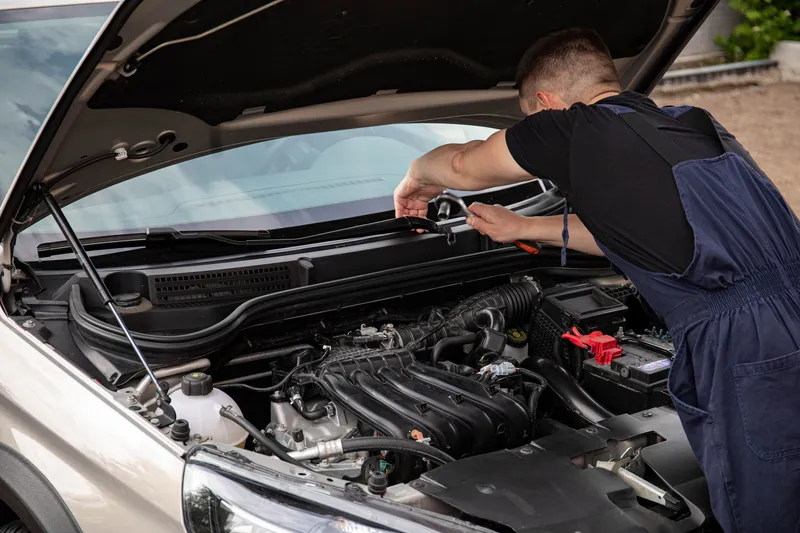
Cold start the engine yourself before the seller does. Listen for knocks, watch for blue or white smoke from the exhaust, see if any warning lights persist past the self-check. Walk around the body in good light, looking for paint mismatch (accident repair), filler bumps, rust at the wheel arches and sills.
Test drive on a mix of roads. Brakes should feel firm. Steering should not pull. Gear changes should be smooth. The clutch bite point should not be at the very top.
When to walk away
Seller refuses the registration number. MOT history shows a fail you cannot find evidence of repair for. Mileage on the V5C does not match the latest MOT. Service history is missing or vague. Cash-only sale on a Saturday afternoon. Any of these alone is enough to step back and re-think.
More checks
- car check, free, from official DVLA and DVSA data
- free car check, exactly what is free and what is not
- car check cost, free, from £7.99 and what others charge
- what a car check is, what it covers and what it misses
- car check before viewing a used car, what to do before you travel
- service history check by reg, what the official records hold
- most common MOT failures, from 25 million DVSA tests
- cars with the lowest MOT fail rate, and why that is not reliability
- car check comparison, prices and what each provider includes
- Car check report options, Compare the three reports
- Imported car check, Imported, non-EU import and exported history
- Number plate history check, Plate and colour changes
- Previous owners check, How many keepers and when the last change was
- Scrapped car check, Is the car recorded as scrapped?
- Write off check, insurance write-off category, Cat S, Cat N and the older Cat C and D
Frequently asked questions
What is the most important single check?
MOT history. It is free, comprehensive (every test since 2005), and impossible to fake. A car with three years of clean passes is a different animal to one that fails every other year. Run the reg in the box above to see it.
Do I need a paid check?
Only if the car costs over about £8,000 or the seller's story is hazy. The official DVLA + DVSA data covers identity, tax, MOT, mileage and recalls for free. Our £12.99 report adds outstanding finance, written-off status and a stolen marker, which matter more for higher-value purchases. Data provided by Experian.
Can the seller refuse to give me the reg?
Yes, but it is a red flag. The reg is on the V5C and the number plate of every car listed for sale. Sellers who refuse to give it before viewing are usually trying to stop you running checks. Walk away.
What about a test drive?
Always. A 20-minute drive on a mix of roads tells you more than any report. Look for warning lights, listen for knocks, check the cold-start, test brakes and steering. The MOT report tells you what an examiner saw a year ago. The test drive tells you what is true today.
Should I get an independent mechanical inspection?
For cars over £5,000, yes. The AA and RAC both offer pre-purchase inspections from around £150. They cover things the MOT does not (engine compression, fluid quality, body filler, accident-repair traces). Worth it on the right car.
Where do I find finance check?
In the £12.99 Honest Car Check report. The free check and the £7.99 report cover the official DVLA and DVSA layer and do not include outstanding finance. The £12.99 report adds the finance check, the write-off check and a stolen marker. Data provided by Experian.
Start with a free reg check
Free profile in seconds. Reports from £7.99.
No signup. No subscription.