Running costs
Suzuki Swift running costs: what UK ownership really costs
Suzuki Swift UK running costs: fuel or electric, insurance group, road tax, servicing and depreciation.
Updated 9th October 2026 DVSA data: Across 133,413 recorded MOT tests, 20.5% failed.
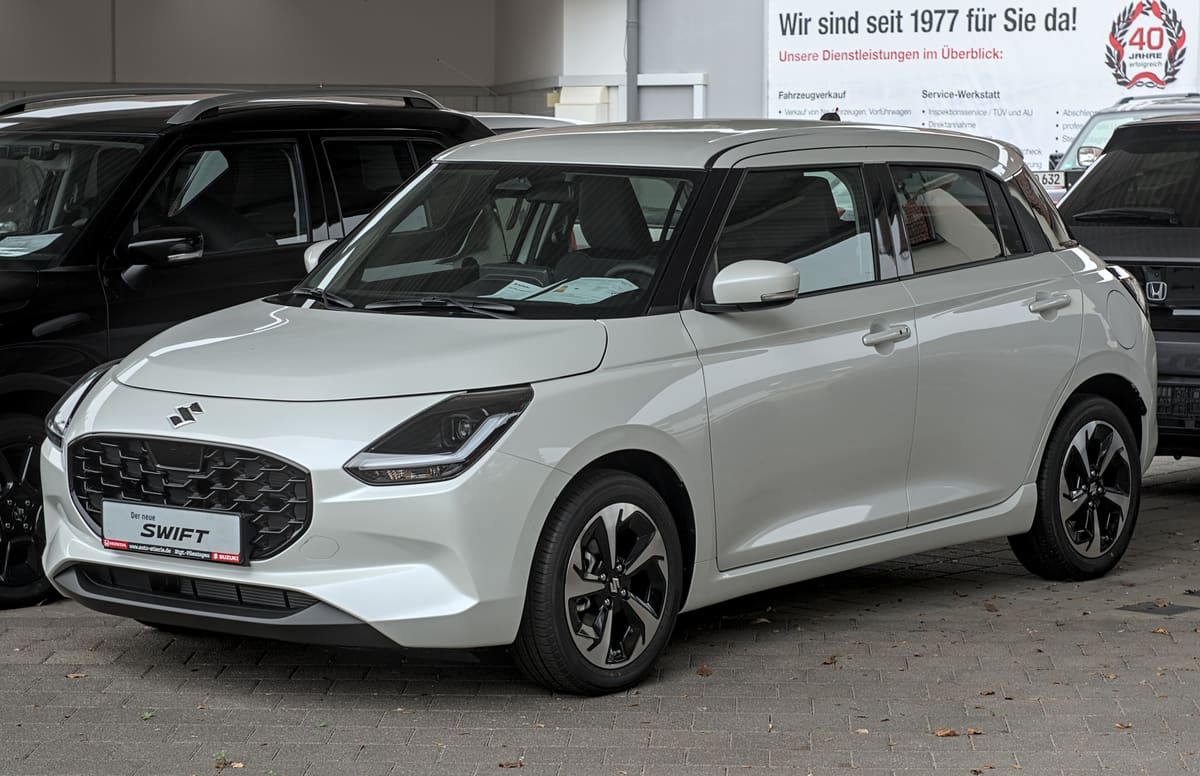
The Suzuki Swift is generally economical to run, with modest fuel consumption and affordable servicing. Its insurance costs vary depending on the model and driver profile, while road tax depends on its emissions and fuel type. The car’s value retention is reasonable, supported by its reputation for reliability and low running costs.
How Vehicle Tax Affects Suzuki Swift Running Costs
Road tax for the Suzuki Swift is determined primarily by its CO2 emissions and fuel type. Petrol and hybrid versions often fall into lower tax bands due to their relatively low emissions, while older or higher-performance variants may attract higher rates. Electric or mild-hybrid models benefit from reduced or zero tax in some cases.
The UK government’s vehicle tax system is designed to encourage cleaner cars, so the Swift’s efficient engines generally keep tax bills manageable. It is important to check the exact tax band for the specific model and year you are interested in, as changes in emissions standards and engine options can affect the amount payable.
For the most accurate and up-to-date information on vehicle tax, the official government website provides a tool to calculate the exact rate based on registration details.
Insurance Group and Its Impact on Swift Ownership Costs
The insurance group rating for the Suzuki Swift depends on factors such as engine size, power output, safety features, and repair costs. Lower-powered, entry-level models typically fall into lower insurance groups, which means cheaper premiums. However, sportier trims or those with larger engines can push the group rating higher, increasing insurance costs.
Driver profile also plays a significant role in insurance pricing. Younger or less experienced drivers may face higher premiums regardless of the Swift’s insurance group, while more experienced drivers often benefit from lower rates.
When obtaining insurance quotes, it is advisable to provide full details of the exact Swift model, trim, and any security features fitted. Comparing quotes from multiple providers will help identify the most cost-effective cover.
Servicing and Maintenance Demands of the Suzuki Swift
The Suzuki Swift is known for relatively straightforward and affordable servicing requirements. Routine maintenance includes oil changes, brake checks, and fluid top-ups at intervals recommended by the manufacturer, which are generally not overly frequent or expensive.
Parts availability is good, and the car’s simple mechanical layout means repairs tend to be less costly than for more complex or premium vehicles. Hybrid versions may have additional components to service, but Suzuki’s hybrid technology is designed to be reliable and low-maintenance.
Owners should follow the service schedule outlined in the handbook to maintain warranty coverage and ensure the car remains in good condition. Independent garages can often provide servicing at competitive prices compared to main dealers.
Fuel Economy and Its Role in Running Costs
Fuel consumption is a significant factor in the overall cost of running a Suzuki Swift. The car’s lightweight design and efficient engines contribute to relatively low fuel usage, especially in urban and mixed driving conditions.
Different engine options and trims will have varying fuel economy figures, so it is important to check the specific model’s official data. Hybrid variants typically offer improved efficiency, particularly in stop-start traffic.
Drivers can further reduce fuel costs by adopting smooth driving habits, maintaining proper tyre pressures, and avoiding unnecessary idling. Fuel prices fluctuate, so keeping an eye on current rates will help manage running expenses.
Resale Value and Depreciation Considerations
The Suzuki Swift tends to hold its value reasonably well, supported by its reputation for reliability, low running costs, and broad appeal. Depreciation is influenced by factors such as mileage, condition, service history, and market demand.
Models with popular engine and trim combinations usually retain value better than niche or less common variants. Well-maintained cars with full service records and minimal cosmetic damage command higher prices on the used market.
Choosing a Swift with features that remain desirable over time, such as modern safety equipment and efficient engines, can help protect resale value. Keeping the car clean and addressing minor repairs promptly also supports better depreciation outcomes.
Suzuki Swift recall record
19 recalls have been issued for the Suzuki Swift, between 2000 and 2025.
Measures Against Loosening of Steering Shaft Nut
R/2025/050Issued 17 February 2025
Steering wheel fastening insufficient the mounting nut may loosen resulting in an abnormal sound or rattling if the use is continued the fitting may become disengaged in the worst case the steering wheel operation may not be possible.
Remedy:Check and clean the installation condition of the steering wheel in all vehicles install the steering wheel correctly and tighten the nut to the revised specified torque of 43Nm (before: 33Nm).
Affects cars built Jun 2022 to Jan 2023
Some vehicles have an inappropriate design and material on check valve of vacuum pump
R/2022/267Issued 1 December 2022
Some vehicles have an inappropriate design and material on the check valve of brake vacuum pump.
Remedy:Replace the vacuum pump check valve.
Affects cars built Oct 2017 to Jun 2019
UNINTENDED ACTIVATION OF THE SIDE AIR BAG CURTAIN AIR BAG AND SEAT PRE TENSIONER MAY OCCUR WHEN REAR DOOR IS SLAMMED SHUT.
R/2019/186Issued 12 June 2019
Unintended activation of side and curtain air bags and seat belt pre-tensioner.
Remedy:Software update to Airbag Controle Module.
Affects cars built Feb 2017 to Feb 2019
INTEGRATED STARTER GENERATOR BELT BELT MAY FAIL
R/2018/078Issued 26 March 2018
Due to a lack of strength in the Integrated Starter Generator (ISG) Belt may break during usage. If this happens the water pump will become inoperative and the charging light will illuminate. The coolant temperature warning light will also light due to an increase in coolant temperature. In the worst case scenario the engine may stall and not restart.
Remedy:On affected vehicles replace the ISG belt.
Affects cars built Feb 2017 to Mar 2017
15 older recalls not shown.
A recall applies to a build range, not to every car of this model. Check a registration to see whether one specific vehicle has an outstanding recall.
Suzuki Swift MOT record
From 133,413 recorded MOT tests, 20.5% failed.
| Registered | Tests | Failed | Median mileage |
|---|---|---|---|
| 2023 | 290 | 1.7% | 16,738 mi |
| 2022 | 4,488 | 4.8% | 17,931 mi |
| 2021 | 7,327 | 6.4% | 23,259 mi |
| 2020 | 7,848 | 7.2% | 29,139 mi |
| 2019 | 10,782 | 9.3% | 35,599 mi |
| 2018 | 9,971 | 12.5% | 42,817 mi |
| 2017 | 7,980 | 14.6% | 47,656 mi |
| 2016 | 10,293 | 15.4% | 54,763 mi |
Most common reasons for failure
- Brake pipe damaged or excessively corroded27.0%
- A suspension pin, bush or joint excessively worn23.7%
- Tyre tread depth not in accordance with the requirements21.5%
- A tyre seriously damaged17.5%
- A spring or spring component fractured or seriously weakened10.3%
Figures cover every Suzuki Swift tested in the DVSA dataset, not this specific car. Check a registration for the actual history of one vehicle.
Suzuki Swift official figures
Median across 5 variants on sale, petrol electric.
- Combined economy
- 60.1 mpg
- WLTP median across variants
- CO2 emissions
- 106 g/km
- Sets the first-year tax rate
Official figures for new cars. Real economy varies with driving, load and conditions.
Frequently asked questions
How often should I service my Suzuki Swift to keep running costs low?
Suzuki recommends servicing the Swift every 12 months or according to the mileage schedule in the handbook. Regular oil changes and checks on the timing chain tensioner help prevent costly engine repairs. Keeping up with scheduled maintenance also ensures the catalytic converter stays efficient.
What are the typical signs that the Suzuki Swift’s clutch might need attention?
If you notice a spongy clutch pedal or difficulty changing gears, it could indicate wear on the clutch plate or pressure plate. A slipping clutch often shows as engine revs rising without acceleration. Getting a garage to inspect the clutch cable or hydraulic system early can avoid more expensive repairs.
Does the Suzuki Swift have any specific tyre requirements that affect running costs?
The Swift usually runs on low rolling resistance tyres designed to improve fuel efficiency. Checking tyre pressures regularly helps maintain these benefits and prevents uneven wear on the suspension components like the shock absorbers. Using the recommended tyre size also ensures accurate speedometer readings.
What should I check if my Suzuki Swift’s engine warning light comes on?
An engine warning light can indicate issues with the oxygen sensor or the mass airflow sensor, both crucial for fuel management. It’s best to get a diagnostic scan to identify the exact fault. Ignoring this warning can lead to reduced fuel economy and increased emissions.
Are there any Suzuki Swift parts that commonly need replacing to keep running costs manageable?
Brake pads and discs tend to wear depending on driving style, so regular checks are important. The Swift’s air filter also needs replacing periodically to maintain engine efficiency. Keeping the battery terminals clean can prevent starting issues, especially in colder months.
How does the Suzuki Swift’s gearbox type affect maintenance and running costs?
Manual gearboxes require occasional clutch and gear oil checks, while automatic versions need regular transmission fluid changes to avoid costly repairs. Listening for unusual noises or rough gear changes can signal gearbox wear. Following the service schedule for gearbox maintenance helps extend its lifespan.
What impact does the Suzuki Swift’s exhaust system have on running costs?
The exhaust system, including the catalytic converter and oxygen sensors, plays a key role in emissions and fuel efficiency. A rattling noise or loss of power might indicate a damaged exhaust pipe or a failing lambda sensor. Early inspection can prevent more expensive replacements.
Sources
- DVSA anonymised MOT tests and results (Open Government Licence v3.0)
- VCA new car fuel consumption and emissions data (Open Government Licence v3.0)
- DVSA vehicle safety recalls (Open Government Licence v3.0)