Running costs
BMW 5 Series running costs: what UK ownership really costs
BMW 5 Series UK running costs: fuel or electric, insurance group, road tax, servicing and depreciation.
Updated 4th September 2026 DVSA data: Across 189,287 recorded MOT tests, 17.6% failed.
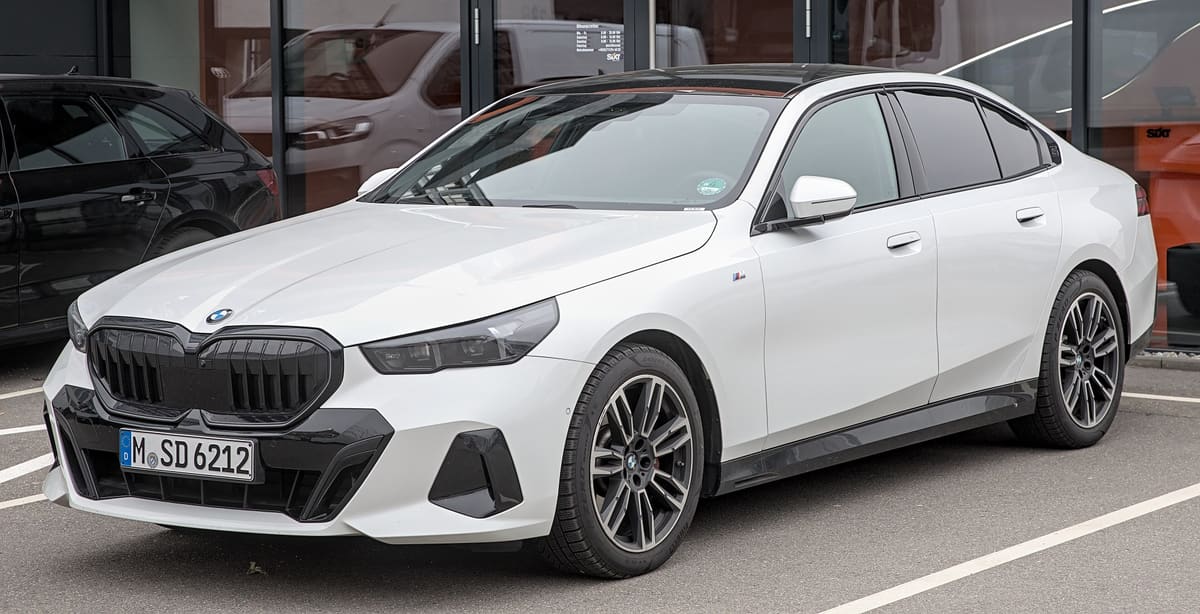
The BMW 5 Series offers a range of running costs that vary depending on the model and engine choice. Fuel costs for petrol and diesel models can be significant, while insurance groups and tax bands differ across the range. Servicing intervals are generally reasonable, and depreciation rates can be steep, impacting total ownership costs.
Fuel Costs
Fuel costs for the BMW 5 Series largely depend on the engine type and driving style. The plug-in hybrid models offer an electric-only range of around 30 miles, which can significantly reduce fuel expenses for short commutes.
When calculating fuel costs, consider the current fuel prices in the UK.
Insurance Groups
Insurance groups for the BMW 5 Series vary significantly based on the specific model and trim level. Generally, the range falls between groups 30 to 50, with more powerful models and those with additional features landing in the higher groups.
For example, the entry-level models may attract lower premiums, while the high-performance M Sport variants can lead to higher insurance costs. It is advisable for potential buyers to obtain quotes from multiple insurers to find the best deal, as premiums can vary widely based on individual circumstances such as driving history and location.
Tax Bands
The BMW 5 Series is subject to Vehicle Excise Duty (VED), which is determined by CO2 emissions. The more efficient the engine, the lower the tax band, with some hybrid models benefiting from reduced rates.
For example, models with CO2 emissions below 100 g/km may incur no road tax, while higher-performance petrol engines can attract the maximum rate. It’s essential for buyers to check the specific emissions figures for the model they are considering to accurately calculate annual tax costs.
Servicing Intervals
BMW offers a service package that can help reduce costs over time, covering essential maintenance for a set period.
The cost of servicing can vary based on the garage and whether genuine BMW parts are used. Independent garages may offer cheaper rates, but using a main dealer can ensure that warranty conditions are met. Regular servicing is crucial for maintaining the vehicle’s performance and resale value, and neglecting it can lead to higher costs down the line.
Typical Depreciation
Depreciation is a significant factor in the overall ownership costs of the BMW 5 Series. On average, luxury vehicles like the 5 Series can lose around 50-60% of their value within the first three years.
Factors influencing depreciation include mileage, condition, and market demand. The 5 Series tends to hold its value better than some competitors, particularly if it has a full service history and is well-maintained. Buyers should consider depreciation when purchasing, as it affects resale value and total cost of ownership.
Conclusion
Understanding the running costs associated with the BMW 5 Series is essential for potential buyers. From fuel expenses and insurance premiums to tax obligations and servicing needs, each aspect contributes to the total ownership experience. By considering these factors, buyers can make informed decisions that align with their budget and driving requirements.
BMW 5 Series recall record
65 recalls have been issued for the BMW 5 Series, between 1999 and 2026.
Checking and re-securing the air-conditioning wiring harness
R/2026/092Issued 17 March 2026
The Safety Recall relates to the air-conditioning wiring harness located behind the dashboard. On the affected vehicles the wiring harness was fixed very close to a screw connection on the interior microfilter housing cover. The microfilter of the air conditioning system will be regularly replaced as part of the oil service. It cannot be ruled out that cables may be damaged when replacing the microfilter during a workshop visit. The filter cover has to be removed from the lower part of the instrument panel. After replacing the filter the cover has to be refitted at which point the wires may become damaged or trapped. If the wiring harness is damaged this could lead to malfunctions of the air conditioning system as well as to a short circuit. In case of a short circuit a sensor may overheat while the vehicle is in operation. As a result smoke may develop from the instrument panel and subsequently a fire cannot be ruled out.
Remedy:On the affected vehicles the air-conditioning wiring harness will be checked repaired if necessary and re-secured in a modified fixing.
Affects cars built Jun 2023 to Apr 2025
Replace the Engine Starter Motor
R/2026/054Issued 2 March 2026
The Safety Recall relates to the engine starter motor. The fault relates to the RSW22 starter RWT (reinforced water tightness). It was found that with RWT starters an increased abrasion of the magnetic contact can cause the growth of deposits at the lowest point of the relay interior. This in turn may increase the relay contact resistance resulting in false starts or even causing short circuits and possibly a thermal reaction. In case of a short circuit the possibility of a thermal event cannot be excluded. This may happen while attempting to start the vehicle or while driving due to vibrations causing a short circuit due to moving deposits.
Remedy:On the affected vehicles the starter motor will be replaced with a variant by another supplier with a different design. Until the repair has been completed it is recommended to not leave the vehicle running unattended after starting the engine.
Affects cars built Oct 2020 to Apr 2022
Takata Driver and/or Passenger Airbag Recall (Global VINs)
R/2025/349Issued 18 December 2025
Affected vehicles are already included in Safety Recalls within the markets they have previously resided in. The vehicles may be fitted with a driver and/or passenger airbag/s which if deployed may do so with excessive force causing sharp metal fragments to be released this may cause serious injury which could prove fatal to people in the vicinity.
Remedy:Vehicles will have the affected airbags checked and if necessary replaced.
Affects cars built Sept 2000 to Sept 2003
Program control units (CoC documents)
R/2026/075Issued 28 November 2025
A quality check has revealed that the affected G61 vehicles software does not reflect the associated CoC documentation.
Remedy:To ensure your vehicle is in perfect working order we would like to program the control units to adapt the vehicle's software level to the CoC documents. as soon as possible. Naturally this work will be free of charge.
Affects cars built Nov 2024 to Jun 2025
61 older recalls not shown.
A recall applies to a build range, not to every car of this model. Check a registration to see whether one specific vehicle has an outstanding recall.
BMW 5 Series MOT record
From 189,287 recorded MOT tests, 17.6% failed.
| Registered | Tests | Failed | Median mileage |
|---|---|---|---|
| 2023 | 311 | 4.5% | 36,897 mi |
| 2022 | 2,224 | 9.5% | 35,797 mi |
| 2021 | 1,826 | 8.3% | 43,509 mi |
| 2020 | 4,116 | 10.5% | 46,023 mi |
| 2019 | 15,160 | 11.1% | 58,943 mi |
| 2018 | 18,602 | 11.8% | 69,312 mi |
| 2017 | 14,877 | 13.8% | 78,452 mi |
| 2016 | 15,276 | 12.9% | 89,042 mi |
Most common reasons for failure
- Tyre tread depth not in accordance with the requirements37.7%
- A suspension pin, bush or joint excessively worn22.5%
- A tyre seriously damaged17.5%
- A spring or spring component fractured or seriously weakened11.3%
- A shock absorber damaged to the extent that it does not function or showing signs of severe leakage11.0%
Figures cover every BMW 5 Series tested in the DVSA dataset, not this specific car. Check a registration for the actual history of one vehicle.
BMW 5 Series official figures
Median across 38 variants on sale, electricity / petrol, petrol electric.
- Combined economy
- 46.3 mpg
- WLTP median across variants
- CO2 emissions
- 131 g/km
- Sets the first-year tax rate
Official figures for new cars. Real economy varies with driving, load and conditions.
Frequently asked questions
What are the average fuel costs for a BMW 5 Series?
Fuel costs for a BMW 5 Series can vary depending on the engine type and driving habits. Generally, you can expect to spend more on fuel for the larger engines compared to the smaller ones.
How much does insurance typically cost for a BMW 5 Series?
Insurance costs for a BMW 5 Series depend on factors like your age, driving history, and location. On average, you may find that premiums are higher due to the car's value and performance.
What are the maintenance costs for a BMW 5 Series?
Maintenance costs can vary based on the model year and condition of the vehicle. Regular servicing, including oil changes and brake checks, is essential and can add to the overall running costs.
Are there any common issues that affect running costs?
Some common issues that can affect running costs include electrical problems and wear on suspension components. Regular checks can help identify these issues early and potentially save on more expensive repairs.
How do road tax costs compare for different BMW 5 Series models?
Road tax costs for the BMW 5 Series vary based on the engine size and emissions. Generally, newer models with lower emissions may benefit from reduced road tax rates.
What is the expected depreciation rate for a BMW 5 Series?
The depreciation rate for a BMW 5 Series can be significant in the first few years, but it tends to stabilise after that. Factors like mileage and condition will also influence how much value the car retains over time.
How does the warranty affect running costs?
Having a warranty can significantly reduce running costs, as it may cover repairs and servicing for a certain period. It's worth checking the specifics of any warranty when purchasing a used BMW 5 Series.
Sources
- DVSA anonymised MOT tests and results (Open Government Licence v3.0)
- VCA new car fuel consumption and emissions data (Open Government Licence v3.0)
- DVSA vehicle safety recalls (Open Government Licence v3.0)