2019 to 2024 problems
Vauxhall Crossland 2019 to 2024: common problems and what to know
What goes wrong on a 2019 to 2024 Vauxhall Crossland, what the DVSA MOT record shows for cars of that age, and what to check before you buy one.
Updated 6th November 2026 MOT record: Honest Car Check counted 77,816 DVSA MOT tests for the Vauxhall Crossland, and 13.0% failed.
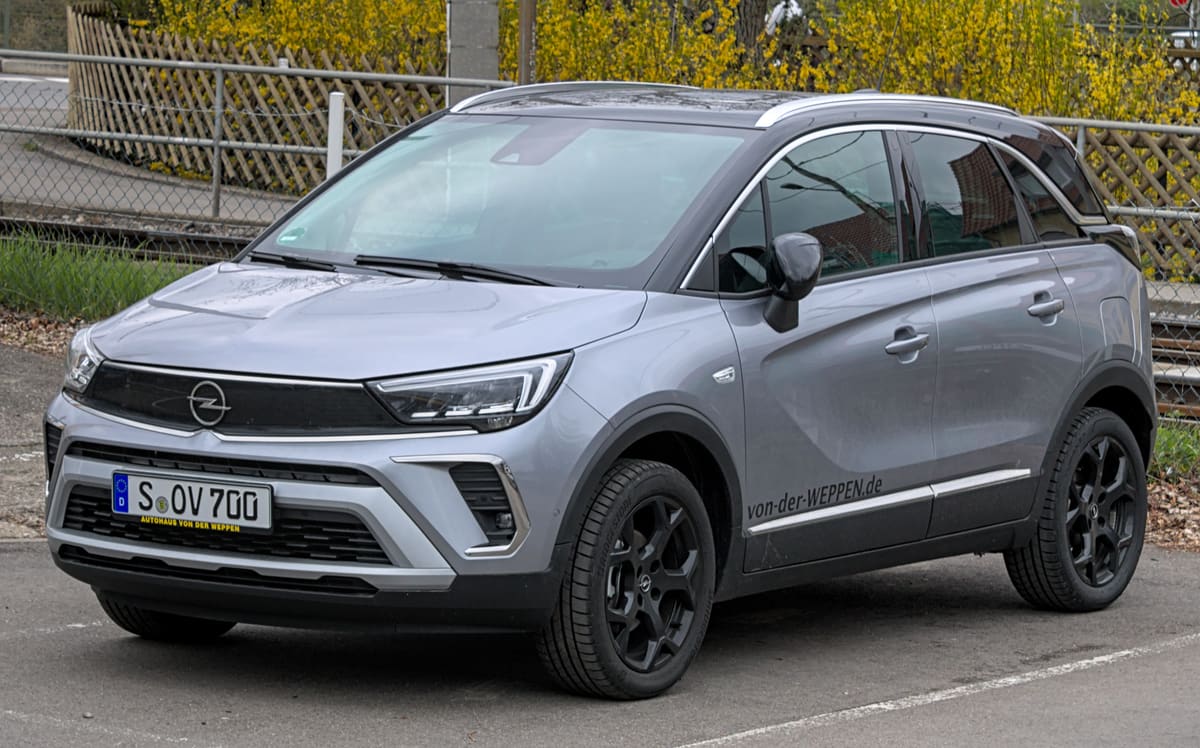
Vauxhall Crossland cars first registered from 2019 to 2024 cover the pre-facelift Crossland X and the facelifted Crossland. Sold in petrol and diesel forms with either a manual or an automatic (torque converter) gearbox, check the service history, MOT record on gov.uk and the handbrake and ABS/ESP warning before buying.
Which Crossland a car registered from 2019 to 2024 is
Cars first registered in 2019 are Crossland X models, the pre-facelift. A 2020 registration may be either the pre-facelift Crossland X or the facelifted Crossland, with most 2020 registrations likely the older Crossland X. Cars registered from 2021 to 2024 are the facelifted Crossland; the model was discontinued in 2024 and replaced by the Vauxhall Frontera.
If you are checking a specific car, match the name on the V5C and the seller’s paperwork to the registration. Trim levels and equipment vary, so check the specification sheet or the vehicle handbook for what the advertised car actually includes.
What drives it
On any car this age, check that the fuel type is correct for the vehicle being offered and that the gearbox functions smoothly in all gears. Also inspect the service record to confirm gearbox and engine servicing was carried out at the intervals in the handbook.
Electrics and electronics
Check that all interior switches, lights, the infotainment screen and heating controls work and that door mirrors and electric windows operate without hesitation.
Check the instrument binnacle for warning lights when you start the car and on a short drive. Also confirm that the car’s battery and charging behaviour are normal for its age, and check any driver aids listed on the specification to ensure they engage and cancel as expected.
Suspension, steering, brakes and body
Handbrake release button sticks or breaks, so the handbrake may not release or apply properly. This was documented on Crossland cars first registered from 2019 to 2024. Also keep an eye on ABS and ESP warning light behaviour, as noted above.
On any car this age, listen for knocks, rattles or clunks over bumps and check for steering play on a parked inspection and while driving straight and through slow corners. Test the handbrake on a gentle slope to ensure it holds and releases cleanly and check brake pedal feel for firmness and any judder under braking. Walk around the car to inspect the body for inconsistent paint, panel gaps, welding repairs and corrosion developing around wheelarch lips, sills and lower doors.
What to check on one this age
Start with paperwork. Check the V5C matches the seller and the registration, examine the service book for entries at the intervals in the handbook, and ask what warranty, if any, remains. Run a vehicle history check and review the MOT history on gov.uk for advisories and mileage and to see if recurring faults appear.
On the road, verify engine and gearbox behaviour across a range of conditions: cold start, steady cruise and under acceleration. Check engines for unusual noises and for smooth pulling, and ensure the gearbox changes gear without juddering or slipping. Test all electrics, the heating and ventilation, and any convenience features shown on the car’s specification. Inspect tyres for even wear and confirm the spare and jack, if fitted, are present. Finally, if a repair or fault is suspected, consider an independent inspection that can lift the car to assess underside condition, suspension bushes and exhaust.
Whether to buy one
A sensible purchase depends on the specific car’s paperwork, the outcome of the checks above, and whether any unresolved warning lights or mechanical problems are present. Before you commit, check what warranty remains or whether one is offered by the seller, and factor in the cost of any work uncovered by inspection. If in doubt, arrange an independent pre-purchase inspection and confirm any finance or outstanding obligations through a full vehicle history check.
DVSA MOT results for 2019 to 2024 cars
How Vauxhall Crossland cars first registered in each of these years fared at their MOT, from DVSA’s anonymised MOT test results (Open Government Licence v3.0). The figures cover every car of the model tested, not any one car, and older cars have covered more miles.
| Registered | MOT tests | Failed | Median mileage |
|---|---|---|---|
| 2019 | 16,173 | 14.2% | 37,925 miles |
| 2020 | 17,877 | 11.3% | 34,148 miles |
| 2021 | 15,387 | 8.6% | 28,953 miles |
| 2022 | 13,133 | 8.5% | 18,183 miles |
| 2023 | 217 | 5.5% | 14,307 miles |
No figures are shown for 2024: there are not enough matched tests for those years to report.
To see how one car has done, enter its registration for its own MOT history.
Vauxhall Crossland recall record
13 recalls have been issued for the Vauxhall Crossland, between 2018 and 2025.
Emission recall – On Board Diagnostics
R/2025/342Issued 18 August 2025
Vehicles may be affected by incorrect performance of the On-Board-Diagnostics related to Selective Catalytic Reduction system and/or Diesel Particle Filter. The Malfunction Indicator Light (MIL) may not illuminate in the event of a malfunction and therefore does not comply with emission regulations.
Remedy: Update the Engine Control Unit software to ensure compliance to regulations.
Affects cars built Oct 2017 to Oct 2020
Vauxhall DV5R Engines Camshaft Chain.
R/2025/245Issued 3 July 2025
Vehicles may be affected by premature wearing of the camshaft drive chain leading to abnormal noise or to a breakage of the chain in the worst case.
Remedy: Update the software to improve oil pressure and reduce wear. Check the engine noise and replace the chain if required. If no problem found change the oil to one with higher viscosity and special anti-wear additives.
Affects cars built Jul 2019 to Jan 2023
Cross carline Engine software
R/2024/133Issued 13 March 2024
On affected vehicles below 12500 miles under certain conditions engine emissions may lead to a non-compliance to regulatory requirements.
Remedy: Check the mileage of the vehicle and update the ECU (Engine Control Unit) calibration on vehicles below 12500 miles.
Affects cars built Jan 2022 to Nov 2022
Affected vehicles may have been fitted with a rear axle crossmember that was not manufactured according to specifications.
R/2023/219Issued 21 July 2023
Affected vehicles may have been fitted with a rear axle crossmember that was not manufactured according to specifications.
Remedy: Check and replace the rear axle crossmember if necessary.
Affects cars built May 2022 to Jun 2022
9 older recalls not shown.
A recall applies to a build range, not to every car of this model. Check a registration to see whether one specific vehicle has an outstanding recall.
Vauxhall Crossland MOT record
Honest Car Check counted 77,816 DVSA MOT tests for the Vauxhall Crossland, and 13.0% failed.
| Registered | Tests | Failed | Median mileage |
|---|---|---|---|
| 2023 | 217 | 5.5% | 14,307 mi |
| 2022 | 13,133 | 8.5% | 18,183 mi |
| 2021 | 15,387 | 8.6% | 28,953 mi |
| 2020 | 17,877 | 11.3% | 34,148 mi |
| 2019 | 16,173 | 14.2% | 37,925 mi |
| 2018 | 12,525 | 21.7% | 47,588 mi |
| 2017 | 2,504 | 23.5% | 51,183 mi |
Most common reasons for failure
- Tyre tread depth not in accordance with the requirements26.1%
- Brake disc or drum excessively weakened, insecure or fractured23.2%
- A tyre seriously damaged23.0%
- a brake lining or pad worn below 1.5mm15.7%
- Exhaust system leaking or insecure12.0%
Figures cover every car recorded under this model name in the DVSA dataset, retests left out. They describe the model, not this specific car. Check a registration for the actual history of one vehicle.
Frequently asked questions
What documented faults should I look for on Crossland cars first registered 2019 to 2024?
Handbrake release button sticks or breaks, so the handbrake may not release or apply properly on cars first registered 2019 to 2024. ABS and ESP warning light comes on, a common cause being a faulty wheel speed sensor on cars first registered 2019 to 2024. When inspecting, operate the handbrake and watch the ABS/ESP warning light on the dash.
How should I check the handbrake and its release on a used Crossland?
With the car stationary, pull up the handbrake then press the handbrake release button to check for smooth movement and full release; feel the lever travel and listen for sticking. If the release button feels stiff or jams, have a garage inspect the handbrake release mechanism.
What does an illuminated ABS or ESP warning light mean and what should I do?
An illuminated ABS or ESP warning light on the dash is a clear symptom to note. Ask a garage to read fault codes with a diagnostic tool and check wheel speed sensors and related wiring as part of the diagnosis.
What brake and general checks should I do before buying a Crossland?
Look for the ABS/ESP warning light on the instrument cluster, check the handbrake release button operation, press the brake pedal to assess firmness, and inspect brake pads through the wheel for wear. Also review the vehicle’s MOT history for any brake advisories.
Sources