Running costs
Seat Ibiza running costs: what UK ownership really costs
Seat Ibiza UK running costs: fuel or electric, insurance group, road tax, servicing and depreciation.
Updated 25th September 2026 DVSA data: Across 188,214 recorded MOT tests, 28.2% failed.
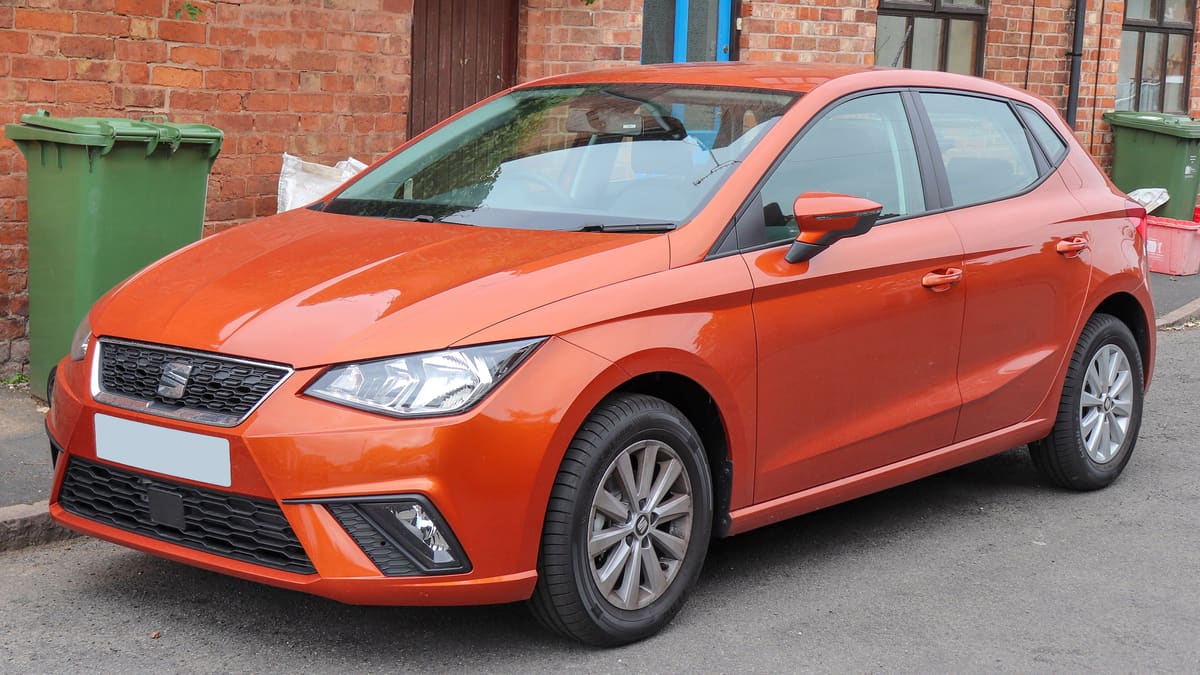
The Seat Ibiza’s running costs are influenced by several factors including vehicle tax, insurance group, servicing demands, and depreciation. Its tax treatment depends on emissions and fuel type, insurance costs reflect its size and safety features, servicing is generally straightforward but varies by engine, and it tends to hold value reasonably well for a supermini. Understanding these elements helps owners budget effectively.
Vehicle Tax and How It Affects Running Costs
The cost of vehicle tax for the Seat Ibiza is primarily determined by the car’s CO2 emissions and fuel type. Petrol and diesel variants are taxed differently, with lower-emission models benefiting from reduced rates or exemptions. This means that choosing a more efficient engine or a newer model with better emissions can significantly lower annual tax bills.
Tax bands are set by the government and can change, so it is important to check the current rates on the official government website. For example, a petrol Ibiza with modest emissions will fall into a lower tax bracket than a diesel with higher emissions. Additionally, newer models may qualify for temporary tax relief or discounts, especially if they meet stringent environmental standards.
Understanding the tax system helps owners anticipate ongoing costs. Cars with higher emissions face steeper charges, which can add up over time. Therefore, when considering an Ibiza, it is wise to factor in the tax implications of the specific engine and trim level.
Insurance Groups and Their Impact on Premiums
Insurance costs for the Seat Ibiza are influenced by its assigned insurance group, which reflects factors such as engine size, repair costs, safety features, and theft risk. The Ibiza generally falls into a moderate insurance group for superminis, making it accessible for a wide range of drivers, including younger ones.
The car’s safety equipment, such as airbags and electronic stability control, can help lower insurance premiums by reducing the likelihood and severity of accidents. Conversely, more powerful engines or sporty trims may push the insurance group higher, increasing costs. The body style and repair costs also play a role; parts that are common and easy to replace keep premiums down.
Prospective buyers should obtain insurance quotes tailored to their personal circumstances and the specific Ibiza model they are interested in. This ensures a realistic understanding of potential costs, as insurance premiums vary widely based on location, driving history, and other factors.
Servicing and Maintenance Demands
The Seat Ibiza is generally straightforward to service, with routine maintenance including oil changes, brake checks, and fluid top-ups being relatively affordable. The availability of parts and the car’s popularity contribute to reasonable servicing costs compared to more specialised or premium vehicles.
Service intervals depend on the engine and model year, so owners should consult the manufacturer’s schedule for precise guidance. Some engines may require more frequent attention, particularly diesel variants that can have more complex emission control systems. Regular servicing helps maintain reliability and efficiency, ultimately reducing the risk of costly repairs.
While the Ibiza is not known for demanding expensive maintenance, neglecting scheduled services can lead to issues that increase running costs. It is advisable to use a reputable garage familiar with the brand to ensure quality work and genuine parts.
Depreciation and Residual Value
The Seat Ibiza tends to hold its value reasonably well within the supermini segment, benefiting from its reputation for practicality and economy. Depreciation is influenced by factors such as mileage, condition, and market demand for small hatchbacks.
Newer models with updated styling and technology often retain value better, while older versions may see sharper declines. The car’s fuel type also affects resale value, with petrol models generally more sought after in the current market. Diesel variants may face lower demand due to changing regulations and perceptions.
Maintaining the car in good condition, keeping service records, and avoiding excessive mileage can help preserve its value. Buyers should consider depreciation when assessing total running costs, as a car that retains value well reduces the overall cost of ownership.
Fuel Economy and Its Role in Running Costs
Fuel consumption is a key factor in the Seat Ibiza’s running costs, influenced by engine size, transmission type, and driving style. Smaller, efficient engines tend to offer better economy, making them more cost-effective for daily commuting and city driving.
Manual transmissions often provide slightly better fuel efficiency compared to automatics, although this can vary with driving conditions. The car’s light weight and aerodynamic design also contribute to reasonable fuel consumption figures for its class.
Drivers can manage fuel costs by adopting smooth acceleration, maintaining proper tyre pressures, and avoiding excessive idling. While fuel prices fluctuate, choosing an Ibiza with a suitable engine and transmission combination can help keep running costs manageable over time.
Seat Ibiza recall record
17 recalls have been issued for the Seat Ibiza, between 1994 and 2025.
Passenger airbag replacement
R/2025/230Issued 30 June 2025
On affected vehicles defective passenger airbags may have been fitted. On affected vehicles the passenger airbag should be deactivated and the passenger seat not used until the recall action has been completed.
Remedy:Affected vehicles will be checked and the passenger airbags replaced if necessary.
Affects cars built Aug 2023 to Feb 2025
Front driver airbag replacement
R/2023/273Issued 11 September 2023
In vehicles produced in a specific period with airbags from manufacturer Takata in the event of an accident with airbag activation the driver airbag gas generator housing may explode.�
Remedy:Inspect the driver�s airbag and replace it if necessary.�
Affects cars built Jul 2015 to May 2017
THE BRACKET OF THE DOUBLE BELT BUCKLE MAY HAVE BEEN DAMAGED DURING THE FORMING PROCESS
R/2020/113Issued 20 April 2020
It is possible that the bracket of the double belt buckle has been damaged during the forming process.
Remedy:The double belt buckle must be replaced in all affected vehicles.
Affects cars built Feb 2020 to Feb 2020
THE ENGINE OIL MAY POSSIBLY REACH THE BRAKE SERVO THROUGH THE VACUUM HOSE
R/2020/090Issued 18 March 2020
It is possible that engine oil reaches the brake servo through the vacuum hose from the tandem pump to the brake servo.
Remedy:The vacuum line from the tandem pump is replaced. It must also be checked whether other components have come into contact with oil and therefore need to be replaced too.
Affects cars built Aug 2019 to Feb 2020
13 older recalls not shown.
A recall applies to a build range, not to every car of this model. Check a registration to see whether one specific vehicle has an outstanding recall.
Seat Ibiza MOT record
From 188,214 recorded MOT tests, 28.2% failed.
| Registered | Tests | Failed | Median mileage |
|---|---|---|---|
| 2023 | 539 | 8.0% | 19,691 mi |
| 2022 | 5,192 | 9.6% | 22,047 mi |
| 2021 | 8,314 | 10.2% | 30,040 mi |
| 2020 | 8,033 | 11.5% | 36,524 mi |
| 2019 | 12,837 | 14.7% | 41,978 mi |
| 2018 | 12,779 | 24.0% | 50,796 mi |
| 2017 | 15,569 | 25.4% | 56,862 mi |
| 2016 | 17,970 | 28.7% | 64,862 mi |
Most common reasons for failure
- Tyre tread depth not in accordance with the requirements28.8%
- A suspension pin, bush or joint excessively worn26.0%
- A tyre seriously damaged18.4%
- A shock absorber damaged to the extent that it does not function or showing signs of severe leakage14.3%
- Brake disc or drum excessively weakened, insecure or fractured12.5%
Figures cover every Seat Ibiza tested in the DVSA dataset, not this specific car. Check a registration for the actual history of one vehicle.
Seat Ibiza official figures
Median across 11 variants on sale, petrol.
- Combined economy
- 51.4 mpg
- WLTP median across variants
- CO2 emissions
- 125 g/km
- Sets the first-year tax rate
Official figures for new cars. Real economy varies with driving, load and conditions.
Frequently asked questions
What should I expect for the fuel costs when running a Seat Ibiza?
Fuel costs depend on your driving style and the engine type fitted to your Ibiza. Diesel models often have different running costs compared to petrol ones. Checking the fuel type and engine size on your specific trim will give you a clearer idea of what to expect.
How often does the Seat Ibiza need an oil change?
The oil should typically be changed every 10,000 to 15,000 miles or once a year, whichever comes first. Look out for the oil warning light on the dashboard, which signals when the oil level or pressure is low and requires attention.
Are there any particular parts on the Seat Ibiza that tend to wear out quickly?
Brake pads and discs often need replacing depending on your driving habits, especially if you do a lot of city driving. It’s a good idea to listen for squealing noises or check for reduced braking performance as signs these parts may need servicing.
What should I check to keep the Seat Ibiza’s tyres in good condition?
Regularly inspect the tyre tread depth and look for uneven wear, which can indicate alignment issues. Maintaining correct tyre pressure as shown in the owner’s manual helps improve fuel efficiency and tyre lifespan.
Does the Seat Ibiza require any special servicing for its air conditioning system?
The air conditioning system should be serviced every couple of years to check refrigerant levels and ensure the compressor is working properly. If you notice weak airflow or unpleasant smells, it might be time for a professional AC service.
What are the typical signs that the Seat Ibiza’s battery needs replacing?
If the engine struggles to start or electrical components like lights and radio dim when idling, the battery may be weakening. A garage can perform a battery load test to confirm if replacement is necessary.
How often should the Seat Ibiza’s timing belt be replaced?
Timing belt replacement intervals vary by engine type, so check your specific model’s service schedule. Ignoring this can lead to serious engine damage, so it’s important to have it inspected regularly by a qualified mechanic.
Are MOT and tax costs higher for the Seat Ibiza compared to other small cars?
MOT and vehicle tax depend on emissions and engine size rather than the model alone. The Ibiza’s emissions will determine its tax band, so checking the exact trim details will help you understand these running costs better.
Sources
- DVSA anonymised MOT tests and results (Open Government Licence v3.0)
- VCA new car fuel consumption and emissions data (Open Government Licence v3.0)
- DVSA vehicle safety recalls (Open Government Licence v3.0)