Running costs
Nissan Leaf running costs: what drives them and what to check
What decides Nissan Leaf running costs: energy, insurance, servicing and value, and what to check before you buy.
Updated 3rd November 2026 MOT record: Honest Car Check counted 52,221 DVSA MOT tests for the Nissan Leaf, and 16.9% failed.
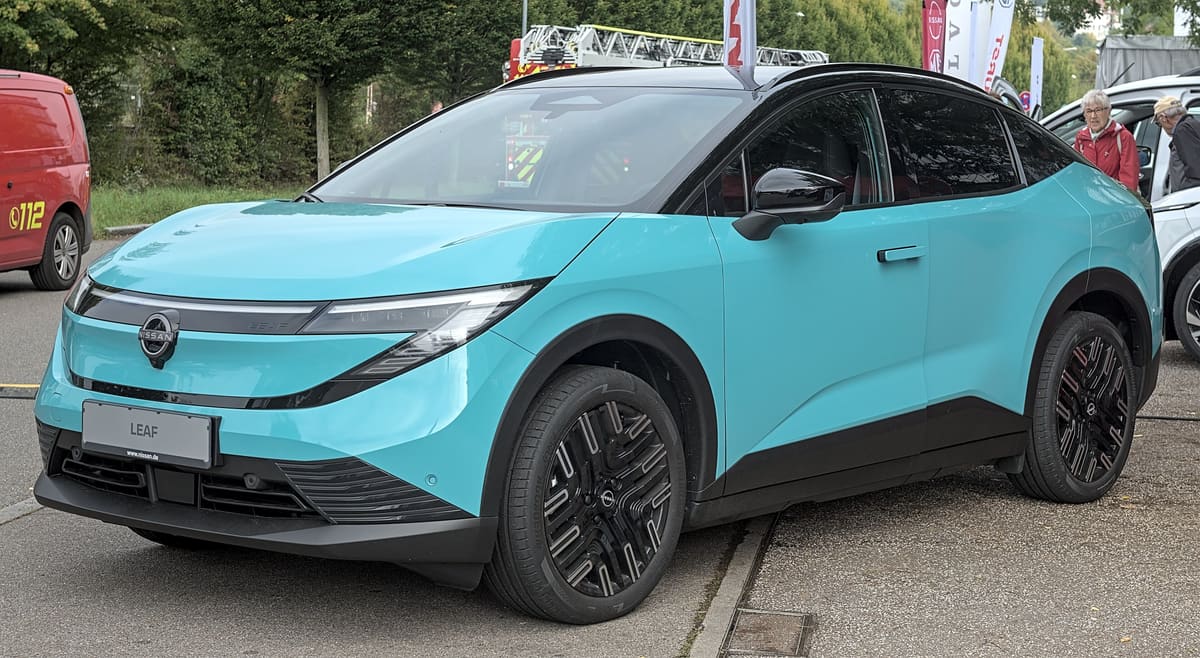
The cost of running a Nissan Leaf depends mainly on energy costs, insurance, servicing, vehicle tax, and how well the car retains its value. Understanding these factors helps you estimate your overall spend. You can calculate your charging costs from your mileage and electricity prices, get accurate insurance quotes for the exact car, check the service history for proper maintenance, and use gov.uk to confirm tax status.
Energy Costs and Charging
The Nissan Leaf runs entirely on electricity, so its running costs are tied to how much you pay for charging. To work out your energy spend, you need to know your typical mileage and the price you pay per unit of electricity, usually measured in pence per kilowatt-hour (kWh).
You can calculate your approximate charging cost by multiplying your annual mileage by the car’s energy consumption figure, then multiplying that by your electricity rate. Since consumption varies by driving style, weather, and conditions, it is best to check the official figure for the specific model and trim you are interested in. Charging at home overnight often costs less than public rapid chargers, so consider where you will mostly charge. Also, some electricity tariffs offer cheaper rates during off-peak hours, which can reduce costs if you charge overnight.
Insurance Considerations
Insurance quotes for a Nissan Leaf depend on several factors beyond the car itself. Insurers assess the driver’s age, driving history, and address, as well as where the car is kept overnight. The specific trim level and any added security features also influence the premium, as does the cost and availability of parts for repairs.
Because insurance premiums vary widely, the only reliable way to know what you will pay is to get a quote for the exact car you want to insure. Avoid relying on general assumptions or insurance group ratings, as these do not reflect the full picture. It is important to provide accurate information about your circumstances and the car’s details when requesting a quote.
Servicing and Maintenance
Servicing a Nissan Leaf involves checks and maintenance specific to electric vehicles. This includes inspecting the battery health, electric motor, brakes, tyres, and software updates. The service history should show that these areas have been regularly checked and maintained according to the intervals in the handbook.
Unlike petrol or diesel cars, there is no need to change engine oil, spark plugs, or timing belts. Brake wear can be less due to regenerative braking, but brake fluid and pads still require attention. When buying a used Leaf, look for a full service history that confirms the car has been properly cared for. Also, check if any battery warranty remains, as this can affect future costs.
Vehicle Tax
Vehicle tax rules and rates change regularly, usually each April. To find the current rate for a Nissan Leaf or any other car, you should consult gov.uk. A registration check on gov.uk will also show whether a particular car is currently taxed. This is the most reliable way to confirm tax status without relying on assumptions or outdated information.
Resale Value Factors
How well a Nissan Leaf holds its value depends on condition, mileage, service history, and demand for electric vehicles. A well-maintained car with a complete service record and no damage will generally retain value better than one with gaps in history or visible wear. Mileage also plays a role, but it is just one of several factors.
Demand for electric cars can fluctuate, so it is important to consider how popular the model and trim are when buying. Checking the condition carefully and verifying the history will help you understand how the car might hold its value over time. Avoid relying on predictions or forecasts, as these can be uncertain.
Nissan Leaf recall record
6 recalls have been issued for the Nissan Leaf, between 2015 and 2024.
Juke (F16) Qashqai (J12) and Leaf (ZE1) VIN Scan
R/2024/234Issued 17 June 2024
On affected vehicles the VIN stored in the vehicle system may not match the actual VIN of the vehicle. This may lead to a situation where a vehicle user can see information related to a different vehicle resulting in a data security breach.
Remedy: Replace the navigation display / control unit and the telematics control unit.
Affects cars built Oct 2019 to Jun 2023
A potential concern affecting the Vehicle Control Module (VCM) logic of some vehicles has been identified whereby in specific and rare circumstances after switching off the cruise control function there is a possibility of unintended acceleration.
R/2023/215Issued 28 July 2023
A potential concern affecting the Vehicle Control Module (VCM) logic of some vehicles has been identified whereby in specific and rare circumstances after switching off the cruise control function there is a possibility of unintended acceleration.
Remedy: The software of the VCM will be updated.
Affects cars built Dec 2017 to May 2023
THE WELDED JOINT ON THE ACTUATOR PLATE WITHIN THE REDUCER MAY BE OF POOR QUALITY AND THE PARK LOCK MAY NOT ENGAGE
R/2020/294Issued 2 November 2020
The welded joint on the park lock actuator plate may be of poor quality and has the potential to fail during usage.
Remedy: Replace the park lock actuator plate with a countermeasure part of all potentially affected vehicles
Affects cars built Jul 2019 to Sept 2019
HEADLAMP AUTO AIM FUNCTION MAY NOT OPERATE
R/2017/173Issued 19 July 2017
Due to a non confromity in production the headlamp auto aim function may not operate
Remedy: Reconfigure and then reinitialise the headlamp leveliser control unit on affected vehicles.
Affects cars built Feb 2017 to Mar 2017
2 older recalls not shown.
A recall applies to a build range, not to every car of this model. Check a registration to see whether one specific vehicle has an outstanding recall.
Nissan Leaf MOT record
Honest Car Check counted 52,221 DVSA MOT tests for the Nissan Leaf, and 16.9% failed.
| Registered | Tests | Failed | Median mileage |
|---|---|---|---|
| 2022 | 8,600 | 6.6% | 20,175 mi |
| 2021 | 8,612 | 8.6% | 28,286 mi |
| 2020 | 7,648 | 11.9% | 35,726 mi |
| 2019 | 4,926 | 13.4% | 42,044 mi |
| 2018 | 4,865 | 16.8% | 51,842 mi |
| 2017 | 4,833 | 20.1% | 52,128 mi |
| 2016 | 3,838 | 29.6% | 59,938 mi |
| 2015 | 3,935 | 31.2% | 59,473 mi |
Most common reasons for failure
- A suspension pin, bush or joint excessively worn30.8%
- Tyre tread depth not in accordance with the requirements27.1%
- A tyre seriously damaged20.3%
- Brake disc or drum excessively weakened, insecure or fractured13.2%
- a brake lining or pad worn below 1.5mm8.6%
Figures cover every car recorded under this model name in the DVSA dataset, retests left out. They describe the model, not this specific car. Check a registration for the actual history of one vehicle.
Frequently asked questions
What are the main running costs to expect with a Nissan Leaf?
Running costs mainly involve electricity for charging the battery and routine checks on the electric motor. Brake pads may also need attention due to regenerative braking reducing wear, but tyres and suspension components require the usual care.
How can I check the health of the Nissan Leaf’s battery before buying?
You can ask for a battery health report from a Nissan dealer or specialist. This report shows the state of the battery cells and any capacity loss. Also, check for warning lights related to the battery management system on the dashboard.
What should I watch out for regarding the Nissan Leaf’s charging system?
Check the condition of the charging port and cable connectors for damage or corrosion. Faulty charging can trigger dashboard warnings or prevent the battery from charging fully, so it’s important these parts are in good order.
Does the Nissan Leaf require brake fluid changes or other fluid checks?
Brake fluid needs checking and replacement at the intervals in the handbook, just like any car.
How do I know if the Nissan Leaf’s electric motor is functioning properly?
Listen for unusual noises during acceleration or deceleration, as the electric motor is normally very quiet. Any warning lights related to the motor or drive system on the dashboard should be diagnosed promptly by a specialist.
What running costs are involved with tyre and brake wear on a Nissan Leaf?
The Leaf benefits from regenerative braking, which reduces brake pad wear, but tyres still wear at a normal rate and need regular checks for tread depth and damage. Suspension components should also be inspected for wear or damage during servicing.
How is vehicle tax handled for a Nissan Leaf in the UK?
The rules and rates change, usually each April, gov.uk publishes the current rate, and a registration check shows whether a car is taxed.
Sources