Running costs
Nissan Juke running costs: what UK ownership really costs
Nissan Juke UK running costs: fuel or electric, insurance group, road tax, servicing and depreciation.
Updated 23rd September 2026 DVSA data: Across 325,064 recorded MOT tests, 25.5% failed.
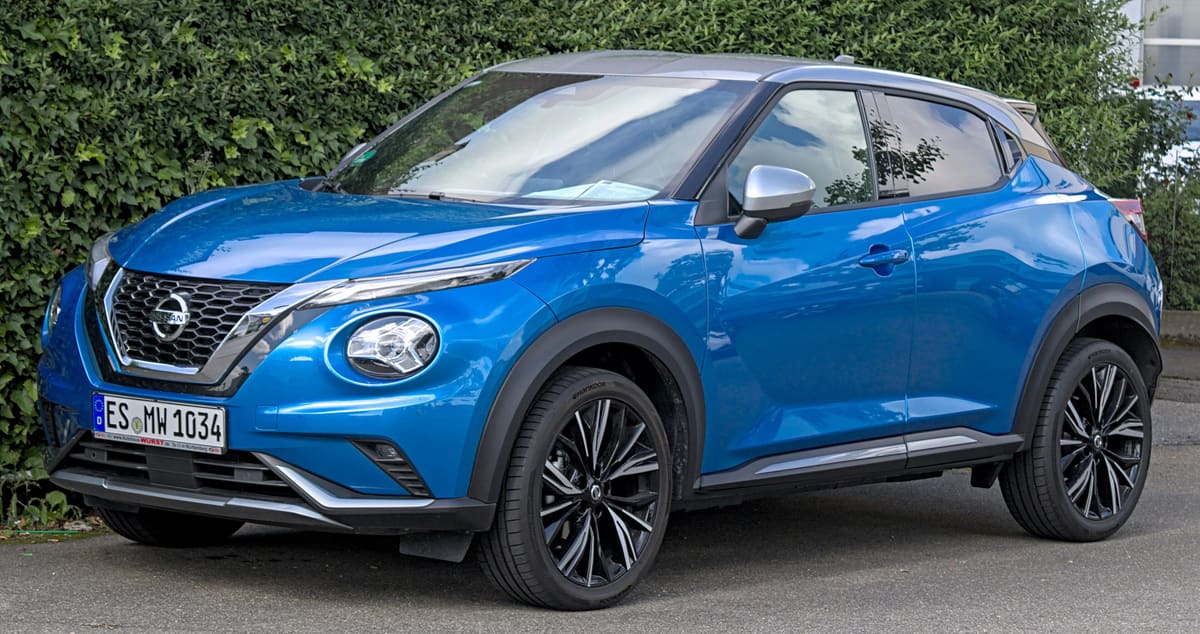
The Nissan Juke’s running costs are influenced by factors such as its tax band, insurance group, servicing demands, and depreciation. Tax depends on its emissions and fuel type, while insurance reflects its safety features and repair costs. Servicing is generally straightforward but varies with engine choice. Its value retention is typical for a compact crossover, affected by mileage and condition.
Vehicle Tax and Its Impact on Running Costs
The cost of vehicle tax for a Nissan Juke depends primarily on the car’s CO2 emissions and fuel type. Petrol and diesel models are taxed differently, with lower-emission variants attracting cheaper rates. Electric or hybrid versions may benefit from reduced or zero road tax, reflecting government incentives to encourage cleaner vehicles.
Since the Juke is available with a range of engines and powertrains, the exact tax band can vary significantly between trims. Buyers should consult the official government vehicle tax checker to determine the precise tax liability for the model they are interested in. This tax is payable annually and forms a predictable part of the car’s running costs.
Tax bands are designed to encourage lower emissions, so a Juke with a smaller engine or hybrid technology will generally cost less to tax than a larger, more powerful petrol or diesel version. This mechanism means that running costs can be influenced heavily by the choice of engine and trim level.
Insurance Group and What Drives Premiums
Insurance costs for the Nissan Juke are influenced by its assigned insurance group, which reflects factors such as repair costs, safety features, engine size, and theft risk. The Juke’s compact SUV design and popularity among younger drivers can push insurance premiums higher, but safety equipment and lower-powered engines can help keep costs down.
Insurance groups are calculated by independent bodies and vary by model and trim. A Juke with a smaller engine and fewer sporty features will typically fall into a lower insurance group, reducing premiums. Conversely, more powerful or performance-oriented versions may be assigned to higher groups, increasing insurance costs.
Drivers should obtain personalised insurance quotes to understand the likely cost, as individual factors like driving history, location, and usage also play a significant role. The government’s insurance premium tax and regulations ensure that insurance remains a significant, but manageable, part of running costs.
Servicing and Maintenance Demands
The Nissan Juke generally has straightforward servicing requirements, typical of compact crossovers. Routine maintenance includes oil and filter changes, brake checks, tyre inspections, and fluid top-ups. The frequency and cost of servicing depend on the engine type and mileage, with petrol engines often being less expensive to maintain than diesel variants.
Servicing intervals are set by Nissan and can vary between trims and engine types, so owners should follow the manufacturer’s schedule to ensure reliability and warranty compliance. Some Juke models may require more frequent servicing if fitted with turbocharged engines or advanced technology such as mild hybrids.
Parts availability and repair complexity also affect maintenance costs. The Juke benefits from being a popular model with widely available parts, which helps keep repair bills reasonable. However, certain components like turbochargers or hybrid system parts may increase servicing costs compared to simpler petrol engines.
Fuel Economy and Running Costs
Fuel economy is a key factor in the Nissan Juke’s running costs, influenced by engine size, transmission type, and driving style. Smaller petrol engines and hybrid variants tend to offer better fuel efficiency, reducing the cost per mile. Diesel engines may provide good economy on long-distance driving but can be more expensive to maintain.
The Juke’s compact size and relatively light weight help it achieve competitive fuel consumption figures within its segment. However, actual running costs will vary depending on whether the car is used mainly for urban commuting or longer motorway journeys.
Drivers should consider the type of driving they do most often when choosing a Juke model, as this will affect fuel costs significantly. Checking official fuel economy figures for the specific trim and engine is advisable to get an accurate picture of expected running costs.
Depreciation and Residual Value
The Nissan Juke’s depreciation rate is typical for a small crossover, with value influenced by factors such as mileage, condition, and market demand. Popularity and the appeal of its distinctive styling can help it hold value reasonably well compared to more conventional rivals.
Trim level and optional equipment also affect resale value, with higher-spec models often retaining more worth. Additionally, models with lower emissions or hybrid technology may benefit from stronger demand in the used car market, aiding residual values.
Regular servicing and maintaining the car in good condition are important to preserve value. Buyers should be aware that depreciation is an inevitable running cost but can be mitigated by choosing a Juke variant that suits their needs and by looking after the vehicle carefully.
Tyres, Brakes, and Other Running Costs
Tyres and brakes contribute to the ongoing running costs of the Nissan Juke. Tyre wear depends on driving style, road conditions, and tyre quality, with replacements needed periodically to maintain safety and performance. The Juke’s compact size means standard tyre sizes that are generally affordable and widely available.
Brake components such as pads and discs wear over time and require replacement at intervals influenced by driving habits. The Juke’s braking system is designed for everyday use, so maintenance costs are usually moderate unless the car is driven aggressively.
Other running costs include items like wiper blades, bulbs, and fluids, which are relatively low but should be factored into the overall budget. Routine checks and timely replacements help avoid more costly repairs and keep the car running reliably.
Understanding the factors that influence the Nissan Juke’s running costs helps buyers make informed decisions. From tax and insurance to servicing and depreciation, each element plays a role in the total cost of ownership. Checking official sources like gov.uk for tax details and obtaining personalised insurance quotes will provide the most accurate picture tailored to individual circumstances.
Nissan Juke recall record
15 recalls have been issued for the Nissan Juke, between 2010 and 2025.
Juke (F16) Front Seat Belt
R/2025/118Issued 7 April 2025
On affected vehicles the front seat belt may have been accidentally damaged during the parts preparation for assembly.
Remedy:The retailers will inspect vehicles as identified as potentially affected and replace any affected seat belt assemblies.
Affects cars built Apr 2024 to Sept 2024
Juke (F16) Qashqai (J12) and Leaf (ZE1) VIN Scan
R/2024/234Issued 17 June 2024
On affected vehicles the VIN stored in the vehicle system may not match the actual VIN of the vehicle. This may lead to a situation where a vehicle user can see information related to a different vehicle resulting in a data security breach.
Remedy:Replace the navigation display / control unit and the telematics control unit.
Affects cars built Oct 2019 to Jun 2023
Juke (F16) Right Hand Rear Door
R/2024/179Issued 25 April 2024
On affected vehicles the right-hand rear door welds may be out of specification. The door may rattle and a side impact may increase the risk of deformation. In the extreme impact could cause the hinge to fail and the door to open.
Remedy:Replace the rear right-hand door.
Affects cars built Nov 2023 to Nov 2023
A potential concern affecting the HEVC (Hybrid Electric Vehicle Control) module software has been identified which may cause a module reset of affected vehicles. Simultaneous pressing of brake and accelerator could cause engine stumble or stall.
R/2023/096Issued 19 April 2023
A potential concern affecting the HEVC (Hybrid Electric Vehicle Control) module software has been identified which may cause a module reset of affected vehicles. Simultaneous pressing of brake and accelerator could cause engine stumble or stall.
Remedy:Update the HEVC module software
Affects cars built Jun 2022 to Dec 2022
11 older recalls not shown.
A recall applies to a build range, not to every car of this model. Check a registration to see whether one specific vehicle has an outstanding recall.
Nissan Juke MOT record
From 325,064 recorded MOT tests, 25.5% failed.
| Registered | Tests | Failed | Median mileage |
|---|---|---|---|
| 2023 | 1,668 | 5.2% | 19,242 mi |
| 2022 | 16,752 | 5.3% | 19,398 mi |
| 2021 | 19,148 | 8.6% | 24,848 mi |
| 2020 | 17,312 | 10.3% | 29,636 mi |
| 2019 | 18,633 | 12.9% | 37,946 mi |
| 2018 | 23,499 | 15.2% | 43,459 mi |
| 2017 | 36,812 | 19.8% | 52,877 mi |
| 2016 | 36,307 | 25.7% | 60,951 mi |
Most common reasons for failure
- A suspension pin, bush or joint excessively worn34.3%
- Tyre tread depth not in accordance with the requirements22.6%
- A tyre seriously damaged16.1%
- a brake lining or pad worn below 1.5mm14.3%
- Brake pipe damaged or excessively corroded12.7%
Figures cover every Nissan Juke tested in the DVSA dataset, not this specific car. Check a registration for the actual history of one vehicle.
Nissan Juke official figures
Median across 15 variants on sale, petrol.
- Combined economy
- 46.3 mpg
- WLTP median across variants
- CO2 emissions
- 137 g/km
- Sets the first-year tax rate
Official figures for new cars. Real economy varies with driving, load and conditions.
Frequently asked questions
How often should I service the Nissan Juke to keep running costs low?
Regular servicing is key to managing running costs. For the Nissan Juke, checking and replacing the engine oil and oil filter at recommended intervals helps maintain engine health. Also, inspecting the brake pads and discs during service can prevent costly repairs later.
What are typical signs that the Nissan Juke’s clutch might need attention?
If you notice a slipping clutch or difficulty changing gears, it could indicate wear on the clutch plate. A burning smell during heavy acceleration is another symptom. Getting the clutch inspected early can avoid more expensive repairs.
Does the Nissan Juke require any special tyres that affect running costs?
The Nissan Juke usually runs on standard all-season tyres, but some trims come with larger alloy wheels that need low-profile tyres. These can wear faster and cost more to replace, so check your specific trim’s wheel size to understand tyre expenses.
What should I check to avoid unexpected battery replacement on a Nissan Juke?
Keep an eye on the battery warning light on the dashboard. If it stays on or flickers, it might indicate charging system issues or a failing battery. Testing the battery and alternator during routine servicing can help prevent sudden failures.
Are there any particular maintenance tasks for the Nissan Juke’s turbocharged engines?
Turbocharged Juke models benefit from regular oil changes using the correct grade oil to protect the turbocharger. Allowing the engine to idle briefly before switching off helps cool the turbo and prolong its life, reducing the risk of costly turbo repairs.
How can I check if the Nissan Juke’s brakes are causing higher running costs?
Listen for squealing noises when braking, which often means the brake pads are worn. Also, a spongy brake pedal can signal air in the brake lines or worn components. Regular brake inspections and timely pad replacements keep costs down.
Is there anything specific about the Nissan Juke’s air conditioning system that affects running costs?
The air conditioning system uses a compressor that can wear out over time. If you notice reduced cooling or strange noises when the AC is on, it’s worth having the system checked for refrigerant leaks or compressor issues to avoid expensive repairs.
What impact does the Nissan Juke’s CVT transmission have on running costs?
CVT transmissions require regular fluid changes with the correct type of transmission oil to maintain smooth operation. Ignoring this can lead to transmission overheating or slipping, which are costly to fix. Check the owner’s manual for the service schedule.
Sources
- DVSA anonymised MOT tests and results (Open Government Licence v3.0)
- VCA new car fuel consumption and emissions data (Open Government Licence v3.0)
- DVSA vehicle safety recalls (Open Government Licence v3.0)