Running costs
Mini Countryman running costs: what drives them and what to check
What decides Mini Countryman running costs: energy, insurance, servicing and value, and what to check before you buy.
Updated 24th October 2026 MOT record: Honest Car Check counted 100,892 DVSA MOT tests for the Mini Countryman, and 11.8% failed.
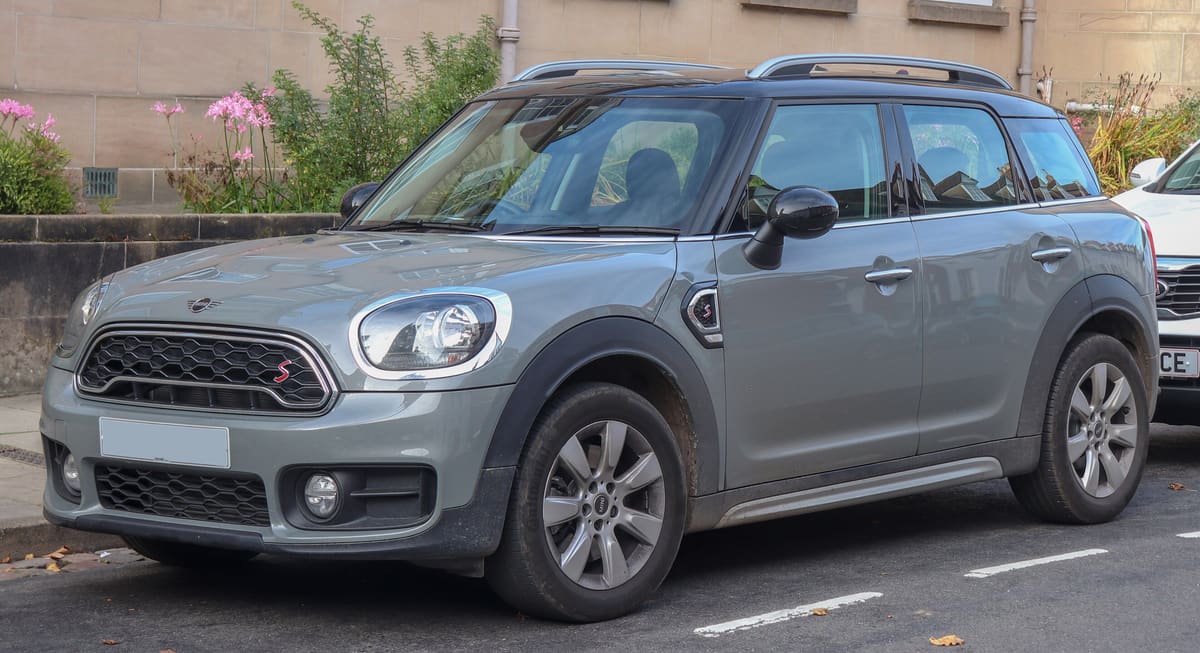
The cost of running a Mini Countryman depends on several factors including the type of energy it uses, insurance considerations, servicing needs, vehicle tax, and how well it retains value. Prospective owners can assess their own mileage and local fuel or electricity prices, check insurance quotes tailored to their circumstances, review service history carefully, and consider the car’s condition and demand when evaluating running costs.
Energy Costs and Fuel Type
The Mini Countryman is available with different powertrains, including petrol, diesel, and plug-in hybrid options. Understanding what energy the car uses is crucial to estimating running costs. Petrol and diesel models require traditional refuelling, while plug-in hybrids need charging alongside fuel.
To work out your own fuel or charging costs, start by knowing your typical annual mileage. Multiply this by the car’s fuel consumption figure for the exact model you are interested in, which varies by trim and engine. Then multiply the result by current local fuel prices. For plug-in hybrids, consider the cost of electricity for charging as well as fuel consumption when running on petrol or diesel. Electricity costs can be estimated by checking your electricity tariff and the car’s charging efficiency, which you can find in the vehicle’s specification or handbook.
Keeping track of your actual mileage and fuel or electricity prices will help you monitor running costs accurately. Fuel economy can also be affected by driving style, traffic conditions, and maintenance, so these factors are worth considering.
Insurance Considerations
Insurance costs for a Mini Countryman depend on multiple factors beyond just the car itself. Insurers assess the driver’s age, driving history, and claims record, as well as where the car is kept overnight. A vehicle kept in a secure garage may attract lower premiums than one parked on the street.
The trim level and specification of the Countryman also influence insurance costs. Higher trims with more expensive parts or advanced technology can be costlier to repair, which insurers take into account. The availability and quality of security features such as alarms and immobilisers also affect premiums.
Because insurance quotes are highly individual, the only reliable way to know the cost is to obtain a quote for the exact car you intend to insure, reflecting your personal details and circumstances. Generalisations about insurance groups or typical premiums should be avoided.
Servicing and Maintenance
Servicing a Mini Countryman involves checks and replacements tailored to its specific powertrain, whether petrol, diesel, or hybrid. Common elements include oil and filter changes, brake inspections, tyre condition checks, and fluid top-ups. Hybrid models require additional attention to battery health and electrical systems.
When considering a used Mini Countryman, review the service history carefully. A full, documented service record at the intervals in the handbook indicates the car has been maintained according to manufacturer recommendations. Look for evidence of work done by authorised dealers or reputable garages, and check that any recalls or software updates have been addressed.
Regular servicing helps maintain reliability and can prevent costly repairs later. It also supports the car’s value when it comes to resale.
Vehicle Tax
Vehicle tax rules and rates change regularly, usually each April. To find the current rate for a specific Mini Countryman, consult the official government website at gov.uk. A registration check on the same site will show whether a car is currently taxed.
Because tax regulations are subject to change and vary by vehicle, it is best to use official sources for the most accurate and up-to-date information rather than relying on general assumptions.
Resale Value and Depreciation
The value a Mini Countryman holds over time depends on several factors. Condition is paramount; a well-maintained car with no damage or mechanical issues will retain value better. A comprehensive service history also reassures buyers and supports higher resale prices.
Mileage affects value as well, with lower mileage generally preferred, but it is just one aspect alongside condition and history. Demand for the model and trim you are considering also influences how well it holds value, as some variants may be more sought after than others.
When assessing a used Mini Countryman, consider these factors rather than relying on predictions about future depreciation. Each car’s value is unique to its circumstances.
Mini Countryman recall record
10 recalls have been issued for the Mini Countryman, between 2013 and 2026.
Adaption Measure for the Emission Control System R60 / R61 N47T
R/2026/284Issued 27 July 2026
For certain vehicles BMW Group has developed a package of measures (hardware and software) for the emission control system of the MINI R60/R61.
Remedy: Installation of the hardware package including the required software measures
Affects cars built Jul 2010 to Jun 2014
Seat Belt Rear Outer Seats
R/2025/444Issued 23 October 2025
On affected vehicles either one or both of the outer most rear seats may not have been manufactured correctly and the sensitivity sensor may be deformed. If the sensor is not functioning correctly there is a risk the seat belt may not operate as intended.
Remedy: On affected vehicles the affected seatbelts will be checked and replaced.
Affects cars built Aug 2025 to Sept 2025
Front Seat Belt Retractor
R/2025/399Issued 23 September 2025
On affected vehicles the front seat belts may have damage to the torsion bar caused during manufacture. The retention function of the seat belt may not perform as expected in the event of an accident.
Remedy: Affected vehicles will have the affected seatbelts replaced.
Affects cars built Jun 2025 to Jul 2025
Checking the Threaded Connection of Grounding Cable PCU48
R/2025/268Issued 18 July 2025
On affected vehicles the ground connection cable on the 48V power supply control unit may not have been torqued to the correct specification.
Remedy: Affected vehicles will have the ground connection checked and re-torqued. If required the relevant cable and Power Control Unit will be replaced.
Affects cars built Jun 2025 to Jun 2025
6 older recalls not shown.
A recall applies to a build range, not to every car of this model. Check a registration to see whether one specific vehicle has an outstanding recall.
Mini Countryman MOT record
Honest Car Check counted 100,892 DVSA MOT tests for the Mini Countryman, and 11.8% failed.
| Registered | Tests | Failed | Median mileage |
|---|---|---|---|
| 2023 | 516 | 4.8% | 17,528 mi |
| 2022 | 7,831 | 7.5% | 20,048 mi |
| 2021 | 7,329 | 8.0% | 26,972 mi |
| 2020 | 7,952 | 8.2% | 31,825 mi |
| 2019 | 13,692 | 8.9% | 38,542 mi |
| 2018 | 13,717 | 11.3% | 47,748 mi |
| 2017 | 10,851 | 11.3% | 53,868 mi |
| 2016 | 9,092 | 12.5% | 57,111 mi |
Most common reasons for failure
- A tyre seriously damaged35.7%
- Tyre tread depth not in accordance with the requirements34.1%
- a brake lining or pad worn below 1.5mm14.2%
- A suspension pin, bush or joint excessively worn8.4%
- Brake disc or drum excessively weakened, insecure or fractured7.7%
Figures cover every car recorded under this model name in the DVSA dataset, retests left out. They describe the model, not this specific car. Check a registration for the actual history of one vehicle.
Mini Countryman official figures
Median across 36 variants on sale, electricity, petrol, petrol electric.
- Combined economy
- 42.8 mpg
- WLTP median across variants
- CO2 emissions
- 148 g/km
- Sets the first-year tax rate
- Electric range, version on sale now
- 288 miles
- Manufacturer WLTP figure. Earlier versions differ
Official figures for new cars. Real economy varies with driving, load and conditions.
Frequently asked questions
What should I check to keep the Mini Countryman's fuel costs reasonable?
Maintaining correct tyre pressure is key to fuel efficiency in the Mini Countryman. Underinflated tyres increase rolling resistance, causing the engine to work harder. Regularly inspect the tyre pressures using a gauge and keep them at the levels specified in the handbook.
Are there any specific warning lights related to running costs I should watch for?
Yes, the Mini Countryman has a warning light for the diesel particulate filter (DPF) if fitted. If this light comes on, it indicates the filter may be clogged and needs regeneration or cleaning, which can affect fuel economy and emissions.
How does servicing the turbocharger affect running costs on a Mini Countryman?
The turbocharger relies on clean oil and proper cooling to function efficiently. Neglecting oil changes or using incorrect oil can cause turbo wear, leading to reduced performance and higher fuel consumption. Ensuring the turbo is well maintained helps avoid costly repairs.
What impact does the Mini Countryman's all-wheel-drive system have on running costs?
The all-wheel-drive system adds mechanical complexity and extra components like the transfer case and additional driveshafts. These parts require attention at the intervals in the handbook to prevent wear that could increase fuel use and repair bills.
Is there a particular maintenance task that helps control brake wear costs on the Mini Countryman?
Checking the condition of brake pads and discs regularly can prevent uneven wear. The Mini Countryman’s regenerative braking system on some models can reduce pad wear, but physical inspection is still necessary to avoid unexpected replacements.
What should I know about battery care for the Mini Countryman hybrid versions to manage running costs?
Battery health is crucial for hybrid Mini Countrymans. Avoid letting the battery fully discharge or remain at full charge for extended periods. The vehicle’s battery management system helps, but keeping the battery within optimal charge levels supports longevity and efficiency.
How can I check if the Mini Countryman’s air conditioning system might be increasing running costs?
A poorly performing air conditioning system can strain the engine and increase fuel consumption. Listen for unusual noises from the compressor or check if airflow is weak. A garage can inspect refrigerant levels and compressor condition to maintain efficiency.
What do I need to know about vehicle tax for the Mini Countryman in the UK?
The rules and rates change, usually each April. Gov.uk publishes the current rate, and a registration check shows whether a car is taxed.
Sources