2019 to 2024 problems
Land Rover Range Rover Evoque 2019 to 2024: common problems and what to know
What goes wrong on a 2019 to 2024 Land Rover Range Rover Evoque, what the DVSA MOT record shows for cars of that age, and what to check before you buy one.
Updated 4th November 2026 MOT record: Honest Car Check counted 163,836 DVSA MOT tests for the Land Rover Range Rover Evoque, and 15.6% failed.
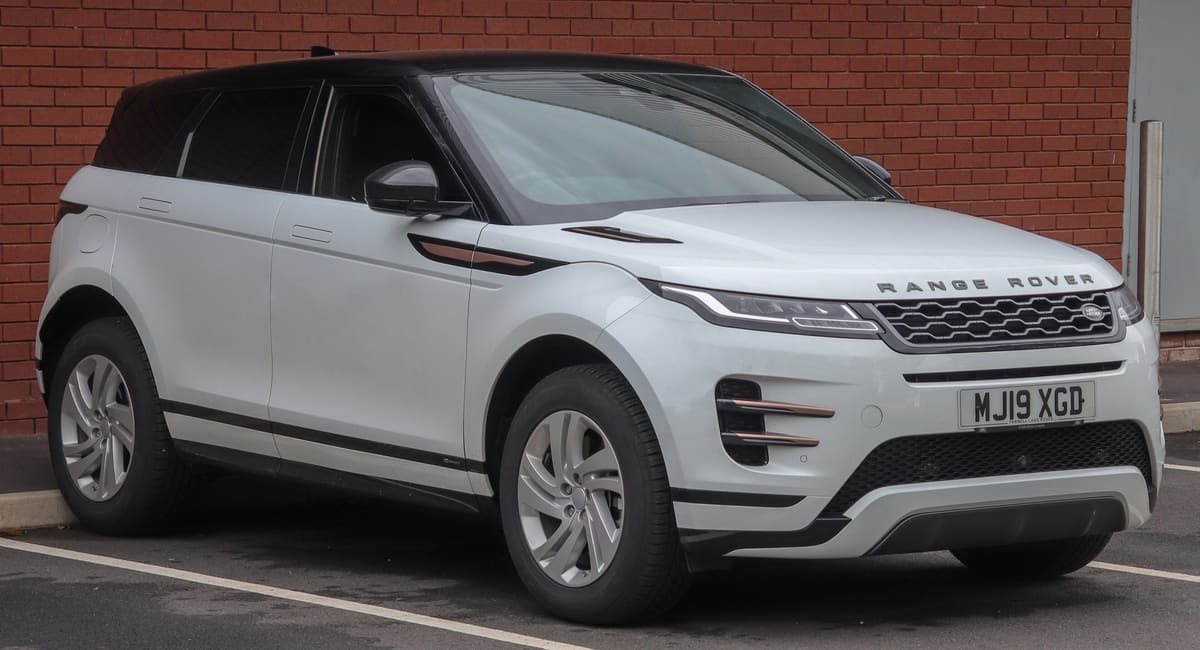
A Range Rover Evoque first registered between 2019 and 2024 is a second‑generation Evoque for most years, with a few late first‑generation examples in 2019 and a facelift arriving in later registrations. Expect petrol, diesel, mild hybrid and plug‑in hybrid options, and manual or automatic gearboxes; check the exact trim and specification for the car you are considering.
Which Range Rover Evoque a car registered from 2019 to 2024 is
A car registered in 2019 may be either the second‑generation Evoque or, on a few cars, a late first‑generation Evoque. Cars registered from 2020 to 2022 are the second‑generation Evoque with a two‑screen dashboard. Registrations in 2023 and 2024 include facelifted second‑generation examples with a single curved screen and revised headlights.
If you need to know which dash or lights a particular registration has, verify against the vehicle photographs and the seller’s specification. Trim levels and options vary by car; check the exact specification for the example you are looking at rather than assuming equipment from the year alone.
What drives it
Across these years Evoques were sold as petrol, diesel, mild hybrid and plug‑in hybrid models, and with either manual or automatic torque converter gearboxes. Check the seller’s paperwork and the handbook for the exact engine and transmission on the car you are viewing.
On automatics with stop‑start, the gearbox can downshift abruptly as the car stops, then show a dash message to select a gear. Selecting a gear does not always move the car until it is switched off and on again. The plug‑in hybrid is reluctant to switch from the petrol engine to the electric motor when it should. Diesel particulate filters and EGR valves clog up on diesel cars used mainly for short town journeys.
When test driving, try to reproduce normal urban and motorway driving to check gearbox behaviour and the plug‑in hybrid’s ability to switch power sources. For a diesel car used mainly in town, check service records for any DPF or EGR cleaning, regeneration work or parts replacement.
Electrics and electronics
Electrics and infotainment include touchscreen systems, instrument clusters and driver aids; these should be checked for responsiveness, screen faults and camera or sensor operation. Test everything that’s fitted, from lights to parking sensors, during a walkaround and on a drive.
The upper touchscreen flickers, and software updates have not cured it in every case. The tyre pressure monitor does not always warn when a tyre has lost a quarter of its cold pressure. This was documented on cars registered in 2020. On any car this age, check that the screen graphics are steady, that USB and smartphone integration work, that cameras and sensors give clear images, and that warning lights and messages clear and set normally.
Suspension, steering, brakes and body
Suspension, steering and brakes should be checked for noise, play and consistent pedal feel on a test drive. Bodywork checks include panel gaps, paint condition, signs of repaired accident damage and the operation of external fittings such as door handles and locks.
One or more doors with pop-out handles can fail to lock even though the lights flash as if they have. On any car this age, operate all door locks from the fob and from inside, check that the central locking works on every door, test the boot and bonnet latches, and inspect seals and rubbers for perishing.
Check brake discs and pads for even wear and any scoring visible through the wheels, and confirm steering has no excessive play or knock. If you have access to a ramp, look for corrosion under the car and check suspension bushes for obvious deterioration.
What to check on one this age
Start with paperwork: check the service history, MOT history and that the car’s specification matches the advert. A registration check will show whether the car is taxed; the rules and rates change, usually each April, and gov.uk publishes the current rate. Check what warranty, if any, remains and whether dealer or manufacturer coverage is transferable.
On the drive, try to reproduce the gearbox stop‑start behaviour and any reluctance of the plug‑in hybrid to switch power modes; also watch the upper touchscreen for flicker and confirm central locking with pop‑out handles works. Inspect for diesel DPF and EGR work on diesel cars used mainly in town and ask the seller for evidence of any cleaning or replacement. Verify tyre pressure monitoring operation by checking cold pressures and looking for any missed TPMS warnings.
Confirm the car’s options and specification against the handbook and the seller’s paperwork.
Whether to buy one
Check the exact trim and specification for the example you are considering.
Before committing, ensure any known behaviours that concern you have been assessed on the test drive and inspection, verify any warranty cover, and confirm the vehicle’s paperwork is complete and correct. If any of the documented issues are present and not well explained, either negotiate accordingly or walk away.
DVSA MOT results for 2019 to 2024 cars
How Land Rover Range Rover Evoque cars first registered in each of these years fared at their MOT, from DVSA’s anonymised MOT test results (Open Government Licence v3.0). The figures cover every car of the model tested, not any one car, and older cars have covered more miles.
| Registered | MOT tests | Failed | Median mileage |
|---|---|---|---|
| 2019 | 17,558 | 13.1% | 43,026 miles |
| 2020 | 12,650 | 12.3% | 36,950 miles |
| 2021 | 5,194 | 10.1% | 32,586 miles |
| 2022 | 2,711 | 8.7% | 24,029 miles |
No figures are shown for 2023 and 2024: there are not enough matched tests for those years to report.
To see how one car has done, enter its registration for its own MOT history.
Land Rover Range Rover Evoque recall record
28 recalls have been issued for the Land Rover Range Rover Evoque, between 2015 and 2026.
E-PACE F-PACE Defender Discovery Sport Range Rover Evoque and Range Rover Velar PHEV Traction Battery Fire Risk
R/2025/553Issued 12 June 2026
Vehicles have experienced thermal overload which may manifest in smoke or fire that may occur underneath the rear of the vehicle where the high voltage traction battery is located. The root cause is not yet known and investigations are continuing. A vehicle thermal overload condition such as fire or smoke can result in increased risk of occupant injury and/or injury to persons outside the vehicle as well as property damage.
Remedy: Vehicles will be inspected by the retailer and as required at-risk battery packs will be replaced.
Affects cars built Aug 2020 to Feb 2025
Land Rover Range Rover Evoque Inappropriate Passenger Airbag Deployment
R/2025/252Issued 12 January 2026
On 2021 – 2024 and certain 2020 and 2025 Model Year Range Rover Evoque vehicles during a passenger airbag deployment the airbag may tear as a result of improper folding of the airbag during the airbag assembly process.
Remedy: Affected Vehicles will have the passenger airbag module and associated components replaced.
Affects cars built Sept 2019 to Dec 2024
Gear Shift Module Moisture Ingress
R/2025/436Issued 30 October 2025
On Affected vehicles it is possible that moisture has entered the Gear Shift Module (GSM) during the assembly process. Under certain conditions there is a risk that this moisture could result in non-illumination of the Light Emitting Diode (LED) indicating the selected gear. Non-illumination of the LED gear indicator adjacent to the shifter would not conform to regulated requirements for automatic transmission control position indicator illumination.
Remedy: Affected vehicles will have the Gear Shift Module replaced.
Affects cars built Aug 2025 to Oct 2025
Electric Power Inverter Converter B (EPICB) Software Update
R/2025/280Issued 5 August 2025
On affected vehicles due to a software issue in the Electric Power Inverter Converter B (EPICB) it is possible that as the high voltage battery depletes during driving in EV mode the engine may not restart when the state of charge reduces and the vehicle will therefore lose power. There will not be an associated warning to the driver.
Remedy: Vehicle’s software to be updated in the Electric Power Inverter Converter B (EPICB) and other modules as required to ensure complete cross-module integration. In parallel an over-the-air update will be rolled out and customers who successfully complete this update will not need to visit a retailer.
Affects cars built Nov 2021 to Jul 2025
24 older recalls not shown.
A recall applies to a build range, not to every car of this model. Check a registration to see whether one specific vehicle has an outstanding recall.
Land Rover Range Rover Evoque MOT record
Honest Car Check counted 163,836 DVSA MOT tests for the Land Rover Range Rover Evoque, and 15.6% failed.
| Registered | Tests | Failed | Median mileage |
|---|---|---|---|
| 2022 | 2,711 | 8.7% | 24,029 mi |
| 2021 | 5,194 | 10.1% | 32,586 mi |
| 2020 | 12,650 | 12.3% | 36,950 mi |
| 2019 | 17,558 | 13.1% | 43,026 mi |
| 2018 | 16,168 | 12.3% | 54,112 mi |
| 2017 | 22,226 | 13.4% | 63,331 mi |
| 2016 | 24,153 | 14.4% | 70,873 mi |
| 2015 | 18,392 | 16.2% | 79,708 mi |
Most common reasons for failure
- Tyre tread depth not in accordance with the requirements29.1%
- A tyre seriously damaged23.5%
- a brake lining or pad worn below 1.5mm21.5%
- Brake disc or drum excessively weakened, insecure or fractured15.4%
- A suspension pin, bush or joint excessively worn10.5%
Figures cover every car recorded under this model name in the DVSA dataset, retests left out. They describe the model, not this specific car. Check a registration for the actual history of one vehicle.
Frequently asked questions
Can the automatic gearbox misbehave, especially with stop-start?
On automatics with stop-start, the gearbox can downshift abruptly as the car stops, then show a dash message to select a gear. Selecting a gear does not always move the car until it is switched off and on again. Test the auto in traffic so you can see any dash message and whether selecting a gear moves the car.
Is the tyre pressure monitoring system trustworthy on these Evoques?
The tyre pressure monitor does not always warn when a tyre has lost a quarter of its cold pressure; this was documented on cars first registered in 2020. Compare any TPMS warnings with a tyre pressure gauge and a cold-pressure check to confirm the system is giving accurate alerts.
What quick checks should I do when inspecting a 2019–2024 Evoque for faults?
On any car this age, check the upper screen for flicker, try the automatic with stop-start to see any dash gear-select message, test pop-out door handles and locking while watching the lights, compare TPMS warnings with a tyre pressure gauge, and for diesels ask about DPF and EGR checks in the service history.
Sources