Running costs
Kia Ceed running costs: what UK ownership really costs
Kia Ceed UK running costs: fuel or electric, insurance group, road tax, servicing and depreciation.
Updated 4th September 2026 DVSA data: Across 121,515 recorded MOT tests, 26.2% failed.
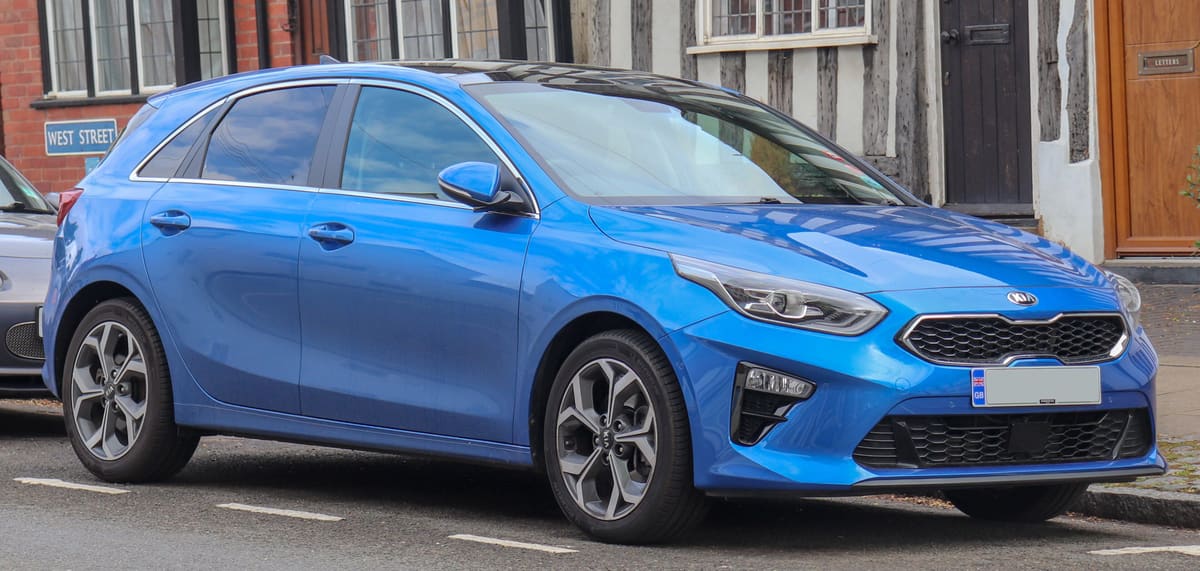
The Kia Ceed offers competitive running costs, making it an appealing choice for budget-conscious drivers. Fuel efficiency varies by engine type, with diesel models generally providing better mileage. Insurance groups range from 10 to 20, while road tax falls within Band A to Band D. Servicing intervals are typically every 12 months or 10,000 miles, and depreciation is moderate, making it a solid investment.
Fuel Costs
The fuel efficiency of the Kia Ceed largely depends on the engine choice. This means that for a typical UK driver covering 12,000 miles a year, fuel costs can vary significantly. However, diesel prices can also fluctuate, impacting overall expenses.
In terms of electric options, the Kia Ceed does not currently offer a fully electric variant, but its hybrid models provide a good balance between performance and efficiency. These hybrids can achieve impressive fuel economy, especially in urban driving conditions, where electric assistance comes into play.
Insurance Groups
Insurance costs for the Kia Ceed are generally reasonable, with most models falling into insurance groups ranging from 10 to 20. This makes it accessible for younger drivers and those looking for affordable insurance premiums. The specific group will depend on the engine size and trim level. For example, the entry-level models are likely to be in the lower insurance brackets, while the more powerful variants may attract higher premiums.
When considering insurance, it is essential to shop around and compare quotes from different providers. Factors such as your driving history, location, and the level of cover you choose will also influence your final insurance costs.
Road Tax
The Kia Ceed’s road tax is determined by its CO2 emissions, placing it in Bands A to D. Models with lower emissions benefit from lower tax rates, while those with higher emissions will incur higher costs. For instance, the petrol engines typically emit between 120 and 140 g/km of CO2, placing them in Band C or D. Diesel variants often have slightly higher emissions, which can affect their tax band.
As of the latest regulations, vehicles with zero emissions are exempt from road tax, a significant benefit for electric or hybrid models. However, as the Kia Ceed does not have a fully electric version, potential buyers should consider the emissions of their chosen model to estimate annual tax costs accurately.
Servicing Intervals
Kia recommends servicing the Ceed every 12 months or 10,000 miles, whichever comes first. This regular maintenance schedule helps ensure the vehicle remains in good condition and can prevent more costly repairs down the line. The cost of servicing can vary based on the dealership or independent garage chosen, but Kia’s competitive pricing often makes it an attractive option.
During a service, routine checks and replacements are performed, including oil changes, brake inspections, and tyre checks. Keeping up with these intervals not only maintains the vehicle’s performance but also helps preserve its resale value. Additionally, Kia offers a seven-year warranty on new models, which can cover certain repairs during the ownership period, further reducing costs.
Depreciation
Depreciation is an important factor to consider when calculating the total ownership cost of the Kia Ceed. Generally, Kia vehicles experience moderate depreciation, which means they retain a reasonable portion of their value over time compared to some competitors.
Several factors influence depreciation, including mileage, condition, and market demand. Keeping the vehicle well-maintained and within reasonable mileage limits can help mitigate depreciation. Additionally, the popularity of the Kia brand and its reputation for reliability can positively impact resale values, making it a sensible choice for long-term ownership.
Conclusion
Overall, the Kia Ceed presents a balanced package of running costs, making it an attractive option for many drivers in the UK. With competitive fuel efficiency, reasonable insurance premiums, manageable road tax, regular servicing intervals, and moderate depreciation, it stands out as a practical choice for those looking to minimise their total ownership costs.
Kia Ceed recall record
4 recalls have been issued for the Kia Ceed, between 2010 and 2025.
Kia Ceed PHEV HCA Fuse Replacement
R/2025/058Issued 2 March 2025
The printed circuit board (PCB) in the Hydraulic Clutch Actuator (HCA) may become contaminated with fluid. A fluid contaminated PCB may lead to an electrical short circuit which in extreme cases may potentially result in a fire in the engine compartment while driving.
Remedy:Check vehicle for Diagnostic Trouble Codes if HCA related codes are found replace the HCA its connector and reduced amperage fuse modifying the fuse board to suit. If no related DTC are recorded fit reduced amperage fuse only modifying the fuse board to suit.
Affects cars built Nov 2019 to Aug 2023
The mesh filter inside the tandem pump may block causing insufficient oil supply and a risk of vacuum pump failure. If the pump fails there will be no vacuum assistance and the possibility of increased braking distance when applying the brake pedal.
R/2023/255Issued 29 September 2023
The mesh filter inside the tandem pump may block causing insufficient oil supply and a risk of vacuum pump failure. If the pump fails there will be no vacuum assistance and the possibility of increased braking distance when applying the brake pedal.�
Remedy:Remove the mesh filter and check the vacuum pump for damage if damaged replace the pump/drive belt.
Affects cars built Oct 2018 to Sept 2020
VEHICLES MAY HAVE BRAKE FLUID CONTAMINATION CAUSED BY TOPPING UP WITH AN INCORRECT FLUID
R/2020/357Issued 3 February 2021
On affected vehicles there may be some contamination of the brake fluid due to topping up with an incorrect fluid.
Remedy:Replace the brake master cylinder and change the brake fluid on affected vehicles.
Affects cars built Jun 2019 to Mar 2020
BRAKES MAY NOT PERFORM CORRECTLY
R/2010/063Issued 14 June 2010
The brake master cylinder on some models fitted with ESP may not be to specification and the result could be longer than expected stopping distances.
Remedy:Recall the vehicles that are likely to be affected to check the brake master cylinder and where necessary replace the master cylinder.
Affects cars built Apr 2008 to Mar 2009
A recall applies to a build range, not to every car of this model. Check a registration to see whether one specific vehicle has an outstanding recall.
Kia Ceed MOT record
From 121,515 recorded MOT tests, 26.2% failed.
| Registered | Tests | Failed | Median mileage |
|---|---|---|---|
| 2023 | 263 | 8.4% | 28,549 mi |
| 2022 | 6,568 | 9.9% | 26,816 mi |
| 2021 | 5,100 | 12.6% | 37,608 mi |
| 2020 | 4,228 | 13.6% | 39,884 mi |
| 2019 | 9,824 | 13.7% | 48,832 mi |
| 2018 | 9,093 | 16.0% | 56,430 mi |
| 2017 | 8,463 | 18.4% | 65,826 mi |
| 2016 | 9,490 | 21.0% | 72,397 mi |
Most common reasons for failure
- A suspension pin, bush or joint excessively worn32.1%
- Tyre tread depth not in accordance with the requirements28.0%
- A tyre seriously damaged14.1%
- Brake disc or drum excessively weakened, insecure or fractured13.0%
- a brake lining or pad worn below 1.5mm12.8%
Figures cover every Kia Ceed tested in the DVSA dataset, not this specific car. Check a registration for the actual history of one vehicle.
Frequently asked questions
How often does a Kia Ceed need servicing?
A Kia Ceed typically requires servicing every 12 months or 10,000 miles, whichever comes first. Regular maintenance includes oil changes, air filter replacements, and brake inspections. Keeping up with these intervals can help prevent more costly repairs down the line.
How reliable is the Kia Ceed in terms of running costs?
The Kia Ceed is generally considered reliable, with many owners reporting minimal issues. Regular checks on components like the timing belt, which should be replaced every 60,000 miles, can help maintain its reliability and keep running costs low.
Sources
- DVSA anonymised MOT tests and results (Open Government Licence v3.0)
- DVSA vehicle safety recalls (Open Government Licence v3.0)