Recall history
BMW 4 Series recall history: what has been recalled and why
BMW 4 Series recall history: which model years were affected, what was fixed, and how to check your own car.
Updated 26th September 2026 DVSA data: Across 96,245 recorded MOT tests, 15.0% failed.
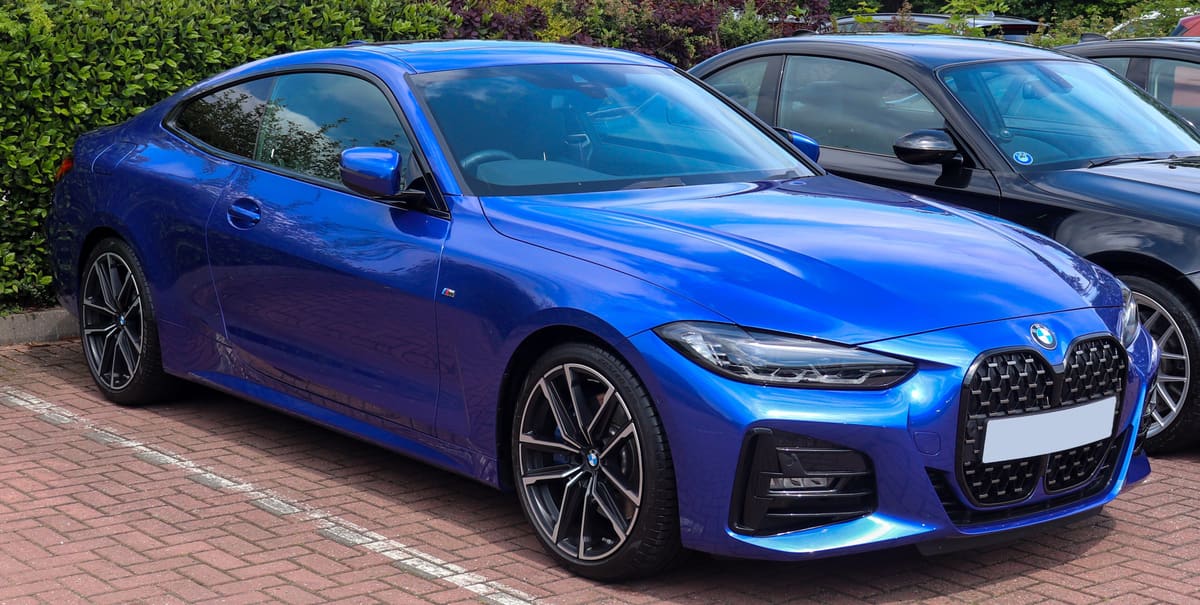
Key recalls have involved problems with the braking system, electrical components, and potential fire hazards. Affected build years range from 2013 to 2021, with most recalls resolved or remedied.
Overview of BMW 4 Series Recalls
The BMW 4 Series, introduced in 2013, has undergone various recalls throughout its production run. These recalls are primarily aimed at ensuring the safety and reliability of the vehicle. The recalls have been initiated due to identified defects that could affect vehicle performance or pose safety risks to drivers and passengers.
The recalls have involved a range of issues, from minor electrical faults to more serious concerns such as braking system failures. BMW has worked to address these issues promptly, often providing free repairs or replacements for affected components. Owners of the BMW 4 Series should be aware of these recalls to ensure their vehicles are safe and compliant with current standards.
Key Recalls and Their Reasons
One of the most significant recalls for the BMW 4 Series involved the braking system. In certain models, a defect in the brake booster could lead to a reduction in braking performance, increasing the risk of an accident. This recall affected vehicles manufactured between 2013 and 2017.
Another notable recall was related to the vehicle’s electrical system. In some models, a fault in the wiring harness could cause a short circuit, potentially leading to a fire hazard. This issue prompted BMW to recall vehicles produced from 2014 to 2020 to rectify the problem.
This issue was particularly concerning due to the risk of fire. Affected vehicles were primarily from the 2015 to 2021 production years.
Affected Build Years
The recalls for the BMW 4 Series span several build years, primarily from 2013 to 2021. The earliest models, introduced in 2013, have been subject to multiple recalls, particularly concerning the braking and electrical systems. As the model evolved, newer vehicles also faced recalls, indicating ongoing vigilance by BMW in monitoring vehicle safety.
Owners of these vehicles should check their VIN against the recall database to ensure their car has been addressed.
Current Status of Recalls
As of now, many of the recalls affecting the BMW 4 Series have been resolved. BMW has implemented corrective measures, including repairs and replacements of faulty components. Owners are encouraged to contact their local BMW dealership to confirm whether their vehicle has been affected and to arrange for any necessary repairs.
The DVSA MOT data indicates that the majority of recalled vehicles have been successfully repaired, with BMW maintaining a proactive approach to addressing safety concerns. However, it remains crucial for owners to stay informed about any new recalls that may arise as the vehicle ages.
How to Check for Recalls
Owners of the BMW 4 Series can easily check for recalls by visiting the official BMW website or contacting their local dealership. They will need to provide their vehicle identification number (VIN) to determine if their car is subject to any outstanding recalls.
Additionally, the DVSA maintains a comprehensive database of recalls that can be accessed by the public. This resource allows owners to stay informed about any safety issues that may affect their vehicle, ensuring they can take appropriate action if necessary.
Importance of Addressing Recalls
Addressing recalls is vital for the safety and reliability of any vehicle, including the BMW 4 Series. Ignoring recall notices can lead to serious safety risks, including potential accidents or vehicle malfunctions. Regularly checking for recalls and ensuring that any necessary repairs are completed can help maintain the vehicle’s performance and safety.
Furthermore, addressing recalls can also enhance the resale value of the vehicle. Prospective buyers are often wary of vehicles with unresolved recalls, so ensuring that all recalls have been addressed can make the car more attractive in the used car market.
Owners should stay informed about these recalls and ensure that their vehicles are safe and compliant with current standards.
BMW 4 Series recall record
18 recalls have been issued for the BMW 4 Series, between 2017 and 2026.
Replace the Engine Starter Motor
R/2026/054Issued 2 March 2026
The Safety Recall relates to the engine starter motor. The fault relates to the RSW22 starter RWT (reinforced water tightness). It was found that with RWT starters an increased abrasion of the magnetic contact can cause the growth of deposits at the lowest point of the relay interior. This in turn may increase the relay contact resistance resulting in false starts or even causing short circuits and possibly a thermal reaction. In case of a short circuit the possibility of a thermal event cannot be excluded. This may happen while attempting to start the vehicle or while driving due to vibrations causing a short circuit due to moving deposits.
Remedy:On the affected vehicles the starter motor will be replaced with a variant by another supplier with a different design. Until the repair has been completed it is recommended to not leave the vehicle running unattended after starting the engine.
Affects cars built Aug 2020 to Nov 2022
Takata Driver and/or Passenger Airbag Recall (Global VINs)
R/2025/349Issued 18 December 2025
Affected vehicles are already included in Safety Recalls within the markets they have previously resided in. The vehicles may be fitted with a driver and/or passenger airbag/s which if deployed may do so with excessive force causing sharp metal fragments to be released this may cause serious injury which could prove fatal to people in the vicinity.
Remedy:Vehicles will have the affected airbags checked and if necessary replaced.
Affects cars built Mar 2014 to Oct 2017
Replace the Engine Starter Motor
R/2025/405Issued 27 October 2025
For affected vehicles there is a concern involving water ingress and corrosion to the starter motor for where a short circuit cannot be ruled out. It is strongly recommended to park the vehicle outdoors and not in the immediate vicinity of buildings until the repair has been carried out.
Remedy:Replacement of the starter motor.
Affects cars built Dec 2019 to Jul 2020
Screw Connection of the Power Supply
R/2025/407Issued 6 October 2025
On affected vehicles the screw connection on the B+ power distributor in the vehicle's boot may have not been properly tightened.
Remedy:On affected vehicles the connections will be reworked.
Affects cars built Jul 2025 to Jul 2025
Check Driver’s Airbag for Conversion Takata SDI & PSDI-5
R/2024/403Issued 21 October 2024
Affected vehicles may have had a retrofit or conversion of the airbag using a previously recalled airbag variant which if deployed may do so with excessive force causing sharp metal fragments to be released this may cause serious injury possibly fatal to people in the vicinity. The original factory fitment airbag for the vehicle is not affected.
Remedy:Vehicles will have the airbag checked and if necessary replaced.
Affects cars built May 2013 to Nov 2017
On certain vehicles the Body Domain Controller (BDC) control unit may have an incorrect setting applied to it.
R/2023/071Issued 20 March 2023
On certain vehicles the Body Domain Controller (BDC) control unit may have an incorrect setting applied to it.
Remedy:Conduct a check of the settings and if necessary perform a reset on the BDC control unit.
Affects cars built Aug 2021 to Sept 2022
A possible degradation of the propellant tablets could lead to an over-aggressive combustion in the event the airbag is activated which may cause the inflator body to rupture.
R/2023/016Issued 24 January 2023
A possible degradation of airbag propellant tablets could lead to an over-aggressive combustion in the event the airbag is activated which may cause the inflator body to rupture.
Remedy:On affected vehicles the drivers airbag module will be replaced.
Affects cars built May 2013 to Dec 2015
Undetected EGR System leaks may cause thermal activity in the intake manifold
R/2022/255Issued 22 August 2022
Undetected EGR System leaks may cause thermal activity in the intake manifold.
Remedy:The engine management control unit (DDE) will be programmed with improved software incorporating the latest OBD functionality.
Affects cars built Jun 2015 to Mar 2018
THE EXHAUST GAS RECIRCULATION COOLER MAY LEAK OVER TIME AND CAUSE THERMAL INCIDENT
R/2022/206Issued 1 August 2022
The Exhaust Gas Recirculation cooler may leak over time and cause thermal incident.
Remedy:On the affected vehicles the EGR cooler module will be replaced.
Affects cars built May 2013 to Jun 2020
THE EXHAUST GAS RECIRCULATION MODULE COULD LEAK OVER TIME
R/2021/213Issued 14 June 2021
The Exhaust Gas Recirculation (EGR) Module could leak over time�and cause thermal incident.
Remedy:The EGR cooler will be internally inspected with an endoscope and replaced if evidence of leaking is found.
Affects cars built Mar 2017 to Sept 2018
AFFECTED VEHICLES MAY BE FITTED WITH BRAKE DISCS WHICH ARE NOT TO SPECIFICATION
R/2021/085Issued 15 March 2021
Affected vehicles may be fitted with brake discs which were not produced according to the specifications
Remedy:On the affected vehicles the brake discs will be checked and if necessary replaced
Affects cars built Jan 2021 to Feb 2021
THE EXHAUST GAS RECIRCULATION COOLER COULD LEAK OVER TIME
R/2021/037Issued 9 February 2021
Leaking glycol coolant could create in combination with soot and oil sediments in the EGR module ignitable deposits.
Remedy:The EGR cooler will be internally inspected with an endoscope and replaced if evidence of leaking is found.
Affects cars built Jun 2015 to Jun 2018
6 older recalls not shown.
A recall applies to a build range, not to every car of this model. Check a registration to see whether one specific vehicle has an outstanding recall.
BMW 4 Series MOT record
From 96,245 recorded MOT tests, 15.0% failed.
| Registered | Tests | Failed | Median mileage |
|---|---|---|---|
| 2021 | 408 | 9.8% | 34,458 mi |
| 2020 | 3,820 | 11.8% | 38,032 mi |
| 2019 | 10,075 | 13.5% | 47,163 mi |
| 2018 | 15,356 | 13.0% | 55,686 mi |
| 2017 | 16,972 | 13.5% | 67,299 mi |
| 2016 | 18,050 | 14.5% | 77,676 mi |
| 2015 | 17,821 | 17.1% | 84,909 mi |
| 2014 | 12,230 | 19.3% | 89,477 mi |
Most common reasons for failure
- Tyre tread depth not in accordance with the requirements39.0%
- A tyre seriously damaged23.9%
- a brake lining or pad worn below 1.5mm14.5%
- A tyre cords visible or damaged11.5%
- Brake disc or drum excessively weakened, insecure or fractured11.1%
Figures cover every BMW 4 Series tested in the DVSA dataset, not this specific car. Check a registration for the actual history of one vehicle.
BMW 4 Series official figures
Median across 21 variants on sale, petrol, petrol electric.
- Combined economy
- 40.3 mpg
- WLTP median across variants
- CO2 emissions
- 159 g/km
- Sets the first-year tax rate
Official figures for new cars. Real economy varies with driving, load and conditions.
Frequently asked questions
What is the recall history of the BMW 4 Series?
Recalls are issued against individual vehicles rather than a model as a whole, so a model-level yes or no would be guesswork. Enter the registration on Honest Car Check and we check the DVSA record for that specific car. Where DVSA holds no status, confirm it with a franchised dealer using the VIN.
How can I check if my BMW 4 Series has been recalled?
Recalls are issued against individual vehicles rather than a model as a whole, so a model-level yes or no would be guesswork. Enter the registration on Honest Car Check and we check the DVSA record for that specific car. Where DVSA holds no status, confirm it with a franchised dealer using the VIN.
What should I do if my BMW 4 Series is recalled?
Recalls are issued against individual vehicles rather than a model as a whole, so a model-level yes or no would be guesswork. Enter the registration on Honest Car Check and we check the DVSA record for that specific car. Where DVSA holds no status, confirm it with a franchised dealer using the VIN.
Are recalls common for the BMW 4 Series?
Recalls are issued against individual vehicles rather than a model as a whole, so a model-level yes or no would be guesswork. Enter the registration on Honest Car Check and we check the DVSA record for that specific car. Where DVSA holds no status, confirm it with a franchised dealer using the VIN.
Will a recall affect the resale value of my BMW 4 Series?
Recalls are issued against individual vehicles rather than a model as a whole, so a model-level yes or no would be guesswork. Enter the registration on Honest Car Check and we check the DVSA record for that specific car. Where DVSA holds no status, confirm it with a franchised dealer using the VIN.
How do I find out what issues were addressed in past recalls for the BMW 4 Series?
Recalls are issued against individual vehicles rather than a model as a whole, so a model-level yes or no would be guesswork. Enter the registration on Honest Car Check and we check the DVSA record for that specific car. Where DVSA holds no status, confirm it with a franchised dealer using the VIN.
Is there a time limit for getting recall repairs done on my BMW 4 Series?
Recalls are issued against individual vehicles rather than a model as a whole, so a model-level yes or no would be guesswork. Enter the registration on Honest Car Check and we check the DVSA record for that specific car. Where DVSA holds no status, confirm it with a franchised dealer using the VIN.
Do I have to pay for recall repairs on my BMW 4 Series?
Recalls are issued against individual vehicles rather than a model as a whole, so a model-level yes or no would be guesswork. Enter the registration on Honest Car Check and we check the DVSA record for that specific car. Where DVSA holds no status, confirm it with a franchised dealer using the VIN.
Sources
- DVSA anonymised MOT tests and results (Open Government Licence v3.0)
- VCA new car fuel consumption and emissions data (Open Government Licence v3.0)
- DVSA vehicle safety recalls (Open Government Licence v3.0)