Running costs
Volvo V90 running costs: what UK ownership really costs
Volvo V90 UK running costs: fuel or electric, insurance group, road tax, servicing and depreciation.
Updated 23rd September 2026 DVSA data: Across 16,241 recorded MOT tests, 14.4% failed.
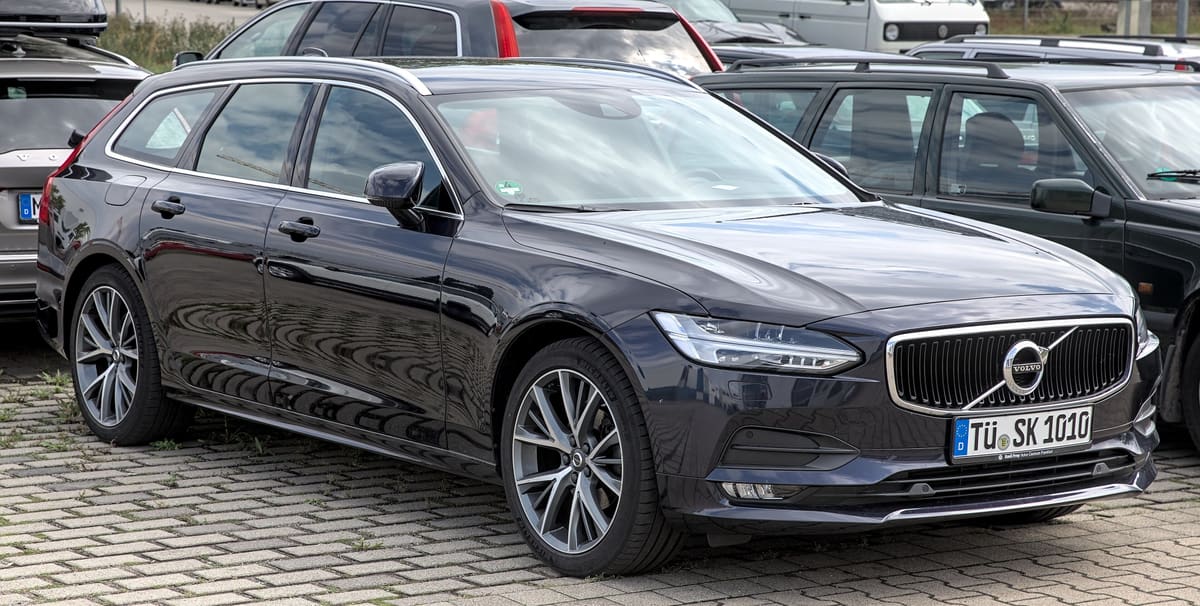
The Volvo V90’s running costs are influenced by several factors including its taxation category, insurance group, servicing demands, and depreciation profile. Its tax treatment depends on emissions and fuel type, insurance costs reflect its safety and repair profile, servicing is generally straightforward but can be pricier than smaller cars, and it tends to hold value well due to brand reputation and build quality.
Vehicle Tax and Its Impact on Running Costs
The cost of vehicle tax for the Volvo V90 is primarily determined by its CO2 emissions and fuel type, as per the UK’s Vehicle Excise Duty (VED) system. Petrol, diesel, and hybrid variants are taxed differently, with lower emissions attracting reduced rates or exemptions in some cases.
Newer V90 models benefit from the current tax regime that favours low-emission vehicles, potentially lowering annual costs. However, higher-performance or diesel versions with greater emissions will attract higher tax bands. The government’s official website provides detailed tables for exact rates, which vary by registration date and engine specifics.
Additionally, the V90’s weight and engine size can influence the first-year tax rate, which is often higher for larger engines. Buyers should check the exact trim and engine variant to understand the precise tax liability, as this can significantly affect the overall cost of ownership.
Insurance Group and What Drives Premiums
Insurance premiums for the Volvo V90 are shaped by its assigned insurance group, which reflects factors such as repair costs, safety features, theft risk, and performance. The V90 generally falls into a moderate to higher insurance group due to its size, value, and advanced technology.
Safety features like multiple airbags, collision avoidance systems, and robust crash structures can help reduce premiums by lowering the risk of injury claims. However, the cost of replacement parts and the complexity of repairs, especially for luxury trims with advanced electronics, can push premiums upward.
Drivers’ personal details, including age, location, and driving history, also affect insurance costs. Obtaining quotes from various insurers is advisable, as premiums can vary widely even for the same vehicle. The government’s insurance group listings and comparison sites provide guidance on expected costs.
Servicing Requirements and Associated Costs
The Volvo V90’s servicing demands are influenced by its engineering and the technology it employs. Regular servicing intervals are typically set by the manufacturer and include oil changes, filter replacements, brake checks, and inspections of key components.
Servicing costs tend to be higher than those for smaller or less premium cars, partly due to the cost of genuine parts and the need for skilled technicians familiar with Volvo’s systems. Features such as advanced driver assistance systems and hybrid components may require specialist attention, increasing labour time and parts expense.
Routine maintenance is crucial for preserving the V90’s reliability and resale value. Many owners opt for service plans offered by dealers or independent garages familiar with Volvo vehicles to manage costs. Checking the service history is essential when buying a used V90 to avoid unexpected expenses.
Fuel Economy and Its Role in Running Costs
Fuel consumption is a significant factor in the V90’s running costs, varying widely depending on the engine type and driving conditions. Petrol, diesel, and hybrid options each have different fuel efficiency profiles, with hybrids generally offering better economy in urban settings.
Driving style, traffic conditions, and load also influence fuel use. The V90’s size and weight mean it will consume more fuel than smaller cars, especially under heavy acceleration or when carrying full loads. Choosing the right engine and trim for your typical usage can help optimise fuel costs.
While official fuel economy figures vary by model and trim, real-world consumption is often affected by factors such as terrain and climate. Prospective buyers should consider their driving patterns and fuel prices when assessing the V90’s running costs.
Depreciation and Residual Value
The Volvo V90 tends to retain its value reasonably well compared to many large estate cars, thanks to Volvo’s reputation for safety, build quality, and durability. Strong residual values help reduce the total cost of ownership by lowering depreciation losses.
Depreciation rates depend on factors such as mileage, condition, service history, and market demand. Well-maintained examples with full service records and popular specifications generally command higher resale prices.
Trim level and optional equipment also influence value retention. Models with sought-after features or lower emissions may hold value better due to ongoing demand. Buyers should research specific trims and consider long-term ownership costs alongside purchase price.
Tyres, Repairs, and Other Running Costs
Tyre replacement and repair costs contribute to the overall running expenses of the Volvo V90. Its size and weight mean it requires tyres designed for larger vehicles, which can be more expensive than standard car tyres.
The choice of tyre brand and type affects both cost and performance. Premium tyres offer better grip and longevity but come at a higher price, while budget options may wear faster and affect fuel economy.
Repairs beyond regular servicing, such as brake replacement or suspension work, can be more costly on a premium estate car due to the complexity and cost of parts. Insurance cover and warranty status can mitigate these expenses.
Regular maintenance of tyres, brakes, and other consumables helps avoid costly repairs and maintains safety and efficiency, impacting overall running costs.
Volvo V90 recall record
16 recalls have been issued for the Volvo V90, between 2002 and 2025.
BCM2 SW – Safety Notice
R/2025/211Issued 23 June 2025
Affected vehicles may experience a temporary loss of braking functionality after coasting downhill with ‘B’ mode selected or when using One Pedal Drive. This could potentially lead to a collision.
Remedy:Install modified software via an Over the Air (OTA) update.
Affects cars built May 2020 to Jun 2025
SPA1 Cell Modules
R/2025/117Issued 24 March 2025
On affected vehicles the High Voltage (HV) Battery may have a manufacturing defect which could cause the battery cells to overheat when the HV Battery is fully charged. In a worst-case scenario there is a risk of fire when the vehicle is parked up with a fully charged HV Battery.
Remedy:Check and replace the HV Battery if necessary and install modified software.
Affects cars built Jun 2019 to Nov 2021
BCM2 – Push Road
R/2024/446Issued 5 November 2024
The rod connecting the brake pedal to the brake booster may not have been assembled correctly. The final torque might not be according to manufacturing specification due to deviations in the equipment. If the rod does disconnect the mechanical connection between brake pedal and brake booster cannot be guaranteed. In the worst-case scenario if the rod disconnects the brake pedal function cannot be guaranteed
Remedy:A Volvo retailer will check and if necessary tighten the rod to correct specification.
Affects cars built Jun 2019 to Oct 2019
There may be a potential software error in the brake control module.
R/2023/025Issued 24 January 2023
There may be a potential software error in the brake control module.
Remedy:Update the brake control module software.
Affects cars built Oct 2022 to Jan 2023
12 older recalls not shown.
A recall applies to a build range, not to every car of this model. Check a registration to see whether one specific vehicle has an outstanding recall.
Volvo V90 MOT record
From 16,241 recorded MOT tests, 14.4% failed.
| Registered | Tests | Failed | Median mileage |
|---|---|---|---|
| 2022 | 953 | 8.8% | 31,548 mi |
| 2021 | 1,222 | 8.8% | 42,098 mi |
| 2020 | 2,391 | 13.4% | 47,755 mi |
| 2019 | 4,406 | 14.2% | 56,348 mi |
| 2018 | 3,941 | 14.8% | 70,517 mi |
| 2017 | 2,896 | 18.0% | 81,920 mi |
| 2016 | 432 | 23.4% | 86,297 mi |
Most common reasons for failure
- Tyre tread depth not in accordance with the requirements31.2%
- A tyre seriously damaged26.3%
- a brake lining or pad worn below 1.5mm25.7%
- A transmission shaft constant velocity joint boot missing or no longer prevents the ingress of dirt etc9.0%
- A tyre cords visible or damaged7.8%
Figures cover every Volvo V90 tested in the DVSA dataset, not this specific car. Check a registration for the actual history of one vehicle.
Volvo V90 official figures
Median across 16 variants on sale, diesel electric, electricity / petrol, petrol electric.
- Combined economy
- 39.7 mpg
- WLTP median across variants
- CO2 emissions
- 164 g/km
- Sets the first-year tax rate
- Electric range
- 53 miles
- Manufacturer WLTP figure
Official figures for new cars. Real economy varies with driving, load and conditions.
Frequently asked questions
What should I expect in terms of fuel costs for a Volvo V90?
Fuel costs depend on the engine type and driving style. Diesel versions typically use a DPF (diesel particulate filter) which needs occasional regeneration to avoid clogging. Checking the DPF warning light can help you maintain efficient fuel use.
How often does the Volvo V90 require servicing?
Volvo recommends servicing the V90 approximately every 12 months or based on mileage. During a service, mechanics will inspect components like the brake pads, oil filter, and the timing belt tensioner to ensure everything is in good condition.
Are there any specific maintenance tasks unique to the Volvo V90?
The V90 features advanced safety systems such as City Safety and Pilot Assist which require software updates during servicing. Additionally, the air suspension system, if fitted, should be checked regularly for leaks or compressor issues to maintain ride quality.
What are typical repair jobs I might face with a used Volvo V90?
Owners often report issues with the turbocharger actuator or the glow plugs in diesel models. A garage can diagnose these by scanning for fault codes and inspecting the turbo boost pressure or glow plug operation to prevent starting problems.
How expensive is tyre replacement for the Volvo V90?
Tyre wear depends on wheel size and driving conditions. The V90 often comes with larger alloy wheels which may require premium tyres. Regularly checking tyre tread depth and pressure helps maintain safety and can extend tyre life.
Does the Volvo V90 have any known electrical quirks affecting running costs?
Some V90 owners have noted issues with the infotainment system or sensors linked to the driver assistance features. These can trigger warning lights or cause malfunctions, requiring diagnostic checks and occasional software resets at a Volvo specialist.
What should I check to avoid costly repairs on a Volvo V90?
Keep an eye on the engine oil level and quality, as the V90’s turbo engines rely on clean oil for longevity. Also, listen for unusual noises from the timing chain area, which could indicate wear and need professional inspection.
How does insurance typically affect the running costs of a Volvo V90?
Insurance premiums vary by trim and engine size, but the V90’s safety features like collision avoidance can sometimes help reduce costs. It’s worth checking with insurers about how these systems impact your policy.
Sources
- DVSA anonymised MOT tests and results (Open Government Licence v3.0)
- VCA new car fuel consumption and emissions data (Open Government Licence v3.0)
- DVSA vehicle safety recalls (Open Government Licence v3.0)