Running costs
Toyota Hilux running costs: what UK ownership really costs
Toyota Hilux UK running costs: fuel or electric, insurance group, road tax, servicing and depreciation.
Updated 10th October 2026 DVSA data: Across 74,135 recorded MOT tests, 24.3% failed.
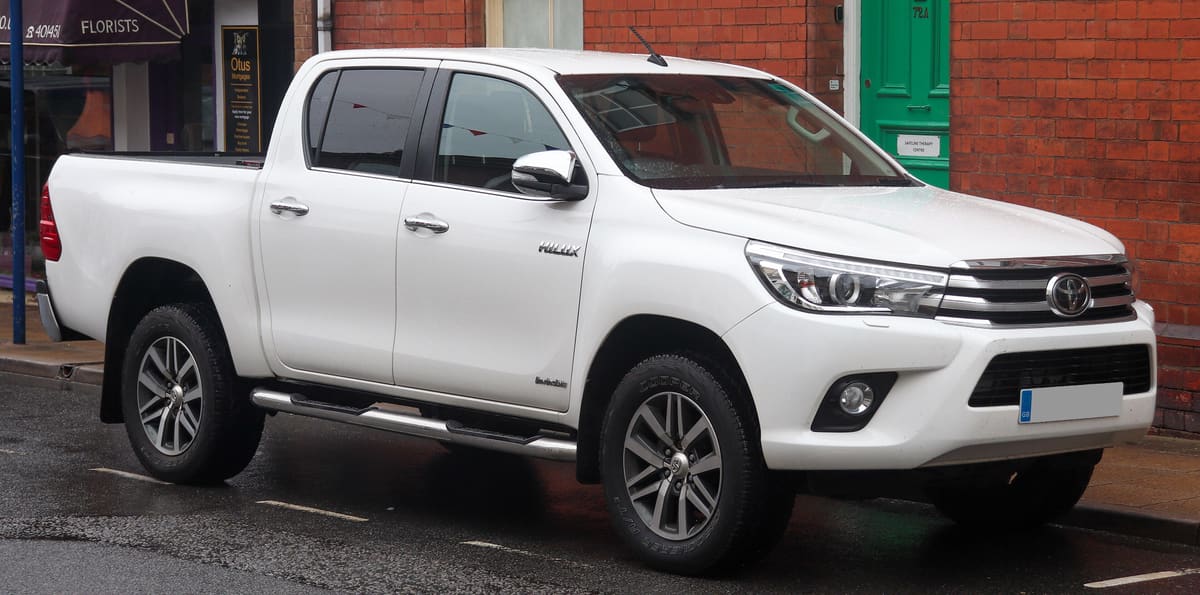
The Toyota Hilux’s running costs are shaped by its tax classification, insurance grouping, servicing demands, and resale strength. Its commercial vehicle status often means favourable tax treatment, but insurance can be higher due to its size and usage profile. Servicing is robust but not overly complex, and the Hilux typically retains value well thanks to its reputation and durability.
Vehicle Tax Treatment
The Hilux is generally classified as a commercial vehicle for Vehicle Excise Duty (VED) purposes, which can lead to lower tax rates compared to private passenger cars. This classification recognises its primary use as a workhorse rather than a family car, affecting the tax bands it falls into.
Tax on commercial vehicles is often calculated differently, with some models benefiting from lower or even zero rates depending on emissions and weight. The Hilux’s emissions profile and weight category will influence its exact tax band, so checking the current gov.uk vehicle tax tool with the registration number is essential for precise information.
Additionally, if the Hilux is used strictly for business purposes, there may be further tax advantages or reliefs available, such as capital allowances or reduced road tax, which can reduce overall running costs.
Insurance Group and Costs
Insurance premiums for the Hilux tend to be influenced by its size, weight, and typical use cases. Being a rugged pickup, it often falls into mid to higher insurance groups, reflecting the cost to repair or replace parts and its potential involvement in more demanding driving conditions.
The insurance group is affected by factors such as engine size, safety features, and repair costs. The Hilux’s robust build and safety equipment can help moderate premiums, but its commercial use and higher repair costs for body panels or specialised parts can push insurance costs upward.
Drivers should obtain insurance quotes tailored to their personal circumstances and vehicle trim, as these can vary significantly. Using comparison tools and providing detailed information about how the vehicle will be used can help secure the most accurate and competitive insurance premium.
Servicing and Maintenance Demands
The Hilux is engineered for durability and reliability, which generally translates into straightforward servicing requirements. Routine maintenance involves regular oil changes, brake checks, and inspections of suspension and drivetrain components, all of which are standard for vehicles in this class.
Parts availability is typically good, reflecting Toyota’s extensive dealer and parts network, which helps keep servicing costs reasonable. However, servicing costs can vary depending on whether the vehicle is maintained at a main dealer or an independent garage.
Because the Hilux is often used in tougher environments, such as off-road or heavy-load conditions, wear and tear on components like tyres, brakes, and suspension may be higher than average. This can increase maintenance frequency and costs over time, so owners should budget accordingly and adhere closely to service schedules.
Fuel and Running Efficiency
While exact fuel consumption figures vary by engine and trim, the Hilux’s design prioritises capability and durability over outright economy. Its engines are tuned to provide strong torque and reliability, which can mean fuel consumption is higher than smaller passenger cars.
The vehicle’s weight, aerodynamics, and typical load-carrying role all influence running efficiency. Drivers who frequently carry heavy loads or tow will notice increased fuel use, which is a natural consequence of the Hilux’s intended purpose.
Choosing the right engine and trim for your needs can help balance performance and running costs. Regular maintenance, such as keeping tyres properly inflated and ensuring the vehicle is well-tuned, also contributes to better fuel economy.
Residual Values and Depreciation
The Toyota Hilux is known for holding its value well compared to many other pickups and commercial vehicles. Its reputation for toughness, reliability, and low running costs makes it a sought-after model on the used market.
Depreciation rates are influenced by factors such as mileage, condition, service history, and market demand. The Hilux’s strong resale value reflects buyers’ confidence in its longevity and the ongoing demand for reliable work vehicles.
Maintaining the vehicle with regular servicing and keeping it in good condition can help maximise resale value. Additionally, choosing popular trims and options can make the vehicle more attractive to second-hand buyers, further supporting its residual worth.
Summary of Running Cost Drivers
The Toyota Hilux’s running costs are primarily driven by its tax classification as a commercial vehicle, which often reduces road tax liability. Insurance tends to be higher due to its size and typical usage, but this varies with driver profile and trim. Servicing is straightforward but can be more frequent if the vehicle is used heavily. Its strong residual values help offset some of the ongoing costs, making it a practical choice for those needing a durable pickup. For precise cost details, always consult official tax tools and obtain personalised insurance quotes.
Toyota Hilux recall record
11 recalls have been issued for the Toyota Hilux, between 2006 and 2025.
Wheel hub and nut loose on Hilux
R/2025/477Issued 1 December 2025
For affected vehicles that previously had the chassis frame replaced in a special facility there is a possibility that some joints were not correctly tightened.
Remedy:Retighten nuts and/or bolts in specific mounting or joint portions.
Affects cars built Jun 2012 to Jan 2019
Hilux Occupant Classification System calibration
R/2024/459Issued 13 January 2025
For certain vehicles there is a possibility that the zero-point calibration of the Occupant Classification System (OCS) that provides input to the Supplemental Restraint System is incorrect.
Remedy:Calibrate the Occupant Classification System (OCS).
Affects cars built Jul 2023 to Nov 2023
On affected vehicles there is a possibility that the DCM may not complete the shutdown process within a specific period of time when the ignition is turned off causing the DCM to not restart at the next ignition cycle and making the e-Call function unavailable. As a result the vehicles do not comply with relevant regulations.
R/2023/279Issued 12 October 2023
On affected vehicles there is a possibility that the DCM may not complete the shutdown process within a specific period of time when the ignition is turned off causing the DCM to not restart at the next ignition cycle and making the e-Call function unavailable. As a result the vehicles do not comply with relevant regulations.
Remedy:The software of the DCM (Data Communication Module) will be updated via an Over the Air (OTA) wireless update.
Affects cars built Sept 2022 to Jun 2023
THE STRENGTH OF THE BRAKE BOOSTER PISTON COULD DEGRADE
R/2020/350Issued 1 February 2021
On affected vehicles the strength of the brake booster piston could degrade.
Remedy:Check the brake booster piston serial number and replace if necessary.
Affects cars built Aug 2018 to Mar 2019
7 older recalls not shown.
A recall applies to a build range, not to every car of this model. Check a registration to see whether one specific vehicle has an outstanding recall.
Toyota Hilux MOT record
From 74,135 recorded MOT tests, 24.3% failed.
| Registered | Tests | Failed | Median mileage |
|---|---|---|---|
| 2022 | 6,131 | 10.8% | 37,442 mi |
| 2021 | 8,012 | 12.3% | 47,304 mi |
| 2020 | 4,863 | 14.0% | 55,717 mi |
| 2019 | 4,956 | 16.0% | 66,686 mi |
| 2018 | 5,227 | 17.5% | 76,662 mi |
| 2017 | 4,823 | 19.3% | 85,580 mi |
| 2016 | 4,305 | 24.7% | 89,227 mi |
| 2015 | 5,337 | 28.3% | 94,490 mi |
Most common reasons for failure
- Brake pipe damaged or excessively corroded24.6%
- Tyre tread depth not in accordance with the requirements24.5%
- A suspension pin, bush or joint excessively worn19.3%
- Vehicle structure corroded to the extent that the rigidity of the assembly is seriously reduced17.1%
- A spring or spring component fractured or seriously weakened14.5%
Figures cover every Toyota Hilux tested in the DVSA dataset, not this specific car. Check a registration for the actual history of one vehicle.
Frequently asked questions
What should I expect in terms of fuel costs for a Toyota Hilux?
Fuel costs depend on your driving style and engine type, but the Hilux’s diesel engines typically use a DPF system. Regular motorway driving helps keep the diesel particulate filter clear, reducing the risk of costly regeneration or replacement.
How often does the Toyota Hilux need servicing?
Toyota recommends servicing the Hilux every 12 months or 10,000 miles, whichever comes first. During a service, mechanics will check components like the timing belt tensioner and brake pads to ensure everything is in good working order.
Are there any specific parts on the Hilux that wear out quickly?
The Hilux’s leaf springs and shock absorbers can wear faster if you regularly carry heavy loads or tow trailers. It’s a good idea to inspect these parts for signs of corrosion or damage during routine checks.
What should I look out for to avoid expensive repairs on a Hilux?
Keep an eye on the dashboard warning lights, especially the glow plug indicator in diesel models. If it stays on longer than usual, it might signal issues with the glow plugs or the injection system, which can lead to costly repairs if ignored.
Is the Toyota Hilux expensive to insure compared to other pickups?
Insurance costs vary widely depending on your location and driving history. The Hilux’s robust safety features, such as its stability control system, can help keep premiums reasonable, but it’s best to get quotes tailored to your circumstances.
How does the Hilux’s maintenance compare to other 4x4 pickups?
The Hilux benefits from Toyota’s reputation for reliability, meaning fewer unexpected repairs. Routine maintenance often involves checking the transfer case oil and the condition of the front and rear differentials, especially if you use the 4x4 system regularly.
Are replacement parts for the Toyota Hilux easy to find in the UK?
Yes, parts like brake discs, air filters, and clutch kits are widely available through Toyota dealers and independent suppliers. It’s advisable to use genuine or approved components to maintain the vehicle’s performance and warranty.
Does the Toyota Hilux require special attention in winter months?
In colder weather, check the condition of the battery and the antifreeze level in the coolant system. The Hilux’s diesel engines can be sensitive to cold starts, so ensuring the glow plugs are functioning properly is important for reliable ignition.
Sources
- DVSA anonymised MOT tests and results (Open Government Licence v3.0)
- DVSA vehicle safety recalls (Open Government Licence v3.0)