Running costs
Nissan Note running costs: what UK ownership really costs
Nissan Note UK running costs: fuel or electric, insurance group, road tax, servicing and depreciation.
Updated 1st October 2026 DVSA data: Across 145,933 recorded MOT tests, 28.1% failed.
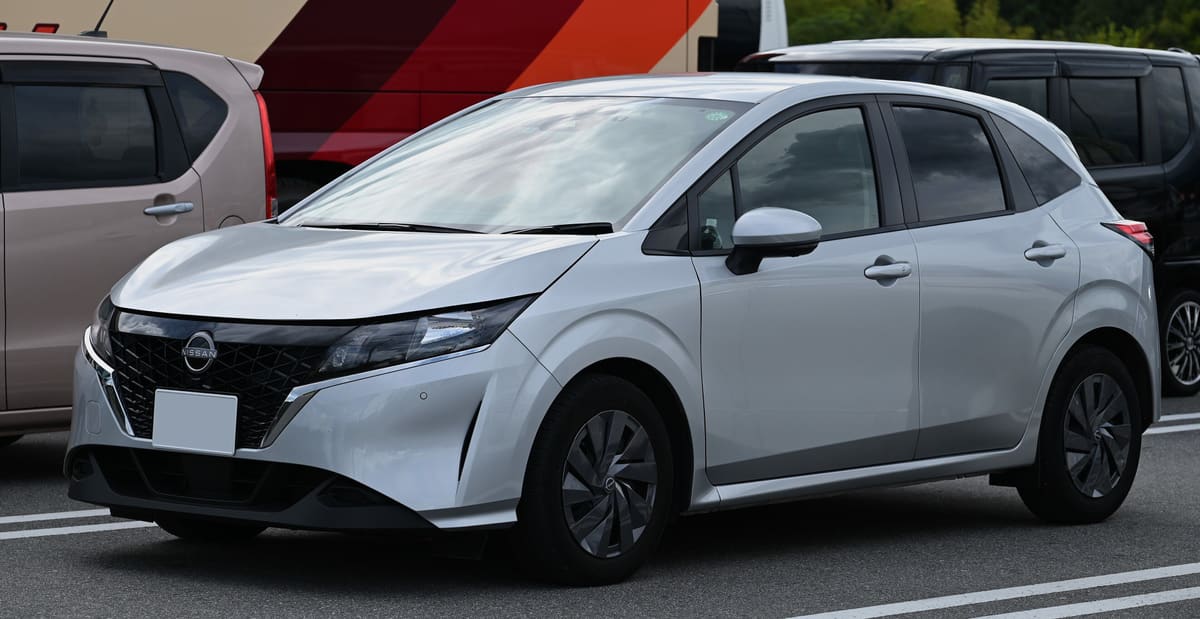
The Nissan Note’s running costs are influenced mainly by its tax band, insurance group, servicing needs, and depreciation. Its efficient engines and compact size generally keep tax and fuel costs reasonable. Insurance varies depending on model and driver profile, while servicing is straightforward without excessive demands. The Note tends to hold value moderately well, reflecting its practical appeal.
Vehicle Tax and Its Impact on Running Costs
The cost of vehicle tax for the Nissan Note depends on the specific engine and fuel type, as the UK tax system bases rates on CO2 emissions and fuel category. Petrol and diesel variants are taxed differently, with lower-emission models benefiting from reduced rates or exemptions. Hybrid versions, if available, may attract lower tax bands due to their cleaner running.
Tax is payable annually and is influenced by the car’s official emissions rating, which varies between trims and model years. Buyers should check the exact tax band for the particular Note they are considering on the official government website. This ensures an accurate understanding of the ongoing tax expense.
Additionally, the Note’s relatively small engine sizes and efficient design typically place it in lower tax brackets compared to larger family cars, making it a cost-effective choice for those mindful of annual tax bills.
Insurance Group and What Affects It
Insurance costs for the Nissan Note are shaped by the model’s insurance group rating, which reflects factors like engine size, repair costs, safety features, and the likelihood of theft or accident claims. The Note often falls into moderate insurance groups, balancing affordability with adequate coverage.
Younger or less experienced drivers may find premiums higher, as insurers consider driver age and history alongside the vehicle’s group. Trim levels with more powerful engines or additional features can push the insurance group up, increasing premiums.
To obtain the most accurate insurance quote, it is advisable to use a comparison service or contact insurers directly with the exact model and trim details. This approach helps reveal how the Note’s insurance costs compare to similar cars in its class.
Servicing and Maintenance Demands
The Nissan Note benefits from a straightforward servicing schedule, typical of compact hatchbacks. Routine maintenance includes oil changes, brake checks, and inspections of key components, which are generally affordable and widely available through Nissan dealerships and independent garages.
Parts for the Note are commonly stocked and reasonably priced, reducing the cost of repairs or replacements. The car’s design does not usually require specialised or frequent servicing beyond standard intervals, which keeps ongoing maintenance manageable.
Owners should follow the manufacturer’s recommended service plan to maintain warranty coverage and ensure reliability. Regular servicing also helps preserve the car’s resale value by demonstrating proper care.
Fuel Efficiency and Running Costs
While exact fuel consumption figures vary by engine and driving conditions, the Nissan Note is known for its economical use of fuel. Its compact size and efficient engine options contribute to lower fuel bills compared to larger vehicles.
Driving style, traffic conditions, and load will affect real-world fuel efficiency, so owners should consider their typical usage when estimating running costs. Hybrid or mild-hybrid versions, if available, can further reduce fuel consumption, especially in urban environments.
Choosing the right trim and engine variant is important, as this influences both fuel economy and tax liability. Prospective buyers should review official fuel economy data for the specific Note they are interested in.
Depreciation and Resale Value
The Nissan Note tends to hold its value moderately well, reflecting its reputation as a practical and reliable small family car. Depreciation rates are influenced by factors such as mileage, condition, service history, and market demand for compact hatchbacks.
Models with comprehensive service records and lower mileage typically command better resale prices. Trim levels with popular features or newer technology may also retain value more effectively.
While depreciation is inevitable, the Note’s affordability and practicality help maintain interest among used car buyers, supporting reasonable resale values over time. Prospective owners should consider this when evaluating total cost of ownership.
Tyres and Running Costs
Tyres for the Nissan Note are generally standard sizes common to compact cars, which helps keep replacement costs down. The choice of tyre can affect fuel economy and ride comfort, so selecting appropriate tyres for the driving environment is important.
Regular tyre maintenance, including correct inflation and alignment, contributes to safety and efficiency, potentially reducing fuel consumption and extending tyre life. Budget-conscious owners can find a range of suitable tyres at varying price points.
Overall, tyre costs are a manageable part of the Note’s running expenses, aligning with its role as an economical urban and family vehicle.
Nissan Note recall record
10 recalls have been issued for the Nissan Note, between 2006 and 2020.
POSSIBLE REDUCED RETENTION FORCE OF THE REAR DOOR CHILD LOCK SWITCH
R/2020/220Issued 14 August 2020
Possible reduced retention force of the Rear Door Child Lock switch.
Remedy:Fit a countermeasure part into the child lock door switch aperture of all potentially affected vehicles.
Affects cars built Sept 2015 to Aug 2016
ABNORMAL DEPLOYMENT OF PASSENGER AIRBAG
R/2017/226Issued 28 November 2017
The subject vehicles are equipped with front passenger�airbag�inflators which could have been assembled with improperly manufactured propellant This could cause the inflator to rupture and the front passenger�airbag�to deploy abnormally in a crash. This could result in increased risk of injury to the occupant.
Remedy:On affected vehicles replace the airbag with a new assembly.
Affects cars built Aug 2005 to Jul 2013
WHEELS MAY LOCK IF ABS IS ACTIVATED
R/2016/273Issued 19 December 2016
It has been identified that due to a manufacturing issue the Anti-lock Braking System (ABS) Actuator Control Unit may have contamination within it. When in use the contamination particle can migrate within the ABS unit and become trapped in a valve. In this condition the ABS may not operate as per design intent in the worst case when the ABS is activated under certain unusual driving conditions the customer may experience wheel lock and the vehicle�s dynamic behaviour would be adversely affected.
Remedy:Recall all affected vehicles to inspect the ABS control unit and where necessary replace it with new component.
Affects cars built Apr 2016 to Apr 2016
ENGINE MAY STALL AND/OR FAIL TO RESTART
R/2016/008Issued 22 February 2016
The engine ignition coil may not be to the correct specification. The internal electrical components of the coil may short circuit resulting in an engine misfire. In the worst case this short circuit may cause a fuse inside the Power Distribution Module (IPDM) to fail stopping power to the ignition relay. In this condition the engine may stall and prevent the customer from being able to restart the engine.
Remedy:Recall the vehicles that are likely to be affected and replace the ignition coil with new.
Affects cars built Aug 2015 to Jan 2016
6 older recalls not shown.
A recall applies to a build range, not to every car of this model. Check a registration to see whether one specific vehicle has an outstanding recall.
Nissan Note MOT record
From 145,933 recorded MOT tests, 28.1% failed.
| Registered | Tests | Failed | Median mileage |
|---|---|---|---|
| 2017 | 5,134 | 13.9% | 44,117 mi |
| 2016 | 10,644 | 13.6% | 47,002 mi |
| 2015 | 14,851 | 16.2% | 55,906 mi |
| 2014 | 21,621 | 21.1% | 63,664 mi |
| 2013 | 11,698 | 27.8% | 70,658 mi |
| 2012 | 11,420 | 32.4% | 75,215 mi |
| 2011 | 11,539 | 33.4% | 82,834 mi |
| 2010 | 13,390 | 34.2% | 88,835 mi |
Most common reasons for failure
- A suspension pin, bush or joint excessively worn39.3%
- Tyre tread depth not in accordance with the requirements21.0%
- A spring or spring component fractured or seriously weakened17.4%
- A tyre seriously damaged12.9%
- The aim of a headlamp is not within limits laid down in the requirements9.3%
Figures cover every Nissan Note tested in the DVSA dataset, not this specific car. Check a registration for the actual history of one vehicle.
Frequently asked questions
What should I check to keep the Nissan Note's engine running efficiently?
Regularly inspect the air filter and replace it if clogged, as a dirty air filter can reduce fuel efficiency. Also, keep an eye on the engine oil level and quality, changing it according to the service schedule to protect the engine components.
Are there any warning lights specific to the Nissan Note that affect running costs?
The check engine light can indicate issues with the catalytic converter or oxygen sensors, which impact fuel consumption. If this light appears, have the car diagnosed promptly to avoid higher running costs from inefficient combustion.
How often should I service the Nissan Note to avoid expensive repairs?
Following the manufacturer’s recommended service intervals is key. This usually involves oil changes, brake fluid checks, and inspecting the timing chain tensioner to prevent engine damage. Regular servicing helps maintain parts like the alternator and starter motor in good condition.
Does the Nissan Note require any special maintenance for its hybrid system?
If you have a hybrid version, the battery management system and inverter coolant levels should be checked during servicing. These components are crucial for smooth hybrid operation and avoiding costly repairs related to the electric drive system.
What are signs that the Nissan Note’s brakes need attention?
Listen for squealing noises or feel a spongy brake pedal, which often indicate worn brake pads or air in the brake lines. Replacing brake pads and bleeding the brakes are typical garage jobs to maintain safe stopping and avoid damage to discs.
How can I monitor tyre wear on the Nissan Note to keep running costs down?
Check the tread depth regularly and look for uneven wear patterns, which might suggest alignment issues or suspension wear. Maintaining correct tyre pressure also helps improve fuel efficiency and extends tyre life.
Is there anything specific to the Nissan Note’s transmission that affects running costs?
For models with CVT transmissions, listen for unusual whining noises or hesitation during acceleration. Regularly checking the transmission fluid condition and level can prevent premature wear of the belt and pulleys inside the CVT.
What should I do if the Nissan Note’s battery keeps losing charge?
Check the condition of the 12-volt battery terminals for corrosion and ensure the alternator is charging correctly. A failing alternator diode or worn battery cells can cause repeated battery drain, leading to unexpected breakdowns.
Sources
- DVSA anonymised MOT tests and results (Open Government Licence v3.0)
- DVSA vehicle safety recalls (Open Government Licence v3.0)