Running costs
Mitsubishi ASX running costs: what UK ownership really costs
Mitsubishi ASX UK running costs: fuel or electric, insurance group, road tax, servicing and depreciation.
Updated 6th October 2026 DVSA data: Across 28,531 recorded MOT tests, 21.7% failed.
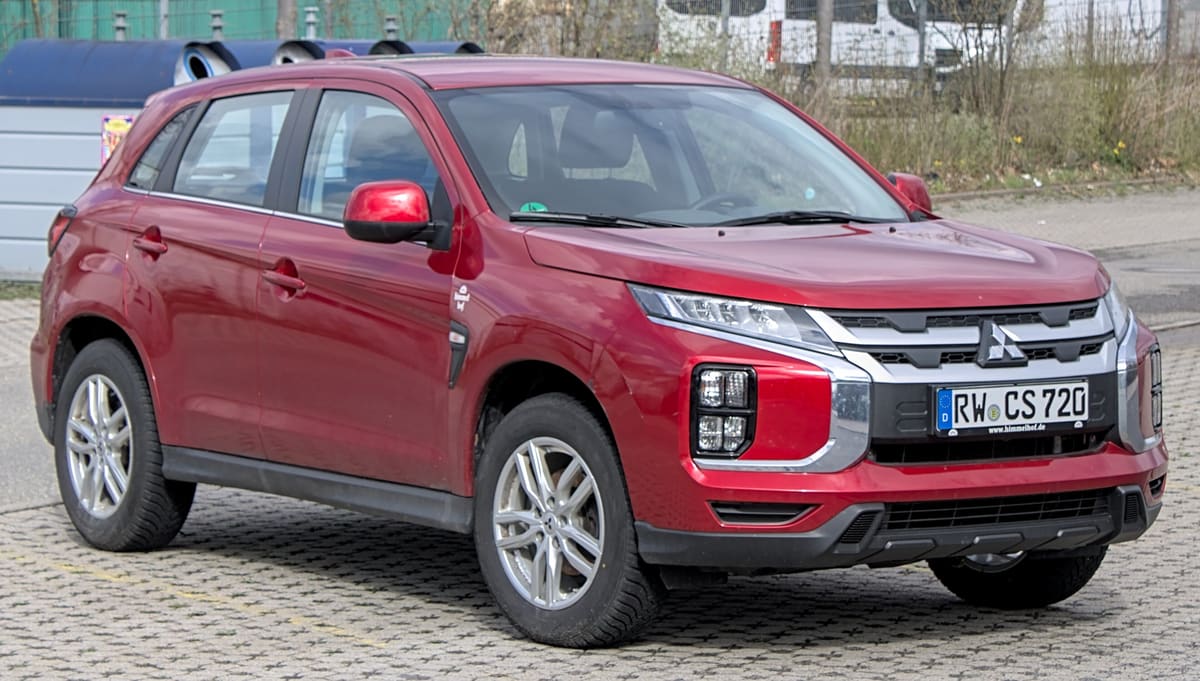
The Mitsubishi ASX’s running costs are influenced by taxation based on emissions and engine size, insurance group ratings reflecting its safety and repair costs, routine servicing demands typical of compact SUVs, and its ability to retain value in a competitive market. Understanding these factors helps owners anticipate expenses and compare the ASX with similar vehicles.
Vehicle Taxation and Its Impact on Running Costs
The cost of vehicle tax for the Mitsubishi ASX depends primarily on its CO2 emissions and engine size, as outlined by the UK government’s vehicle tax system. Cars with lower emissions benefit from reduced tax rates, while higher-emission models attract increased charges. This structure encourages choosing more efficient versions to keep annual tax bills manageable.
For petrol and diesel variants, the tax bands are set according to the emissions figures declared for each model and trim. Hybrid or plug-in hybrid versions may qualify for lower or even zero tax in the first year, with subsequent years typically attracting a standard rate. It is essential to check the exact tax band for the specific ASX trim under consideration, as this can vary significantly.
The government’s official website provides a detailed breakdown of current vehicle tax rates and bands, helping prospective buyers and owners estimate their yearly tax obligations. This transparency allows for better budgeting and comparison with other vehicles in the same segment.
Insurance Group Ratings and Their Influence
Insurance costs for the Mitsubishi ASX are affected by its assigned insurance group, which reflects factors such as repair costs, safety features, and the likelihood of theft or accident claims. The ASX generally falls into mid-range insurance groups, balancing its compact SUV appeal with moderate repair expenses.
The vehicle’s safety equipment and crash test performance contribute positively to its insurance rating, potentially lowering premiums compared to less well-equipped rivals. However, factors such as engine size, power output, and the cost of replacement parts can push the insurance group higher, increasing premiums.
Drivers should obtain personalised insurance quotes to understand how their circumstances, including location, driving history, and chosen cover level, impact the cost. Insurance comparison websites offer quick access to multiple quotes, helping to identify the most cost-effective options for the ASX.
Servicing and Maintenance Demands
Routine servicing for the Mitsubishi ASX follows a schedule typical of compact SUVs, involving regular oil changes, brake inspections, and checks on essential systems. The frequency and extent of servicing depend on the engine type, mileage, and driving conditions, with some trims requiring more frequent attention.
Mitsubishi’s reputation for reliability means that the ASX generally does not demand excessive maintenance, but owners should be prepared for standard wear items such as tyres, brake pads, and filters. Using authorised service centres ensures access to genuine parts and manufacturer expertise, which can help maintain the vehicle’s condition and resale value.
Costs for servicing can vary depending on the dealer or independent garage chosen, so it is advisable to compare prices and consider service packages or extended warranties. Keeping up with scheduled maintenance is key to avoiding costly repairs and preserving the vehicle’s performance.
Fuel Economy and Its Role in Running Costs
While exact fuel consumption figures vary by model and driving style, the Mitsubishi ASX’s fuel economy is broadly in line with other compact SUVs. Engine choice and transmission type influence efficiency, with smaller engines and manual gearboxes typically offering better economy.
Driving habits and conditions also play a significant role in fuel costs. Urban stop-start traffic tends to increase consumption, whereas steady motorway driving can improve efficiency. Hybrid variants, if available, may offer reduced fuel consumption in certain scenarios, further lowering running costs.
Owners should consider fuel prices and their expected mileage when evaluating the ASX’s running costs. Comparing fuel economy across trims and with competitor models provides a clearer picture of potential expenses over time.
Residual Values and Depreciation
The Mitsubishi ASX’s residual value is shaped by factors including brand perception, reliability, and market demand for compact SUVs. While depreciation is inevitable, the ASX tends to hold its value reasonably well within its segment, aided by Mitsubishi’s reputation for durability.
Trim level, condition, mileage, and service history all influence resale prices. Well-maintained examples with full service records typically command higher prices on the used market. Features such as advanced safety equipment or popular colour options can also enhance desirability.
Prospective buyers should review current market listings to gauge the ASX’s depreciation rate and compare it with similar vehicles. Understanding how quickly the car loses value helps in making informed decisions about purchase timing and ownership duration.
Mitsubishi ASX recall record
13 recalls have been issued for the Mitsubishi ASX, between 2012 and 2024.
Mitsubishi ASX Exhaust
R/2024/416Issued 2 December 2024
On affected vehicles a crack may occur at the welded joint of rear muffler to tail pipe resulting in potential detachment of the tail pipe.
Remedy:Replace muffler with a muffler fitted with a reinforcement bracket.
Affects cars built Jan 2011 to Dec 2019
INAPPROPRIATE ECU PROGRAM FOR THE BATTERY DETERIORATION JUDGMENT (STATE OF CHARGE)
R/2018/347Issued 8 January 2019
Inappropriate ECU program for battery deterioration judgement.
Remedy:Reprogram the software with the countermeasure software.
Affects cars built Jun 2010 to Sept 2011
THE BRAKE HYDRAULIC UNIT FUNCTION MAY BE INTERRUPTED
R/2018/285Issued 3 November 2018
Driver assist programme functions through the hydraulic brake unit may be interrupted.
Remedy:The ECU will be rewritten with modified software.
Affects cars built Sept 2017 to Mar 2018
WHERE TAIL PIPE IS WELDED TO THE EXHAUST SILENCER A CRACK MAY APPEAR
R/2018/247Issued 12 October 2018
Exhaust tailpipe section may crack at silencer weld.
Remedy:Check and replace silencer if cracked. Fit support bracket if not cracked.
Affects cars built Jun 2010 to Oct 2017
9 older recalls not shown.
A recall applies to a build range, not to every car of this model. Check a registration to see whether one specific vehicle has an outstanding recall.
Mitsubishi ASX MOT record
From 28,531 recorded MOT tests, 21.7% failed.
| Registered | Tests | Failed | Median mileage |
|---|---|---|---|
| 2021 | 497 | 7.4% | 32,440 mi |
| 2020 | 1,467 | 7.8% | 33,139 mi |
| 2019 | 1,581 | 8.5% | 39,628 mi |
| 2018 | 2,173 | 13.0% | 49,637 mi |
| 2017 | 3,941 | 17.8% | 58,821 mi |
| 2016 | 3,153 | 18.5% | 68,000 mi |
| 2015 | 4,434 | 21.8% | 76,540 mi |
| 2014 | 3,641 | 27.8% | 86,008 mi |
Most common reasons for failure
- Brake pipe damaged or excessively corroded25.3%
- Tyre tread depth not in accordance with the requirements24.6%
- A suspension pin, bush or joint excessively worn20.9%
- a brake lining or pad worn below 1.5mm17.1%
- Brake disc or drum excessively weakened, insecure or fractured12.2%
Figures cover every Mitsubishi ASX tested in the DVSA dataset, not this specific car. Check a registration for the actual history of one vehicle.
Frequently asked questions
What should I check to keep the Mitsubishi ASX’s engine running efficiently?
Regularly inspect the air filter for dirt and debris, as a clogged air filter can reduce engine performance and increase fuel consumption. Changing the spark plugs at recommended intervals also helps maintain smooth running and prevents misfires.
How often does the Mitsubishi ASX require brake pad replacement?
Brake pads on the ASX typically need replacing when you hear a squealing noise or feel reduced braking responsiveness. A garage can measure the pad thickness during routine servicing to advise if replacement is necessary.
Are there any warning lights specific to the Mitsubishi ASX that affect running costs?
The ASX features a tyre pressure monitoring system warning light that alerts you to low tyre pressure. Driving with underinflated tyres increases fuel consumption and tyre wear, so it’s important to check and adjust pressures regularly.
What maintenance tasks help control the Mitsubishi ASX’s fuel consumption?
Keeping the tyre pressures at the manufacturer’s recommended levels and ensuring the fuel injectors are clean can improve fuel efficiency. A dirty fuel injector may cause rough idling or hesitation, which can increase running costs over time.
Does the Mitsubishi ASX have any components that require frequent replacement to avoid costly repairs?
The timing belt is a critical component that should be replaced according to the service schedule. Failure to replace it can lead to engine damage, resulting in expensive repairs. Always check the service history to confirm timing belt changes.
What should I look out for in the Mitsubishi ASX’s suspension to avoid increased running costs?
Listen for knocking noises over bumps or uneven tyre wear, which may indicate worn suspension bushes or shock absorbers. Faulty suspension parts can affect handling and cause premature tyre replacement.
How can I check if the Mitsubishi ASX’s battery is in good condition?
Look for corrosion on the battery terminals and check if the engine struggles to start, especially in cold weather. A garage can perform a battery load test to assess its health and avoid unexpected breakdowns.
Is there anything specific about the Mitsubishi ASX’s transmission that affects running costs?
For models with a CVT transmission, it’s important to have the transmission fluid changed at intervals recommended by Mitsubishi. Neglecting this can lead to slipping or jerking, which increases wear and potential repair bills.
Sources
- DVSA anonymised MOT tests and results (Open Government Licence v3.0)
- DVSA vehicle safety recalls (Open Government Licence v3.0)