2019 to 2024 problems
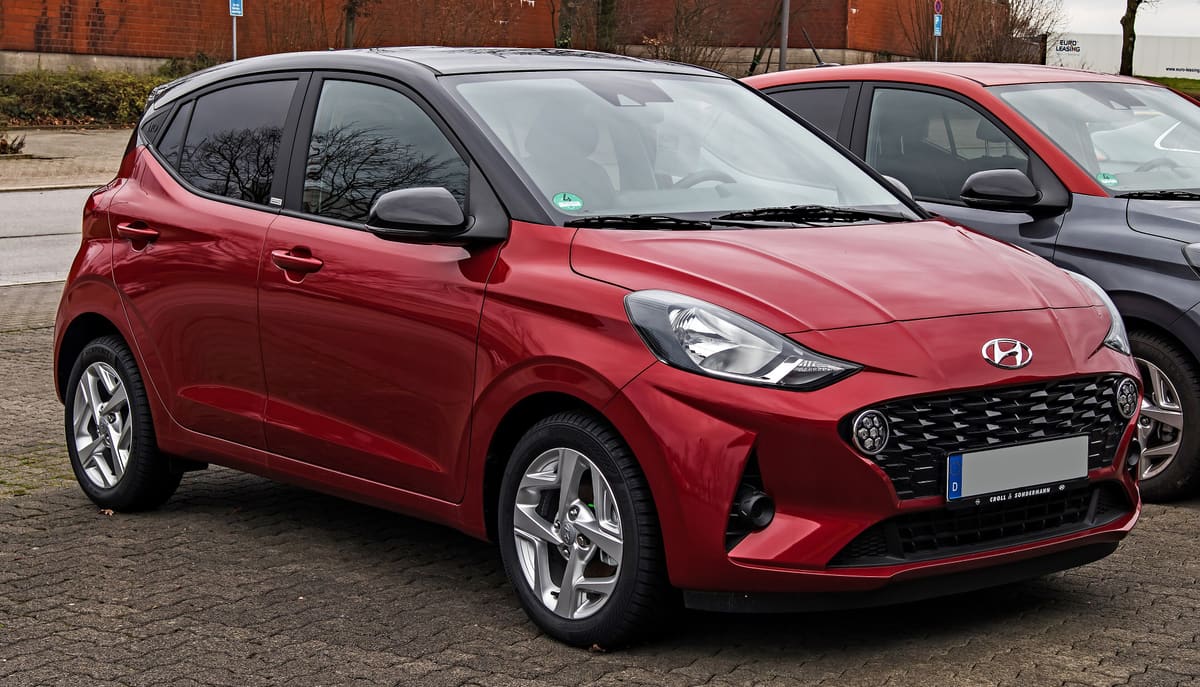
Hyundai i10 2019 to 2024: common problems and what to know
What goes wrong on the 2019 to 2024 Hyundai i10, what owners report and what to check before you buy one.
Updated 22nd June 2026 DVSA data: Across 247,537 recorded MOT tests, 21.0% failed.
TL;DR
The 2019 to 2024 Hyundai i10 is generally reliable but has reported issues with the clutch, gearbox, and electrical systems. It is a solid choice for a small car, but potential buyers should be aware of these common problems.
Key facts callout
- Common problems include clutch wear and gearbox issues.
- Electrical failures, such as power steering and ignition switch malfunctions, have been reported.
- The 1.0-litre and 1.2-litre engines are known for their reliability.
- The N Line trim offers a sportier option with additional features.
Engine and gearbox
The 2019 to 2024 Hyundai i10 features two petrol engine options: a 1.0-litre and a 1.2-litre. Both engines are known for their reliability, but some owners report premature clutch wear, leading to difficulties in engaging gears, especially when reversing. Gearbox issues, including stiffness and difficulty shifting, have also been noted by a few drivers. It is advisable to check the clutch and gearbox performance thoroughly during a test drive.
Electrics and electronics
Electrical problems have been reported by some i10 owners. Instances of power steering failure can lead to steering difficulties, particularly at low speeds. Ignition switch malfunctions may cause the car to fail to start or experience intermittent starting problems. These electrical faults can be frustrating and potentially costly to repair, so ensure that all electronic features are functioning correctly before purchasing.
Body and suspension
The i10’s body and suspension are generally well-regarded, with robust build quality that holds up over time. However, some owners have reported issues with rear brake pads sticking to the discs, leading to uneven wear and reduced braking efficiency. While the suspension is designed for comfort, some drivers note it can feel firm over rough surfaces, which is something to consider if you frequently drive on bumpy roads.
What people are asking
What is the common problem with the Hyundai i10?
Common problems include clutch and gearbox issues, as well as various electrical faults.
Is the 2019 Hyundai i10 reliable?
Yes, the Hyundai i10 is generally reliable, with its engines proving dependable.
What is the most common problem with Hyundais?
The most common problem faced by Hyundai cars is engine knocking and failure, although this is less prevalent in the i10.
Which is the best Hyundai i10 to buy?
Currently, the highest-spec i10 is the N Line trim, which offers a sportier design and additional features.
What owners say
Many appreciate its compact size, fuel efficiency, and ease of parking. However, some users have expressed frustration over the reported clutch and electrical issues. Overall, while there are some concerns, many owners still recommend the i10 for its value and reliability. Owner reports indicates a generally positive experience with the i10.
Should you buy a 2019 to 2024 Hyundai i10?
The 2019 to 2024 Hyundai i10 is a solid choice for those seeking a reliable and compact city car. While there are common issues, particularly with the clutch and electrical systems, the overall reliability of the engine and the car’s practicality make it a worthwhile option. If you can find a well-maintained model with a good service history, the i10 could serve you well for years to come. Be sure to conduct a thorough inspection and test drive to ensure you are making a sound investment.
Hyundai i10 recall record
4 recalls have been issued for the Hyundai i10, between 2022 and 2026.
The vehicle fuel pump may have an internal malfunction which may fail over time.
R/2026/093Issued 6 April 2026
The vehicle fuel pump may have an internal malfunction which may fail over time. The malfunction indicator light MIL on the vehicle instrument cluster may illuminate when this symptom occurs and if ignored and the vehicle continues to be driven the vehicle may lose motive power.
Remedy:The affected vehicles will have the fuel pump replaced as a permanent solution
Affects cars built Nov 2021 to Apr 2023
The fuel tank may have been produced with a manufacturing defect which may result in fuel leakage in a limited number of vehicles
R/2025/273Issued 29 September 2025
The fuel tank may have been produced with a manufacturing defect which may result in fuel leakage in a limited number of vehicles
Remedy:The fuel tank will be replaced to correct the potential concern.
Affects cars built Oct 2025 to Oct 2025
The vehicle exhaust gas recirculation valve may have an internal short circuit which in some cases may result in the vehicle engine stalling.
R/2024/490Issued 20 January 2025
The vehicle exhaust gas recirculation valve may have an internal short circuit which in some cases may result in the vehicle engine stalling.
Remedy:Affected vehicles will have the exhaust gas recirculation valve replaced
Affects cars built Mar 2024 to May 2024
VEHICLES FITTED WITH A REAR RIGHT SEAT BELT PRETENSIONER MAY EXPERIENCE ABNORMAL PERFORMANCE OF THE PRETENSIONER DURING DEPLOYMENT
R/2022/163Issued 27 June 2022
Vehicles fitted with a rear right seat belt pretensioner within the affected production range may experience abnormal performance of the pretensioner during deployment
Remedy:Inspect the bar code on the rear right hand seatbelt assembly and replace if found within the affected production range with a countermeasure part.
Affects cars built Sept 2020 to Oct 2020
A recall applies to a build range, not to every car of this model. Check a registration to see whether one specific vehicle has an outstanding recall.
Hyundai i10 MOT record
From 247,537 recorded MOT tests, 21.0% failed.
| Registered | Tests | Failed | Median mileage |
|---|---|---|---|
| 2023 | 440 | 8.2% | 14,132 mi |
| 2022 | 8,479 | 11.2% | 14,881 mi |
| 2021 | 7,920 | 11.2% | 18,870 mi |
| 2020 | 6,256 | 9.8% | 21,610 mi |
| 2019 | 17,810 | 13.0% | 28,574 mi |
| 2018 | 20,801 | 14.7% | 33,928 mi |
| 2017 | 23,372 | 14.0% | 39,843 mi |
| 2016 | 21,830 | 15.2% | 42,434 mi |
Most common reasons for failure
- Tyre tread depth not in accordance with the requirements29.1%
- A tyre seriously damaged25.4%
- Brake pipe damaged or excessively corroded18.1%
- Brake disc or drum excessively weakened, insecure or fractured14.3%
- a brake lining or pad worn below 1.5mm13.1%
Figures cover every Hyundai i10 tested in the DVSA dataset, not this specific car. Check a registration for the actual history of one vehicle.
Hyundai i10 official figures
Median across 20 variants on sale, petrol.
- Combined economy
- 52.3 mpg
- WLTP median across variants
- CO2 emissions
- 123 g/km
- Sets the first-year tax rate
Official figures for new cars. Real economy varies with driving, load and conditions.
Frequently asked questions
What is the common problem with the Hyundai i10?
Common issues include clutch and gearbox problems, as well as various electrical faults.
Is the 2019 Hyundai i10 reliable?
Yes, the Hyundai i10 is generally reliable, with its engines proving dependable.
Sources
- DVSA anonymised MOT tests and results (Open Government Licence v3.0)
- VCA new car fuel consumption and emissions data (Open Government Licence v3.0)
- DVSA vehicle safety recalls (Open Government Licence v3.0)