Running costs
Ford Ranger running costs: what UK ownership really costs
Ford Ranger UK running costs: fuel or electric, insurance group, road tax, servicing and depreciation.
Updated 4th September 2026 DVSA data: Across 120,895 recorded MOT tests, 22.6% failed.
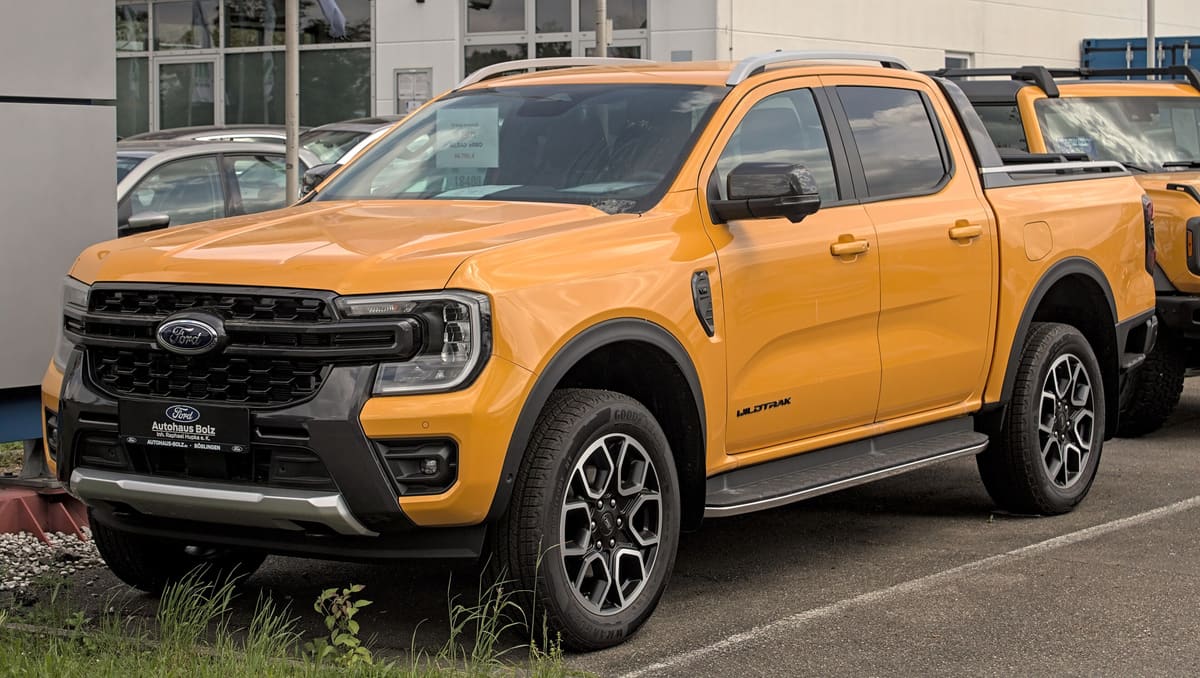
Insurance groups vary from 33 to 40, while road tax falls into bands C to F. Servicing intervals are typically every 12 months or 12,500 miles, and depreciation is moderate, averaging around 30% over three years.
Fuel Costs
The Ford Ranger’s fuel economy is a significant factor in its running costs. Depending on the engine variant, the Ranger can achieve between 30 and 40 miles per gallon. The most economical models, particularly those with smaller engines, tend to offer better fuel efficiency, making them more appealing for frequent long-distance driving.
The diesel engines are generally more fuel-efficient than petrol options, which is important for those using the vehicle for work purposes. Additionally, the choice between manual and automatic transmissions can also affect fuel consumption, with manuals often providing slightly better economy.
Insurance Groups
Insurance costs for the Ford Ranger can vary widely based on the model and trim level. The insurance groups range from 33 to 40, with higher-spec models naturally falling into the more expensive categories. This means that owners should consider their insurance options carefully when selecting a model, as premiums can significantly impact overall running costs.
It is advisable to obtain quotes from multiple insurers to find the best deal. Factors such as the driver’s age, driving history, and location will also influence insurance premiums, so it is worth shopping around to ensure the best coverage at a competitive price.
Road Tax
Road tax for the Ford Ranger is determined by its CO2 emissions, which can vary between models.
Choosing a model with lower emissions can help reduce tax costs, making it an important consideration for potential buyers. Additionally, the Ranger’s robust build and off-road capabilities mean that it is often used in more demanding environments, which can lead to increased wear and tear and potentially higher tax costs for commercial users.
Servicing Intervals
Regular servicing is crucial for maintaining the Ford Ranger’s performance and reliability. The recommended servicing interval is every 12 months or 12,500 miles, whichever comes first. This schedule helps ensure that the vehicle remains in optimal condition, reducing the likelihood of costly repairs down the line.
Servicing costs can vary depending on the dealership or independent garage chosen, as well as the specific services required. Routine maintenance typically includes oil changes, filter replacements, and checks on essential systems such as brakes and suspension. Owners should budget for these regular costs to keep the Ranger running smoothly.
Depreciation
Depreciation is an important consideration for any vehicle owner, and the Ford Ranger is no exception. On average, the Ranger experiences a depreciation rate of around 30% over the first three years. This is relatively moderate compared to other vehicles in the same category, making it a sensible choice for those looking to retain value over time.
Factors influencing depreciation include mileage, condition, and market demand. The Ranger’s reputation for durability and reliability can help mitigate depreciation, as buyers often seek out well-maintained used models. Keeping the vehicle in good condition and maintaining service records can further enhance resale value.
Conclusion
Overall, the Ford Ranger presents a balanced approach to running costs, with reasonable fuel efficiency, manageable insurance premiums, and predictable servicing intervals. While depreciation is a factor to consider, the Ranger’s strong build quality and reliability can help maintain its value over time. For those in need of a capable pickup, the Ranger remains a practical choice in the UK market.
Ford Ranger recall record
41 recalls have been issued for the Ford Ranger, between 1999 and 2026.
26S35 – Ranger – Engine failure
R/2026/289Issued 31 August 2026
On affected vehicles it may be possible that one or more engine camshaft roller finger followers were not properly installed at the time of assembly. An improperly installed camshaft roller finger follower may result in engine failure resulting in a no-start condition or a loss of motive power.
Remedy:Replace the engine.
Affects cars built Mar 2025 to Mar 2025
26S10 - Kuga Ranger - Potential Exhaust Gas Recirculation Valve Failure
R/2026/160Issued 27 August 2026
On affected vehicles the Exhaust Gas Recirculation (EGR) valve may fail leading to weak acceleration engine vibration a no start condition or a loss of power.
Remedy:Replace the EGR valve.
Affects cars built Feb 2025 to Mar 2025
26S19 Ranger PHEV - High Voltage Battery Tray Retaining Bracket Replacement
R/2026/123Issued 22 June 2026
Affected vehicles may experience a fracture of the High Voltage Battery front mounting bracket lower legs potentially causing the battery to drop onto the chassis frame.
Remedy:Replace the High Voltage Battery which contains the retaining brackets
Affects cars built Aug 2025 to Aug 2025
25S19 Ranger – Automatic Transmission no reverse
R/2026/174Issued 8 May 2026
Ford constantly monitors production processes and vehicles in service. While monitoring vehicles in operation we have become aware of a number of Ranger automatic transmission vehicles where you may experience no reverse motion when the gear selector is placed in reverse due to a potential issue with the transmission main control valve body. The Malfunction Indicator Light (MIL) and Wrench light will illuminate when this malfunction occurs. The vehicle could roll forward despite the gear selector being in the reverse position depending on where parked. Unexpected vehicle motion can increase the risk of a crash.
Remedy:Replace the transmission main control valve body
Affects cars built Mar 2025 to Mar 2025
37 older recalls not shown.
A recall applies to a build range, not to every car of this model. Check a registration to see whether one specific vehicle has an outstanding recall.
Ford Ranger MOT record
From 120,895 recorded MOT tests, 22.6% failed.
| Registered | Tests | Failed | Median mileage |
|---|---|---|---|
| 2023 | 499 | 10.0% | 35,262 mi |
| 2022 | 14,896 | 13.7% | 40,379 mi |
| 2021 | 15,748 | 17.1% | 50,511 mi |
| 2020 | 11,254 | 19.7% | 57,248 mi |
| 2019 | 13,959 | 20.2% | 66,410 mi |
| 2018 | 13,584 | 21.9% | 74,688 mi |
| 2017 | 10,294 | 22.2% | 80,785 mi |
| 2016 | 10,086 | 22.9% | 87,459 mi |
Most common reasons for failure
- Tyre tread depth not in accordance with the requirements31.3%
- A spring or spring component fractured or seriously weakened24.4%
- A suspension pin, bush or joint excessively worn15.4%
- Brake pipe damaged or excessively corroded15.2%
- a brake lining or pad worn below 1.5mm13.7%
Figures cover every Ford Ranger tested in the DVSA dataset, not this specific car. Check a registration for the actual history of one vehicle.
Frequently asked questions
How often does a Ford Ranger need servicing?
A Ford Ranger typically requires a service every 12 months or 12,500 miles, whichever comes first. Regular maintenance includes oil changes, air filter replacements, and checks on the brake system to ensure optimal performance.
What are common maintenance costs for a Ford Ranger?
Maintenance costs can include routine items like brake pad replacements, which may need attention every 20,000 to 30,000 miles. Additionally, a timing belt change for certain models can be a significant expense, often recommended around 100,000 miles.
How reliable is the Ford Ranger?
The Ford Ranger is generally considered reliable, with many owners reporting few issues. However, some models, particularly from 2012-2015, have had reports of electrical issues, such as problems with the central locking system.
Sources
- DVSA anonymised MOT tests and results (Open Government Licence v3.0)
- DVSA vehicle safety recalls (Open Government Licence v3.0)