Running costs
Ford Kuga running costs: what UK ownership really costs
Ford Kuga UK running costs: fuel or electric, insurance group, road tax, servicing and depreciation.
Updated 4th September 2026 DVSA data: Across 309,002 recorded MOT tests, 16.3% failed.
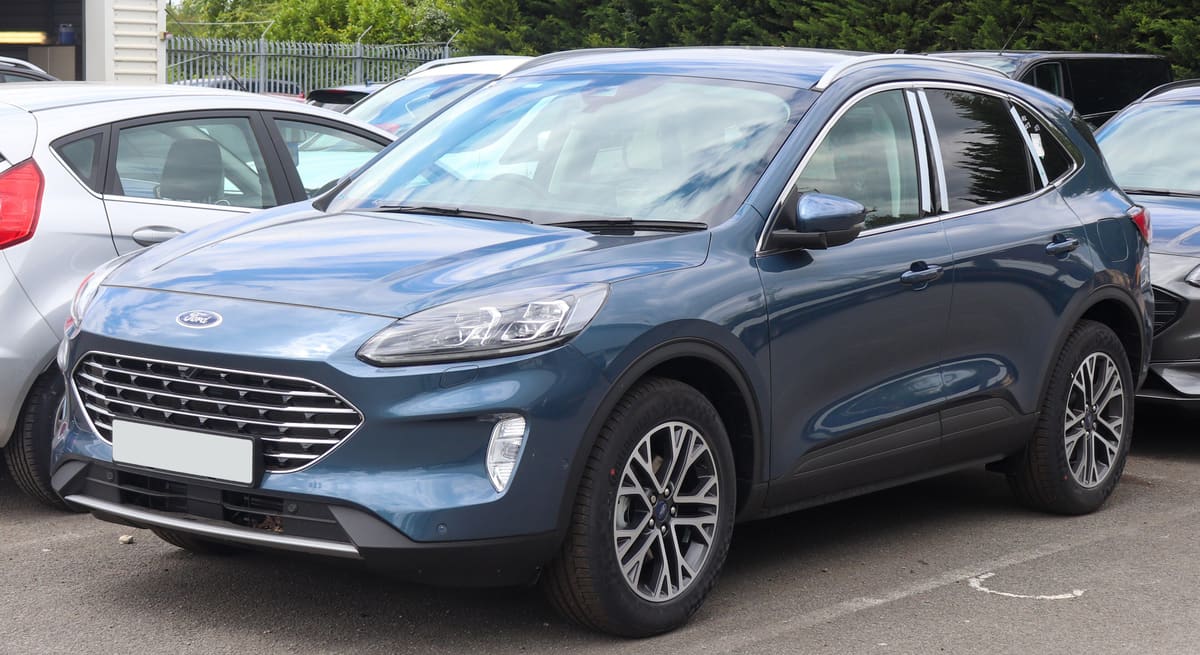
The Ford Kuga offers reasonable running costs for a compact SUV, with fuel efficiency varying by engine type, insurance groups ranging from 18 to 30, and tax bands depending on emissions. Servicing intervals are typically every 12 months or 12,500 miles, while depreciation can be moderate, making it a practical choice for many drivers.
Fuel Costs
The fuel costs for the Ford Kuga depend largely on the engine choice. The petrol variants generally offer lower fuel efficiency compared to diesel options, with the latter providing better miles per gallon (MPG).
For hybrid and plug-in hybrid models, the running costs can be significantly reduced, especially if you frequently charge the vehicle and use electric power for short journeys. The electric-only range of the plug-in hybrid can be beneficial for urban driving, reducing reliance on petrol or diesel.
Insurance Groups
Insurance for the Ford Kuga varies by model and engine size, with groups ranging from 18 to 30. Generally, the lower the insurance group, the cheaper the premiums. The entry-level models tend to fall into the lower groups, making them more affordable for younger or first-time drivers.
Higher-spec models with more powerful engines and additional features will usually fall into the higher insurance groups. It’s advisable to compare quotes from various insurers to find the best deal, as premiums can differ significantly based on individual circumstances.
Tax Bands
Vehicle Excise Duty (VED), commonly known as road tax, is determined by the CO2 emissions of the Ford Kuga. The tax bands range from A to M, with lower emissions resulting in lower tax costs.
Conversely, higher-emission models will incur higher tax costs, which can be a significant factor to consider when choosing a model. The introduction of new tax regulations can also affect the costs, so it’s wise to stay informed about any changes that may impact ownership costs.
Servicing Intervals
Regular maintenance is crucial to keep the vehicle running efficiently and to avoid costly repairs down the line.
During servicing, essential checks are performed on the engine, brakes, tyres, and other critical components. It’s recommended to follow the manufacturer’s service schedule closely, as this can help maintain the vehicle’s warranty and resale value.
Typical Depreciation
Depreciation for the Ford Kuga is moderate compared to other vehicles in its class. On average, a Kuga may lose around 40-50% of its value over the first three years of ownership. Factors influencing depreciation include mileage, condition, and market demand.
Choosing a popular model with desirable features can help mitigate depreciation. Additionally, maintaining the vehicle well and keeping service records can enhance its resale value when it comes time to sell or trade in.
Conclusion
Overall, the Ford Kuga presents a balanced option for those considering a compact SUV. With reasonable running costs in terms of fuel, insurance, tax, servicing, and depreciation, it remains a practical choice for many UK drivers. Understanding these aspects can aid in making an informed decision about ownership and budgeting for the future.
Ford Kuga recall record
39 recalls have been issued for the Ford Kuga, between 2009 and 2026.
26S10 - Kuga Ranger - Potential Exhaust Gas Recirculation Valve Failure
R/2026/160Issued 27 August 2026
On affected vehicles the Exhaust Gas Recirculation (EGR) valve may fail leading to weak acceleration engine vibration a no start condition or a loss of power.
Remedy:Replace the EGR valve.
Affects cars built Feb 2025 to Jun 2025
Multi Vehicle Line: Unintended High Beam Behaviour - Compliance
R/2026/268Issued 30 June 2026
Affected vehicles may experience erratic behaviour of the Glare Free High Beam function under certain circumstances.
Remedy:Update the Advanced Driver Assistance Systems Electronic Control Unit software.
Affects cars built Sept 2025 to Apr 2026
Transit Courier: Diesel DV-Neo Engine Coolant Pump Update
R/2026/237Issued 15 June 2026
Affected vehicles may have been repaired using a coolant pump with a potential issue. This issue may lead to incorrect engine timing resulting in an engine failure causing a sudden loss of power without prior warning. The engine cannot be restarted.
Remedy:Check and replace the water pump and timing belt if necessary.
Affects cars built Mar 2020 to Mar 2020
Multi Vehicle Line (MVL): Telecommunications Control Module (TCU) loss of Function Software Update
R/2026/181Issued 5 May 2026
Affected vehicles may experience a loss of emergency call system (eCall) functionality which impacts both automatic and manual eCall events.
Remedy:Update the Telematics Control Unit software to the latest level.
Affects cars built Dec 2019 to Feb 2022
35 older recalls not shown.
A recall applies to a build range, not to every car of this model. Check a registration to see whether one specific vehicle has an outstanding recall.
Ford Kuga MOT record
From 309,002 recorded MOT tests, 16.3% failed.
| Registered | Tests | Failed | Median mileage |
|---|---|---|---|
| 2023 | 1,360 | 4.5% | 19,693 mi |
| 2022 | 25,862 | 6.3% | 24,371 mi |
| 2021 | 20,165 | 8.9% | 33,046 mi |
| 2020 | 15,257 | 11.0% | 37,263 mi |
| 2019 | 40,019 | 12.0% | 43,669 mi |
| 2018 | 37,871 | 12.3% | 52,688 mi |
| 2017 | 36,377 | 13.5% | 62,534 mi |
| 2016 | 32,916 | 17.1% | 71,065 mi |
Most common reasons for failure
- Tyre tread depth not in accordance with the requirements35.9%
- a brake lining or pad worn below 1.5mm21.6%
- A tyre seriously damaged17.0%
- A suspension pin, bush or joint excessively worn14.8%
- Brake disc or drum excessively weakened, insecure or fractured10.7%
Figures cover every Ford Kuga tested in the DVSA dataset, not this specific car. Check a registration for the actual history of one vehicle.
Frequently asked questions
Are there any specific maintenance issues to watch for?
Drivers should keep an eye on the dual-clutch transmission in the 2019 Ford Kuga, as it can exhibit symptoms like rough shifting or hesitation. Regular fluid changes can help mitigate these issues.
Sources
- DVSA anonymised MOT tests and results (Open Government Licence v3.0)
- DVSA vehicle safety recalls (Open Government Licence v3.0)