Running costs
Ford EcoSport running costs: what UK ownership really costs
Ford EcoSport UK running costs: fuel or electric, insurance group, road tax, servicing and depreciation.
Updated 4th September 2026 DVSA data: Across 109,955 recorded MOT tests, 16.4% failed.
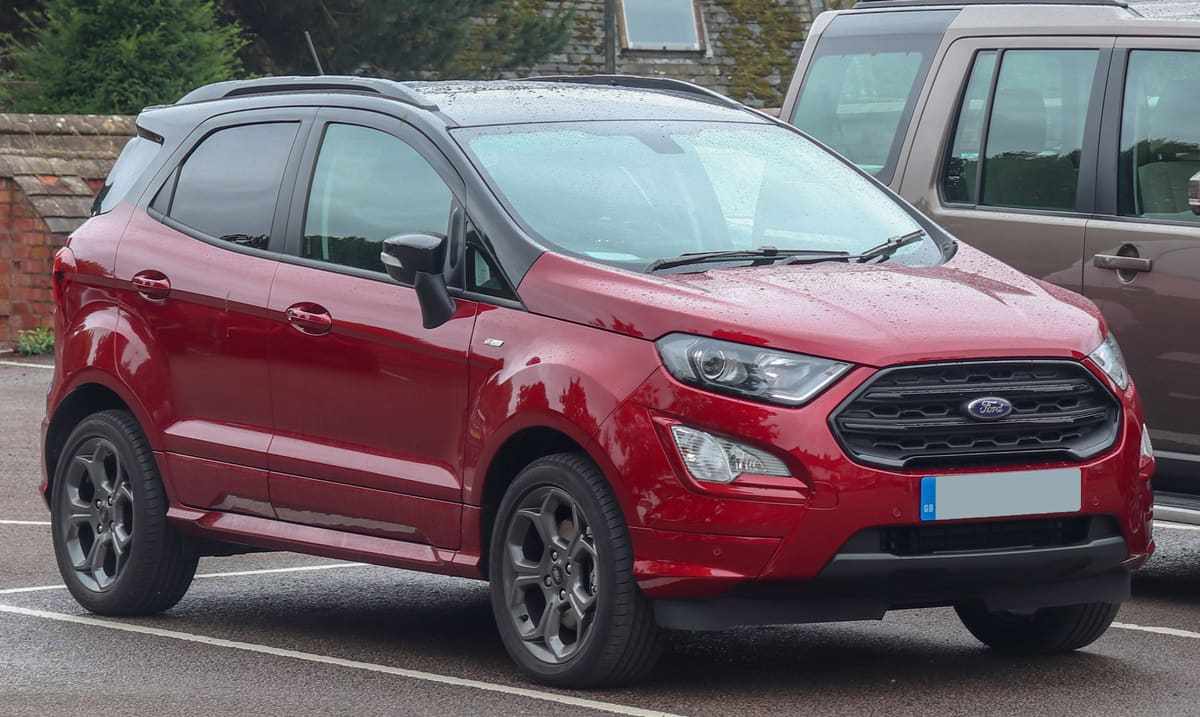
The Ford EcoSport offers reasonable running costs for a compact SUV, with competitive fuel efficiency, moderate insurance groups, and manageable servicing intervals. Owners can expect typical depreciation rates, making it an attractive option for budget-conscious drivers seeking a versatile vehicle.
Fuel Economy and Running Costs
The Ford EcoSport is available with a range of petrol and diesel engines, providing decent fuel efficiency. These figures contribute to lower fuel costs, making the EcoSport a practical choice for daily commuting and longer journeys.
Fuel costs can vary significantly depending on driving habits and fuel prices, but with the EcoSport’s efficiency, many owners find their monthly fuel expenses manageable. Additionally, the availability of both petrol and diesel engines allows buyers to choose an option that best suits their driving style and needs.
Insurance Groups
Insurance costs for the Ford EcoSport are generally moderate, with most models falling within insurance groups 10 to 16. This range makes it accessible for a variety of drivers, including younger and first-time car owners. The specific insurance group may vary depending on the engine size and trim level selected.
When considering insurance, it’s essential to compare quotes from different providers, as premiums can differ significantly. Factors such as driving history, location, and the chosen level of coverage will also influence the overall cost. The EcoSport’s relatively low insurance group can help keep annual expenses in check.
Road Tax Bands
The Ford EcoSport’s road tax costs depend on the engine type and emissions. The lower emissions from the petrol and diesel engines help keep tax costs reasonable, especially for those who opt for the more efficient variants.
Newer models may benefit from lower tax rates due to improved emissions standards. It’s crucial to check the specific CO2 emissions of the chosen model to determine the exact tax band and associated costs. Overall, the EcoSport remains a cost-effective option in terms of road tax.
Servicing Intervals and Maintenance
Ford recommends servicing the EcoSport every 12 months or 12,500 miles, whichever comes first. Regular maintenance is vital to ensure the vehicle runs smoothly and efficiently. The cost of servicing can vary depending on the garage and the specific work required, but many owners find it manageable.
Routine maintenance typically includes oil changes, filter replacements, and checks on brakes and tyres. Keeping up with these intervals can help prevent more significant issues down the line, ultimately saving money on repairs. Ford also offers service plans that can help spread the cost of maintenance over time.
Depreciation Rates
The Ford EcoSport tends to depreciate at a moderate rate compared to other vehicles in its class. Owners can expect to see a depreciation of around 40-50% over the first three years of ownership. Factors influencing depreciation include mileage, condition, and market demand for used models.
The EcoSport’s unique styling and practicality can help maintain its resale value, especially if kept in good condition. Buyers looking for a used EcoSport may find it to be a cost-effective option, as the initial depreciation has already occurred, providing an opportunity for savings.
Overall Ownership Costs
When considering the total ownership costs of the Ford EcoSport, potential buyers should factor in fuel, insurance, road tax, servicing, and depreciation. Overall, the EcoSport offers a balanced package for those seeking a compact SUV with reasonable running costs.
By understanding these costs, prospective owners can make informed decisions about their purchase. The EcoSport’s practicality, combined with its competitive running costs, makes it an appealing choice for those looking for a versatile vehicle that won’t break the bank.
Ford EcoSport recall record
8 recalls have been issued for the Ford EcoSport, between 2015 and 2026.
25C76 EcoSport - Powertrain Control Module Software Update
R/2026/047Issued 6 February 2026
On affected vehicles the software repair for previous recall 21C08 may not have been delivered properly and diagnostic equipment connected via the Onboard diagnostic port will not read out the long term fuel consumption and distance values as per required regulation.
Remedy:Update the Powertrain Control Module and perform an additional verification process to ensure the configuration has been installed correctly.
Affects cars built Sept 2020 to Oct 2020
CrossCar: Sync3 Rear-View Camera Software Update
R/2025/359Issued 8 September 2025
On affected vehicles a software problem may result in issues with the rear-view camera that reduce the driver’s view or with it remaining on after a reversing event.
Remedy:Update the vehicle software to the latest level.
Affects cars built Jun 2019 to Jun 2019
X-Car Powertain Control Module (PCM) Software Update
R/2025/094Issued 19 December 2024
Affected vehicles may develop a crack in the Diesel Particulate Filter (DPF).
Remedy:Update software to prevent a cracked DPF. Test and replace DPFs that are already cracked.
Affects cars built Oct 2017 to May 2018
VEHICLE SEATBELTS MAY HAVE A DEFECTIVE LOW G LOCKING MECHANISM
R/2021/123Issued 14 April 2021
Vehicle seatbelts may have a defective low G locking mechanism.
Remedy:Inspect the seat belt label for date range. If within suspect range exchange seat belt retractor.
Affects cars built Feb 2021 to Mar 2021
4 older recalls not shown.
A recall applies to a build range, not to every car of this model. Check a registration to see whether one specific vehicle has an outstanding recall.
Ford EcoSport MOT record
From 109,955 recorded MOT tests, 16.4% failed.
| Registered | Tests | Failed | Median mileage |
|---|---|---|---|
| 2023 | 746 | 11.0% | 17,877 mi |
| 2022 | 9,606 | 10.7% | 17,793 mi |
| 2021 | 5,025 | 10.6% | 22,738 mi |
| 2020 | 8,689 | 12.6% | 28,749 mi |
| 2019 | 24,258 | 11.8% | 32,814 mi |
| 2018 | 22,108 | 13.6% | 39,440 mi |
| 2017 | 13,010 | 20.7% | 49,967 mi |
| 2016 | 13,895 | 22.5% | 57,223 mi |
Most common reasons for failure
- A tyre seriously damaged31.4%
- Tyre tread depth not in accordance with the requirements26.8%
- A spring or spring component fractured or seriously weakened18.6%
- Stop lamp missing, inoperative or in the case of a multiple light source more than 1/2 not functioning12.1%
- a brake lining or pad worn below 1.5mm11.1%
Figures cover every Ford EcoSport tested in the DVSA dataset, not this specific car. Check a registration for the actual history of one vehicle.
Frequently asked questions
What are the road tax bands for the Ford EcoSport?
The Ford EcoSport is typically placed in tax bands ranging from A to D, depending on the engine size and emissions. For example, the 1.0 EcoBoost model may fall into Band B, which has a lower annual road tax cost compared to larger engines.
Are there any known issues that could affect running costs?
Some Ford EcoSport owners have reported issues with the turbocharger, particularly in earlier models like the 2014 version. If the turbo fails, it can lead to increased fuel consumption and costly repairs, so regular checks are advisable.
What is the warranty coverage for a Ford EcoSport?
The Ford EcoSport typically comes with a three-year or 60,000-mile warranty, which covers many components. This can help mitigate running costs during the warranty period, especially for issues related to the engine or transmission.
Sources
- DVSA anonymised MOT tests and results (Open Government Licence v3.0)
- DVSA vehicle safety recalls (Open Government Licence v3.0)