Running costs
Toyota Yaris running costs: what UK ownership really costs
Toyota Yaris UK running costs: fuel or electric, insurance group, road tax, servicing and depreciation.
Updated 6th October 2026 DVSA data: Across 473,864 recorded MOT tests, 19.7% failed.
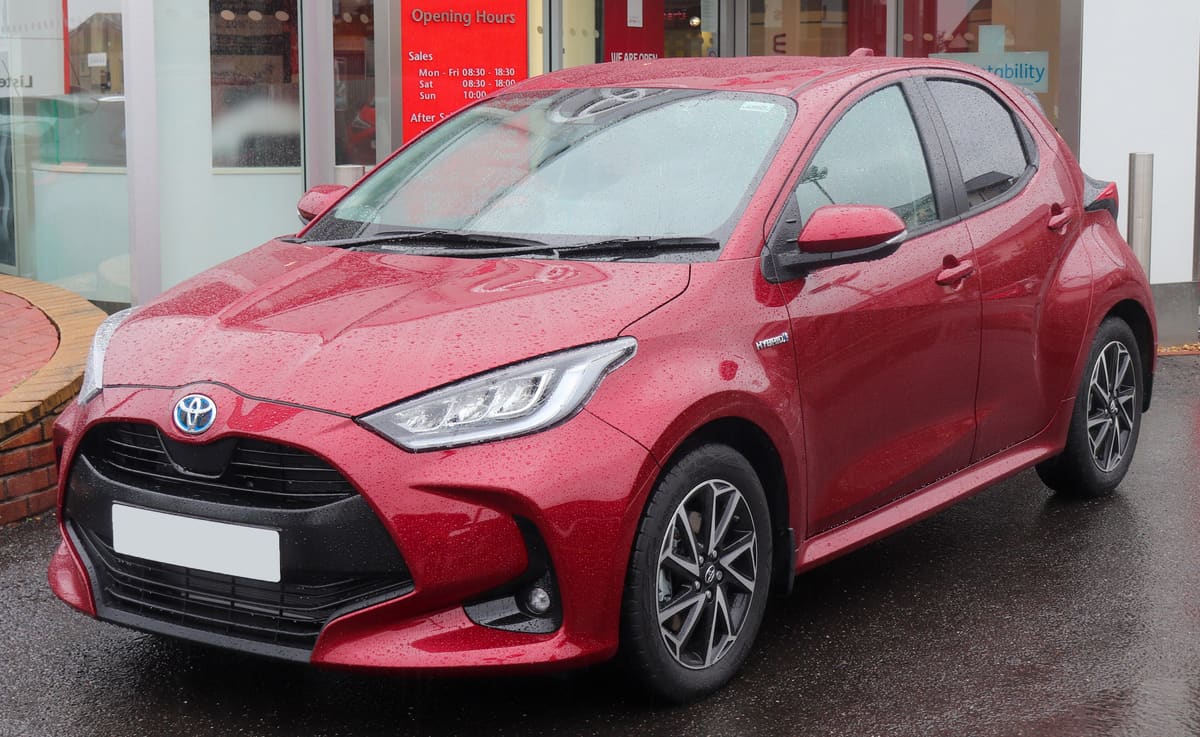
The Toyota Yaris is generally economical to run, thanks to its modest engine sizes, efficient fuel consumption, and relatively low insurance groups. Its tax liability depends on the engine type and emissions, with hybrid models often benefiting from lower rates. Servicing is straightforward and affordable, reflecting Toyota’s reputation for reliability. The Yaris also tends to hold its value well, supported by strong demand for small, practical hatchbacks.
How Vehicle Excise Duty (Road Tax) Affects Running Costs
The cost of road tax for a Toyota Yaris depends primarily on its CO2 emissions and fuel type. Petrol and diesel models are taxed according to government bands that reflect their environmental impact. Lower-emission versions, especially hybrids, usually attract reduced or zero rates in the first year, followed by modest annual charges.
Hybrid Yaris models benefit from the UK’s tax incentives for cleaner vehicles, often placing them in lower tax brackets compared to conventional petrol variants. This can make a notable difference over several years of ownership. It is important to check the exact tax band for the specific Yaris trim and engine you are considering, as this varies.
The government’s official vehicle tax calculator on gov.uk provides the definitive guide to current rates and bands, ensuring buyers can assess the exact tax implications before purchase.
Insurance Group Ratings and Their Impact
Insurance groups for the Toyota Yaris are influenced by factors such as engine size, repair costs, security features, and historical claims data. Smaller engines and lower repair costs typically place the Yaris in lower insurance groups, helping to reduce premiums.
Trim levels with advanced safety equipment or anti-theft devices can further lower insurance costs. Conversely, more powerful or sportier versions may be assigned to higher groups, increasing premiums. The Yaris’s compact size and good safety record generally keep it affordable to insure.
Insurance quotes vary by driver profile and insurer, so obtaining personalised quotes is essential. Using a comparison service or insurer’s website will provide tailored information reflecting your circumstances and the exact Yaris model.
Servicing and Maintenance Demands
The Toyota Yaris is known for its reliability and relatively low maintenance requirements. Routine servicing involves standard checks and replacements such as oil changes, filters, brake pads, and fluid top-ups. Toyota’s widespread dealer network and availability of parts help keep servicing convenient and competitively priced.
Hybrid models may have additional maintenance considerations, such as battery health checks and inverter servicing, but these are typically infrequent and covered under warranty for several years. The Yaris’s simple mechanical layout means fewer complex components that might require costly repairs.
Owners should follow the manufacturer’s recommended service intervals to maintain warranty coverage and ensure longevity. Independent garages can also provide cost-effective servicing options without compromising quality.
Fuel Economy and Its Role in Running Costs
Fuel consumption is a significant factor in the Yaris’s running costs. Its small engines and efficient hybrid technology contribute to favourable fuel economy, reducing the frequency and expense of refuelling.
Driving style, traffic conditions, and maintenance all influence real-world fuel efficiency. Regular servicing, correct tyre pressures, and smooth driving habits help maximise economy. Hybrid versions can further improve fuel use, particularly in urban or stop-start conditions.
Because fuel prices fluctuate, it is wise to consider the fuel type and likely consumption based on your typical driving when choosing a Yaris model. Checking official figures for the specific trim is recommended, as economy varies between petrol, hybrid, and diesel variants.
Depreciation and Residual Value
The Toyota Yaris holds its value well compared to many small hatchbacks, thanks to Toyota’s reputation for reliability and strong demand for practical, economical cars. Models with hybrid powertrains often retain value better, reflecting growing interest in low-emission vehicles.
Depreciation is influenced by factors such as mileage, condition, service history, and market trends. Keeping the car well-maintained and ensuring it has a full service record can help preserve resale value.
Trim choice also affects residuals; popular and well-equipped versions tend to be more desirable on the used market. Buyers should consider how long they plan to keep the car and the likely resale prospects when assessing total cost of ownership.
Tyres, Brakes and Other Running Costs
Tyres and brakes are consumables that contribute to ongoing running costs. The Yaris typically uses tyres sized for economy and comfort rather than performance, which helps keep replacement costs moderate. Regular checks and timely replacements are important for safety and efficiency.
Brake wear depends on driving style and conditions but is generally reasonable for a small, lightweight hatchback. The Yaris’s regenerative braking system on hybrid models can reduce brake wear, extending component life and lowering costs.
Other minor running costs include items such as wiper blades, bulbs, and fluids, which are straightforward to replace and inexpensive. Overall, the Yaris’s simple design and widespread parts availability help keep these expenses manageable.
Toyota Yaris recall record
40 recalls have been issued for the Toyota Yaris, between 2000 and 2025.
Parking Assist ECU reprogram on multiple models
R/2025/466Issued 1 December 2025
For certain vehicles equipped with a Parking Assist ECU a component of the Panoramic View Monitor (PVM) system that displays the rear view image the software may cause the rear view image to freeze or not display
Remedy:Reprogram the parking assist ECU.
Affects cars built Apr 2024 to Oct 2025
Combination Meter Reprogramming on Multiple Models
R/2025/270Issued 24 November 2025
For certain vehicles equipped with the combination meter system (where various information is displayed) that due to an improper programming of the combination meter unnecessarily repetitive data is written to a memory device. This may cause the memory device to deteriorate and the monitor to not display during the meter at start up and remain in this state permanently.
Remedy:Reprogram or replace the combination meter.
Affects cars built Apr 2024 to Oct 2024
On affected vehicles there is a possibility that the DCM may not complete the shutdown process within a specific period of time when the ignition is turned off causing the DCM to not restart at the next ignition cycle and making the e-Call function unavailable. As a result the vehicles do not comply with relevant regulations.
R/2023/279Issued 12 October 2023
On affected vehicles there is a possibility that the DCM may not complete the shutdown process within a specific period of time when the ignition is turned off causing the DCM to not restart at the next ignition cycle and making the e-Call function unavailable. As a result the vehicles do not comply with relevant regulations.
Remedy:The software of the DCM (Data Communication Module) will be updated via an Over the Air (OTA) wireless update.
Affects cars built Jul 2021 to Jul 2023
Affected vehicles have wheel nuts on the right-side front and rear wheels may not have been torqued correctly due to improper tightening of the nuts when installing the wheels at the vehicle assembly plant.
R/2023/217Issued 7 August 2023
Affected vehicles have wheel nuts on the right-side front and rear wheels may not have been torqued correctly due to improper tightening of the nuts when installing the wheels at the vehicle assembly plant.
Remedy:Check and tighten wheel nuts.
Affects cars built Jun 2023 to Jun 2023
36 older recalls not shown.
A recall applies to a build range, not to every car of this model. Check a registration to see whether one specific vehicle has an outstanding recall.
Toyota Yaris MOT record
From 473,864 recorded MOT tests, 19.7% failed.
| Registered | Tests | Failed | Median mileage |
|---|---|---|---|
| 2023 | 2,124 | 3.3% | 17,720 mi |
| 2022 | 35,789 | 4.4% | 19,188 mi |
| 2021 | 25,679 | 5.4% | 24,246 mi |
| 2020 | 20,340 | 7.3% | 26,590 mi |
| 2019 | 27,575 | 9.6% | 31,533 mi |
| 2018 | 27,571 | 12.2% | 37,921 mi |
| 2017 | 26,525 | 14.2% | 42,978 mi |
| 2016 | 28,250 | 13.8% | 49,241 mi |
Most common reasons for failure
- Tyre tread depth not in accordance with the requirements23.8%
- A suspension pin, bush or joint excessively worn21.6%
- A tyre seriously damaged19.9%
- A spring or spring component fractured or seriously weakened18.6%
- Brake pipe damaged or excessively corroded16.2%
Figures cover every Toyota Yaris tested in the DVSA dataset, not this specific car. Check a registration for the actual history of one vehicle.
Toyota Yaris official figures
Median across 35 variants on sale, petrol electric.
- Combined economy
- 58.9 mpg
- WLTP median across variants
- CO2 emissions
- 109 g/km
- Sets the first-year tax rate
Official figures for new cars. Real economy varies with driving, load and conditions.
Frequently asked questions
How often should I service my Toyota Yaris to keep running costs low?
Toyota recommends servicing the Yaris roughly every 12 months or after a set mileage, whichever comes first. Regular oil changes and checks on the timing belt and brake pads help avoid costly repairs later. Always follow the service schedule in your owner’s manual.
What are the typical signs that the Toyota Yaris needs a new clutch?
If you notice the clutch pedal feels spongy or the car struggles to change gears smoothly, it might be time for a clutch replacement. A burning smell or the engine revving without corresponding acceleration are also warning signs to get the clutch checked by a garage.
Does the Toyota Yaris have any specific maintenance tasks that affect insurance or tax costs?
Keeping the Yaris’s emissions system, including the catalytic converter, in good condition can influence tax bands. A faulty oxygen sensor or warning lights on the dashboard related to emissions should be addressed promptly to avoid increased running costs.
What should I check if my Toyota Yaris is using more fuel than usual?
Inspect the air filter and spark plugs first, as dirty or worn components can reduce fuel efficiency. Also, check tyre pressures regularly since underinflated tyres increase fuel consumption. A garage can run a diagnostic to spot issues with the fuel injection system.
Are hybrid Toyota Yaris models more expensive to maintain than petrol versions?
Hybrid Yaris models require attention to the high-voltage battery and regenerative braking system. While the petrol engine maintenance is similar, hybrid-specific components like the inverter coolant need checking. However, hybrid brake pads often last longer due to less wear.
What are the common causes of dashboard warning lights in a Toyota Yaris?
Warning lights can indicate issues ranging from low oil pressure to ABS faults. For example, the engine management light might come on if the lambda sensor detects a problem. It is best to have a diagnostic scan done to identify the exact cause and avoid bigger repairs.
How often do Toyota Yaris tyres need replacing to maintain safety and efficiency?
Tyres should be inspected regularly for tread depth and uneven wear, especially on the front wheels which handle most steering. Uneven wear might suggest an alignment issue. Replacing tyres before they become bald helps maintain fuel economy and safe handling.
Is it important to use Toyota-approved parts for Yaris maintenance?
Using Toyota-approved parts like genuine brake discs or oil filters ensures compatibility and reliability. Non-approved parts might save money initially but can lead to premature wear or sensor faults. Your local Toyota dealer can advise on the correct components for your model.
Sources
- DVSA anonymised MOT tests and results (Open Government Licence v3.0)
- VCA new car fuel consumption and emissions data (Open Government Licence v3.0)
- DVSA vehicle safety recalls (Open Government Licence v3.0)