Running costs
Toyota GR Yaris running costs: what UK ownership really costs
Toyota GR Yaris UK running costs: fuel or electric, insurance group, road tax, servicing and depreciation.
Updated 8th October 2026 DVSA data: Across 4,294 recorded MOT tests, 6.5% failed.
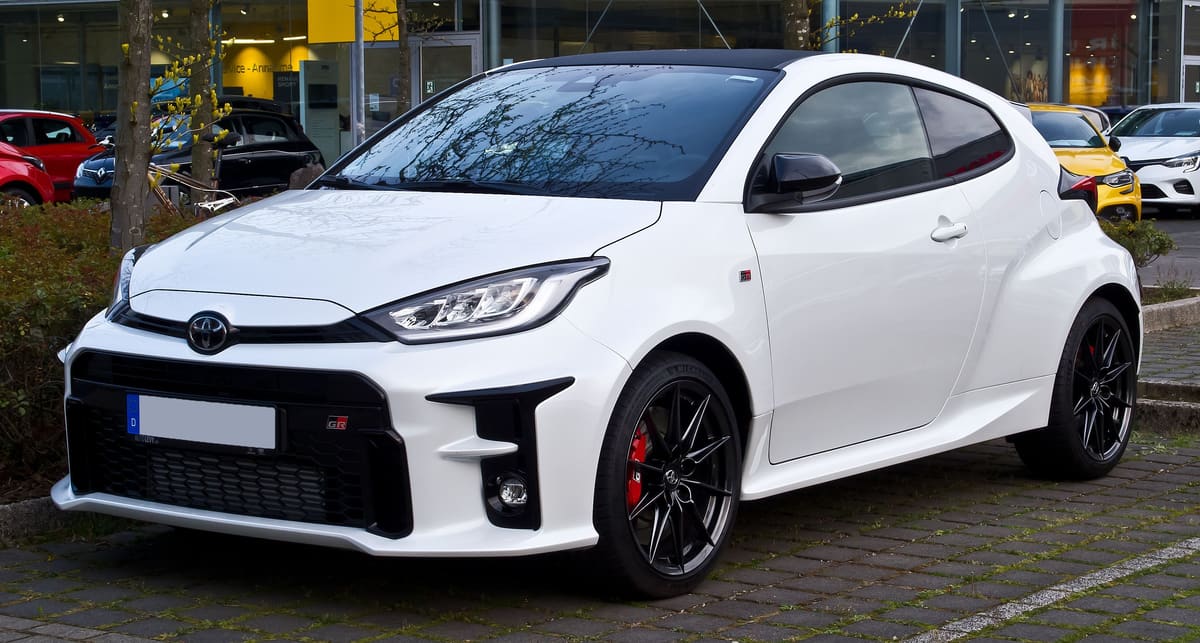
The Toyota GR Yaris combines rally-inspired performance with a compact hatchback form, which influences its running costs in several ways. Its tax liability is shaped by emissions and engine size, insurance groups reflect its sporty character, servicing demands are higher than a standard Yaris due to its specialised components, and it tends to hold value well thanks to its niche appeal and limited production.
Vehicle Tax and How It Affects Running Costs
The cost of vehicle tax for the Toyota GR Yaris depends primarily on its CO2 emissions and engine size, as set out by the UK government’s Vehicle Excise Duty (VED) system. Cars with higher emissions fall into higher tax bands, which increases annual charges. The GR Yaris, being a performance-oriented car, generally sits in a higher tax bracket than standard hatchbacks.
The government’s tax system uses emissions data to encourage lower-polluting vehicles, so the GR Yaris’s sporty engine means it is not exempt from higher rates. Buyers should check the exact tax band for the specific model and trim they are considering, as this can vary. The initial registration tax and subsequent annual fees can add a noticeable amount to the cost of ownership compared to more economical cars.
Insurance Group and Its Impact on Premiums
Insurance costs for the GR Yaris are influenced by its classification in insurance groups, which assess risk based on factors like engine size, performance, repair costs, and driver profile. The GR Yaris, with its high-performance engine and sporty handling, is typically placed in a higher insurance group than regular small hatchbacks.
This means premiums tend to be higher, reflecting the increased risk insurers associate with faster cars that may be driven more aggressively. Repair and parts costs also factor in, as specialised components can be more expensive to replace. Prospective owners should obtain personalised insurance quotes to understand how their circumstances and the car’s insurance group will affect premiums.
Servicing and Maintenance Requirements
The servicing demands of the Toyota GR Yaris are more intensive than those of a standard Yaris due to its performance-oriented engineering. Its turbocharged engine, all-wheel-drive system, and sport-tuned components require careful maintenance to ensure reliability and performance.
Routine servicing intervals may be shorter, and parts such as brakes, tyres, and suspension components might wear faster under spirited driving conditions. Additionally, specialised servicing by technicians familiar with the GR Yaris’s unique features can add to labour costs. Owners should budget for these factors and follow the manufacturer’s recommended service schedule to maintain the car’s condition.
Fuel Economy and Running Costs
While the GR Yaris benefits from modern engine technology, its focus on performance means fuel consumption will generally be higher than that of a standard small hatchback. The turbocharged engine and all-wheel-drive system contribute to increased fuel use, especially when driven enthusiastically.
This higher fuel demand translates into greater running costs at the pump. However, actual fuel economy will vary depending on driving style, road conditions, and trim level. Owners who prioritise efficient driving can mitigate some of these costs, but the GR Yaris is fundamentally designed for spirited performance rather than economy.
Residual Values and Depreciation
The Toyota GR Yaris tends to hold its value well compared to many other hot hatchbacks, largely due to its limited production run and strong enthusiast following. Its unique position as a rally-inspired car in a small hatchback package makes it sought after in the used market.
Depreciation rates are generally lower than for mass-produced models, which helps reduce the overall cost of ownership. However, condition, mileage, and service history remain crucial factors in determining resale value. Buyers looking for a used GR Yaris should ensure the car has been well maintained to preserve its value.
Tyre and Brake Wear Considerations
The sporty nature of the GR Yaris means that tyres and brakes are subject to greater wear than on a standard hatchback. High-performance tyres fitted as standard or as options tend to have softer compounds that provide better grip but wear faster.
Similarly, the braking system is designed to handle spirited driving, but aggressive use will accelerate pad and disc wear. Replacement parts for these components can be more expensive due to their specialised nature. Owners should factor in these consumable costs when budgeting for running the car.
Toyota GR Yaris MOT record
From 4,294 recorded MOT tests, 6.5% failed.
| Registered | Tests | Failed | Median mileage |
|---|---|---|---|
| 2022 | 1,395 | 6.2% | 10,846 mi |
| 2021 | 2,899 | 6.6% | 16,927 mi |
Most common reasons for failure
- Tyre tread depth not in accordance with the requirements34.2%
- A tyre cords visible or damaged29.0%
- A tyre seriously damaged17.0%
- Lambda coefficient outside the default limits or the range specified by the manufacturer10.0%
- a brake lining or pad worn below 1.5mm9.8%
Figures cover every Toyota GR Yaris tested in the DVSA dataset, not this specific car. Check a registration for the actual history of one vehicle.
Toyota GR Yaris official figures
Median across 6 variants on sale, petrol.
- Combined economy
- 32.5 mpg
- WLTP median across variants
- CO2 emissions
- 197 g/km
- Sets the first-year tax rate
Official figures for new cars. Real economy varies with driving, load and conditions.
Frequently asked questions
What should I expect in terms of fuel costs for the Toyota GR Yaris?
The Toyota GR Yaris uses a turbocharged engine that can be quite thirsty under spirited driving. Checking the fuel consumption yourself by monitoring the trip computer after mixed driving will give you a realistic idea of running costs.
Are there any specific maintenance tasks unique to the GR Yaris?
Yes, the GR Yaris has a sophisticated all-wheel-drive system that requires regular checks of the transfer case oil and front and rear differential fluids. These are not standard on many small cars and should be inspected during routine servicing.
How often does the GR Yaris need brake pad replacement?
Brake pads on the GR Yaris tend to wear faster than on regular hatchbacks due to its sporty nature and heavier braking demands. You can check for wear by listening for a squealing noise or inspecting the pad thickness through the alloy wheels.
Is the GR Yaris expensive to insure compared to other hot hatches?
Insurance costs depend on your personal details and location, but the GR Yaris’s performance and limited production can lead to higher premiums. It’s advisable to get quotes from multiple insurers to find the best deal.
What are the common warning lights to watch for on the GR Yaris?
Keep an eye on the all-wheel-drive system warning light, which can indicate issues with the transfer case or differential sensors. Also, the turbocharger warning light may appear if there’s a problem with boost pressure or related components.
Does the GR Yaris require special tyres or more frequent replacements?
The GR Yaris often comes fitted with performance tyres that wear quicker than standard ones. Regularly checking tyre tread depth and pressure is important, especially since the car’s handling benefits from properly maintained tyres.
Are there any known issues with the GR Yaris’s clutch or gearbox?
The manual gearbox in the GR Yaris is robust but the clutch can wear faster if driven aggressively. Signs to watch for include slipping when accelerating or difficulty engaging gears, which should prompt a garage inspection.
How does the GR Yaris’s servicing schedule affect running costs?
Toyota recommends specific intervals for oil changes, spark plug replacements, and inspections of the turbocharger system. Sticking to this schedule helps avoid costly repairs and keeps the car running smoothly.
Sources
- DVSA anonymised MOT tests and results (Open Government Licence v3.0)
- VCA new car fuel consumption and emissions data (Open Government Licence v3.0)