Running costs
Toyota Corolla running costs: what UK ownership really costs
Toyota Corolla UK running costs: fuel or electric, insurance group, road tax, servicing and depreciation.
Updated 5th October 2026 DVSA data: Across 124,463 recorded MOT tests, 15.2% failed.
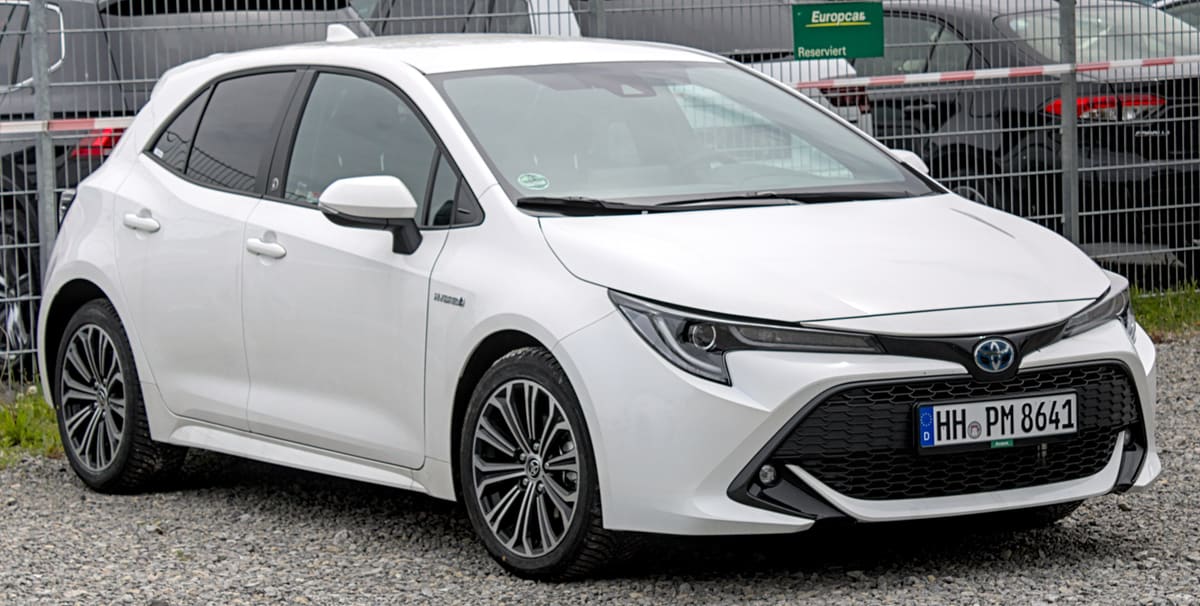
The Toyota Corolla is generally economical to run, with costs influenced by factors such as its engine type, insurance grouping, and maintenance schedule. Its tax liability depends on emissions and fuel type, while insurance costs reflect its safety record and repair costs. Servicing is straightforward but varies by model, and the Corolla tends to hold its value well due to its reputation for reliability.
How Vehicle Tax Affects Running Costs
The cost of vehicle tax for a Toyota Corolla depends primarily on its CO2 emissions and fuel type, as set out by the UK government’s vehicle tax system. Petrol and diesel models are taxed differently, with lower-emission versions attracting reduced rates or exemption in some cases.
Newer Corolla models, especially hybrids, often benefit from favourable tax treatment because of their lower emissions. This means that choosing a hybrid over a conventional petrol or diesel engine can reduce annual tax bills significantly. However, exact tax rates vary by model year and engine variant, so it is important to check the current rates on the official government website before purchase.
Taxation also changes with the age of the vehicle. Cars registered before certain dates may fall under different tax bands or flat-rate charges. This means that older Corollas might have a different tax liability compared to newer ones, even with similar emissions.
Insurance Group and Its Impact on Costs
Insurance premiums for the Toyota Corolla are influenced by its assigned insurance group, which reflects factors such as repair costs, vehicle performance, safety features, and theft risk. The Corolla’s reputation for reliability and safety tends to keep it in moderate insurance groups, making it affordable for a wide range of drivers.
Higher trim levels or more powerful engine options can push the insurance group up, increasing premiums. Conversely, base models with smaller engines and fewer expensive features generally fall into lower groups. The car’s safety record, including the presence of driver assistance systems and airbags, also helps keep insurance costs down.
Drivers’ personal circumstances, such as age, driving history, and location, will also affect insurance quotes. It is advisable to obtain multiple insurance quotes tailored to the specific Corolla model and driver profile to understand the likely premium.
Servicing and Maintenance Demands
The Toyota Corolla is known for its relatively straightforward servicing requirements, with routine maintenance intervals that are generally standard for compact family cars. Regular oil changes, brake checks, and tyre rotations are part of the typical servicing schedule, which helps maintain reliability and performance.
Hybrid versions of the Corolla may require additional checks related to the battery and electrical systems, but these are usually covered within the manufacturer’s recommended service plan. Parts availability is generally good, which helps keep repair times and costs manageable.
Toyota’s reputation for durability means that major repairs tend to be infrequent if the car is well maintained. However, as with any vehicle, neglecting servicing can lead to increased running costs due to premature wear or component failure.
Fuel Economy and Its Role in Running Costs
Fuel consumption is a significant factor in the overall cost of running a Toyota Corolla. The car’s fuel economy varies depending on the engine type, transmission, and driving conditions. Hybrid models typically offer better fuel efficiency, especially in urban driving, which can reduce fuel expenditure over time.
Driving style and maintenance also affect fuel consumption. Smooth acceleration, avoiding excessive idling, and keeping tyres properly inflated contribute to better economy. Regular servicing ensures the engine runs efficiently, further helping to keep fuel costs down.
Because fuel prices fluctuate, it is wise to consider the type of fuel the Corolla requires and how that fits with your typical driving patterns. Petrol engines may be cheaper to buy and maintain, while hybrids offer savings on fuel but sometimes at a higher initial cost.
Depreciation and Resale Value
The Toyota Corolla tends to hold its value well compared to many other cars in its class. This is largely due to its strong reputation for reliability, low running costs, and broad appeal. A well-maintained Corolla typically attracts good resale prices, which helps offset the overall cost of ownership.
Depreciation rates vary depending on model year, trim level, and condition. Higher-spec models with more features may retain value better, but they can also cost more to insure and maintain. Conversely, basic models may depreciate faster but have lower running costs.
Market demand for used Corollas remains steady, partly because they are seen as practical and economical choices. This demand supports better resale values, making the Corolla a sensible option for buyers concerned about long-term running costs.
Summary of Running Cost Drivers
The running costs of a Toyota Corolla are shaped by a combination of taxation, insurance, servicing, fuel consumption, and depreciation. Understanding how each factor applies to the specific model and trim you are considering will help you estimate the true cost of ownership.
Checking official sources for vehicle tax rates and obtaining tailored insurance quotes are essential steps. Regular maintenance and mindful driving habits contribute to keeping costs manageable. The Corolla’s overall reputation for reliability and economy makes it a sensible choice for those seeking a car with predictable and reasonable running costs.
Toyota Corolla recall record
30 recalls have been issued for the Toyota Corolla, between 2002 and 2025.
Combination Meter Reprogramming on Multiple Models
R/2025/270Issued 24 November 2025
For certain vehicles equipped with the combination meter system (where various information is displayed) that due to an improper programming of the combination meter unnecessarily repetitive data is written to a memory device. This may cause the memory device to deteriorate and the monitor to not display during the meter at start up and remain in this state permanently.
Remedy:Reprogram or replace the combination meter.
Affects cars built Aug 2022 to May 2025
High-Pressure Fuel Pump replacement on multiple models
R/2024/514Issued 20 January 2025
For certain vehicles that were affected by a previous campaign announced in October 2023 for high-pressure fuel pump a further check is required to confirm if the correct pump is fitted.
Remedy:A check of the high-pressure fuel pump and replace if necessary.
Affects cars built Dec 2018 to Nov 2022
Brake actuator Skid control ECU reprogram on Certain Toyota Corolla 24SD-146
R/2024/463Issued 17 January 2025
For certain vehicles there is an issue involving the skid control software of the skid control Electronic Control Unit (ECU) where a hard brake pedal feel cannot be ruled out.
Remedy:The remedy for the concern will be to reprogram the Brake Actuator (Skid control ECU)
Affects cars built Jan 2023 to Nov 2024
Affected vehicles are fitted with a high-pressure fuel pump which over time could develop a crack which could lead to a fuel leak and a risk of a vehicle fire.
R/2023/298Issued 20 November 2023
Affected vehicles are fitted with a high-pressure fuel pump which over time could develop a crack which could lead to a fuel leak and a risk of a vehicle fire.�
Remedy:Check and replace high pressure fuel pump if necessary.�
Affects cars built Jun 2018 to Nov 2022
26 older recalls not shown.
A recall applies to a build range, not to every car of this model. Check a registration to see whether one specific vehicle has an outstanding recall.
Toyota Corolla MOT record
From 124,463 recorded MOT tests, 15.2% failed.
| Registered | Tests | Failed | Median mileage |
|---|---|---|---|
| 2025 | 477 | 0.4% | 222 mi |
| 2024 | 1,515 | 3.2% | 23,371 mi |
| 2023 | 3,050 | 5.7% | 50,140 mi |
| 2022 | 18,835 | 6.0% | 29,336 mi |
| 2021 | 19,664 | 6.8% | 38,724 mi |
| 2020 | 18,810 | 7.1% | 46,036 mi |
| 2019 | 16,256 | 7.9% | 56,502 mi |
| 2009 | 1,129 | 27.9% | 116,750 mi |
Most common reasons for failure
- Tyre tread depth not in accordance with the requirements28.3%
- A tyre seriously damaged25.3%
- Brake pipe damaged or excessively corroded16.0%
- A suspension component excessively damaged or corroded15.9%
- A spring or spring component fractured or seriously weakened14.4%
Figures cover every Toyota Corolla tested in the DVSA dataset, not this specific car. Check a registration for the actual history of one vehicle.
Toyota Corolla official figures
Median across 26 variants on sale, petrol electric.
- Combined economy
- 60.1 mpg
- WLTP median across variants
- CO2 emissions
- 106 g/km
- Sets the first-year tax rate
Official figures for new cars. Real economy varies with driving, load and conditions.
Frequently asked questions
How often should I service a Toyota Corolla to keep running costs low?
Toyota recommends servicing the Corolla roughly every 12 months or 10,000 miles, whichever comes first. Regular oil changes and checks on components like the air filter and brake pads help avoid costly repairs later. Always follow the service schedule in your vehicle handbook.
What are the typical maintenance tasks that affect the Toyota Corolla’s running costs?
Routine maintenance includes replacing engine oil, inspecting the timing belt or chain, and checking the condition of the brake discs and pads. The Corolla’s hybrid models also require battery health checks and inverter coolant replacement to maintain efficiency.
Does the Toyota Corolla have any warning lights I should watch for that impact running costs?
Keep an eye on the engine management light and the hybrid system warning light if applicable. These can indicate issues with the catalytic converter or hybrid battery system, which might lead to expensive repairs if ignored.
Are tyre replacements a significant part of the Toyota Corolla’s running costs?
Tyre wear depends on driving style and road conditions, but the Corolla uses standard tyre sizes that are widely available. Regularly checking tyre tread depth and pressure can extend tyre life and improve fuel efficiency, helping to keep costs down.
How does the Toyota Corolla’s hybrid system affect running costs compared to petrol-only models?
The hybrid system reduces fuel consumption by using an electric motor alongside the petrol engine. However, it requires specific maintenance like inverter coolant changes and battery health monitoring. These tasks are different from petrol-only models but help maintain overall efficiency.
What should I check before buying a used Toyota Corolla to avoid unexpected running costs?
Inspect the service history for regular oil and filter changes, and check for any signs of wear on the brake discs and suspension components. For hybrids, ask if the high-voltage battery has been tested recently and look for any warning lights on the dashboard.
How often do Toyota Corolla brake pads typically need replacing?
Brake pad replacement intervals vary with driving habits, but many Corolla owners find they last around 20,000 to 30,000 miles. Listen for squealing noises or a spongy brake pedal, which indicate it’s time for a garage to inspect the brake pads and discs.
Does the Toyota Corolla require special fluids that affect running costs?
Yes, the Corolla hybrid uses inverter coolant to keep the hybrid system components cool, which needs periodic replacement. Additionally, standard engine oil and brake fluid changes are essential. Using the correct Toyota-approved fluids ensures the vehicle runs smoothly and avoids damage.
Sources
- DVSA anonymised MOT tests and results (Open Government Licence v3.0)
- VCA new car fuel consumption and emissions data (Open Government Licence v3.0)
- DVSA vehicle safety recalls (Open Government Licence v3.0)