Running costs
Toyota Aygo running costs: what UK ownership really costs
Toyota Aygo UK running costs: fuel or electric, insurance group, road tax, servicing and depreciation.
Updated 9th October 2026 DVSA data: Across 253,974 recorded MOT tests, 19.3% failed.
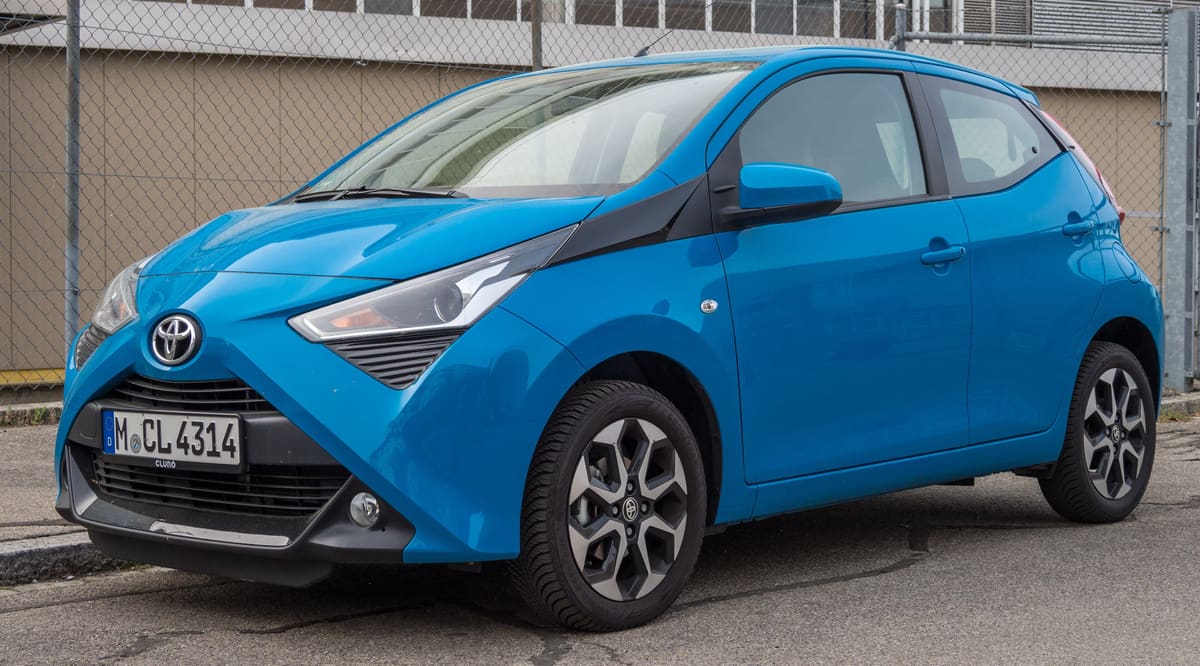
The Toyota Aygo is a cost-effective city car, with running costs shaped by its small engine size, low emissions, and modest insurance group. Its road tax benefits from low CO2 output, insurance premiums vary by driver profile and trim, servicing is straightforward but regular, and it retains value reasonably well due to Toyota’s reputation and demand in the compact segment.
Road Tax and Emissions
The Aygo benefits from the UK’s vehicle tax system that favours cars with low carbon dioxide emissions. Because it is designed as a compact urban car with a small petrol engine, its CO2 output is typically low, placing it in a favourable tax band. This means owners pay less annual Vehicle Excise Duty compared to larger or less efficient cars.
The government’s vehicle tax bands are based on emissions, so the Aygo’s efficient engine design helps keep running costs down. However, exact tax costs depend on the specific model and year of registration, as newer cars may be subject to different tax rules. Checking the current rates on gov.uk is essential for accurate information.
Insurance Group and Premiums
Insurance costs for the Aygo are influenced by its classification in insurance groups, which consider factors such as engine size, repair costs, and safety features. Generally, the Aygo falls into lower to mid-range insurance groups, reflecting its modest performance and relatively cheap parts.
However, insurance premiums can vary widely based on the driver’s age, location, driving history, and the chosen trim level. Some sportier or more feature-rich versions may attract higher premiums due to increased repair costs or perceived risk. Obtaining personalised insurance quotes is the best way to understand the cost for your circumstances.
Servicing and Maintenance
The Aygo’s servicing demands are typically modest, reflecting its simple, small-displacement petrol engine and straightforward mechanical layout. Regular servicing intervals are designed to be manageable and affordable, with routine checks on oil, filters, brakes, and tyres.
Parts availability is generally good, and repairs tend to be less expensive than for larger or more complex vehicles. However, as with any car, neglecting scheduled maintenance can lead to higher costs over time. The Aygo’s reliability record supports low long-term servicing expenses, but owners should follow the manufacturer’s recommended service schedule closely.
Fuel Economy and Running Costs
Fuel consumption is a key factor in the Aygo’s running costs. Its small engine and lightweight construction contribute to efficient fuel use, especially in urban driving conditions where stop-start traffic is common. This efficiency helps reduce the amount spent on petrol over the car’s lifetime.
While exact fuel economy varies by driving style, trim, and conditions, the Aygo is generally economical compared to larger or less efficient vehicles. This makes it a sensible choice for city dwellers or those with short daily commutes who want to keep fuel expenses low.
Depreciation and Resale Value
The Aygo holds its value reasonably well within the small car segment, benefiting from Toyota’s reputation for reliability and low running costs. Its popularity as an affordable, easy-to-drive city car means there is steady demand on the used market.
Depreciation rates are influenced by factors such as mileage, condition, and model year, but the Aygo’s straightforward design and economical operation help it retain value better than some competitors. Buyers looking for a budget-friendly used car often consider the Aygo a sensible option, which supports its resale prices.
Tyres and Other Running Costs
Tyre wear on the Aygo tends to be moderate due to its light weight and modest power output, which reduces stress on tyres compared to more powerful cars. Replacement tyres are generally affordable, and the car uses common tyre sizes that are widely available.
Other running costs such as brake pads and consumables are typically low, reflecting the car’s urban focus and gentle driving characteristics. Overall, the Aygo’s running costs are kept down by its simplicity and efficiency, making it an economical choice for drivers prioritising low expenditure on maintenance and repairs.
Toyota Aygo recall record
9 recalls have been issued for the Toyota Aygo, between 2010 and 2023.
On affected vehicles there is a possibility that the DCM may not complete the shutdown process within a specific period of time when the ignition is turned off causing the DCM to not restart at the next ignition cycle and making the e-Call function unavailable. As a result the vehicles do not comply with relevant regulations.
R/2023/279Issued 12 October 2023
On affected vehicles there is a possibility that the DCM may not complete the shutdown process within a specific period of time when the ignition is turned off causing the DCM to not restart at the next ignition cycle and making the e-Call function unavailable. As a result the vehicles do not comply with relevant regulations.
Remedy:The software of the DCM (Data Communication Module) will be updated via an Over the Air (OTA) wireless update.
Affects cars built Sept 2022 to Aug 2023
SOME REAR INNER SEAT BELTS MAY HAVE INCORRECT STITCHING ON THE BELT MATERIAL
R/2020/351Issued 25 January 2021
On affected vehicles some rear inner seat belts may have incorrect stitching on the belt material.
Remedy:Check seat belts and relace if necessary.
Affects cars built Aug 2020 to Oct 2020
IT MAY NOT BE POSSIBLE TO SWITCH HEADLIGHTS FROM HIGH BEAM TO LOW BEAM OR LOW BEAM TO HIGH BEAM
R/2020/254Issued 20 October 2020
It may not be possible to switch headlights from high beam to low beam or low beam to high beam.
Remedy:Replace the Headlamp Units
Affects cars built Jun 2020 to Jun 2020
AN INCORRECT TOOLING SETUP DURING THE MANUFACTURING OF THE FUEL TANK MAY RESULT IN REDUCED WALL THICKNESS OR SMALL PIN HOLE IN THE TANK'S BOTTOM SURFACE
R/2018/316Issued 21 January 2019
An incorrect tooling setup during the manufacturing of the fuel tank may result in reduced wall thickness
Remedy:Check the serial number and replace the fuel tank if necessary.
Affects cars built Jun 2016 to Jun 2016
5 older recalls not shown.
A recall applies to a build range, not to every car of this model. Check a registration to see whether one specific vehicle has an outstanding recall.
Toyota Aygo MOT record
From 253,974 recorded MOT tests, 19.3% failed.
| Registered | Tests | Failed | Median mileage |
|---|---|---|---|
| 2022 | 1,576 | 5.1% | 16,545 mi |
| 2021 | 16,616 | 7.0% | 19,724 mi |
| 2020 | 16,199 | 8.9% | 23,906 mi |
| 2019 | 21,692 | 9.7% | 29,228 mi |
| 2018 | 21,510 | 10.3% | 34,477 mi |
| 2017 | 21,095 | 12.1% | 40,752 mi |
| 2016 | 21,851 | 13.5% | 46,543 mi |
| 2015 | 22,910 | 15.5% | 52,505 mi |
Most common reasons for failure
- A suspension pin, bush or joint excessively worn27.9%
- A tyre seriously damaged23.1%
- Tyre tread depth not in accordance with the requirements22.4%
- Brake pipe damaged or excessively corroded14.5%
- A suspension component excessively damaged or corroded12.2%
Figures cover every Toyota Aygo tested in the DVSA dataset, not this specific car. Check a registration for the actual history of one vehicle.
Frequently asked questions
How expensive is servicing a Toyota Aygo?
Servicing a Toyota Aygo typically involves changing the engine oil, replacing the oil filter, and checking the brake pads. The spark plugs also need attention at certain intervals. Regular servicing helps keep the catalytic converter and timing belt in good condition.
What should I look out for in terms of fuel efficiency?
The Aygo is known for its efficient fuel use, but watch for a drop in fuel economy which can indicate issues with the air filter or tyre pressures. Checking the condition of the fuel injectors during servicing can also help maintain good mileage.
Are there any specific maintenance tasks unique to the Toyota Aygo?
One important task is inspecting the condition of the CV joints, especially if you hear clicking noises when turning. The Aygo’s compact engine bay means the alternator and water pump should be checked regularly for wear during routine services.
How reliable is the Toyota Aygo’s battery and electrical system?
The 12-volt battery in the Aygo usually lasts well but can be affected by short journeys. If the dashboard warning light for the battery appears, it’s wise to have the alternator and battery tested to avoid unexpected breakdowns.
What are the typical tyre wear patterns on a Toyota Aygo?
Uneven tyre wear on the Aygo can result from misaligned wheels or worn suspension components like the shock absorbers. Regularly checking tyre tread depth and pressures helps maintain safety and running costs.
Does the Toyota Aygo require any special brake maintenance?
Brake discs and pads on the Aygo should be inspected for wear during every service. If you notice a squealing noise or reduced braking performance, it’s important to have the brake pads replaced promptly to avoid damage to the discs.
How often should I check the Toyota Aygo’s coolant and oil levels?
It’s a good idea to check coolant and engine oil levels monthly. Low coolant can cause the engine to overheat, while low oil may trigger the oil pressure warning light. Both fluids are vital for the engine’s longevity.
What are signs that the Toyota Aygo’s clutch might need attention?
If you experience difficulty changing gears or notice a burning smell, the clutch could be slipping. The clutch cable or hydraulic system should be inspected by a mechanic to prevent more costly repairs.
Sources
- DVSA anonymised MOT tests and results (Open Government Licence v3.0)
- DVSA vehicle safety recalls (Open Government Licence v3.0)