Running costs
Tesla Model 3 running costs: what UK ownership really costs
Tesla Model 3 UK running costs: fuel or electric, insurance group, road tax, servicing and depreciation.
Updated 1st October 2026 DVSA data: Across 86,416 recorded MOT tests, 14.2% failed.
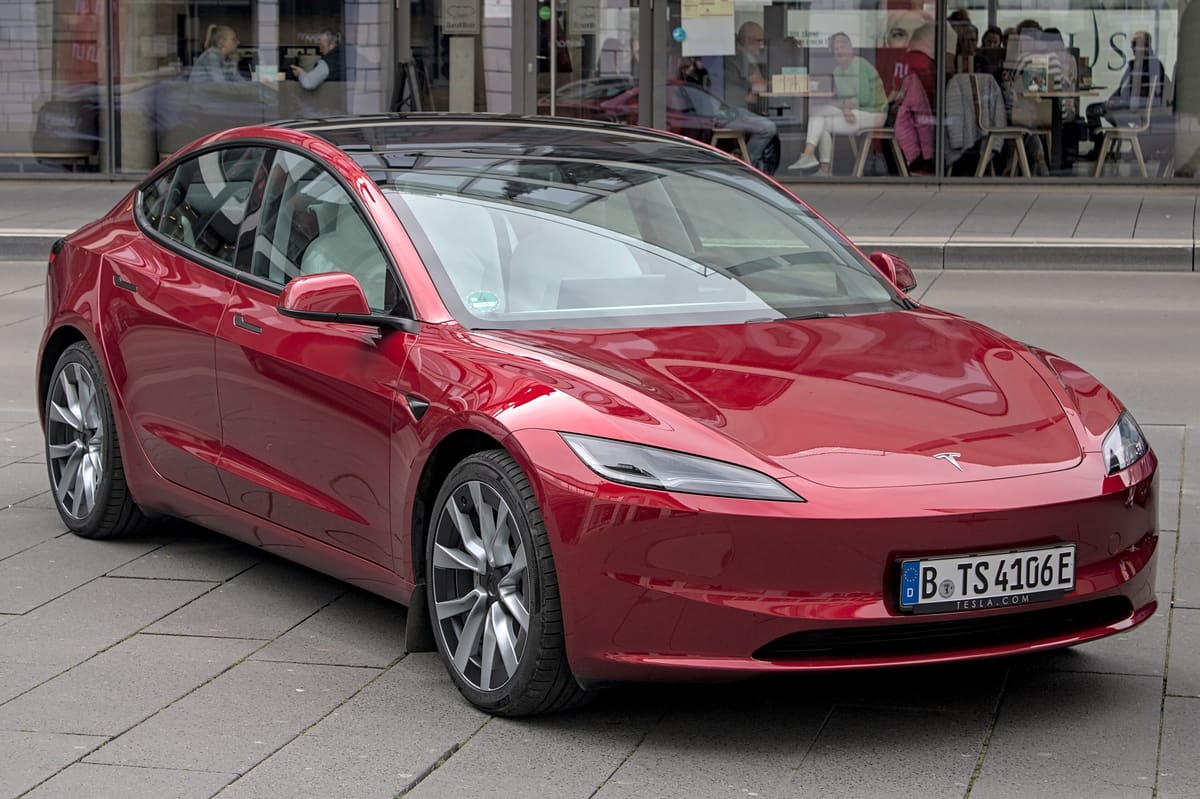
The Tesla Model 3’s running costs are shaped by its electric powertrain, government tax incentives, insurance group, servicing needs, and depreciation profile. Its electric nature reduces fuel and road tax expenses, but insurance can be higher due to repair costs and technology. Servicing is less frequent than petrol or diesel cars, and it tends to hold value well, reflecting strong demand for electric vehicles.
How the UK Tax System Affects Tesla Model 3 Running Costs
The Tesla Model 3 benefits from a favourable tax regime in the UK, primarily because it is a fully electric vehicle. Electric cars are exempt from paying Vehicle Excise Duty (road tax) for the first few years, and after that, their tax band is typically lower than equivalent petrol or diesel models. This can significantly reduce annual running costs compared to internal combustion engine vehicles.
Additionally, electric vehicles attract lower Benefit-in-Kind (BIK) rates for company car drivers, making them more attractive for business users. This tax advantage encourages adoption and reduces the overall cost of ownership. However, it is important to check the latest government guidelines on gov.uk, as tax rules can evolve with changing environmental policies.
Insurance Group Factors for the Tesla Model 3
Insurance premiums for the Tesla Model 3 can be influenced by several factors that push its insurance group rating. The car’s advanced technology and electric powertrain mean repair costs tend to be higher than for conventional cars. Bodywork and battery repairs require specialist knowledge and parts, which can increase claim costs.
On the other hand, the Model 3 benefits from a strong safety record and advanced driver assistance systems, which can help reduce accident risk and potentially lower premiums. Insurance providers also consider the car’s performance, repair costs, and theft rates when assigning groups. Prospective owners should obtain insurance quotes tailored to their circumstances to understand the likely premium.
Servicing and Maintenance Demands of the Tesla Model 3
The Tesla Model 3 generally requires less servicing than traditional petrol or diesel cars because it has fewer moving parts and no need for oil changes, spark plugs, or exhaust system repairs. Routine maintenance focuses on checking brakes, tyres, suspension, and software updates.
Its regenerative braking system reduces wear on brake components, often extending the interval between replacements. However, the battery and electric motor require careful monitoring, and Tesla recommends periodic inspections to ensure optimal performance. Software updates are delivered over the air, which can fix bugs and improve efficiency without a visit to the garage.
While servicing costs tend to be lower, any repairs involving the battery or electronics may be more expensive due to specialised parts and labour. Owners should follow Tesla’s recommended maintenance schedule to avoid costly issues.
Depreciation and Residual Value of the Tesla Model 3
The Tesla Model 3 holds its value relatively well compared to many other cars, reflecting strong demand for electric vehicles and the brand’s reputation. Its residual value benefits from growing interest in zero-emission cars and government incentives that encourage electric vehicle ownership.
Battery longevity and warranty coverage also support resale values, as buyers feel more confident about the car’s reliability over time. However, depreciation can vary depending on factors such as mileage, condition, and updates to newer models or software.
As electric vehicle technology evolves rapidly, older models may lose value faster if newer versions offer significantly improved range or features. Still, the Model 3’s strong market presence helps maintain its appeal on the used car market.
What Actually Drives the Cost of Running a Tesla Model 3?
The main drivers of running costs for the Tesla Model 3 are electricity prices, insurance premiums, servicing requirements, and depreciation. Electricity is generally cheaper than petrol or diesel, but costs vary depending on charging location and tariff. Home charging overnight can offer the best value, while public rapid chargers may be more expensive.
Insurance costs reflect the car’s repair complexity and safety features, so premiums can be higher than average but vary widely by driver profile and insurer. Servicing is less frequent and less costly than for combustion engine cars, but repairs to the battery or electronics can be pricey.
Depreciation is influenced by evolving technology and market demand for electric vehicles, with the Model 3 typically retaining value well. Overall, the Model 3’s running costs tend to be lower than comparable petrol or diesel cars, especially when factoring in tax benefits and fuel savings. Prospective buyers should consider their own driving patterns, charging options, and insurance quotes to get a full picture of ownership costs.
Tesla Model 3 recall record
11 recalls have been issued for the Tesla Model 3, between 2020 and 2025.
Loss of Rearview Camera Display Recall
R/2025/049Issued 28 March 2025
On a small percentage of affected vehicles upon vehicle power up the car computer board may experience a short resulting in the loss of rear view camera functionality .
Remedy:Over the air software update or Car Computer replacement if necessary.
Affects cars built Jan 2024 to Sept 2024
Update Vehicle Software To Rectify EPAS Functionality
R/2025/104Issued 14 March 2025
On affected vehicles operating with a software release prior to 2023.38.4 an overvoltage breakdown in the steering rack may overstress motor drive components on the printed circuit board. If the overstress condition occurs while the vehicle is driving steering assistance will not be affected and a visual alert will illuminate. Once the vehicle speed comes to a standstill a loss of steering assistance may occur and loss of steering assistance will persist when the vehicle is driven again. Manual steering without steering assistance remains available to the driver.
Remedy:Install modified software via an Over the Air (OTA) wireless update.
Affects cars built Jan 2022 to Aug 2023
Update vehicle software to correct TPMS behaviour
R/2025/002Issued 31 December 2024
On affected vehicles upon detection of a malfunction with the tyre pressure monitoring system (TPMS) the TPMS tell tale does not persist between drive cycles where the vehicle is off or asleep between the drive cycles. Therefore the driver may not be adequately warned of potential under-inflation of the tyres increasing the risk of a collision.
Remedy:Install modified software via an Over the Air (OTA) wireless update.
Affects cars built May 2019 to Oct 2024
IN CERTAIN CONDITIONS THE USER INTERFACE (UI ) ON AFFECTED VEHICLES DISPLAYS VEHICLE SPEED BUT NOT A UNIT OF SPEED(I.E MPH OR KM/H)
R/2022/120Issued 20 April 2022
In certain conditions the user interface (�UI�) on affected vehicles displays vehicle speed but not a unit of speed (i.e. mph or km/h).
Remedy:Tesla will deploy an over the air firmware update that will reintroduce the display of the speed unit when using Track Mode.
Affects cars built Feb 2018 to Apr 2022
7 older recalls not shown.
A recall applies to a build range, not to every car of this model. Check a registration to see whether one specific vehicle has an outstanding recall.
Tesla Model 3 MOT record
From 86,416 recorded MOT tests, 14.2% failed.
| Registered | Tests | Failed | Median mileage |
|---|---|---|---|
| 2023 | 705 | 7.5% | 45,717 mi |
| 2022 | 18,864 | 13.4% | 36,863 mi |
| 2021 | 34,740 | 12.9% | 44,808 mi |
| 2020 | 21,902 | 16.5% | 51,977 mi |
| 2019 | 10,205 | 16.2% | 56,340 mi |
Most common reasons for failure
- Tyre tread depth not in accordance with the requirements44.5%
- A suspension pin, bush or joint excessively worn17.4%
- A tyre seriously damaged16.5%
- A tyre cords visible or damaged12.9%
- Brake disc or drum excessively weakened, insecure or fractured8.7%
Figures cover every Tesla Model 3 tested in the DVSA dataset, not this specific car. Check a registration for the actual history of one vehicle.
Tesla Model 3 official figures
Median across 10 variants on sale, electricity.
- Electric range
- 394.5 miles
- Manufacturer WLTP figure
Official figures for new cars. Real economy varies with driving, load and conditions.
Frequently asked questions
What are the main maintenance tasks for a Tesla Model 3?
Tesla Model 3 requires regular checks on the brake fluid and cabin air filter, as well as software updates via the touchscreen. Unlike petrol cars, it does not need oil changes, but tyre wear and suspension components still need inspection during servicing.
How can I monitor the battery health of my Tesla Model 3?
You can keep an eye on battery health through the car’s energy app, which shows charge cycles and estimated range. If you notice a sudden drop in range or the battery warning light appears, it’s wise to book a diagnostic check with a Tesla service centre.
Are there any specific warning lights I should watch for on a Model 3?
Yes, the battery temperature warning light is important to monitor. It indicates if the battery is overheating or too cold, which can affect performance. Also, the tyre pressure monitoring system light alerts you to low pressure, which impacts efficiency.
Does the Tesla Model 3 require brake pad replacements often?
Due to regenerative braking, the Model 3’s brake pads usually last longer than on conventional cars. However, you should still have them checked during routine servicing, especially if you hear squealing noises or feel reduced braking responsiveness.
What should I check before buying a used Tesla Model 3 regarding running costs?
Inspect the condition of the battery and look for any signs of screen or software issues, as these can be costly to fix. Also, check the service history for regular brake fluid changes and software updates, which are essential for smooth running.
How does charging affect the running costs of a Tesla Model 3?
Charging at home overnight using a dedicated wall charger is generally the most cost-effective method. Frequent use of rapid public chargers can increase wear on the battery’s thermal management system, potentially leading to more frequent servicing.
Are tyre replacements a significant running cost for the Model 3?
Tyres on the Model 3 can wear faster due to the instant torque of the electric motor. It’s important to regularly check tread depth and alignment, especially if you notice uneven wear or the car pulling to one side.
What software updates impact running costs for the Tesla Model 3?
Tesla regularly releases over-the-air software updates that can improve battery efficiency and add features. Keeping your car updated helps maintain optimal performance and can reduce energy consumption, which in turn affects running costs.
Sources
- DVSA anonymised MOT tests and results (Open Government Licence v3.0)
- VCA new car fuel consumption and emissions data (Open Government Licence v3.0)
- DVSA vehicle safety recalls (Open Government Licence v3.0)