Running costs
Suzuki Vitara running costs: what UK ownership really costs
Suzuki Vitara UK running costs: fuel or electric, insurance group, road tax, servicing and depreciation.
Updated 6th October 2026 DVSA data: Across 69,735 recorded MOT tests, 10.0% failed.
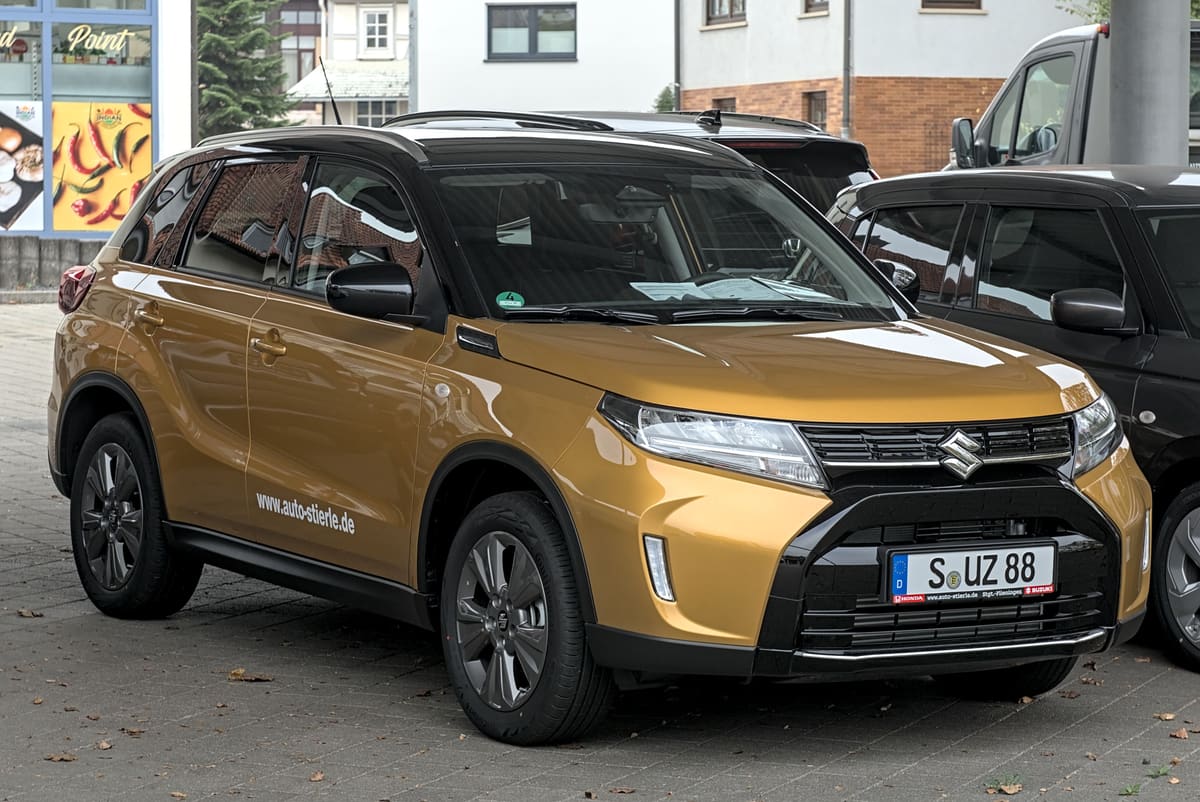
The Suzuki Vitara’s running costs are influenced by several factors including its tax band, insurance group, servicing demands, and depreciation. Its relatively modest engine options and efficient design help keep tax and fuel costs manageable, while insurance premiums vary with model year and trim. Routine servicing is straightforward, and the Vitara tends to hold its value reasonably well compared to other small SUVs.
Vehicle Tax and How It Affects Running Costs
The cost of vehicle tax for the Suzuki Vitara depends primarily on its engine size and emissions profile. In the UK, cars are taxed based on CO2 emissions, with lower-emission models attracting lower rates or even zero tax in some cases. The Vitara’s range of petrol and diesel engines means tax liability can vary significantly between trims and model years.
Newer Vitara models with smaller, more efficient engines typically fall into lower tax bands, reducing annual costs. Conversely, higher-powered versions or those with larger engines will attract higher tax rates. Diesel variants may also face additional levies depending on their emissions standards, especially in urban areas with Clean Air Zones.
To understand the exact tax cost for a specific Vitara, it is best to consult the official government website where up-to-date tax bands and rates are listed. This ensures buyers or owners know what to expect before purchase and can factor tax into their overall running costs.
Insurance Group and Its Impact on Premiums
Insurance premiums for the Suzuki Vitara are influenced by the insurance group assigned to each variant. This group is determined by factors such as engine size, performance, repair costs, and security features. Generally, Vitara models with smaller engines and fewer sporty features fall into lower insurance groups, making them more affordable to insure.
Higher trims with more powerful engines or additional technology may push the Vitara into a higher insurance group, increasing premiums. Additionally, driver demographics like age, location, and claims history will affect the final insurance cost, but the base group rating provides a useful starting point.
When considering insurance quotes, it is advisable to obtain multiple estimates from reputable providers. This helps identify the most competitive premium for the chosen Vitara model and trim, reflecting both the vehicle’s insurance group and personal circumstances.
Servicing Requirements and Maintenance Costs
The Suzuki Vitara is generally regarded as straightforward to service, with routine maintenance tasks being relatively affordable compared to larger or more complex vehicles. Its mechanical simplicity and widespread parts availability contribute to manageable servicing costs.
Regular servicing intervals typically include oil and filter changes, brake inspections, and checks on fluid levels and tyres. More extensive maintenance such as timing belt replacement or brake pad renewal depends on mileage and age. Diesel models may require additional attention to components like particulate filters.
Owners can reduce costs by choosing independent garages familiar with Suzuki vehicles rather than dealer services, which tend to be pricier. Keeping up with scheduled servicing not only ensures reliability but also helps maintain the vehicle’s resale value.
Fuel Economy and Its Role in Running Costs
Fuel consumption is a significant factor in the overall cost of running the Suzuki Vitara. The model’s range of engines, including petrol and diesel options, offers varying levels of efficiency. Smaller engines and newer technologies typically deliver better fuel economy, lowering running costs.
Driving style, traffic conditions, and load also influence fuel consumption. The Vitara’s lightweight construction and aerodynamic design help improve efficiency, but real-world figures will depend on individual usage patterns.
To get a clear picture of expected fuel costs, prospective buyers should review official fuel economy figures for the exact trim and engine combination they are interested in. This allows for a more accurate comparison with other vehicles in the same segment.
Depreciation and Residual Value
The Suzuki Vitara tends to hold its value reasonably well within the small SUV market. Factors influencing depreciation include the vehicle’s condition, mileage, service history, and desirability of the trim and engine type.
Models with popular features and efficient engines often retain value better, while those with less demand or higher running costs may depreciate faster. Regular maintenance and keeping the car in good condition also help preserve resale value.
Compared to some competitors, the Vitara’s reputation for reliability and practicality supports steadier depreciation. Buyers looking for a used Vitara should consider how well the specific model has been maintained to maximise its residual value.
Summary of Running Costs Considerations
Running costs for the Suzuki Vitara are shaped by taxation based on emissions, insurance group ratings, servicing demands, fuel economy, and depreciation. Understanding these components helps owners budget effectively and choose the right model for their needs. Checking official sources for tax bands and obtaining personalised insurance quotes are essential steps before purchase. Regular maintenance and mindful driving further contribute to keeping the Vitara economical over time.
Suzuki Vitara recall record
11 recalls have been issued for the Suzuki Vitara, between 1998 and 2025.
Canister Replacement
R/2025/127Issued 16 April 2025
On affected vehicles the EVAP Carbon canister should be filled with activated carbon however an air gap may develop on the inside during use which may degrade its performance. There is a risk that fuel evaporation gas will leak into the atmosphere resulting in non-compliance with regulations.
Remedy:Replace the EVAP Carbon cannister.
Affects cars built Sept 2019 to Jan 2020
Left Rear Brake Pipe Inspection
R/2024/032Issued 14 February 2024
On affected vehicles there is a possibility that the left rear brake pipe was damaged during the tightening process.
Remedy:Check the left rear brake pipe and replace if damaged.
Affects cars built Sept 2023 to Oct 2023
Some vehicles have an inappropriate design and material on check valve of vacuum pump
R/2022/267Issued 1 December 2022
Some vehicles have an inappropriate design and material on the check valve of brake vacuum pump.
Remedy:Replace the vacuum pump check valve.
Affects cars built Sept 2018 to May 2019
VEHICLE EMISSION OUTPUTS MAY NOT BE CORRECT
R/2021/059Issued 26 February 2021
Vehicle emission outputs may not be correct.
Remedy:Software upgrade to be carried out
Affects cars built Feb 2015 to Sept 2016
7 older recalls not shown.
A recall applies to a build range, not to every car of this model. Check a registration to see whether one specific vehicle has an outstanding recall.
Suzuki Vitara MOT record
From 69,735 recorded MOT tests, 10.0% failed.
| Registered | Tests | Failed | Median mileage |
|---|---|---|---|
| 2023 | 283 | 3.2% | 17,691 mi |
| 2022 | 6,053 | 4.6% | 21,145 mi |
| 2021 | 6,183 | 4.1% | 28,008 mi |
| 2020 | 5,093 | 6.1% | 33,693 mi |
| 2019 | 12,568 | 8.1% | 39,974 mi |
| 2018 | 11,872 | 11.1% | 48,398 mi |
| 2017 | 11,304 | 12.6% | 55,824 mi |
| 2016 | 10,837 | 14.1% | 64,022 mi |
Most common reasons for failure
- Tyre tread depth not in accordance with the requirements46.7%
- a brake lining or pad worn below 1.5mm17.1%
- A tyre seriously damaged15.6%
- Brake disc or drum excessively weakened, insecure or fractured11.0%
- Brake pipe damaged or excessively corroded9.5%
Figures cover every Suzuki Vitara tested in the DVSA dataset, not this specific car. Check a registration for the actual history of one vehicle.
Suzuki Vitara official figures
Median across 12 variants on sale, petrol electric.
- Combined economy
- 52.3 mpg
- WLTP median across variants
- CO2 emissions
- 128 g/km
- Sets the first-year tax rate
Official figures for new cars. Real economy varies with driving, load and conditions.
Frequently asked questions
How expensive is servicing a Suzuki Vitara?
A typical service for a Suzuki Vitara involves oil and filter changes, air filter replacement, and checks on brake pads and discs. The timing chain usually does not require replacement at early intervals, which helps keep costs reasonable.
What should I check to avoid costly repairs on a Vitara?
Keep an eye on the engine warning light, which can indicate issues with components like the oxygen sensor or catalytic converter. Regularly inspect the condition of the brake discs and pads to prevent more expensive repairs later.
Are Suzuki Vitara tyres expensive to replace?
Tyre replacement costs depend on the size fitted to your Vitara trim. The car often uses standard SUV tyres, so you can find a range of options. Checking tyre tread depth and wear patterns regularly helps avoid uneven wear and premature replacement.
Does the Suzuki Vitara have any known issues that affect running costs?
Some Vitara owners report occasional problems with the dual-clutch automatic gearbox, such as hesitation or juddering. Having the transmission fluid checked and changed at recommended intervals can help maintain smooth operation and avoid costly repairs.
How often does the Suzuki Vitara need brake servicing?
Brake pads and discs should be inspected at every service, typically every 12 months or 12,000 miles. If you notice squealing noises or reduced braking performance, it is wise to get the brakes checked sooner to prevent damage to the calipers.
Is the Suzuki Vitara expensive to insure?
Insurance costs vary by driver profile and location, but the Vitara generally falls into moderate insurance groups. Features like electronic stability control and multiple airbags can help reduce premiums by improving safety ratings.
What fuel type is best for keeping running costs low on a Vitara?
Most Suzuki Vitaras run on petrol, and using the recommended grade helps maintain engine health. Avoiding premium fuels unless specified prevents unnecessary expense, and regular servicing of the fuel injectors keeps fuel efficiency steady.
Are replacement parts for the Suzuki Vitara readily available?
Parts like brake pads, air filters, and wiper blades are widely available from Suzuki dealers and independent suppliers. More specialised components, such as the turbocharger on certain engines, may require ordering but are generally not difficult to source.
Sources
- DVSA anonymised MOT tests and results (Open Government Licence v3.0)
- VCA new car fuel consumption and emissions data (Open Government Licence v3.0)
- DVSA vehicle safety recalls (Open Government Licence v3.0)