MOT failure rates
Suzuki Jimny MOT failure rates: what to expect
What fails on a Suzuki Jimny at MOT, how often, and what each fix typically costs.
Updated 4th September 2026 DVSA data: Across 23,018 recorded MOT tests, 25.7% failed.
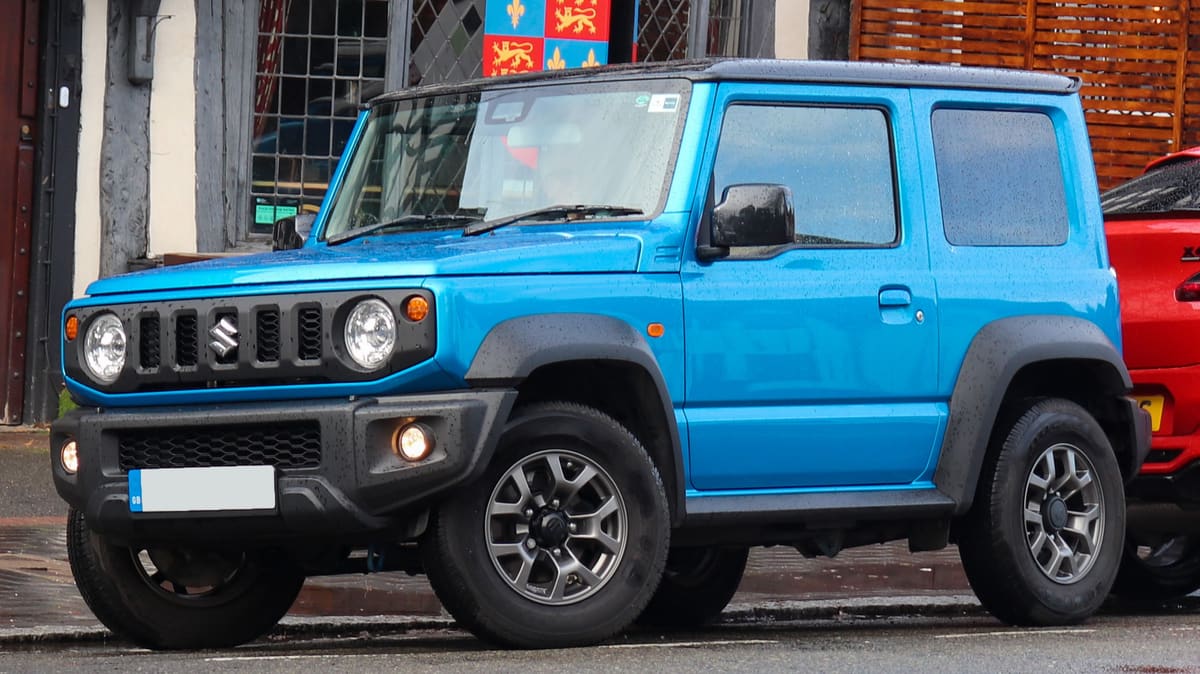
The Suzuki Jimny is a popular compact 4x4 vehicle, but like any car, it can face issues during its MOT. Common failures include corrosion, suspension problems, and lighting faults. Addressing these issues can vary in cost, but understanding them can help Jimny owners prepare for their MOT tests.
Corrosion Issues
Corrosion is a frequent problem with Suzuki Jimnys, particularly in older models. The underbody and wheel arches are often the most affected areas. Rust can lead to significant structural weaknesses, which can result in an MOT failure.
To fix corrosion, affected areas may need to be treated with rust inhibitors, and in severe cases, sections may require replacement.
Suspension Problems
The suspension system on the Suzuki Jimny is designed to handle off-road conditions, but wear and tear can lead to common MOT failures. Issues often arise with shock absorbers, springs, and bushings, which can affect the vehicle’s handling and safety.
Regular checks can help identify these issues before the MOT.
Lighting Failures
Lighting issues are another common reason for MOT failures in Suzuki Jimnys. Problems can include blown bulbs, misaligned headlights, or faulty indicators. These issues are often straightforward to fix but can lead to a failed MOT if not addressed.
Ensuring all lights are functioning correctly before the MOT can save time and money.
Brake System Concerns
The braking system is critical for safety, and any issues can lead to an MOT failure. Common problems include worn brake pads, discs, or fluid leaks. The Suzuki Jimny’s compact design can make brake components more susceptible to wear, especially if the vehicle is frequently used off-road.
Regular maintenance of the braking system is essential for passing the MOT.
Exhaust Emissions
Suzuki Jimnys can sometimes fail their MOT due to excessive exhaust emissions. This issue can arise from a faulty catalytic converter, worn-out oxygen sensors, or other engine-related problems. Emissions failures are particularly concerning as they indicate potential engine inefficiencies.
Regular servicing and checks can help keep emissions within acceptable limits and ensure a successful MOT.
Tyre Condition
Tyres are a critical safety component and are frequently inspected during the MOT. Common issues include insufficient tread depth, uneven wear, or damage. The legal minimum tread depth in the UK is 1.6mm, and exceeding this is essential for safe driving.
Regularly checking tyre pressure and tread depth can help avoid MOT failures and ensure better handling and safety on the road.
Suzuki Jimny recall record
8 recalls have been issued for the Suzuki Jimny, between 2001 and 2024.
Jimny Fuel Pump Replacement
R/2024/138Issued 8 April 2024
The fuel feeding impeller may interfere with the fuel pump housing resulting in the fuel pump malfunction
Remedy:Replace the fuel pump fitted to affected vehicles
Affects cars built Nov 2018 to Sept 2019
THE FUEL FEEDING IMPELLER IN THE FUEL PUMP MAY BE SWOLLEN AND DEFORMED
R/2021/172Issued 12 July 2021
The fuel feeding impeller in the fuel pump may be swollen and deformed.
Remedy:Replace fuel pump.
Affects cars built May 2018 to Nov 2018
IMPROPER DESIGN OF THE DRIVER SIDE AND THE PASSENGER SIDE DOOR HARNESSES MAY AFFECT AIR BAG OPERATION
R/2021/173Issued 12 July 2021
Improper design of the driver side and the passenger side door harnesses may affect air bag operation..
Remedy:Replace the door harnesses of the affected vehicles.
Affects cars built May 2018 to Dec 2020
BRAKING PERFORMANCE MAY BE REDUCED
R/2016/211Issued 28 October 2016
The brake servo booster may not have been correctly manufactured. This may cause a harder feel to the brake pedal operation and require more effort from the driver.
Remedy:Replace Brake Servo Booster on affected vehicles.
Affects cars built Jan 2014 to Jul 2014
4 older recalls not shown.
A recall applies to a build range, not to every car of this model. Check a registration to see whether one specific vehicle has an outstanding recall.
Suzuki Jimny MOT record
From 23,018 recorded MOT tests, 25.7% failed.
| Registered | Tests | Failed | Median mileage |
|---|---|---|---|
| 2022 | 430 | 2.1% | 15,385 mi |
| 2021 | 397 | 1.3% | 21,618 mi |
| 2020 | 887 | 4.7% | 24,549 mi |
| 2019 | 1,194 | 8.1% | 29,056 mi |
| 2018 | 494 | 16.4% | 30,672 mi |
| 2017 | 932 | 16.2% | 32,690 mi |
| 2016 | 1,042 | 18.7% | 38,347 mi |
| 2015 | 968 | 19.3% | 42,554 mi |
Most common reasons for failure
- Body, cab or chassis excessively corroded at a mounting point25.7%
- Brake pipe damaged or excessively corroded24.0%
- A spring or spring component fractured or seriously weakened17.3%
- Vehicle structure corroded to the extent that the rigidity of the assembly is seriously reduced17.0%
- A tyre seriously damaged15.9%
Figures cover every Suzuki Jimny tested in the DVSA dataset, not this specific car. Check a registration for the actual history of one vehicle.
Frequently asked questions
What is the Suzuki Jimny MOT requirement in the UK?
In the UK, the Suzuki Jimny must undergo its first MOT test three years after its registration date. After that, it needs to be tested annually.
How can I check if my Suzuki Jimny has a valid MOT?
You can check the MOT status of your Suzuki Jimny by visiting the official UK government website. You will need the vehicle registration number to access the information.
What common issues should I look for before the MOT?
Before the MOT, check the brakes, lights, tyres, and exhaust system of your Suzuki Jimny. Ensuring these components are in good condition can help avoid failures.
Can I drive my Suzuki Jimny if the MOT has expired?
No, you cannot legally drive your Suzuki Jimny if the MOT has expired, unless you are driving it to a pre-booked MOT appointment. Doing so can result in fines.
What happens if my Suzuki Jimny fails the MOT?
If your Suzuki Jimny fails the MOT, you will receive a list of reasons for the failure. You will need to address these issues and have the vehicle retested.
Is there any way to prepare my Suzuki Jimny for the MOT?
Yes, you can prepare your Suzuki Jimny by ensuring it is clean and checking fluid levels, tyre pressure, and lights. A thorough inspection can help identify potential issues.
What documents do I need for the MOT appointment?
You will need to bring the vehicle registration document and any previous MOT certificates if available. It's also helpful to have proof of insurance.
Sources
- DVSA anonymised MOT tests and results (Open Government Licence v3.0)
- DVSA vehicle safety recalls (Open Government Licence v3.0)