Running costs
Subaru Forester running costs: what UK ownership really costs
Subaru Forester UK running costs: fuel or electric, insurance group, road tax, servicing and depreciation.
Updated 19th October 2026 DVSA data: Across 14,668 recorded MOT tests, 23.7% failed.
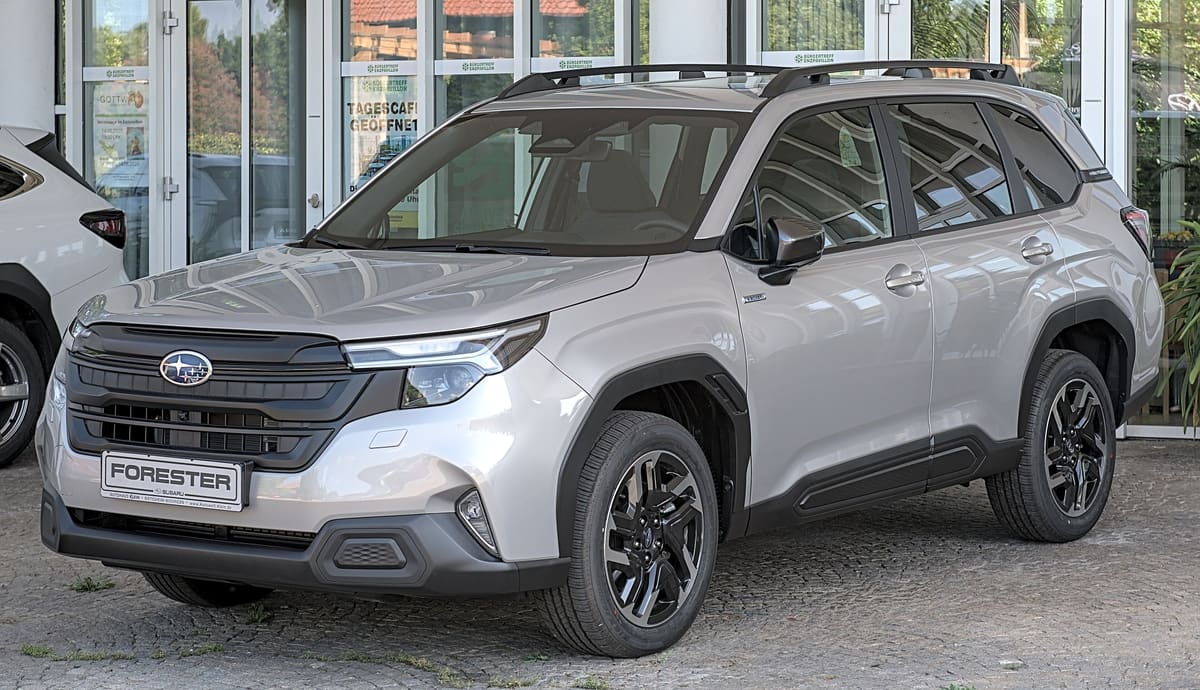
The Subaru Forester’s running costs are shaped by its drivetrain layout, engine options, and overall design. Its all-wheel-drive system and boxer engine can lead to higher servicing and repair expenses compared to simpler cars. Insurance groups vary depending on engine size and trim, while road tax depends on emissions. Residual values tend to be steady, reflecting its reputation for reliability and practicality.
How Vehicle Tax Impacts Forester Running Costs
Vehicle Excise Duty (VED), commonly known as road tax, is influenced by the Forester’s engine emissions and fuel type. Petrol and diesel versions are taxed differently, with diesel models potentially facing higher rates due to stricter emissions standards. The UK government’s tax bands are based on CO2 emissions, so higher-output or older models may attract increased charges.
The Forester’s all-wheel-drive system and engine size can push it into higher tax brackets compared to smaller, front-wheel-drive SUVs. Buyers should check the exact emissions figures for the model and trim they are considering on the official government website to understand the precise tax liability. Additionally, newer Foresters with updated engines may benefit from lower tax bands due to improved emissions control technologies.
Insurance Group Factors for the Subaru Forester
Insurance premiums for the Forester are affected by its engine power, repair costs, and safety features. Larger engines and higher-spec trims typically place the Forester in mid to upper insurance groups, reflecting the increased risk and replacement value. The all-wheel-drive system can be a double-edged sword: it may reduce accident risk by improving handling but can increase repair costs if components are damaged.
Safety equipment such as multiple airbags, stability control, and driver assistance systems can help lower insurance costs by reducing the likelihood and severity of claims. The Forester’s reputation for solid crash safety ratings also benefits insurance assessments. Prospective owners should obtain personalised insurance quotes, as factors like location, driving history, and annual mileage will significantly influence the final premium.
Servicing and Maintenance Demands
The Subaru Forester’s boxer engine and all-wheel-drive system require specific maintenance routines that can be more involved than those for simpler front-wheel-drive vehicles. Regular oil changes are crucial to maintain the horizontally opposed engine’s smooth operation. The AWD system includes additional components such as a centre differential and transfer case, which need periodic inspection and servicing.
Brake and suspension wear may be slightly higher due to the Forester’s weight and off-road capability, especially if used on rough terrain. Tyre replacement costs can also be above average since the vehicle often requires tyres suited to both on-road grip and light off-road use. Servicing intervals vary by model year and engine type, so owners should follow the manufacturer’s schedule closely to avoid costly repairs.
Fuel Economy and Running Costs
While the Forester is not designed as a fuel-sipping city car, its fuel consumption is generally reasonable for a compact SUV with all-wheel drive. The boxer engine layout offers a low centre of gravity, which aids driving dynamics but does not necessarily translate to exceptional fuel efficiency. Larger engines and turbocharged variants will consume more fuel, impacting running costs accordingly.
Drivers who regularly use the Forester for long-distance or mixed driving may find fuel costs manageable, but urban stop-start conditions can increase consumption. Choosing the right trim and engine variant can help balance performance and economy. Checking official fuel economy figures for the specific model is advisable, as these vary widely across the Forester range.
Depreciation and Resale Value
The Subaru Forester tends to hold its value reasonably well, supported by its reputation for reliability, practicality, and all-weather capability. Demand for used Foresters remains steady, particularly among buyers seeking a rugged yet comfortable SUV. Models with full service history and low mileage typically command better resale prices.
Factors influencing depreciation include the vehicle’s age, condition, mileage, and trim level. Higher-spec models with additional features may retain value better but can also cost more to insure and service. The Forester’s niche appeal as a boxer-engined AWD SUV means it may not depreciate as rapidly as some mainstream competitors, but prospective buyers should consider individual vehicle history when assessing value.
Summary of Running Cost Considerations
Owning a Subaru Forester involves balancing the benefits of its unique engineering and all-wheel-drive capability against the associated running costs. Road tax depends on emissions, insurance is influenced by engine size and safety features, and servicing requires attention to specialised components. Fuel economy varies with engine choice, and resale values tend to be stable due to the model’s strong reputation. Checking the specific details of the chosen model and trim is essential to understanding the full cost picture.
Subaru Forester recall record
12 recalls have been issued for the Subaru Forester, between 2012 and 2022.
THE IMPELLER DEFORMATION MAY CAUSE THE FUEL PUMP TO BECOME INOPERATIVE
R/2022/266Issued 19 September 2022
The fuel pump impeller may cause the pump failure resulting in stalling of the vehicle.
Remedy:Replace the fuel pump assembly.
Affects cars built Nov 2020 to Jun 2021
POTENTIAL FAILURE OF THE IGNITION COIL MODULE CAUSING ENGINE STALL AND A NONE START CONDITION
R/2021/353Issued 1 November 2021
Ignition coils may short circuit and fail.�
Remedy:Replace all ignition coils. If a misfire DTC is stored replace the front exhaust pipe.�
Affects cars built Sept 2016 to Oct 2019
THE BOLTS OF THE REAR STABILISER BRACKET MIGHT BECOME LOOSE
R/2021/352Issued 1 November 2021
The bolts on the rear stabilizer bracket might become loose.�
Remedy:Inspect the bolts and tighten them to the�specified��torque.�If the bolt(s) are missing new bolts will be�attached.�
Affects cars built Apr 2017 to May 2019
DUE TO IMPROPER ECM PROGRAMMING UNDER CERTAIN CIRCUMSTANCES THE IGNITION COIL MAY BE ENERGIZED LONGER THAN DESIGNED AFTER THE ENGINE IS OFF
R/2020/316Issued 15 November 2020
Possible engine stall and restart failure.
Remedy:Re-programme the engine control module and replace if required the ignition coil.
Affects cars built Sept 2016 to Oct 2019
8 older recalls not shown.
A recall applies to a build range, not to every car of this model. Check a registration to see whether one specific vehicle has an outstanding recall.
Subaru Forester MOT record
From 14,668 recorded MOT tests, 23.7% failed.
| Registered | Tests | Failed | Median mileage |
|---|---|---|---|
| 2022 | 261 | 5.0% | 24,852 mi |
| 2021 | 724 | 9.0% | 33,703 mi |
| 2020 | 226 | 8.8% | 38,072 mi |
| 2019 | 1,092 | 8.1% | 40,947 mi |
| 2018 | 914 | 14.0% | 50,636 mi |
| 2017 | 895 | 17.6% | 60,440 mi |
| 2016 | 1,172 | 22.4% | 69,659 mi |
| 2015 | 974 | 23.2% | 77,894 mi |
Most common reasons for failure
- A suspension pin, bush or joint excessively worn46.1%
- Tyre tread depth not in accordance with the requirements17.9%
- A tyre seriously damaged13.1%
- A suspension component excessively damaged or corroded12.7%
- a brake lining or pad worn below 1.5mm10.2%
Figures cover every Subaru Forester tested in the DVSA dataset, not this specific car. Check a registration for the actual history of one vehicle.
Subaru Forester official figures
Median across 3 variants on sale, petrol electric.
- Combined economy
- 34.9 mpg
- WLTP median across variants
- CO2 emissions
- 183 g/km
- Sets the first-year tax rate
Official figures for new cars. Real economy varies with driving, load and conditions.
Frequently asked questions
How often does the Subaru Forester need servicing to keep running costs low?
Subaru recommends servicing the Forester roughly every 12 months or 12,000 miles, whichever comes first. Regular oil changes and checks on the timing belt condition help avoid costly engine repairs. Keeping an eye on the brake pads during these visits can also prevent premature wear.
Are there any specific parts on the Forester that tend to wear out quickly?
The Forester’s CV joints and wheel bearings can show wear, especially if you drive on rough roads. Listen for clicking noises when turning, which may indicate CV joint wear. A garage can inspect these during routine maintenance to avoid more expensive repairs later.
What should I check to avoid unexpected running costs with the Forester’s cooling system?
Keep an eye on the coolant level and watch for any warning lights related to engine temperature on the dashboard. The radiator and thermostat are key components that can fail and cause overheating. Regular coolant flushes help maintain the system’s efficiency.
Does the Subaru Forester have any known issues that affect fuel economy?
Fuel economy can be affected if the oxygen sensors or spark plugs become worn. These parts influence how efficiently the engine burns fuel. If you notice rough idling or a drop in performance, it’s worth having these components checked and replaced if necessary.
What are the typical tyre wear patterns on a Subaru Forester and how do they impact running costs?
Uneven tyre wear on the Forester often results from misaligned wheels or worn suspension bushes. This can lead to more frequent tyre replacements. Regular wheel alignment checks and inspecting suspension components like the anti-roll bar links can help extend tyre life.
How reliable is the Forester’s all-wheel-drive system in terms of maintenance?
The Forester’s all-wheel-drive system requires periodic checks of the transfer case fluid and differentials. Neglecting these can lead to noisy operation or drivetrain damage. A garage can perform fluid changes and inspect the driveshaft boots to keep the system running smoothly.
Are there any dashboard warning lights specific to the Forester that I should be aware of?
The Forester features a stability control warning light that can indicate issues with the traction system or wheel speed sensors. If this light stays on, it’s advisable to have the ABS and stability control systems diagnosed to prevent safety and running cost issues.
What routine checks can I do myself to keep the Forester’s running costs down?
You can regularly check the condition of the air filter and replace it if dirty, as a clogged filter reduces engine efficiency. Also, inspect the brake fluid level and look for any leaks around the brake calipers. These simple checks help avoid more expensive repairs.
Sources
- DVSA anonymised MOT tests and results (Open Government Licence v3.0)
- VCA new car fuel consumption and emissions data (Open Government Licence v3.0)
- DVSA vehicle safety recalls (Open Government Licence v3.0)