Running costs
Skoda Kamiq running costs: what UK ownership really costs
Skoda Kamiq UK running costs: fuel or electric, insurance group, road tax, servicing and depreciation.
Updated 2nd October 2026 DVSA data: Across 24,108 recorded MOT tests, 9.3% failed.
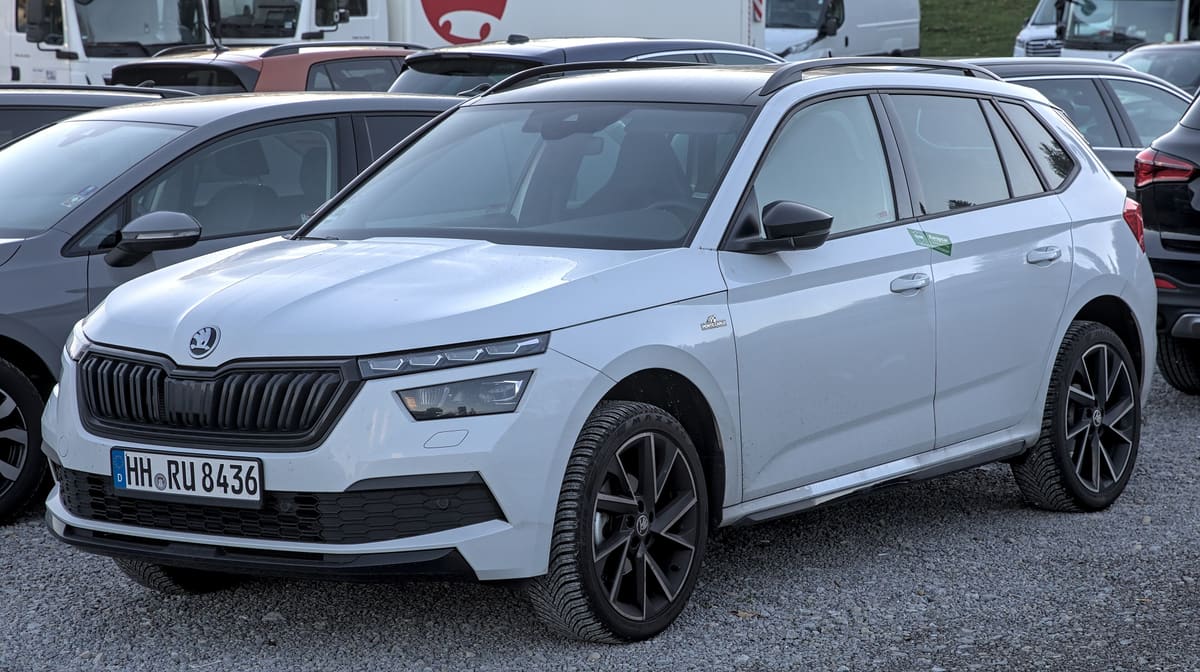
The Skoda Kamiq’s running costs are shaped by factors such as its tax band, insurance group, servicing demands, and depreciation profile. Its efficient engines and moderate insurance grouping help keep expenses manageable, while routine servicing is straightforward and value retention is competitive within the small SUV segment. Understanding these elements helps clarify what owning a Kamiq entails financially.
Vehicle Tax and Its Impact on Running Costs
The cost of vehicle tax for the Skoda Kamiq depends primarily on its CO2 emissions and fuel type, as outlined by the UK government’s vehicle tax system. Petrol and diesel models are taxed differently, with lower-emission variants benefiting from reduced rates or exemptions in the first year. After the initial period, a standard rate applies regardless of emissions for most petrol and diesel cars.
This means that choosing a Kamiq with a more efficient engine can reduce the annual tax burden, especially if it qualifies for lower first-year rates. Electric and plug-in hybrid versions, if available, typically enjoy favourable tax treatment, including possible exemptions or reduced rates, reflecting government incentives to encourage cleaner vehicles.
Prospective owners should consult the official gov.uk vehicle tax checker with the exact registration details of the Kamiq they are interested in, as tax rates can vary significantly based on engine specification and registration date. This ensures accurate budgeting for annual tax costs.
Insurance Group and Factors Influencing Premiums
Insurance costs for the Skoda Kamiq are influenced by its assigned insurance group, which reflects the vehicle’s performance, repair costs, safety features, and theft risk. The Kamiq generally falls into moderate insurance groups, balancing its small SUV appeal with manageable power outputs and safety equipment.
Factors that can push insurance premiums up include higher engine sizes, sporty trims, or optional extras that increase the vehicle’s value. Conversely, models with advanced safety technology and lower power outputs tend to attract more affordable premiums. Driver profile, location, and claims history also play crucial roles in determining the final insurance cost.
To get a precise idea of insurance costs, it is advisable to obtain quotes from multiple insurers using the specific trim and engine variant of the Kamiq. This approach reflects the variability in premiums and highlights how individual circumstances affect insurance expenses.
Servicing and Maintenance Demands
The Skoda Kamiq benefits from straightforward servicing requirements typical of modern small SUVs. Routine maintenance includes oil changes, brake checks, tyre inspections, and scheduled replacements of components such as air filters and spark plugs. The intervals between services are generally standard and designed to keep running costs predictable.
Servicing costs can vary depending on whether the work is carried out at a main dealer or an independent garage. Main dealers may charge a premium but offer the advantage of manufacturer-trained technicians and original parts, which can be important for warranty compliance. Independent garages often provide a more cost-effective alternative without compromising quality.
The availability of parts and the relative simplicity of the Kamiq’s mechanical layout contribute to reasonable maintenance expenses. However, owners should be mindful of additional costs that may arise from wear items like tyres and brakes, which depend on driving style and conditions.
Fuel Economy and Its Influence on Running Costs
Fuel consumption is a significant factor in the overall cost of running a Skoda Kamiq. The model’s range of engines is designed to offer a balance between performance and efficiency, with smaller petrol engines typically delivering better economy in urban and mixed driving conditions.
Driving habits, traffic conditions, and load can all affect real-world fuel consumption, so owners should consider their typical usage when estimating fuel costs. Choosing a trim with an efficient engine and manual transmission may help reduce fuel expenses, although automatic variants offer convenience that some drivers prefer.
While exact fuel economy figures vary by trim and engine, the Kamiq’s engineering aims to keep running costs competitive within its class. Prospective buyers should check official fuel economy ratings and consider independent fuel consumption reports to get a realistic expectation.
Depreciation and Residual Value
The Skoda Kamiq tends to hold its value reasonably well compared to other small SUVs, thanks to the brand’s reputation for reliability and practicality. Depreciation is influenced by factors such as initial purchase price, popularity of the model, and ongoing demand in the used car market.
Higher-specification trims and well-maintained examples usually retain value better, while cars with higher mileage or less desirable features may depreciate more quickly. The availability of newer models with updated technology can also impact the Kamiq’s residual value over time.
Understanding depreciation helps owners anticipate the vehicle’s worth when it comes time to sell or trade in. Keeping the car in good condition, adhering to service schedules, and maintaining comprehensive documentation can all support stronger resale values.
Tyres, Repairs, and Other Running Costs
Beyond the major cost areas, tyres and repairs contribute to the overall expense of running a Skoda Kamiq. The vehicle typically uses tyres sized for small SUVs, which are widely available and competitively priced. Regular tyre maintenance, including rotation and alignment, helps extend tyre life and maintain safety.
Repairs are generally straightforward due to the Kamiq’s conventional mechanical layout and the widespread availability of parts. However, costs can rise if the vehicle requires work on more complex systems like electronics or advanced driver assistance features.
Owners should budget for occasional unexpected repairs and consider extended warranties or service plans to manage these potential costs. Routine checks and prompt attention to minor issues can prevent more expensive repairs down the line.
Skoda Kamiq recall record
2 recalls have been issued for the Skoda Kamiq, between 2019 and 2020.
THE E-CALL FUNCTION MAY NOT WORK CORRECTLY
R/2020/086Issued 25 March 2020
Due to a fault of the software of the OCU control unit (Online Connectivity Unit) the e-call function may work incorrectly.
Remedy:An update of the software of the OCU control unit has to be carried out.
Affects cars built Jul 2019 to Feb 2020
AN INCORRECT DATASET WAS UPLOADED TO THE OCU UNIT
R/2019/376Issued 1 November 2019
The functions e-call and Info/Service call may not work correctly due to a software fault.
Remedy:The OCU control unit has to be replaced in the affected vehicles
Affects cars built Aug 2019 to Sept 2019
A recall applies to a build range, not to every car of this model. Check a registration to see whether one specific vehicle has an outstanding recall.
Skoda Kamiq MOT record
From 24,108 recorded MOT tests, 9.3% failed.
| Registered | Tests | Failed | Median mileage |
|---|---|---|---|
| 2023 | 588 | 7.3% | 19,616 mi |
| 2022 | 7,973 | 8.4% | 22,041 mi |
| 2021 | 7,905 | 9.0% | 29,204 mi |
| 2020 | 6,930 | 10.8% | 33,186 mi |
| 2019 | 712 | 11.0% | 35,944 mi |
Most common reasons for failure
- A tyre seriously damaged29.0%
- a brake lining or pad worn below 1.5mm27.0%
- Brake disc or drum excessively weakened, insecure or fractured19.0%
- Tyre tread depth not in accordance with the requirements17.0%
- Brake disc or drum significantly and obviously worn7.9%
Figures cover every Skoda Kamiq tested in the DVSA dataset, not this specific car. Check a registration for the actual history of one vehicle.
Skoda Kamiq official figures
Median across 28 variants on sale, petrol.
- Combined economy
- 49.9 mpg
- WLTP median across variants
- CO2 emissions
- 128 g/km
- Sets the first-year tax rate
Official figures for new cars. Real economy varies with driving, load and conditions.
Frequently asked questions
What should I expect in terms of fuel costs for a Skoda Kamiq?
Fuel costs depend on the engine type and driving style. The Kamiq’s turbocharged petrol engines generally offer efficient fuel use, but keep an eye on the fuel gauge and consider regular servicing of the fuel injectors to maintain economy.
How often does the Skoda Kamiq need servicing to keep running costs low?
Skoda recommends servicing the Kamiq roughly every 12 months or 10,000 miles. Regular oil changes and checks on the timing belt and brake pads help avoid expensive repairs later. Always follow the service schedule in your vehicle handbook.
Are there any specific parts on the Skoda Kamiq that tend to wear out quickly?
Brake discs and pads can wear faster if you do a lot of city driving. Watch for squealing noises or a spongy brake pedal, which indicate it’s time for a garage check. Also, the clutch may need attention if you notice slipping or difficulty changing gears.
Does the Skoda Kamiq require any special maintenance for its turbocharger?
The turbocharger needs clean oil and proper warm-up and cool-down periods to avoid damage. Avoid shutting the engine off immediately after hard driving to protect the turbo’s bearings. Regular oil changes with the correct grade are essential.
What are the typical costs related to tyres on the Skoda Kamiq?
Tyre wear depends on your driving habits and road conditions. The Kamiq uses standard sizes, so replacement tyres are widely available. Check the tread depth regularly and look for uneven wear, which might mean a wheel alignment is needed.
How can I check if the Skoda Kamiq’s battery is in good condition?
Look out for slow engine starts or dim interior lights, which can signal a weakening battery. A garage can perform a battery load test to assess its health. Keeping the battery terminals clean and free from corrosion also helps prolong battery life.
Are there any warning lights specific to the Skoda Kamiq that affect running costs?
The engine management light can indicate issues with components like the oxygen sensor or turbo system, which can impact fuel efficiency. Addressing these warnings promptly at a garage can prevent higher running costs due to poor engine performance.
What routine checks can I do myself to keep the Skoda Kamiq running smoothly?
Regularly check tyre pressure and oil levels, as underinflated tyres and low oil can increase running costs. Also, inspect the air filter for dirt and replace it if clogged to maintain engine efficiency. These simple steps help avoid unnecessary garage visits.
Sources
- DVSA anonymised MOT tests and results (Open Government Licence v3.0)
- VCA new car fuel consumption and emissions data (Open Government Licence v3.0)
- DVSA vehicle safety recalls (Open Government Licence v3.0)