Running costs
Seat Ateca running costs: what UK ownership really costs
Seat Ateca UK running costs: fuel or electric, insurance group, road tax, servicing and depreciation.
Updated 13th October 2026 DVSA data: Across 51,393 recorded MOT tests, 10.0% failed.
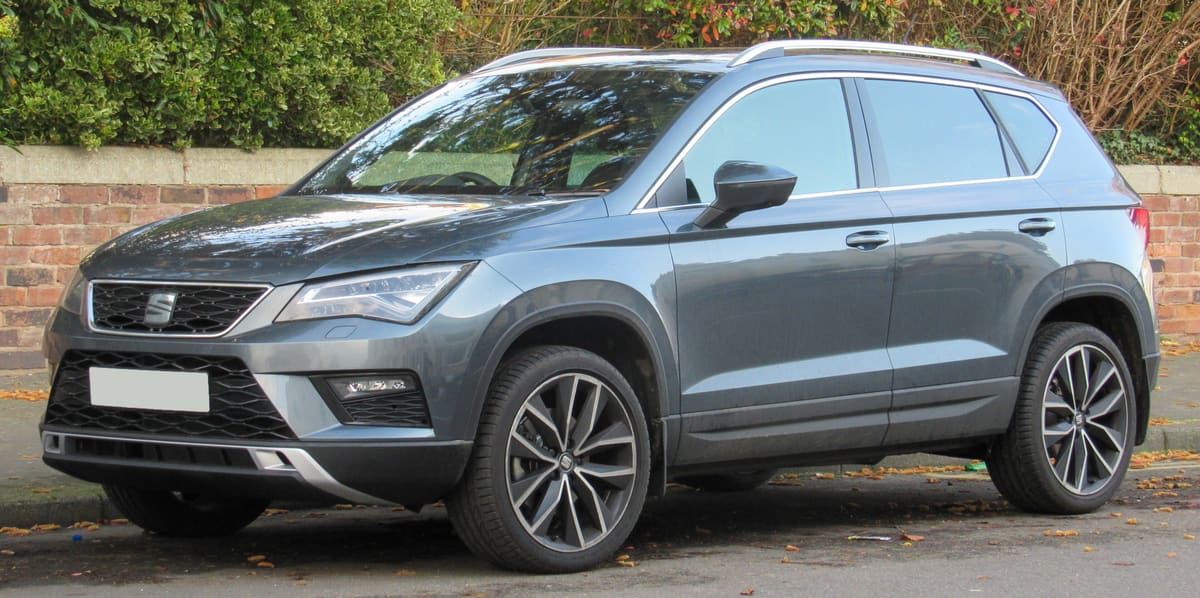
The Seat Ateca’s running costs are influenced by factors such as its taxation band, insurance group, servicing requirements, and depreciation. Its tax liability depends on engine emissions and fuel type, while insurance costs reflect its safety features and repair costs. Servicing is generally straightforward but varies with engine choice. The Ateca tends to hold value reasonably well compared to rivals, making it a practical choice for cost-conscious buyers.
Vehicle Tax and How It Affects the Seat Ateca
The cost of vehicle tax for the Seat Ateca is primarily determined by its CO2 emissions and fuel type. Petrol and diesel variants are taxed differently, with diesel models often facing higher charges unless they meet strict emissions standards. The government’s vehicle tax system is designed to encourage cleaner, lower-emission cars, so the Ateca’s tax band will vary depending on the engine and year of registration.
Newer Ateca models with lower emissions benefit from reduced or zero first-year tax rates, while older or higher-emission versions attract higher charges. Petrol versions typically fall into more favourable tax brackets than diesel, but this depends on the specific engine and trim. Buyers should consult the official government vehicle tax tool to confirm the exact tax band for the Ateca variant they are considering, as this directly impacts annual running costs.
Insurance Group and What Influences It
The Ateca’s insurance group is a key factor in determining how much it costs to insure. Insurance groups are assigned based on the car’s performance, repair costs, safety features, and theft risk. The Ateca generally sits in a moderate insurance group, reflecting its balance of sporty styling and family-friendly practicality.
Higher-powered engines or sportier trims tend to push the insurance group up because they are seen as higher risk by insurers. Conversely, models with more safety technology and lower repair costs may fall into lower groups. Insurance premiums also depend on the driver’s profile and location, so obtaining a personalised quote is essential. Checking comparison sites or insurer websites will provide a clearer picture of expected insurance costs for the specific Ateca trim.
Servicing and Maintenance Demands
The Seat Ateca’s servicing requirements are typical for a modern compact SUV, with intervals that vary depending on engine type and usage. Petrol engines usually have slightly less demanding servicing schedules than diesels, which may require more frequent oil and filter changes due to the nature of diesel combustion.
Routine servicing includes checks on brakes, tyres, fluid levels, and engine components. The Ateca’s mechanical layout is straightforward, making servicing relatively affordable compared to more complex or premium SUVs. However, costs can rise if the car is equipped with advanced driver assistance systems or requires specific parts. Following the manufacturer’s recommended service schedule helps maintain reliability and resale value.
Fuel Economy and Running Costs
Fuel consumption is a significant element of the Ateca’s running costs. The car’s efficiency depends on engine size, fuel type, and driving conditions. Smaller petrol engines tend to be more economical for urban and mixed driving, while diesel variants may offer better efficiency on longer motorway journeys.
Driving style and maintenance also influence fuel costs. Keeping the car well-maintained, avoiding aggressive acceleration, and using the correct fuel grade can help reduce consumption. The Ateca’s weight and aerodynamics contribute to its fuel economy, but buyers should check the official fuel consumption figures for the specific model and engine they are interested in, as these vary.
Depreciation and Residual Value
The Seat Ateca holds its value reasonably well within the compact SUV segment, partly due to its strong brand reputation and practical appeal. Depreciation is influenced by factors such as mileage, condition, and market demand for SUVs. Models with popular engine choices and trims tend to retain value better.
Diesel models may depreciate faster if market sentiment shifts away from diesel vehicles, especially in urban areas with low-emission zones. Petrol models often enjoy steadier demand in the used market. Keeping the car well-maintained and retaining full service history also supports higher resale values. Buyers should consider depreciation alongside other running costs when assessing the Ateca’s overall affordability.
Tyres, Repairs, and Other Running Expenses
Tyre wear and repair costs contribute to the ongoing expense of owning a Seat Ateca. The car’s tyre size varies by trim, with larger wheels generally costing more to replace and potentially wearing faster. Regularly checking tyre condition and maintaining correct pressures can extend tyre life and improve fuel economy.
Repairs are typically straightforward, with parts widely available due to the Ateca’s shared platform with other models in the Volkswagen Group. Insurance repair costs influence premiums, so models with more expensive bodywork or advanced technology may cost more to insure. Routine maintenance such as brake pads, wiper blades, and fluids represent predictable running costs that should be budgeted for alongside fuel and tax.
Seat Ateca recall record
11 recalls have been issued for the Seat Ateca, between 2017 and 2023.
Front driver airbag replacement
R/2023/273Issued 11 September 2023
In vehicles produced in a specific period with airbags from manufacturer Takata in the event of an accident with airbag activation the driver airbag gas generator housing may explode.�
Remedy:Inspect the driver�s airbag and replace it if necessary.�
Affects cars built Oct 2016 to Mar 2017
ENGINE DESIGN COVERS COULD DETACH FROM THEIR FIXING
R/2022/076Issued 23 March 2022
In some vehicles within the range of specified VINs it is possible that they have engine design covers installed that could detach from their fixing depending on use (very sporty driving or poor road conditions) and the operating time.
Remedy:The engine design cover must be removed on all affected vehicles.
Affects cars built Oct 2020 to Feb 2022
POSSIBLE FAULT IN A TURN SIGNAL
R/2019/356Issued 14 October 2019
In the event of a turn signal (indicator) fault the driver may not realise
Remedy:Reprogram the on-board network control unit
Affects cars built Nov 2016 to Jul 2018
AT LOW ENGINE SPEEDS THE ENGINE PRODUCES INSUFFICIENT TORQUE
R/2019/305Issued 9 September 2019
Too little torque may be provided by the engine at low engine speeds.
Remedy:On the affected vehicles the software of the engine control unit must be updated.
Affects cars built Sept 2018 to Jun 2019
7 older recalls not shown.
A recall applies to a build range, not to every car of this model. Check a registration to see whether one specific vehicle has an outstanding recall.
Seat Ateca MOT record
From 51,393 recorded MOT tests, 10.0% failed.
| Registered | Tests | Failed | Median mileage |
|---|---|---|---|
| 2023 | 432 | 7.2% | 23,925 mi |
| 2022 | 5,156 | 6.4% | 24,830 mi |
| 2021 | 7,325 | 9.4% | 32,201 mi |
| 2020 | 7,677 | 9.6% | 38,525 mi |
| 2019 | 10,666 | 10.1% | 47,370 mi |
| 2018 | 8,838 | 11.5% | 57,118 mi |
| 2017 | 9,425 | 11.2% | 65,031 mi |
| 2016 | 1,874 | 11.1% | 73,226 mi |
Most common reasons for failure
- Tyre tread depth not in accordance with the requirements32.9%
- a brake lining or pad worn below 1.5mm22.1%
- A tyre seriously damaged21.2%
- A shock absorber damaged to the extent that it does not function or showing signs of severe leakage12.9%
- Brake disc or drum excessively weakened, insecure or fractured10.9%
Figures cover every Seat Ateca tested in the DVSA dataset, not this specific car. Check a registration for the actual history of one vehicle.
Seat Ateca official figures
Median across 5 variants on sale, petrol.
- Combined economy
- 45.6 mpg
- WLTP median across variants
- CO2 emissions
- 141 g/km
- Sets the first-year tax rate
Official figures for new cars. Real economy varies with driving, load and conditions.
Frequently asked questions
How often should I service the Seat Ateca to keep running costs low?
The Seat Ateca typically requires an oil and filter change every 12 months or according to the service schedule in the handbook. Regular checks on the brake pads and air filter during services can prevent costly repairs later.
What are the typical maintenance jobs that affect the Seat Ateca’s running costs?
Replacing brake pads and discs is a standard maintenance task that can influence running costs. Also, keeping an eye on the timing belt condition is important, as failure can cause serious engine damage and expensive repairs.
Does the Seat Ateca have any warning lights I should watch for that might increase running costs?
Yes, the engine management light can indicate issues with components like the oxygen sensor or turbocharger. Ignoring this warning can lead to higher fuel consumption and more expensive repairs down the line.
How can I check tyre wear on my Seat Ateca to avoid extra running costs?
Regularly inspect the tread depth and look for uneven wear patterns on the tyres. Uneven wear might suggest alignment or suspension problems, which can increase fuel consumption and cause premature tyre replacement.
Are there any Seat Ateca parts that commonly need replacing and affect running costs?
The diesel particulate filter (DPF) on diesel models can become clogged if the car is mostly used for short trips. This may require a forced regeneration or cleaning at a garage, which adds to running costs.
What should I know about the Seat Ateca’s fuel system to manage running costs?
Keeping the fuel injectors clean is important for efficient running. Dirty injectors can cause rough idling and increased fuel use. A professional injector clean or replacement might be necessary if symptoms persist.
How does the Seat Ateca’s battery affect running costs?
The 12-volt battery powers all electrical systems and should be tested regularly, especially before winter. A failing battery can cause starting problems and put extra strain on the alternator, potentially leading to further repairs.
Is it important to check the Seat Ateca’s coolant system for running costs?
Yes, the coolant system protects the engine from overheating. Look out for warning lights or a drop in coolant level, which could indicate leaks or a failing water pump. Addressing these early avoids engine damage and costly repairs.
Sources
- DVSA anonymised MOT tests and results (Open Government Licence v3.0)
- VCA new car fuel consumption and emissions data (Open Government Licence v3.0)
- DVSA vehicle safety recalls (Open Government Licence v3.0)