Running costs
Renault Zoe running costs: what UK ownership really costs
Renault Zoe UK running costs: fuel or electric, insurance group, road tax, servicing and depreciation.
Updated 5th October 2026 DVSA data: Across 26,546 recorded MOT tests, 18.4% failed.
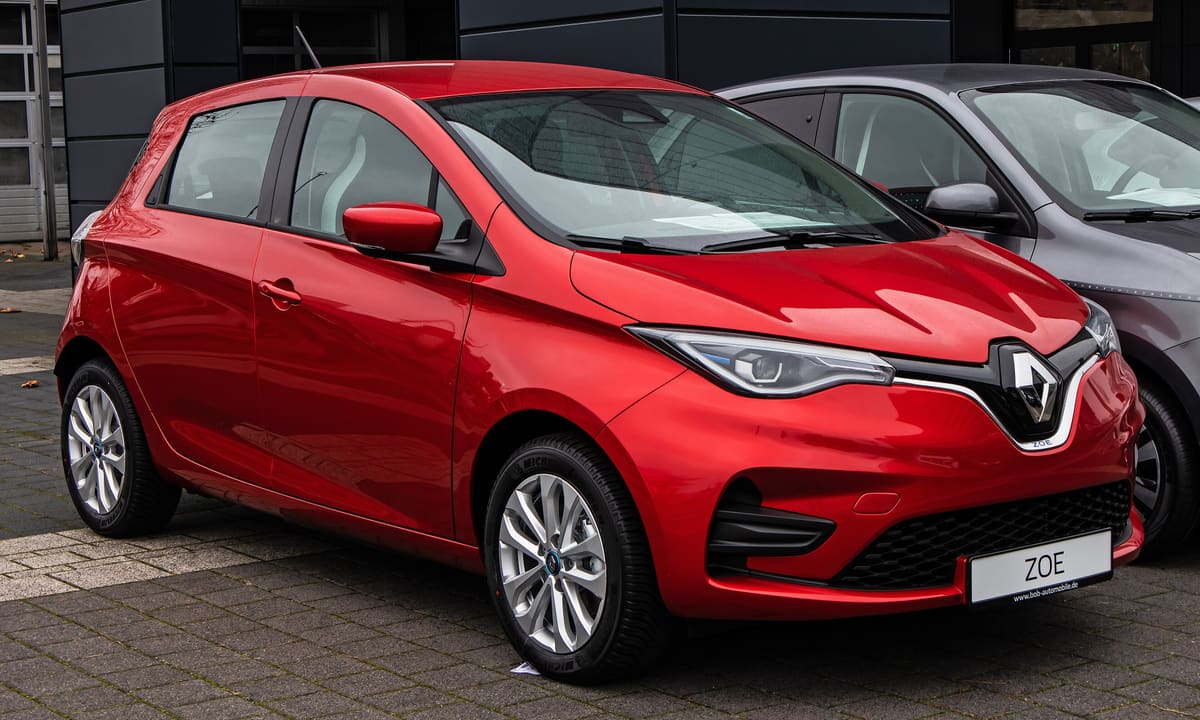
The Renault Zoe’s running costs are shaped primarily by its electric powertrain, which reduces fuel expenses and road tax significantly, but insurance premiums and servicing can vary depending on model year and trim. Its depreciation tends to be moderate, influenced by evolving battery technology and market demand for used electric vehicles.
Road Tax and Government Incentives
The Renault Zoe benefits from the UK’s favourable tax treatment of electric vehicles. Since it produces zero tailpipe emissions, it is exempt from paying Vehicle Excise Duty (VED), commonly known as road tax, which significantly lowers annual running costs compared to petrol or diesel cars.
Beyond the exemption from VED, electric vehicles like the Zoe may also qualify for various government grants or incentives, particularly when purchased new. These schemes aim to encourage the adoption of low-emission vehicles and can reduce the initial purchase price, indirectly affecting overall cost of ownership.
It is important to check the latest information on gov.uk to understand current tax rules and any available incentives, as these can change over time. Additionally, some local authorities offer benefits such as reduced congestion charges or free parking for electric vehicles, further enhancing cost savings.
Insurance Costs and Factors Affecting Premiums
Insurance premiums for the Renault Zoe can vary widely depending on factors such as the driver’s age, location, and driving history, as well as the specific trim and battery size of the vehicle. Electric cars sometimes attract higher insurance groups due to the cost of battery repairs and replacement, which can be expensive compared to conventional engines.
The Zoe’s insurance group is influenced by its safety features, repair costs, and theft risk. Models with advanced driver assistance systems may benefit from lower premiums, as these features can reduce the likelihood of accidents. Conversely, the relatively high value of the battery pack can push premiums upwards.
To get an accurate insurance quote, it is advisable to use comparison tools and provide detailed information about the specific Zoe variant. Insurance providers also consider the driver’s profile and location, so quotes can differ significantly. Checking multiple sources will help find the best deal.
Servicing and Maintenance Demands
The Renault Zoe’s electric drivetrain means it requires less routine maintenance than a petrol or diesel car. There are no oil changes, spark plugs, or exhaust system repairs, which reduces both the frequency and cost of servicing.
However, the Zoe still needs regular checks on components such as brakes, tyres, suspension, and battery health. Electric vehicles often use regenerative braking, which can extend the life of brake pads, but these parts still need inspection and occasional replacement.
Battery maintenance is a key consideration. While the battery is designed to last many years, its capacity can degrade over time, potentially affecting range and performance. Renault offers warranties on the battery, but replacement costs can be substantial if needed outside warranty. Regular servicing will include diagnostics to monitor battery condition.
Depreciation and Residual Value
The Renault Zoe’s depreciation is influenced by factors common to electric vehicles, such as advances in battery technology and shifting market demand. Early models may depreciate faster due to smaller battery capacities and shorter ranges compared to newer versions.
Residual values tend to be moderate, with newer Zoe models generally holding value better due to improved technology and longer battery warranties. The availability of government incentives for new electric cars can also impact the used market, sometimes suppressing prices.
Prospective buyers should consider the specific trim and model year when evaluating depreciation. Checking recent sales data for similar vehicles can provide insight into expected resale values. Maintaining the battery’s health and keeping the car well serviced will help preserve value.
Energy Costs and Charging Considerations
Running costs for the Renault Zoe are strongly influenced by electricity prices and charging habits. Charging at home during off-peak hours can significantly reduce the cost per mile compared to public rapid chargers, which tend to be more expensive.
The Zoe supports various charging options, including slow, fast, and rapid charging, each with different impacts on cost and convenience. Home charging requires an appropriate installation, which may involve upfront expenses but offers long-term savings.
Public charging infrastructure is expanding, but availability and pricing vary by location. Some providers offer subscription plans or pay-as-you-go tariffs, so understanding local options is important for budgeting running costs.
Tyres and Wear Items
Electric vehicles like the Renault Zoe often use low rolling resistance tyres to maximise efficiency, which can affect tyre choice and replacement costs. These tyres may wear differently compared to conventional ones due to the instant torque of electric motors.
Tyre wear can be influenced by driving style and road conditions. The Zoe’s weight distribution and regenerative braking system can reduce wear on brakes but may place different demands on tyres.
Regular checks and maintenance of tyres, including correct pressures and alignment, are essential to maintain efficiency and safety. Replacement costs should be factored into running costs, especially as specialised tyres for electric vehicles may carry a premium.
Renault Zoe recall record
6 recalls have been issued for the Renault Zoe, between 2016 and 2023.
On affected vehicles the rear seat bench may not be locked into position securely. This could result in injury to the occupants in the event of hard breaking or a collision.
R/2023/028Issued 26 January 2023
On affected vehicles the rear seat bench may not be locked into position securely. This could result in injury to the occupants in the event of hard breaking or a collision.
Remedy:Check the rear seat bench has been securely locked in place.
Affects cars built Nov 2022 to Dec 2022
RISK OF INTERNAL SHORT CURCUIT TO THE BATTERY
R/2022/001Issued 18 January 2022
Risk of internal short-circuit to the battery.
Remedy:Controlling the battery and replacing the module if necessary.
Affects cars built Jan 2021 to Feb 2021
GEARBOX MAY FAIL TO HOLD IN PARK POSITION WHEN VEHICLE IS STATIONARY
R/2018/070Issued 4 June 2018
The gearbox may not hold the vehicle in the park position when the vehicle is stationary (Position �P�). The vehicle may roll if the handbrake is not applied.
Remedy:Recall the vehicles that are likely to be affected and replace the gearbox parking pin.
Affects cars built Nov 2016 to Apr 2017
INCORRECT THROTTLE PEDAL FITTED
R/2018/025Issued 5 February 2018
An incorrect accelerator pedal may be fitted which could cause discomfort or in extreme circumstances the pedal may get suck under the floor mat.
Remedy:Recall the vehicles that are likely to be affected and check the accelerator pedal fitted. Replace the pedal where necessary.
Affects cars built Jul 2017 to Oct 2017
2 older recalls not shown.
A recall applies to a build range, not to every car of this model. Check a registration to see whether one specific vehicle has an outstanding recall.
Renault Zoe MOT record
From 26,546 recorded MOT tests, 18.4% failed.
| Registered | Tests | Failed | Median mileage |
|---|---|---|---|
| 2022 | 5,455 | 8.8% | 18,142 mi |
| 2021 | 5,996 | 11.1% | 24,905 mi |
| 2020 | 5,951 | 12.6% | 29,964 mi |
| 2019 | 2,238 | 29.1% | 33,018 mi |
| 2018 | 1,777 | 30.0% | 40,678 mi |
| 2017 | 977 | 34.5% | 48,483 mi |
| 2016 | 1,465 | 33.1% | 42,383 mi |
| 2015 | 1,635 | 36.4% | 47,390 mi |
Most common reasons for failure
- A tyre seriously damaged28.0%
- Tyre tread depth not in accordance with the requirements27.8%
- A suspension pin, bush or joint excessively worn24.5%
- Brake disc or drum excessively weakened, insecure or fractured10.8%
- A tyre cords visible or damaged9.0%
Figures cover every Renault Zoe tested in the DVSA dataset, not this specific car. Check a registration for the actual history of one vehicle.
Renault Zoe official figures
Median across 75 variants on sale, electricity.
- Electric range
- 240 miles
- Manufacturer WLTP figure
Official figures for new cars. Real economy varies with driving, load and conditions.
Frequently asked questions
What should I check to keep the Renault Zoe's battery healthy?
Regularly monitor the battery management system via the dashboard warning lights. If the battery temperature warning appears, it could indicate overheating. Keeping the battery cool during charging and avoiding frequent rapid charges helps maintain its condition over time.
How often does the Renault Zoe need brake fluid replacement?
Brake fluid in the Renault Zoe should be replaced roughly every two years. This is important because the regenerative braking system works alongside the hydraulic brakes, and old fluid can affect braking performance and safety.
Are there any specific maintenance tasks unique to the Renault Zoe's electric motor?
The electric motor itself requires minimal maintenance, but it’s wise to have the inverter and cooling system checked during servicing. Any unusual noises or warning lights related to the motor control unit should prompt a garage visit.
What are the signs that the Renault Zoe’s charging port might need attention?
Look out for difficulty plugging in the charger or warning lights indicating charging faults. Dirt or corrosion on the charging port pins can cause issues, so regular cleaning and inspection can prevent charging interruptions.
Does the Renault Zoe require special tyres or more frequent replacements?
While the Zoe uses standard tyres, it’s important to check for uneven wear caused by the instant torque of the electric motor. Regular tyre pressure checks help maintain efficiency and safety, especially as electric vehicles can be heavier than petrol cars.
How can I tell if the Renault Zoe’s 12V battery needs replacing?
If you notice warning lights on the dashboard or difficulty starting the car’s electrical systems, the 12V battery might be failing. This smaller battery powers accessories and the control systems, so it’s worth having it tested during routine servicing.
Is there anything specific to watch for in the Renault Zoe’s heating system costs?
The Zoe uses an electric heater rather than a traditional engine heater, which can increase electricity use in colder months. Check the cabin heater’s performance and listen for unusual noises from the heat pump or resistive heater components.
What routine checks can help avoid costly repairs on the Renault Zoe’s drivetrain?
Keep an eye on the transmission warning light and listen for unusual sounds when accelerating. The single-speed gearbox is generally reliable, but any grinding or hesitation should be inspected promptly to avoid more extensive repairs.
Sources
- DVSA anonymised MOT tests and results (Open Government Licence v3.0)
- VCA new car fuel consumption and emissions data (Open Government Licence v3.0)
- DVSA vehicle safety recalls (Open Government Licence v3.0)