Running costs
Renault Arkana running costs: what UK ownership really costs
Renault Arkana UK running costs: fuel or electric, insurance group, road tax, servicing and depreciation.
Updated 18th October 2026 DVSA data: Across 8,676 recorded MOT tests, 9.1% failed.
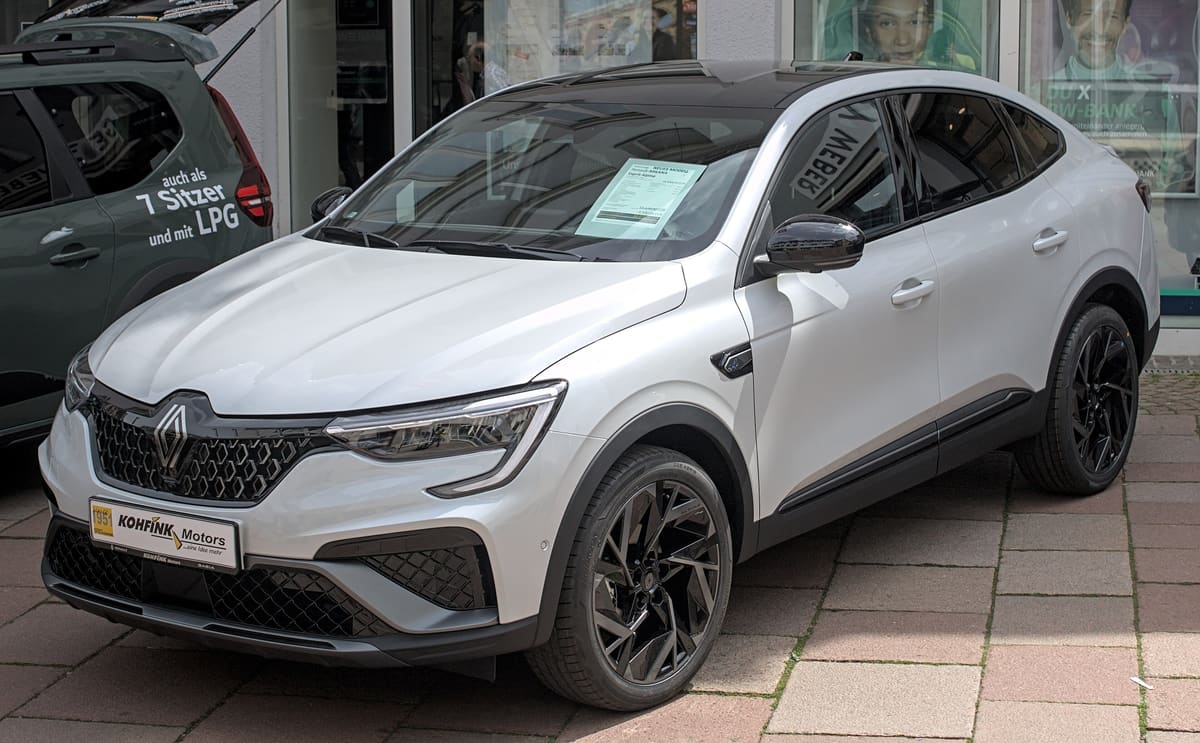
The Renault Arkana’s running costs are influenced by its tax classification, insurance group, servicing requirements, and depreciation profile. Its hybrid technology and emissions impact tax rates favourably, while insurance depends on trim and safety features. Servicing is straightforward but varies by powertrain, and residual values reflect Renault’s brand positioning and market demand.
Vehicle Tax and Emissions Impact
The cost of vehicle tax for the Renault Arkana is primarily driven by its CO2 emissions and fuel type, as the UK government bases tax bands on these factors. Since the Arkana includes hybrid variants, it often benefits from lower tax rates compared to conventional petrol or diesel models, reflecting its reduced environmental impact.
Tax is calculated annually and can vary significantly between trims due to differences in engine technology and emissions outputs. The government’s official vehicle tax calculator on gov.uk provides precise rates based on registration date and emissions data. Buyers should check the exact tax band for the specific Arkana trim they are considering, as this can influence overall running costs substantially.
Insurance Group and Premium Influences
Insurance costs for the Renault Arkana depend on the model’s assigned insurance group, which reflects factors such as repair costs, vehicle performance, and safety features. Higher-powered trims or those with expensive components can push the Arkana into a higher insurance group, increasing premiums.
Safety equipment fitted as standard, such as autonomous emergency braking and lane assist, can help reduce insurance costs by lowering the risk profile. However, the Arkana’s status as a relatively new model means insurers may price it cautiously until more claims data is available. Prospective owners should obtain personalised insurance quotes to understand how their chosen trim and personal circumstances affect premiums.
Servicing and Maintenance Demands
The Renault Arkana’s servicing requirements are influenced by its hybrid technology and engine complexity. Hybrid models typically have additional components such as battery systems and electric motors that require specialist attention, although these are generally designed for durability and low maintenance.
Routine servicing intervals follow Renault’s recommendations and include checks on brakes, fluids, and engine components. Hybrid variants may have longer service intervals for certain elements due to reduced wear. Parts and labour costs can vary depending on whether servicing is carried out at a main dealer or independent garage, with main dealers typically charging more but offering expertise on hybrid systems.
Fuel Economy and Running Efficiency
While exact fuel economy figures vary by trim and driving conditions, the Arkana’s hybrid powertrain aims to improve efficiency over traditional petrol models. This can reduce fuel expenditure, especially in urban or stop-start driving where electric assistance is most effective.
Drivers can expect the hybrid system to moderate fuel consumption by using electric power at low speeds and assisting acceleration. However, heavier driving styles or motorway cruising may diminish these benefits. The overall cost of running the Arkana will depend on individual usage patterns, fuel prices, and maintenance of efficient driving habits.
Depreciation and Residual Value
The Renault Arkana’s depreciation rate is shaped by Renault’s brand perception, market demand for SUVs, and the appeal of hybrid technology. Newer models with advanced features and low emissions tend to hold value better, but Renault’s residual values typically trail those of premium brands.
Factors such as trim level, condition, mileage, and regional popularity influence how well the Arkana retains value. Hybrid variants may benefit from stronger demand in the used market due to increasing interest in low-emission vehicles. Buyers should consider resale prospects alongside purchase price and running costs to assess overall ownership value.
Tyres and Wear-Related Expenses
Tyre choice and wear rates also contribute to running costs. The Arkana’s size and weight, combined with its hybrid system’s torque delivery, can affect tyre wear differently than conventional vehicles. Choosing tyres that balance performance and longevity can help manage replacement frequency and expense.
Regular checks on tyre condition and pressure improve safety and fuel efficiency, indirectly reducing running costs. While premium tyres may have a higher upfront cost, their durability and grip can offer better value over time. Owners should factor in tyre maintenance as part of the Arkana’s overall cost of ownership.
Renault Arkana recall record
2 recalls have been issued for the Renault Arkana, between 2022 and 2025.
Injection Computer Software Update
R/2026/094Issued 4 December 2025
For certain vehicles reprogramming of the injection computer is required. Without this software update it could lead to breakdown or the vehicle failing to start.
Remedy:Reprogramme the injection computer
Affects cars built Sept 2022 to Jul 2025
OVER HEATING OF AN INTERNAL COMPONENT IN THE ELECTRIC POWER STEERING
R/2022/045Issued 22 February 2022
Overheating of an internal component in the Electric Power Steering.
Remedy:Recalibration of the Electronic Power Steering Calculator limiting the overheating at the end lock.
Affects cars built Oct 2019 to Nov 2021
A recall applies to a build range, not to every car of this model. Check a registration to see whether one specific vehicle has an outstanding recall.
Renault Arkana MOT record
From 8,676 recorded MOT tests, 9.1% failed.
| Registered | Tests | Failed | Median mileage |
|---|---|---|---|
| 2023 | 520 | 8.3% | 24,485 mi |
| 2022 | 6,660 | 9.1% | 24,262 mi |
| 2021 | 1,496 | 9.0% | 29,920 mi |
Most common reasons for failure
- Tyre tread depth not in accordance with the requirements35.9%
- Wiper blade missing or obviously not clearing the windscreen20.8%
- A tyre seriously damaged19.7%
- A tyre cords visible or damaged14.8%
- Brake disc or drum excessively weakened, insecure or fractured8.8%
Figures cover every Renault Arkana tested in the DVSA dataset, not this specific car. Check a registration for the actual history of one vehicle.
Renault Arkana official figures
Median across 96 variants on sale, petrol, petrol electric.
- Combined economy
- 52.6 mpg
- WLTP median across variants
- CO2 emissions
- 121.5 g/km
- Sets the first-year tax rate
Official figures for new cars. Real economy varies with driving, load and conditions.
Frequently asked questions
What should I expect in terms of fuel costs for the Renault Arkana?
Fuel costs depend on the engine type and your driving style. The Arkana’s turbocharged petrol engines typically require premium unleaded, so checking the fuel filler cap label is a good idea. Regular servicing of the fuel injectors helps maintain efficiency.
How often does the Renault Arkana need servicing to keep running costs low?
Renault recommends servicing the Arkana every 12 months or according to the mileage schedule in the handbook. During a service, mechanics check components like the air filter and brake pads, which can affect running costs if neglected.
Are there any warning lights specific to the Arkana that indicate costly repairs might be needed?
The engine management light can indicate issues with the turbocharger or emission control systems. If this light appears, it’s best to have the car diagnosed promptly to avoid more expensive repairs later.
What are typical maintenance jobs for the Renault Arkana that impact running costs?
Replacing the timing belt and spark plugs at recommended intervals is important. The timing belt ensures the engine runs smoothly, and worn spark plugs can reduce fuel efficiency, increasing your overall running costs.
Does the Renault Arkana require any special checks for its hybrid system to control running costs?
For hybrid versions, monitoring the battery health and ensuring the regenerative braking system functions correctly helps keep running costs down. A garage can perform a battery diagnostic test during routine servicing.
How can I check tyre wear on the Renault Arkana to avoid increased running costs?
Uneven tyre wear can raise fuel consumption and affect handling. Inspect the tyres regularly for tread depth and sidewall damage, and ensure the wheel alignment is checked during servicing.
Is the Renault Arkana expensive to insure, and does this affect overall running costs?
Insurance costs vary by trim and driver profile, but the Arkana’s safety features like lane departure warning and automatic emergency braking can help reduce premiums. It’s worth comparing quotes to find the best deal.
What should I look out for in the Arkana’s brakes to avoid costly repairs?
Listen for squealing noises which often indicate worn brake pads. The Arkana uses ventilated discs at the front, which should be checked for thickness during servicing to prevent damage to the brake discs.
Sources
- DVSA anonymised MOT tests and results (Open Government Licence v3.0)
- VCA new car fuel consumption and emissions data (Open Government Licence v3.0)
- DVSA vehicle safety recalls (Open Government Licence v3.0)