Running costs
Porsche Taycan running costs: what UK ownership really costs
Porsche Taycan UK running costs: fuel or electric, insurance group, road tax, servicing and depreciation.
Updated 14th October 2026 DVSA data: Across 10,712 recorded MOT tests, 8.3% failed.
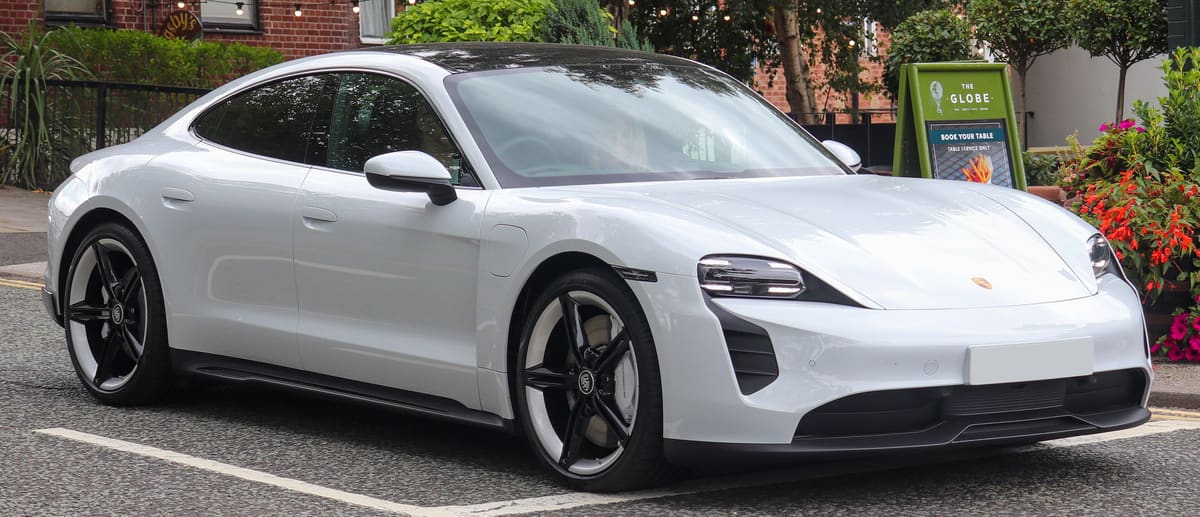
The Porsche Taycan’s running costs are influenced by its electric powertrain, premium brand status, and advanced technology. While it benefits from lower fuel and road tax expenses compared to petrol or diesel cars, insurance and servicing costs tend to be higher due to its performance credentials and specialist maintenance needs. Its strong residual values help balance overall ownership costs.
Road Tax and Government Charges
The Taycan benefits from the UK’s favourable tax treatment of electric vehicles, which reduces the cost of ownership compared to traditional combustion-engine cars. Since it produces zero tailpipe emissions, it is exempt from Vehicle Excise Duty (VED) or road tax, making it cheaper to keep on the road annually.
However, other government charges such as the London Congestion Charge or Ultra Low Emission Zone (ULEZ) fees do not apply to the Taycan, which can save significant money for drivers in urban areas. This exemption is part of the government’s wider push to encourage electric vehicle adoption.
It is important to check the latest details on gov.uk because tax rules and incentives can change, and some Taycan variants may have different classifications depending on their equipment or battery size. Overall, the Taycan’s tax position is a major advantage over petrol or diesel alternatives.
Insurance Costs and Factors
Insurance for the Porsche Taycan tends to be higher than average due to its status as a premium performance electric car. Insurers consider factors such as the vehicle’s high purchase price, repair costs, and the advanced technology fitted, all of which can increase premiums.
The Taycan’s insurance group rating reflects its performance capabilities and the cost of replacement parts, which are often more expensive than for mainstream vehicles. Additionally, the specialised nature of electric car repairs means insurers factor in potentially longer repair times and the need for authorised Porsche service centres.
Drivers can expect insurance quotes to vary based on personal details like age, driving history, and location, so obtaining personalised quotes is essential. Comparing prices from multiple providers will help find the best deal, bearing in mind that the Taycan’s insurance costs are generally above those of more conventional cars.
Servicing and Maintenance Demands
The Taycan’s electric drivetrain means it requires less routine maintenance than petrol or diesel cars, as there are fewer moving parts and no need for oil changes or exhaust system repairs. This can reduce servicing frequency and costs over time.
However, Porsche’s premium brand positioning means that servicing is often carried out at authorised dealerships or specialist garages, which can be more expensive than standard service centres. The Taycan’s advanced battery and electronic systems also require expert diagnostics and care.
Brake wear is typically lower on electric vehicles like the Taycan due to regenerative braking, which reduces mechanical brake use. Tyres and suspension components may still need regular attention, especially given the car’s performance orientation and weight.
Owners should follow Porsche’s recommended service schedule to maintain warranty coverage and ensure the vehicle remains in optimal condition. While servicing costs are generally lower than for combustion engines, the premium nature of the Taycan means they are not as low as for some other electric cars.
Depreciation and Residual Values
The Porsche Taycan holds its value relatively well compared to many electric vehicles, thanks to the brand’s strong reputation and desirability. Its status as a luxury sports saloon appeals to a specific market segment that values performance and modern technology.
Electric vehicles can experience faster depreciation due to rapidly evolving battery technology and changing incentives, but the Taycan’s build quality and Porsche badge help mitigate this. Buyers looking for used Taycans often find a good balance between modern features and price.
Residual values are also influenced by factors such as battery health, mileage, and condition, so maintaining the car well is important. The availability of charging infrastructure and future changes to electric vehicle incentives may also impact resale prices.
Overall, the Taycan’s depreciation is more favourable than many other electric cars, but prospective owners should consider how long they plan to keep the vehicle and how its value might change over time.
Energy and Charging Costs
Running costs for the Taycan are affected by electricity prices, which vary depending on where and when you charge. Home charging overnight on a standard tariff is usually the most economical option, while public rapid chargers can be more expensive.
The Taycan supports fast charging, which reduces downtime but may come at a premium cost per kilowatt-hour. Drivers who frequently use rapid chargers should factor this into their running cost calculations.
Energy consumption depends on driving style, weather conditions, and terrain. Performance driving or cold weather can increase electricity use, raising running costs. Planning journeys and charging habits carefully can help manage expenses.
While the Taycan avoids fuel costs associated with petrol or diesel, it is important to monitor electricity tariffs and consider smart charging solutions to optimise running costs.
Tyres and Wear-Related Expenses
Tyres on the Porsche Taycan are typically high-performance and low-rolling-resistance models designed to balance grip with efficiency. These tyres can be more expensive than standard car tyres and may wear faster if the car is driven aggressively.
The Taycan’s weight, due to its battery pack, also places additional stress on tyres and suspension components, potentially increasing replacement frequency. Regular tyre maintenance, including correct pressures and alignment, helps extend tyre life and maintain safety.
Brake wear is generally reduced thanks to regenerative braking, but suspension and other wear items may still require attention. Owners should budget for premium replacement parts and specialist fitting services.
Choosing the right tyres and maintaining them well contributes to controlling running costs and ensures the Taycan performs as intended.
Porsche Taycan recall record
17 recalls have been issued for the Porsche Taycan, between 2021 and 2026.
ASB1 Recall campaign - Check wiring harness of the front seats and rework if necessary
R/2026/015Issued 16 January 2026
For affected vehicles there is a possibility that the wiring harness for the front seats has not been installed in accordance with specifications and the harness may be damaged by seat adjustment over the lifetime of the vehicle.
Remedy:To prevent this the installation of the affected wiring harness is to be checked and if necessary reworked.
Affects cars built Apr 2024 to Dec 2025
ASA6 - Check the air suspension strut on the front axle and rework if necessary
R/2025/264Issued 8 July 2025
There is a possibility that a locking ring on the air-spring strut at the front left and right was not fitted according to specifications on the affected vehicles. If this is the case the locking ring on the upper side of the respective spring strut can loosen and air can thus escape from the air spring. As a result the driving characteristics may be impaired which increases the risk of an accident.
Remedy:The locking ring on the air-spring strut at the front left and right must be checked and reworked depending on the test result
Affects cars built Dec 2024 to May 2025
ARB6 recall campaign – Checking HVB cell modules and re-programming BMCe software
R/2024/454Issued 11 November 2024
A short circuit within the battery modules during the vehicle’s service life cannot be ruled out under certain circumstances which could lead to thermal events and later to a fire in the vehicle.
Remedy:On the affected vehicles the battery modules must be replaced and the on-board diagnostic software (BMCe control unit) will be installed.
Affects cars built Oct 2019 to Mar 2024
ARB5 Recall Campaign - Replacing cell block module on high-voltage battery.
R/2024/407Issued 16 October 2024
On affected vehicles production issues may have occurred at the battery cell / module supplier. A short circuit within the battery modules leading to thermal events and fires cannot be ruled out.
Remedy:Replace the affected battery module on the high-volt battery.
Affects cars built Nov 2019 to Jun 2023
13 older recalls not shown.
A recall applies to a build range, not to every car of this model. Check a registration to see whether one specific vehicle has an outstanding recall.
Porsche Taycan MOT record
From 10,712 recorded MOT tests, 8.3% failed.
| Registered | Tests | Failed | Median mileage |
|---|---|---|---|
| 2023 | 201 | 10.4% | 19,234 mi |
| 2022 | 4,421 | 8.5% | 23,166 mi |
| 2021 | 3,502 | 7.6% | 29,860 mi |
| 2020 | 2,588 | 8.6% | 32,250 mi |
Most common reasons for failure
- Tyre tread depth not in accordance with the requirements39.0%
- A tyre seriously damaged31.9%
- A tyre cords visible or damaged21.4%
- Number plate does not conform to the specified requirements5.3%
- Defect 100012.4%
Figures cover every Porsche Taycan tested in the DVSA dataset, not this specific car. Check a registration for the actual history of one vehicle.
Porsche Taycan official figures
Median across 19 variants on sale, electricity.
- Electric range
- 384 miles
- Manufacturer WLTP figure
Official figures for new cars. Real economy varies with driving, load and conditions.
Frequently asked questions
How often does the Porsche Taycan need servicing?
The Taycan requires regular servicing focused on its electric drivetrain and brake system. Porsche recommends checks on the high-voltage battery cooling system and brake fluid replacement at intervals specified in the owner's manual. A garage will also inspect the electric motor and software updates during service.
What should I check to monitor the Taycan's battery health?
You can monitor battery health via the vehicle’s onboard display, which shows state of charge and any warnings. Watch for warning lights related to battery temperature or charging faults, as these indicate potential issues with the battery management system or cooling components.
Are there any specific tyres recommended for the Taycan to keep running costs down?
Porsche recommends using tyres designed for electric vehicles, often marked with an 'E' on the sidewall. These tyres help manage the Taycan’s weight and torque, reducing wear. Regularly check tyre pressure and tread depth to avoid uneven wear and maintain efficiency.
What are typical garage jobs for the Taycan’s electric drivetrain?
Garage visits often include inspection of the electric motor’s cooling system and checking the inverter for faults. Technicians may also update the vehicle’s software to optimise performance and battery management. Brake system checks are important due to regenerative braking components.
Does the Taycan require brake fluid changes despite being electric?
Yes, the Taycan uses hydraulic brakes alongside regenerative braking, so brake fluid needs replacing periodically. This prevents moisture buildup and maintains braking efficiency. A warning light on the dashboard will alert you if brake fluid levels are low or if there is a system fault.
How can I tell if the Taycan’s charging system is working properly?
During charging, the dashboard will display the charging status and any error messages. If the car shows a charging fault warning or fails to initiate charging, it could indicate issues with the onboard charger or the high-voltage charging port, which a specialist garage should inspect.
Are there any maintenance tasks unique to the Taycan’s cooling system?
The Taycan has a complex cooling system for its battery and electric motors. Regular checks include inspecting coolant levels and looking for leaks around the coolant reservoir. A drop in coolant or overheating warnings on the dash require prompt attention to avoid damage to the battery pack.
What should I look out for when buying a used Taycan regarding running costs?
Check the service history for battery health checks and software updates. Look for any warning lights related to the electric drivetrain or battery cooling system. Also, verify the condition of the tyres and brakes, as these components affect running costs and are specific to the Taycan’s performance needs.
Sources
- DVSA anonymised MOT tests and results (Open Government Licence v3.0)
- VCA new car fuel consumption and emissions data (Open Government Licence v3.0)
- DVSA vehicle safety recalls (Open Government Licence v3.0)