Running costs
Porsche Cayman running costs: what UK ownership really costs
Porsche Cayman UK running costs: fuel or electric, insurance group, road tax, servicing and depreciation.
Updated 17th October 2026 DVSA data: Across 14,235 recorded MOT tests, 9.4% failed.
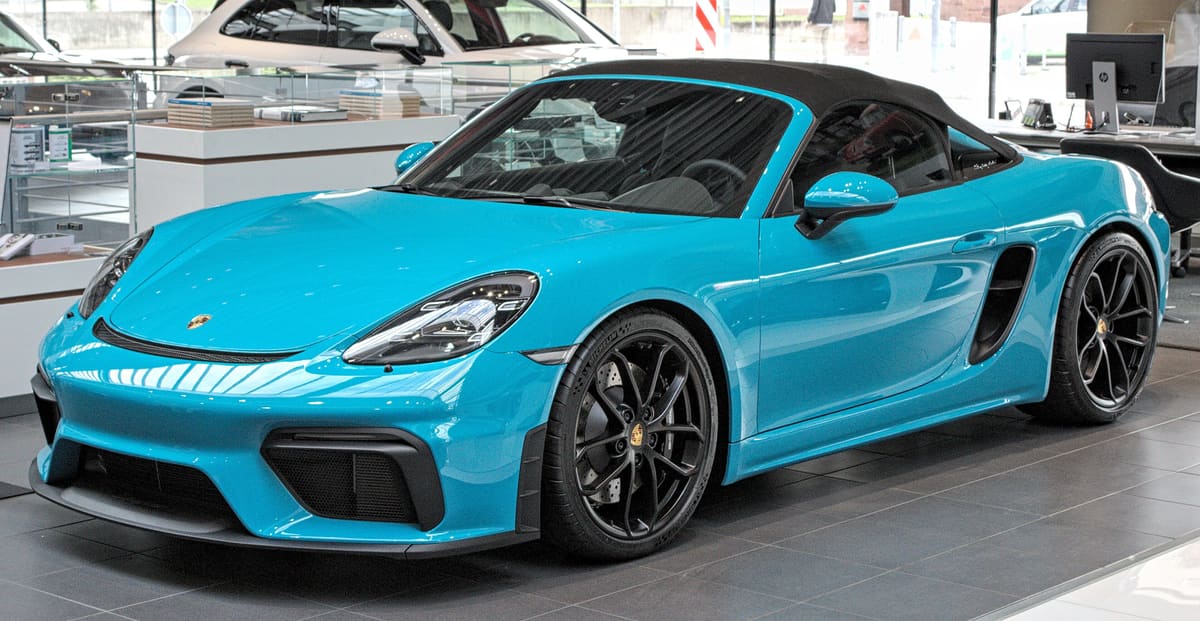
The Porsche Cayman’s running costs are influenced primarily by its sporty engineering, insurance grouping, and servicing requirements. While it benefits from relatively favourable tax treatment due to its emissions profile, insurance premiums tend to be higher than average. Servicing demands are more intensive than mainstream cars, but the Cayman holds its value well, helping offset ownership expenses over time.
Vehicle Tax and Emissions Impact
The cost of vehicle tax for a Porsche Cayman depends largely on its CO2 emissions and fuel type, as set out by the UK government’s vehicle tax bands. Models with lower emissions attract reduced rates, while higher-emitting variants incur greater charges. This system encourages buyers to consider cleaner engines when choosing a Cayman trim.
Tax rates are reviewed annually and can vary depending on whether the car is new or used. For example, new vehicles are taxed differently in their first year compared to subsequent years. Buyers should check the latest rates on the official government website to understand the exact tax liability for the specific Cayman model they are interested in.
Additionally, some Cayman variants may benefit from exemptions or reduced rates if they meet certain environmental criteria, such as being classified as low emission or alternative fuel vehicles. This can make a noticeable difference in annual tax costs compared to other sports cars.
Insurance Group and Premium Factors
Insurance costs for the Porsche Cayman tend to be higher than average due to its classification as a premium sports car with strong performance capabilities. Insurance groups are assigned based on factors such as engine size, repair costs, and safety features, all of which influence premiums.
The Cayman’s sporty nature and the potential cost of repairs to specialised parts push it into higher insurance groups. However, the presence of advanced safety equipment and driver aids can help moderate premiums somewhat. Insurance providers also consider the driver’s age, location, and driving history, which can cause significant variation in quotes.
Prospective owners should obtain personalised insurance quotes from multiple providers to gauge the likely cost. Comparing quotes online or through brokers can reveal the best deals, as insurers weigh risk differently. It is also worth noting that higher insurance groups do not necessarily mean prohibitively expensive premiums but reflect the car’s overall risk profile.
Servicing and Maintenance Demands
Servicing a Porsche Cayman is generally more demanding and costly than servicing a typical family car, reflecting its performance engineering and specialised components. Routine maintenance intervals are often shorter, and the parts used tend to be pricier due to brand and quality standards.
The Cayman’s mid-engine layout and precision engineering mean that some servicing tasks require specialist knowledge and equipment. This can limit servicing options to authorised dealers or specialist garages, which may charge premium labour rates. Owners should budget for regular oil changes, brake checks, and inspections of suspension and cooling systems.
While the Cayman benefits from robust build quality, wear items such as tyres and brake pads can experience faster degradation due to spirited driving. Using genuine or high-quality replacement parts is recommended to maintain performance and reliability, though this can increase maintenance costs.
Tyres and Fuel Consumption Considerations
Tyres on the Porsche Cayman are typically performance-oriented, designed for grip and handling rather than economy. This means replacement tyres can be more expensive than standard car tyres, and their lifespan may be shorter, especially if the car is driven aggressively.
Fuel consumption tends to be higher than average for a compact sports car, reflecting the engine’s tuning for power rather than efficiency. While the Cayman is not as thirsty as larger sports cars or supercars, owners should expect fuel costs to be a noticeable part of running expenses.
Choosing the right tyres and maintaining correct pressures can help optimise fuel economy and tyre longevity. Some owners may opt for all-season tyres to reduce wear and improve everyday usability, though this can affect handling characteristics.
Depreciation and Residual Value
The Porsche Cayman generally holds its value well compared to many other sports cars, thanks to its strong brand reputation and desirability among enthusiasts. This slower depreciation can help offset some of the higher running costs associated with insurance and servicing.
Factors that support good residual values include the Cayman’s build quality, driving experience, and the relative scarcity of well-maintained examples. Limited edition or higher-spec models often retain value better, but all variants benefit from Porsche’s strong market presence.
Maintaining the car in excellent condition, keeping full service records, and avoiding modifications can further enhance resale prospects. Buyers looking for a Cayman should consider how depreciation impacts total cost of ownership alongside running expenses.
Summary of Ownership Costs
Owning a Porsche Cayman involves balancing higher insurance and servicing costs against relatively favourable tax treatment and strong resale values. The car’s performance credentials and engineering quality mean that maintenance and running expenses exceed those of mainstream vehicles, but the enjoyment and prestige it offers often justify these costs for enthusiasts.
Prospective owners should carefully research tax bands, obtain insurance quotes, and budget for specialist servicing. Considering tyre and fuel costs alongside depreciation will provide a clearer picture of the overall financial commitment. With proper care, the Cayman can be a rewarding and manageable sports car to own in the UK.
Porsche Cayman recall record
8 recalls have been issued for the Porsche Cayman, between 2006 and 2024.
ARA7 Recall campaign - Replace shift cable
R/2024/243Issued 5 June 2024
On affected vehicles the transmission shift cable may have had the safety clip on the shift cable incorrectly fitted or the cable sheath on the shift cable may be damaged resulting in the risk of a roll away incident after the vehicle is placed in park (P) if the parking brake is not applied.
Remedy:Replace shift cable
Affects cars built Jun 2023 to Mar 2024
On affected vehicles the rear spoiler setting may not meet specifications due to incorrect coding during production making it too high. The high-mounted brake light may become less visible while driving and the aerodynamics of the vehicle may change.
R/2024/001Issued 20 December 2023
On affected vehicles the rear spoiler setting may not meet specifications due to incorrect coding during production making it too high.� The high-mounted brake light may become less visible while driving and the aerodynamics of the vehicle may change.
Remedy:Re-code the rear vehicle electronics control unit on affected vehicles.�
Affects cars built Jun 2023 to Oct 2023
REAR AXLE CARRIER SIDE PARTS MAY NOT MEET REQUIRED SPECIFICATIONS
R/2021/314Issued 15 September 2021
The carrier side parts installed on the rear axle during a certain period may not meet the required specifications.
Remedy:The left and right carrier side parts of the affected vehicles must be replaced.
Affects cars built Jan 2014 to Jul 2014
AIR BAG CONTROL UNIT MAY HAVE BEEN INSTALLED WITH A FAULTY CAPACITOR
R/2019/250Issued 23 August 2019
Possible fault within the air bag control unit.
Remedy:Software upgrade to the control unit and replacement if faulty.
Affects cars built Jun 2015 to Jun 2016
4 older recalls not shown.
A recall applies to a build range, not to every car of this model. Check a registration to see whether one specific vehicle has an outstanding recall.
Porsche Cayman MOT record
From 14,235 recorded MOT tests, 9.4% failed.
| Registered | Tests | Failed | Median mileage |
|---|---|---|---|
| 2022 | 463 | 4.5% | 11,559 mi |
| 2021 | 431 | 3.3% | 16,366 mi |
| 2020 | 422 | 4.7% | 19,614 mi |
| 2019 | 978 | 5.3% | 26,400 mi |
| 2018 | 1,166 | 5.7% | 31,044 mi |
| 2017 | 868 | 5.3% | 34,446 mi |
| 2016 | 978 | 5.2% | 30,143 mi |
| 2015 | 1,080 | 5.7% | 37,012 mi |
Most common reasons for failure
- Tyre tread depth not in accordance with the requirements27.5%
- Brake pipe damaged or excessively corroded26.1%
- A tyre seriously damaged21.0%
- Brake disc or drum excessively weakened, insecure or fractured14.9%
- A suspension pin, bush or joint excessively worn10.5%
Figures cover every Porsche Cayman tested in the DVSA dataset, not this specific car. Check a registration for the actual history of one vehicle.
Frequently asked questions
How often should I service a Porsche Cayman to keep running costs reasonable?
Porsche recommends servicing the Cayman every 12 months or 10,000 miles, whichever comes first. Regular checks include oil changes, brake fluid replacement, and inspection of the spark plugs. Keeping up with these helps avoid expensive repairs to components like the ignition coils or catalytic converters.
What are the typical maintenance tasks that affect the Porsche Cayman’s running costs?
Routine maintenance involves changing the engine oil, replacing the air filter, and checking the brake pads. The Cayman’s mid-engine layout means the cooling system, including the radiator and water pump, should be inspected carefully to prevent overheating issues that can lead to costly repairs.
Are Porsche Cayman tyres expensive to replace and what should I look out for?
Tyres for the Cayman often require performance or run-flat types, which can wear faster than standard tyres. Watch for uneven tread wear or vibrations while driving, as these can indicate suspension or alignment issues that also impact tyre life and overall running costs.
Does the Porsche Cayman have any specific warning lights I should be aware of that affect running costs?
The engine management light can indicate issues with sensors like the oxygen sensor or mass airflow sensor, which affect fuel efficiency and emissions. Ignoring these warnings can lead to more serious engine problems, so it’s important to get a diagnostic check promptly.
How does the Porsche Cayman’s braking system influence maintenance expenses?
The Cayman uses high-performance brake discs and pads that wear faster under spirited driving. Regular inspection of the brake discs for scoring and the brake fluid for contamination is essential. Replacing brake components with genuine Porsche parts ensures optimal performance but can impact running costs.
Is the Porsche Cayman costly to insure compared to other sports cars?
Insurance costs vary widely depending on your personal details and the specific Cayman model. Factors like engine size and security features, such as an immobiliser or alarm system, influence premiums. It’s advisable to get quotes from several insurers to find the best deal.
What should I check before buying a used Porsche Cayman to avoid unexpected running costs?
Inspect the condition of the clutch, especially on manual models, as replacement can be expensive. Also, check for any oil leaks around the engine and gearbox, and ensure the service history includes timing belt or chain replacements as per Porsche’s schedule.
How does fuel type affect the running costs of a Porsche Cayman?
The Cayman requires premium unleaded petrol to run efficiently and avoid engine knocking. Using lower octane fuel can trigger the knock sensor and reduce performance, potentially causing long-term damage to components like the pistons or valves.
Sources
- DVSA anonymised MOT tests and results (Open Government Licence v3.0)
- DVSA vehicle safety recalls (Open Government Licence v3.0)