Running costs
Porsche Cayenne running costs: what UK ownership really costs
Porsche Cayenne UK running costs: fuel or electric, insurance group, road tax, servicing and depreciation.
Updated 16th October 2026 DVSA data: Across 31,307 recorded MOT tests, 12.1% failed.
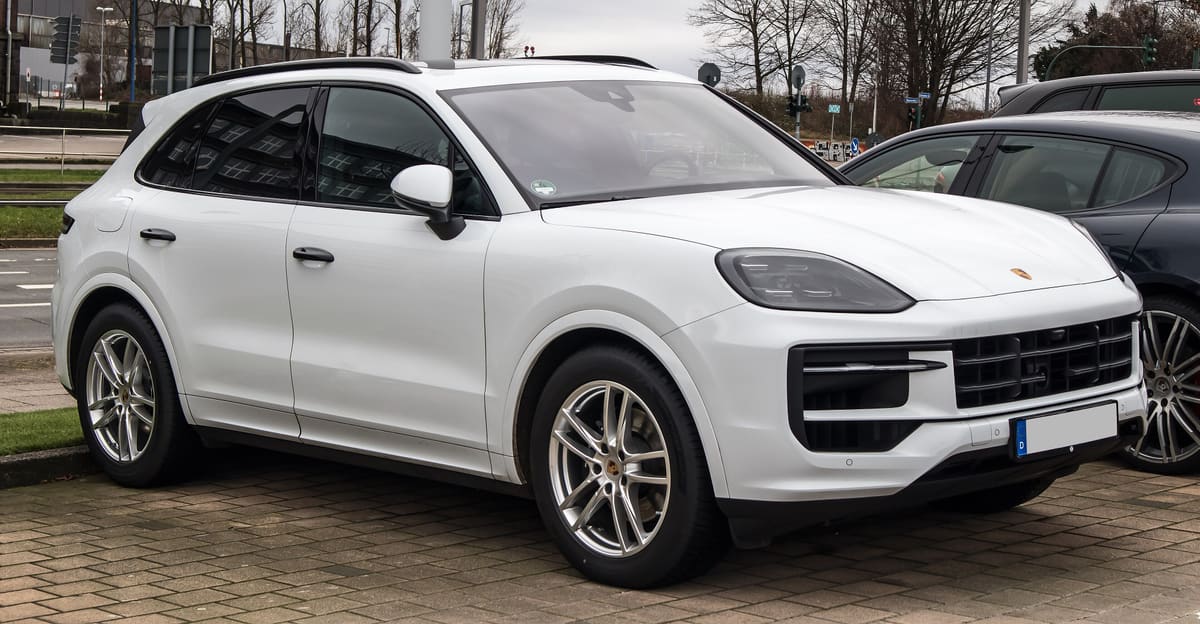
The Porsche Cayenne’s running costs are influenced by its premium positioning, powerful engines, and sophisticated technology. Taxation depends on the engine variant and emissions, insurance groups reflect its performance and repair costs, servicing demands are higher than average, and it tends to hold value well compared to many SUVs. Understanding these factors helps buyers anticipate the true cost of ownership.
Vehicle Tax and How It Affects Running Costs
Vehicle Excise Duty (VED), commonly known as road tax, is a significant ongoing cost for the Porsche Cayenne. The tax system in the UK bases the annual charge on emissions and engine size, which means that higher-performance or petrol variants generally attract higher tax rates. Diesel models may have different rates, especially considering recent changes aimed at reducing pollution.
The first-year tax rate is usually higher for models with greater carbon dioxide emissions, reflecting government efforts to encourage cleaner vehicles. After the initial year, the standard rate applies, but some variants may still incur additional charges if they exceed certain emission thresholds. Buyers should consult the official government website to check the exact tax band for the specific Cayenne variant they are interested in, as this can vary widely depending on engine and model year.
Insurance Group and Factors Influencing Premiums
Insurance premiums for the Porsche Cayenne tend to be on the higher side, largely due to its classification in higher insurance groups. These groups are determined by factors such as the car’s performance, repair costs, safety record, and theft rates. The Cayenne’s powerful engines and premium parts contribute to its elevated insurance group rating.
Other factors pushing insurance costs up include the cost of replacement parts, which are often imported and specialised, and the complexity of repairs, which require skilled technicians. However, driver profile, location, and security measures can influence the final premium. Prospective owners should obtain personalised insurance quotes to understand how their circumstances affect the cost and consider fitting additional security devices to potentially lower premiums.
Servicing and Maintenance Demands
The Porsche Cayenne’s servicing requirements are more demanding than those of average family SUVs, reflecting its luxury and performance status. Routine maintenance involves specialised checks and the use of high-quality parts and fluids, which can increase labour and parts costs. The complexity of the engine and electronic systems means that servicing intervals may be shorter or more involved compared to more mainstream vehicles.
Regular maintenance includes oil and filter changes, brake inspections, and software updates, but also extends to more detailed work on the transmission, suspension, and cooling systems. The availability of authorised service centres and the cost of genuine Porsche parts can add to the expense. Owners should follow the manufacturer’s recommended service schedule closely to maintain reliability and resale value.
Fuel Costs and Efficiency Considerations
Fuel consumption is a notable factor in the running costs of the Porsche Cayenne. Its range of engines, from efficient diesels to high-performance petrol units, means that fuel economy varies significantly between trims. Generally, more powerful variants consume more fuel, increasing running costs.
Driving style and conditions also impact fuel use. The Cayenne’s all-wheel-drive system and weight contribute to higher consumption compared to smaller SUVs or less powerful vehicles. Prospective buyers should review official fuel consumption figures for their chosen model and consider their typical driving patterns to estimate fuel expenses accurately.
Depreciation and Residual Value
The Porsche Cayenne tends to hold its value well relative to many other SUVs, partly due to the brand’s strong reputation and desirability in the used car market. Its combination of luxury, performance, and practicality appeals to a broad range of buyers, supporting steady demand for second-hand models.
Depreciation rates vary depending on model year, condition, mileage, and specification. Well-maintained examples with comprehensive service histories generally retain value better. Optional extras and limited editions can also influence resale prices. Buyers should consider depreciation alongside other running costs to assess total ownership expense over time.
Tyres, Brakes, and Other Wear Items
Tyres and brakes on the Porsche Cayenne are typically larger and more performance-oriented than those on standard SUVs, which affects replacement costs. High-performance tyres designed for grip and stability are more expensive and may wear faster depending on driving style.
Brake components, including discs and pads, are often larger and made from premium materials to handle the vehicle’s weight and power, contributing to higher replacement costs. Regular inspection and timely replacement of these wear items are essential to maintain safety and performance, but owners should budget accordingly for these ongoing expenses.
Porsche Cayenne recall record
26 recalls have been issued for the Porsche Cayenne, between 2004 and 2025.
ASA9 Recall campaign - Check the high-pressure pump connections and if necessary replace the high-pressure pumps including fuel lines
R/2025/432Issued 9 October 2025
On affected vehicles the screw connection of the high-pressure pump was not implemented in accordance with the technical specifications. This can lead to a leak and the possibility of the fuel igniting.
Remedy:Check the screw connections of both high-pressure pumps and replace the high-pressure pumps and fuel lines if necessary.
Affects cars built Apr 2023 to Sept 2025
ARC2 Recall campaign - Re-programming DME control unit
R/2025/060Issued 1 December 2024
The software version of the engine control unit does not correspond to the software version that should be on the vehicle.
Remedy:Review the software version of the engine control unit and if necessary update it to the correct software version.
Affects cars built Mar 2016 to Sept 2017
ARB9 Recall campaign - Re-program DME control unit
R/2025/061Issued 1 December 2024
The software version of the engine control unit does not correspond to the software version that should be on the vehicle.
Remedy:Review the software version of the engine control unit and if necessary update it to the correct software version.
Affects cars built Nov 2012 to Oct 2017
ARC1 Recall campaign - Re-programming DME control unit
R/2025/063Issued 1 December 2024
The software version of the engine control unit does not correspond to the software version that should be on the vehicle.
Remedy:Review the software version of the engine control unit and if necessary update it to the correct software version.
Affects cars built Aug 2014 to Nov 2017
22 older recalls not shown.
A recall applies to a build range, not to every car of this model. Check a registration to see whether one specific vehicle has an outstanding recall.
Porsche Cayenne MOT record
From 31,307 recorded MOT tests, 12.1% failed.
| Registered | Tests | Failed | Median mileage |
|---|---|---|---|
| 2022 | 2,388 | 5.7% | 24,798 mi |
| 2021 | 1,554 | 5.5% | 32,300 mi |
| 2020 | 2,327 | 7.8% | 39,678 mi |
| 2019 | 3,176 | 7.1% | 44,759 mi |
| 2018 | 1,808 | 9.7% | 57,378 mi |
| 2017 | 1,751 | 10.2% | 68,914 mi |
| 2016 | 2,765 | 11.7% | 76,986 mi |
| 2015 | 2,315 | 12.1% | 84,170 mi |
Most common reasons for failure
- Tyre tread depth not in accordance with the requirements35.4%
- A tyre seriously damaged25.0%
- a brake lining or pad worn below 1.5mm17.0%
- A spring or spring component fractured or seriously weakened14.1%
- Brake disc or drum excessively weakened, insecure or fractured8.5%
Figures cover every Porsche Cayenne tested in the DVSA dataset, not this specific car. Check a registration for the actual history of one vehicle.
Porsche Cayenne official figures
Median across 18 variants on sale, electricity / petrol, petrol.
- Combined economy
- 24.1 mpg
- WLTP median across variants
- CO2 emissions
- 266 g/km
- Sets the first-year tax rate
- Electric range
- 27 miles
- Manufacturer WLTP figure
Official figures for new cars. Real economy varies with driving, load and conditions.
Frequently asked questions
What are the typical maintenance tasks for a Porsche Cayenne?
Regular maintenance for a Porsche Cayenne includes oil changes using Porsche-approved synthetic oil, brake fluid replacement, and inspection of the air suspension system. The air suspension can develop leaks or faults that affect ride quality, so checking for uneven ride height is advisable.
How often should I check the tyres on my Porsche Cayenne?
Tyres on a Porsche Cayenne should be inspected regularly for tread wear and correct pressure. Uneven wear can indicate alignment issues or suspension problems, especially with the adaptive air suspension. Checking tyre pressure monthly helps maintain handling and fuel efficiency.
Does the Porsche Cayenne have any specific warning lights I should watch for?
Yes, the Cayenne features warning lights for components like the air suspension and brake system. For example, a flashing ABS light or an air suspension warning symbol can indicate a sensor fault or a failing compressor, which should be diagnosed promptly at a specialist garage.
Are there any parts on the Porsche Cayenne that commonly need replacement?
Brake pads and discs tend to wear faster on the Cayenne due to its weight and performance. Additionally, the air suspension compressor is a known wear item that may require replacement if you notice the vehicle sagging or the compressor running excessively.
What should I check before buying a used Porsche Cayenne regarding running costs?
Before purchasing, check the service history for regular oil and brake fluid changes, and ask if the air suspension has been serviced or repaired. Also, inspect for any warning lights on the dashboard during a test drive and listen for unusual compressor noises.
How does the air suspension affect running costs on a Porsche Cayenne?
The air suspension system can increase running costs because components like compressors and air springs may fail over time. Repairs often require specialist diagnostics and parts, so keeping an eye on ride height and listening for compressor noise can help catch issues early.
Is the Porsche Cayenne expensive to insure compared to other SUVs?
Insurance costs for the Cayenne can be higher due to its performance credentials and repair costs. Factors like the engine size and trim level influence premiums, so it is best to get a personalised quote based on your specific vehicle and driving history.
What fuel type should I use for the Porsche Cayenne to avoid engine issues?
Using the recommended premium unleaded petrol is important to prevent knocking and maintain engine health. Lower grade fuel can trigger the engine management light and cause reduced performance, so always check the owner's manual for the correct fuel specification.
Sources
- DVSA anonymised MOT tests and results (Open Government Licence v3.0)
- VCA new car fuel consumption and emissions data (Open Government Licence v3.0)
- DVSA vehicle safety recalls (Open Government Licence v3.0)