Running costs
Peugeot 308 running costs: what UK ownership really costs
Peugeot 308 UK running costs: fuel or electric, insurance group, road tax, servicing and depreciation.
Updated 12th October 2026 DVSA data: Across 124,916 recorded MOT tests, 29.4% failed.
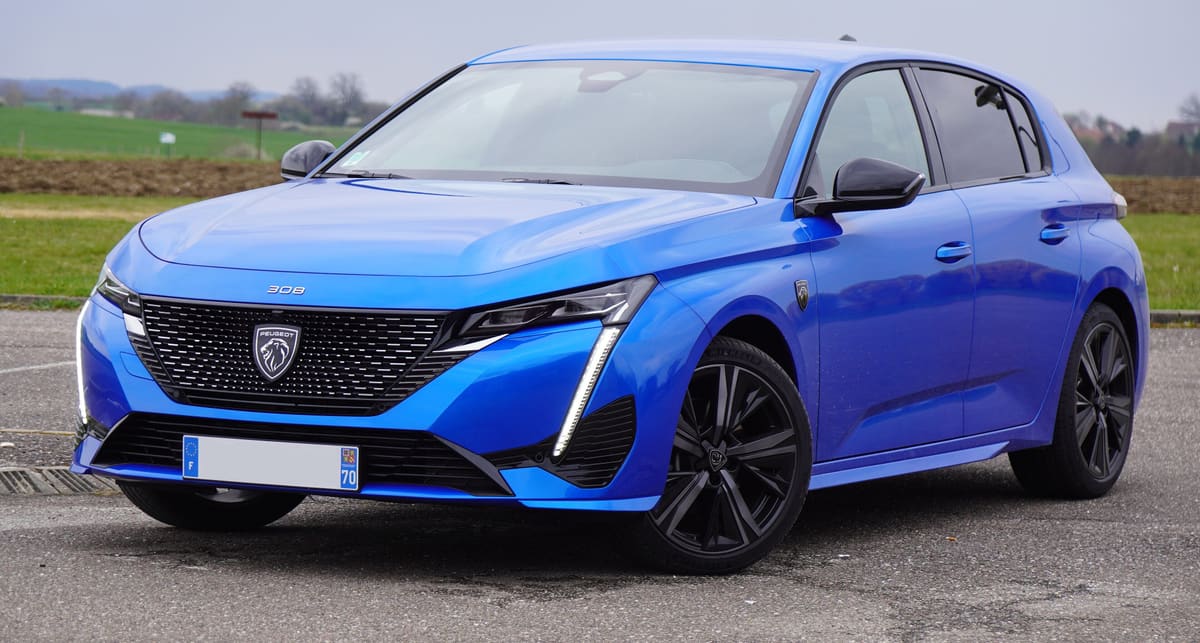
The Peugeot 308’s running costs are shaped by several factors including its tax band, insurance group, servicing demands, and depreciation. Its efficient engines and moderate CO2 emissions generally keep tax and fuel costs reasonable. Insurance premiums depend on trim and engine size, while servicing is straightforward but must be done at regular intervals. The 308 holds value fairly well, reflecting its popularity and build quality.
Vehicle Tax and How It Affects Running Costs
The cost of vehicle tax for the Peugeot 308 depends primarily on its CO2 emissions and fuel type. Petrol and diesel variants are taxed differently under the UK’s Vehicle Excise Duty system. Lower-emission models benefit from reduced tax rates, which helps keep annual costs down.
Newer 308 models with efficient engines tend to fall into lower tax bands, especially if they emit fewer pollutants. However, higher-performance or larger-engine versions attract more tax due to their increased emissions. Petrol versions generally have a simpler tax calculation based on emissions, while diesel variants may incur additional surcharges unless they meet the latest emissions standards.
Tax rates are updated annually and can be checked on the government’s official website. Buyers should verify the exact tax band for the specific 308 trim and engine they are considering, as this can vary significantly.
Insurance Group and Its Impact on Premiums
The Peugeot 308’s insurance group rating influences how much you will pay for cover. Insurance groups are assigned based on factors such as engine size, performance, repair costs, and safety features. Generally, the 308 sits in mid-range groups, reflecting its balance of performance and practicality.
Higher-spec or sportier trims with more powerful engines tend to be placed in higher insurance groups, which pushes premiums up. Conversely, lower-powered models with fewer optional extras usually fall into lower groups, making them cheaper to insure. Safety equipment like multiple airbags and electronic stability control can help reduce insurance costs by lowering risk.
Insurance quotes will vary depending on the driver’s profile, location, and history, so it is advisable to obtain personalised quotes from comparison sites. Knowing the insurance group can give a helpful indication of expected costs but should not be the sole deciding factor.
Servicing and Maintenance Requirements
The Peugeot 308 requires regular servicing to maintain reliability and performance. Service intervals are typically set by the manufacturer and vary depending on engine type and model year. Routine maintenance includes oil and filter changes, brake checks, and inspections of key components.
Diesel engines may require additional attention to items like the diesel particulate filter and fuel system, while petrol engines usually have simpler servicing needs. The 308’s servicing is generally straightforward and can be carried out at Peugeot dealerships or independent garages familiar with the model.
Parts availability is good, and the 308’s mechanical layout is conventional, which helps keep repair costs reasonable. Following the recommended service schedule is important to avoid costly repairs and to maintain warranty coverage if applicable.
Fuel Economy and Running Costs
Fuel economy is a major factor in the cost of running the Peugeot 308. Its range of petrol and diesel engines are designed with efficiency in mind, helping to reduce fuel expenditure. Smaller engines and manual transmissions tend to offer better economy, while larger or automatic variants may consume more fuel.
Driving style and conditions also influence fuel consumption. Urban stop-start driving typically uses more fuel than steady motorway cruising. The 308’s aerodynamic design and modern engine technology contribute positively to its fuel efficiency.
To get an accurate idea of fuel costs, prospective owners should check official economy figures for the exact trim and engine combination they are interested in, as these vary. Using fuel-efficient driving habits can further reduce running costs.
Depreciation and Residual Value
The Peugeot 308 holds its value reasonably well compared to many competitors in the compact hatchback segment. Its strong brand presence, practical design, and reputation for reliability help maintain demand on the used car market.
Depreciation rates depend on factors such as mileage, condition, and specification. Higher-spec models with popular features tend to retain value better, while unusual or less sought-after trims may lose value faster. Regular servicing and keeping the car in good condition also support higher resale prices.
The 308’s residual value is influenced by market trends and the availability of newer models. Buyers should consider how long they intend to keep the car and factor in depreciation when assessing overall running costs.
Tyres, Brakes and Other Consumables
The cost of consumables like tyres and brakes also affects the 308’s running costs. Tyre size varies by trim, with sportier versions often fitted with larger, wider tyres that can be more expensive to replace. Standard trims usually have more affordable tyre options.
Brake wear depends on driving style and environment. The 308’s braking system is conventional and parts are widely available, which helps keep replacement costs manageable. Regular checks and timely replacement of consumables prevent more expensive repairs down the line.
Other consumables such as wiper blades, bulbs, and fluids are typical for a car of this class and do not present unusual costs. Routine maintenance and attention to these items contribute to the 308’s overall affordability.
Peugeot 308 recall record
59 recalls have been issued for the Peugeot 308, between 2008 and 2026.
VSM software Interior door handles
R/2026/228Issued 3 June 2026
Affected vehicles may experience an unexpected deactivation of the interior door handles when the key is in engine-running mode which could result in occupants being unable to exit.
Remedy:Update the Vehicle Supervision Module software.
Affects cars built Nov 2023 to Feb 2026
VSM software missing AEB telltale in case of blind camera.
R/2025/542Issued 21 April 2026
On certain Peugeot vehicles the Automatic Emergency Braking Assist telltale fails to illuminate if the front camera is blocked. No AEB warning telltale meaning no warning light appears in the instrument cluster. An additional pop-up appears for around 10 seconds at each key on/key off (Driving Assistance Sensor Blind: clean sensor see User Manual). The Automatic Emergency Braking system is operating in a degraded mode but remains functional due to radar support.
Remedy:To rectify this issue we will update the Vehicle System Management software
Affects cars built Feb 2024 to Jul 2024
Peugeot Cross carline Fuel Injection common rail.
R/2026/020Issued 21 January 2026
On affected vehicles a non-conformity issue with the fuel injection common rail may lead to a loosening of the nut and a potential fuel leak.
Remedy:Check the fuel injection common rail and if necessary replace the rail and high-pressure fuel pipes.
Affects cars built Aug 2025 to Oct 2025
Emission recall – On Board Diagnostics
R/2025/344Issued 18 August 2025
Vehicles may be affected by incorrect performance of the On-Board-Diagnostics related to Selective Catalytic Reduction system and/or Diesel Particle Filter. The Malfunction Indicator Light (MIL) may not illuminate in the event of a malfunction and therefore does not comply with emission regulations.
Remedy:Update the Engine Control Unit software to ensure compliance to regulations.
Affects cars built Oct 2016 to May 2021
55 older recalls not shown.
A recall applies to a build range, not to every car of this model. Check a registration to see whether one specific vehicle has an outstanding recall.
Peugeot 308 MOT record
From 124,916 recorded MOT tests, 29.4% failed.
| Registered | Tests | Failed | Median mileage |
|---|---|---|---|
| 2022 | 3,742 | 8.9% | 26,283 mi |
| 2021 | 1,459 | 11.4% | 36,997 mi |
| 2020 | 3,747 | 11.6% | 37,953 mi |
| 2019 | 7,034 | 14.4% | 47,122 mi |
| 2018 | 8,319 | 19.1% | 57,198 mi |
| 2017 | 8,999 | 23.4% | 65,552 mi |
| 2016 | 14,190 | 26.8% | 75,102 mi |
| 2015 | 13,539 | 27.5% | 83,240 mi |
Most common reasons for failure
- Tyre tread depth not in accordance with the requirements31.7%
- A suspension pin, bush or joint excessively worn24.0%
- Brake disc or drum excessively weakened, insecure or fractured16.1%
- A tyre seriously damaged14.7%
- a brake lining or pad worn below 1.5mm13.5%
Figures cover every Peugeot 308 tested in the DVSA dataset, not this specific car. Check a registration for the actual history of one vehicle.
Frequently asked questions
What should I check to keep the Peugeot 308’s diesel particulate filter in good condition?
It’s important to regularly drive the Peugeot 308 at higher engine speeds to help the diesel particulate filter regenerate properly. If the warning light for the DPF comes on, it indicates the filter may be clogged and needs attention to avoid costly repairs.
How often does the timing belt need replacing on a Peugeot 308?
The timing belt on a Peugeot 308 typically requires replacement around the 60,000 to 100,000-mile mark, depending on the engine type. It’s crucial to follow the service schedule because a worn belt can cause severe engine damage if it snaps.
Are Peugeot 308 brake pads expensive to replace?
Replacing brake pads on a Peugeot 308 is a routine maintenance task. The front brake pads tend to wear faster and should be checked regularly for thickness. Worn pads will trigger a squealing noise or reduced braking performance, signalling it’s time for replacement.
What are the signs that the Peugeot 308’s clutch might need attention?
If you notice slipping when accelerating or difficulty changing gears, the clutch could be wearing out. A Peugeot 308’s clutch replacement is a common garage job, especially on manual models, and catching issues early can prevent further drivetrain damage.
Does the Peugeot 308 require special oil for servicing?
Peugeot recommends using specific engine oils that meet their standards, often fully synthetic types. Using the correct oil helps protect components like the turbocharger and variable valve timing system, ensuring smooth running and longevity.
How can I tell if the Peugeot 308’s suspension needs servicing?
Listen for knocking noises over bumps or notice if the car feels unstable when cornering. These symptoms often point to worn suspension components such as the shock absorbers or anti-roll bar links, which are typical service items on the Peugeot 308.
Is the Peugeot 308 expensive to insure compared to other hatchbacks?
Insurance costs depend on the specific trim and engine size of the Peugeot 308, as well as your personal details. Generally, it falls within a reasonable insurance group for compact family cars, but checking quotes for your exact model is always recommended.
What should I look out for in the Peugeot 308’s electrical system to avoid running costs?
Keep an eye on warning lights related to the battery or alternator, as electrical faults can lead to battery drain. Regular checks of the battery terminals for corrosion and ensuring the alternator belt is in good condition can help prevent unexpected breakdowns.
Sources
- DVSA anonymised MOT tests and results (Open Government Licence v3.0)
- DVSA vehicle safety recalls (Open Government Licence v3.0)