Running costs
Mitsubishi Shogun running costs: what UK ownership really costs
Mitsubishi Shogun UK running costs: fuel or electric, insurance group, road tax, servicing and depreciation.
Updated 15th October 2026 DVSA data: Across 27,709 recorded MOT tests, 27.4% failed.
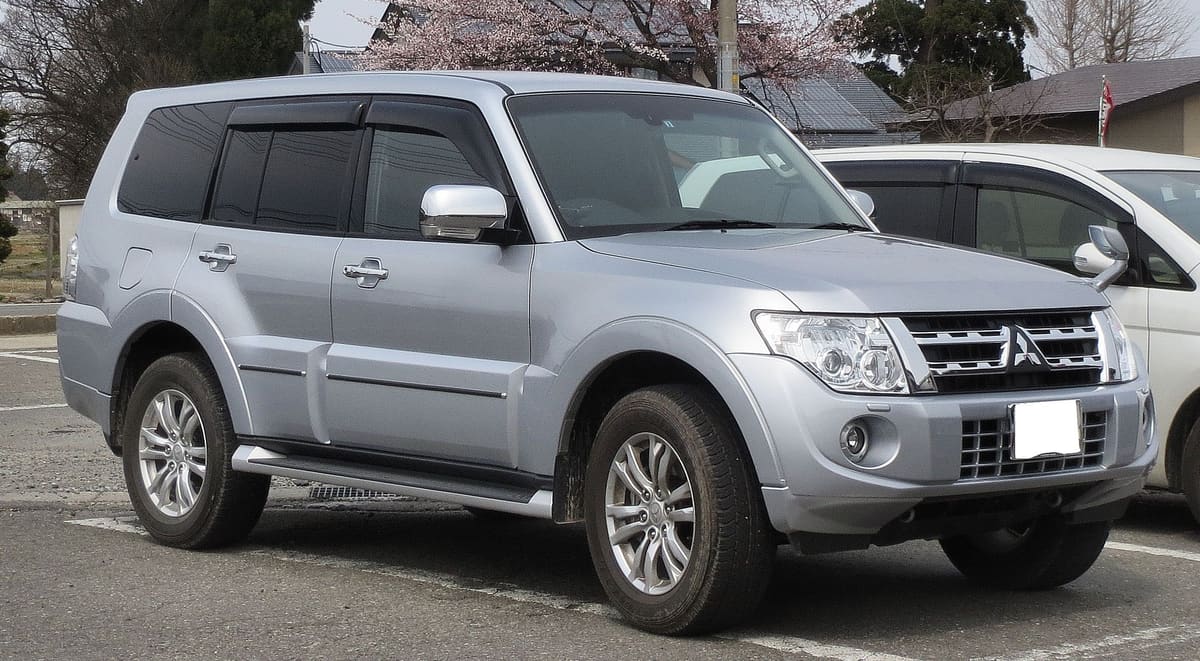
The Mitsubishi Shogun’s running costs are influenced by several factors including its tax band, insurance group, servicing demands, and depreciation. Its size and engine options typically place it in higher tax brackets and insurance groups, while servicing can be more involved than smaller SUVs. However, it tends to hold its value reasonably well due to its reputation and utility.
Vehicle Tax and Its Impact on Running Costs
The cost of vehicle tax for the Mitsubishi Shogun depends primarily on the engine size and emissions of the specific model. Larger engines and higher CO2 emissions generally push the car into higher tax bands, increasing the annual cost. Diesel variants may face additional charges or surcharges depending on current government policies aimed at reducing pollution.
Tax is calculated on a sliding scale, so even small differences in emissions can affect the amount payable. For the Shogun, which is a substantial SUV, expect it to fall into mid to upper tax bands. This means owners should budget accordingly, especially if the vehicle is used daily or for long distances.
The UK government’s official vehicle tax checker provides the exact tax band for any registration, which is essential to confirm before purchase. This transparency helps buyers understand the ongoing tax liability and factor it into their total cost of ownership.
Insurance Group and What Drives Its Cost
Insurance premiums for the Mitsubishi Shogun are influenced by the vehicle’s insurance group rating, which reflects factors such as repair costs, performance, safety features, and theft risk. The Shogun’s size, engine power, and potential repair costs often place it in higher insurance groups compared to smaller family cars.
Its robust build and reputation for durability can help moderate premiums, but the cost of parts and labour for a large SUV tends to be more expensive. Additionally, the vehicle’s use. whether as a family car, workhorse, or off-road vehicle. affects risk assessments by insurers.
Drivers can obtain personalised insurance quotes through comparison websites, which consider individual circumstances such as age, driving history, and location. This is the best way to get an accurate idea of insurance costs rather than relying solely on group ratings.
Servicing and Maintenance Demands
The Mitsubishi Shogun’s servicing requirements are generally more demanding than those of smaller cars due to its size, complexity, and off-road capabilities. Regular servicing intervals include oil changes, filter replacements, brake checks, and inspections of the four-wheel-drive system, which can add to the cost.
Parts such as tyres, brakes, and suspension components may wear faster if the vehicle is used off-road or for towing, increasing maintenance expenses. The availability of parts and the expertise required for servicing can also influence costs, with specialist garages often charging more than general service centres.
Owners should follow the manufacturer’s recommended service schedule to maintain reliability and resale value. Some trims or model years might have specific service needs, so checking the exact requirements for the chosen vehicle is important.
Fuel Economy and Its Effect on Running Costs
While exact fuel economy figures vary depending on engine choice and driving conditions, the Mitsubishi Shogun’s size and weight generally mean it consumes more fuel than smaller SUVs or hatchbacks. This results in higher fuel bills, especially for those who cover significant mileage or drive in urban stop-start traffic.
Diesel versions may offer better fuel economy on longer journeys, but this can be offset by higher fuel prices or additional taxes. Petrol variants might be less efficient but could have lower upfront costs and servicing expenses.
Drivers can manage fuel costs by maintaining steady speeds, avoiding excessive idling, and keeping tyres properly inflated. Understanding the specific engine and trim’s fuel consumption is crucial before purchase, as this will greatly influence running costs.
Depreciation and Residual Value
The Mitsubishi Shogun tends to hold its value relatively well compared to many other large SUVs, thanks to its reputation for toughness and off-road ability. This can help reduce the overall cost of ownership, as a stronger resale value means less depreciation loss.
However, depreciation rates vary depending on factors such as mileage, condition, trim level, and market demand. Well-maintained examples with full service histories and popular specifications generally command better prices on the used market.
Potential buyers should consider the total cost of ownership over several years, factoring in how much value the vehicle is likely to retain. This can offset some of the higher running costs associated with tax, insurance, and servicing.
Tyres, Repairs, and Other Running Expenses
Tyres for the Mitsubishi Shogun are typically larger and more robust than those for smaller vehicles, which can increase replacement costs. Off-road use or towing can accelerate tyre wear and the need for suspension repairs.
Repairs on a large SUV can be more expensive due to the cost of parts and the labour involved. However, the Shogun’s mechanical simplicity compared to more modern SUVs with complex electronics may help keep some repair costs manageable.
Owners should budget for these occasional expenses alongside regular maintenance to get a realistic picture of the vehicle’s running costs. Regular checks and prompt attention to wear and tear can prevent more costly repairs down the line.
Mitsubishi Shogun recall record
12 recalls have been issued for the Mitsubishi Shogun, between 2000 and 2020.
THE RIGHT FRONT LOWER ARM ASSEMBLY COULD BE BROKEN DUE TO IMPROPER WELDING
R/2020/147Issued 20 November 2020
The right front lower arm assembly could be broken due to improper welding by the supplier.
Remedy:The right front lower arm will be replaced
Affects cars built Oct 2016 to Feb 2018
PROPELLANT IN THE DRIVER AND PASSENGER SIDE AIRBAG INFLATORS MAY HAVE DETERIORATED
R/2017/275Issued 30 October 2017
The propellant (ammonium nitrate) in the inflator of the drivers and passengers front airbag inflator may deteriorate due to high temperature and humid conditions over a longer period in use. As a result the inflator body may rupture during airbag deployment in the event of an accident where the airbags are required to be deployed. The inflator body may rupture during airbag deployment with the potential to cause injury.
Remedy:Replacement of the driver and passenger front airbag inflators.
Affects cars built Sept 2006 to Jun 2012
ENGINE MAY STALL
R/2015/003Issued 11 February 2015
Due to a fault in the engine ECU software it is possible that the 4M41 engines in the Shogun will not learn the variations or age deterioration in injectors and be able to adjust the amount of fuel being injection accordingly. This inability to learn these values correctly can result in the engine emits an excessive amount of soot to the DPF which can block it. This can result in the engine stalling and not being able to restart.
Remedy:Recall all affected vehicles and reprogramme engine ECU software.
Affects cars built Oct 2011 to Dec 2013
ENGINE MAY STALL
R/2015/004Issued 11 February 2015
Due to a high carbon build up the check ball seat of the timing chain tensioner can show premature wear. It is possible that the check ball may stick to the seat preventing the tensioner from functioning properly. This in turn will result in an un-tensioned timing chain which causes a rattling noise and in the worst cases the chain will break.
Remedy:Replace tensioner on all affected vehicles. Depending on outcome of further inspections the timing chain may also need to be replaced.
Affects cars built Oct 2006 to Mar 2014
8 older recalls not shown.
A recall applies to a build range, not to every car of this model. Check a registration to see whether one specific vehicle has an outstanding recall.
Mitsubishi Shogun MOT record
From 27,709 recorded MOT tests, 27.4% failed.
| Registered | Tests | Failed | Median mileage |
|---|---|---|---|
| 2021 | 1,191 | 10.5% | 41,287 mi |
| 2020 | 671 | 14.5% | 44,083 mi |
| 2019 | 725 | 16.1% | 52,507 mi |
| 2018 | 1,123 | 16.1% | 55,358 mi |
| 2017 | 1,152 | 16.2% | 60,426 mi |
| 2016 | 1,523 | 18.6% | 67,356 mi |
| 2015 | 1,820 | 18.9% | 73,365 mi |
| 2014 | 1,532 | 21.9% | 86,422 mi |
Most common reasons for failure
- A suspension pin, bush or joint excessively worn33.2%
- Brake pipe damaged or excessively corroded18.7%
- The strength or continuity of the load bearing structure within 30cm of any sub-frame, spring or suspension component mounting (a 'prescribed area') is significantly reduced or inadequately repaired17.7%
- Tyre tread depth not in accordance with the requirements17.4%
- Vehicle structure corroded to the extent that the rigidity of the assembly is seriously reduced13.0%
Figures cover every Mitsubishi Shogun tested in the DVSA dataset, not this specific car. Check a registration for the actual history of one vehicle.
Frequently asked questions
What should I expect in terms of fuel costs for a Mitsubishi Shogun?
The Mitsubishi Shogun typically uses a diesel engine, so fuel costs depend on how often you drive and your style. Keep an eye on the diesel particulate filter, as a clogged DPF can increase fuel consumption and cause warning lights to appear.
Are Mitsubishi Shogun tyres expensive to replace?
Tyres for the Shogun tend to be larger due to its SUV size, so replacement can be more costly than smaller cars. Regularly check the tread depth and look for uneven wear, which might indicate suspension issues needing attention.
How often does the Mitsubishi Shogun need servicing?
Service intervals vary by model and mileage, but generally the Shogun requires a full service every 12 months or after a set number of miles. During servicing, mechanics will check key components like the timing belt and brake pads to ensure reliability.
What are typical maintenance tasks that affect running costs on a Shogun?
Routine maintenance includes oil changes, brake fluid replacement, and air filter swaps. The Shogun’s turbocharger also needs monitoring; if you notice a loss of power or excessive smoke, it might require inspection or repair.
Does the Mitsubishi Shogun have any known electrical issues that impact running costs?
Some owners report problems with the central locking system or dashboard warning lights. If the battery or alternator starts failing, it can cause electrical faults that increase repair bills, so regular checks of the battery health are advisable.
How reliable is the Mitsubishi Shogun’s 4WD system in terms of maintenance?
The 4WD system is robust but requires regular checks of the transfer case and differentials. Look out for unusual noises when switching between 2WD and 4WD modes, as this can indicate wear or fluid issues needing a garage visit.
Are brake repairs frequent or costly on the Mitsubishi Shogun?
Brake pads and discs on the Shogun are larger due to its weight, so they wear faster than on smaller cars. Listen for squealing noises and check for a spongy brake pedal, which can signal the need for brake fluid replacement or pad changes.
What should I check to avoid unexpected running costs with a used Mitsubishi Shogun?
Inspect the condition of the suspension components, especially the shock absorbers and bushes, as worn parts can lead to costly repairs. Also, verify the service history for regular timing belt changes, since failure here can cause serious engine damage.
Sources
- DVSA anonymised MOT tests and results (Open Government Licence v3.0)
- DVSA vehicle safety recalls (Open Government Licence v3.0)