Running costs
Mitsubishi Eclipse Cross running costs: what UK ownership really costs
Mitsubishi Eclipse Cross UK running costs: fuel or electric, insurance group, road tax, servicing and depreciation.
Updated 7th October 2026 DVSA data: Across 2,417 recorded MOT tests, 8.5% failed.
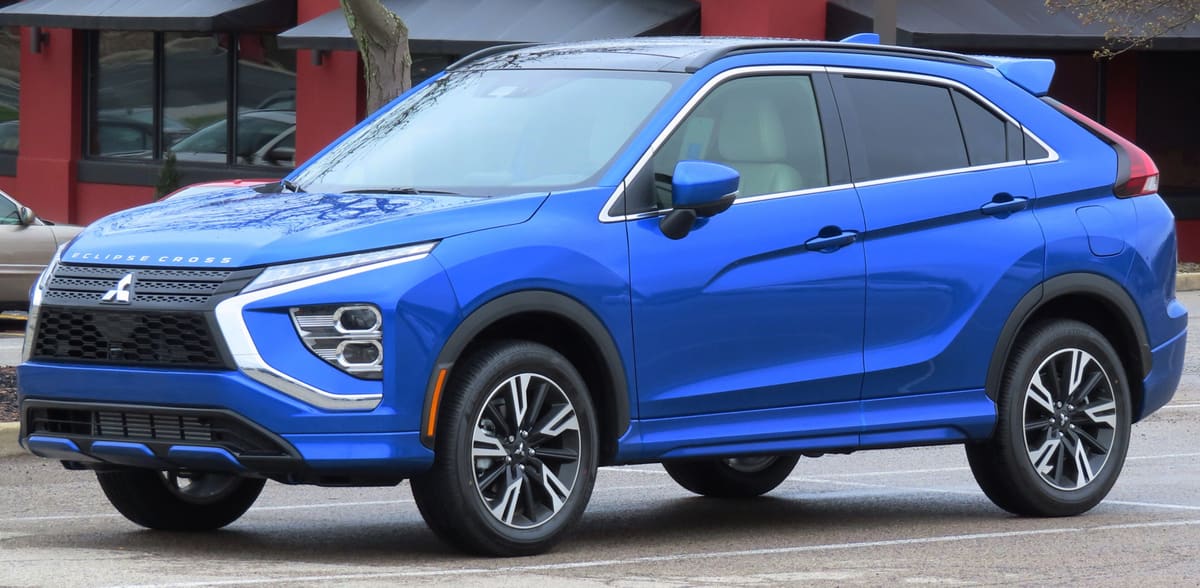
The Mitsubishi Eclipse Cross’s running costs are shaped by its engine type, insurance group, and servicing needs, alongside the UK’s vehicle tax system. Its hybrid and petrol variants influence fuel and tax bills differently, while insurance costs depend on trim and safety features. Servicing is straightforward but varies by model, and its resale value holds reasonably well, reflecting Mitsubishi’s reliability reputation.
How Vehicle Tax Affects Running Costs
The UK vehicle tax system bases charges on emissions and fuel type, which directly impacts the Eclipse Cross’s running costs. Petrol models typically face a standard rate, while hybrid versions benefit from lower or zero-emission banding in the first year, reducing initial tax outlay. After the first year, the tax settles into a standard band depending on CO2 emissions.
The Eclipse Cross’s emissions vary by engine and trim, so the exact tax band will differ. Diesel variants, if any, might attract additional surcharges or require a particulate filter to avoid penalties. Checking the latest rates on the government’s official vehicle tax page is essential, as these rates can change annually and influence ownership costs significantly.
Insurance Group and Its Influence on Premiums
Insurance premiums for the Eclipse Cross are influenced by its assigned insurance group, which reflects factors like engine size, repair costs, and safety features. Higher trim levels with more powerful engines or advanced technology can push the car into a higher group, increasing premiums. Conversely, models with modest engines and good safety ratings tend to fall into lower groups, helping keep insurance costs down.
Safety features such as autonomous emergency braking, lane departure warnings, and multiple airbags can positively affect premiums by reducing the risk of injury and claims. However, the Eclipse Cross’s SUV body style and popularity among certain driver demographics might increase premiums compared to smaller hatchbacks. Prospective buyers should obtain personalised insurance quotes to understand the specific cost implications for their chosen model and location.
Servicing and Maintenance Demands
The Eclipse Cross generally has straightforward servicing requirements typical of modern compact SUVs. Routine maintenance includes oil changes, brake inspections, and fluid top-ups, with intervals depending on whether the vehicle is petrol or hybrid. Hybrid models may require additional checks on the electric drivetrain components, but these are usually covered under warranty for the first few years.
Mitsubishi’s reputation for reliability means major mechanical issues are uncommon, which helps keep unexpected repair costs low. However, servicing costs can vary depending on whether the work is done at a main dealer or an independent garage. Genuine parts for the Eclipse Cross are widely available, but choosing a reputable service provider is key to maintaining the car’s performance and resale value.
Fuel Costs and Efficiency Considerations
Fuel costs are a significant part of running the Eclipse Cross, with variations depending on engine choice and driving style. Petrol versions typically consume more fuel than hybrids, which can switch between electric and petrol power to improve economy in urban driving. The hybrid system’s complexity might mean slightly higher servicing costs but can offset this by reducing fuel consumption.
Driving habits, traffic conditions, and journey length all influence real-world fuel efficiency. The Eclipse Cross’s size and weight mean it may consume more fuel than smaller cars, especially on stop-start urban routes or hilly terrain. Buyers should consider their typical driving patterns and fuel prices when estimating running costs.
Resale Value and Depreciation Trends
The Mitsubishi Eclipse Cross tends to hold its value reasonably well compared to some rivals, thanks to its reliability and the growing appeal of compact SUVs. Depreciation is influenced by factors such as mileage, condition, and the popularity of the chosen trim or engine type. Hybrid models may retain value better due to increasing demand for low-emission vehicles.
Regular servicing and maintaining a full service history help preserve resale value. Additionally, the Eclipse Cross’s distinctive styling and Mitsubishi’s warranty offerings can make it attractive on the used market. Prospective buyers should research current market values and consider how long they plan to keep the vehicle to understand depreciation’s impact on overall running costs.
Mitsubishi Eclipse Cross recall record
4 recalls have been issued for the Mitsubishi Eclipse Cross, between 2018 and 2021.
THE FRONT WHEEL MOULDING COULD BECOME DETACHED AND FALL FROM THE VEHICLE
R/2021/334Issued 15 November 2021
The front wheel moulding could become detached and fall from the vehicle.
Remedy:An additional bracket will be installed on the front wheel moulding to increase retention force.
Affects cars built Oct 2017 to Sept 2019
If there is an object in front of the vehicle the FCM camera system may incorrectly detect it as a pedestrian depending on road circumstances.
R/2021/233Issued 25 July 2021
If there is an object in front of the vehicle the FCM camera system may incorrectly detect it as a pedestrian depending on road circumstances.
Remedy:Carry out a software update to the FCM-ECU.
Affects cars built Oct 2017 to Sept 2019
THE BRAKE HYDRAULIC UNIT FUNCTION MAY BE INTERRUPTED
R/2018/285Issued 3 November 2018
Driver assist programme functions through the hydraulic brake unit may be interrupted.
Remedy:The ECU will be rewritten with modified software.
Affects cars built Oct 2017 to Apr 2018
ON CERTAIN VEHICLES EQUIPPED WITH FCM FCM MAY ACTIVATE THE BRAKE FOR LONGER THAN NECESSARY
R/2018/286Issued 3 November 2018
Collision avoidance system may activate the brake for longer than necessary.
Remedy:The ECU will be rewritten with modified software.
Affects cars built Oct 2017 to Jul 2018
A recall applies to a build range, not to every car of this model. Check a registration to see whether one specific vehicle has an outstanding recall.
Mitsubishi Eclipse Cross MOT record
From 2,417 recorded MOT tests, 8.5% failed.
| Registered | Tests | Failed | Median mileage |
|---|---|---|---|
| 2021 | 950 | 7.0% | 28,803 mi |
| 2020 | 950 | 9.8% | 35,259 mi |
| 2019 | 517 | 8.9% | 38,386 mi |
Most common reasons for failure
- A tyre seriously damaged28.0%
- a brake lining or pad worn below 1.5mm27.5%
- Tyre tread depth not in accordance with the requirements22.6%
- Wiper blade missing or obviously not clearing the windscreen12.1%
- Brake disc or drum excessively weakened, insecure or fractured9.8%
Figures cover every Mitsubishi Eclipse Cross tested in the DVSA dataset, not this specific car. Check a registration for the actual history of one vehicle.
Frequently asked questions
How expensive is servicing a Mitsubishi Eclipse Cross?
Servicing typically involves oil and filter changes, air filter replacement, and brake fluid checks. The timing chain does not usually require replacement, but the spark plugs and brake pads are items to monitor during routine visits to your garage.
What should I check to avoid costly repairs on an Eclipse Cross?
Keep an eye on the warning lights, especially the engine management light and the tyre pressure monitoring system. Regularly inspect the CV joints for any clicking noises during turns, as worn joints can lead to expensive repairs if ignored.
Are there any known issues with the Eclipse Cross that affect running costs?
Some owners report early wear on the front brake discs, which can increase maintenance frequency. Checking the condition of the brake discs and pads during service can help you avoid unexpected replacements.
How does the Eclipse Cross perform in terms of fuel consumption?
Fuel consumption varies by engine and trim, so it is best to check the specific model details. The turbocharged petrol engines may require premium fuel to maintain efficiency, which can influence running costs.
What are the typical tyre wear patterns on the Eclipse Cross?
Tyre wear can be uneven if the wheel alignment is off, especially on models with all-wheel drive. Regularly checking the tread depth and getting an alignment check at your garage can help prolong tyre life.
Does the Eclipse Cross have any particular electrical components that affect running costs?
The infotainment system and climate control rely on the vehicle’s battery and alternator. If you notice dimming lights or slow screen response, it might be worth having the alternator and battery tested to avoid breakdowns.
What maintenance should I perform on the Eclipse Cross to keep insurance costs down?
Maintaining the anti-lock braking system (ABS) and electronic stability control is important. Regular checks of the ABS sensors and brake fluid condition can ensure these safety features work correctly, which insurers often consider.
Are there any specific checks for the Eclipse Cross hybrid models?
For hybrid versions, monitoring the condition of the high-voltage battery and inverter cooling system is key. Listen for unusual noises from the electric motor and watch for any hybrid system warning lights on the dashboard.
Sources
- DVSA anonymised MOT tests and results (Open Government Licence v3.0)
- DVSA vehicle safety recalls (Open Government Licence v3.0)