Running costs
Mazda MX-30 running costs: what UK ownership really costs
Mazda MX-30 UK running costs: fuel or electric, insurance group, road tax, servicing and depreciation.
Updated 12th October 2026 DVSA data: Across 2,782 recorded MOT tests, 7.2% failed.
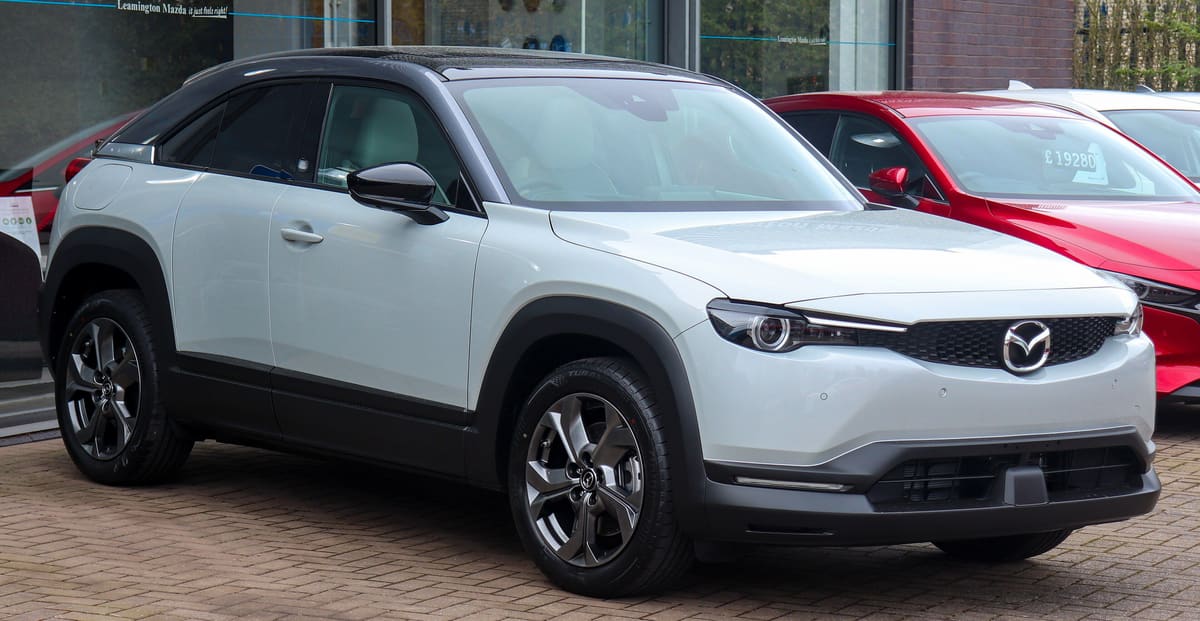
The Mazda MX-30’s running costs are influenced primarily by its electric drivetrain, which reduces fuel expenses and road tax but can increase insurance premiums due to repair costs and parts availability. Servicing is generally less demanding than petrol or diesel cars, yet battery health and software updates require attention. Its residual value depends on electric vehicle market trends and battery condition.
Taxation and Road Tax Treatment
The Mazda MX-30 benefits from the UK’s tax system designed to encourage electric vehicle adoption. As a fully electric car, it qualifies for zero or very low road tax rates compared to petrol or diesel models. This is because the government incentivises zero-emission vehicles to reduce pollution and carbon emissions.
Owners of the MX-30 do not pay the standard Vehicle Excise Duty that applies to most internal combustion engine cars. Instead, the tax is either nil or minimal, especially in the first years of ownership. However, it is important to check the current gov.uk guidelines, as tax bands and incentives can change over time. Additionally, electric vehicles may be exempt from certain congestion charges or low emission zone fees in some cities, further reducing running costs.
While road tax is favourable, other taxes such as company car tax for business users also reflect the MX-30’s electric status, often resulting in lower taxable benefits compared to petrol or diesel alternatives.
Insurance Costs and Influencing Factors
Insurance premiums for the Mazda MX-30 can be higher than some conventional cars due to several factors. Electric vehicles often attract increased insurance costs because their parts, especially batteries and electric drivetrain components, are more expensive to repair or replace. Additionally, the relative novelty of the model means insurers have less historical data to assess risk accurately.
The MX-30’s insurance group is influenced by its safety features, repair costs, and theft risk. Advanced safety technology can reduce premiums by lowering the likelihood of injury claims, but the cost of repairing sophisticated electronics and body panels can push premiums up. The car’s popularity and availability of spare parts also affect insurance group placement.
Prospective buyers should obtain insurance quotes tailored to their personal circumstances and the exact MX-30 trim they are interested in. This ensures a realistic understanding of annual insurance costs, which can vary significantly based on location, driving history, and coverage level.
Servicing and Maintenance Demands
The Mazda MX-30’s electric powertrain means servicing requirements differ from traditional petrol or diesel cars. It lacks an internal combustion engine, so there are no oil changes, spark plugs, or exhaust system checks. This generally lowers routine maintenance costs and complexity.
However, the MX-30 still requires regular checks on tyres, brakes, suspension, and cooling systems. Brake wear may be reduced due to regenerative braking, which uses the electric motor to slow the car and recover energy. Battery health is a critical aspect of maintenance, with manufacturers recommending periodic inspections to ensure capacity and performance remain optimal.
Software updates may be necessary to improve vehicle systems or fix bugs, and these can sometimes be performed remotely or during servicing appointments. While servicing is less frequent and less demanding mechanically, it is important to follow Mazda’s recommended schedule to maintain warranty coverage and vehicle reliability.
Depreciation and Residual Value
The Mazda MX-30’s residual value is shaped by the broader electric vehicle market and the condition of its battery. Electric cars tend to depreciate differently from petrol or diesel models, partly because battery technology evolves rapidly and can affect desirability over time.
Battery degradation is a key factor influencing resale value. Buyers look for vehicles with well-maintained batteries and sufficient remaining capacity. Mazda’s warranty on the battery offers some reassurance, but potential owners should consider how the battery’s health will affect the car’s value in the future.
Market demand for electric vehicles is growing, which can support stronger residual values compared to early electric models. However, the MX-30’s unique position as a compact electric SUV with specific styling and features means its depreciation may not mirror that of more mainstream EVs. Checking current market prices for used examples and considering the trim and condition is essential for an accurate picture of running costs over time.
Energy Costs and Charging Considerations
Running costs for the Mazda MX-30 are heavily influenced by electricity prices and charging habits. Charging at home overnight using an economy tariff can significantly reduce the cost per mile compared to petrol or diesel fuel. Public charging costs vary widely, with rapid chargers typically more expensive than slower, standard chargers.
The MX-30’s battery size and charging speed affect how often and how long it needs to be charged, which in turn impacts electricity costs and convenience. Using home charging is generally the most economical option, but access to suitable charging infrastructure is a key consideration for owners.
Charging efficiency and energy consumption depend on driving style, weather conditions, and terrain. Efficient driving and utilising regenerative braking can extend range and reduce electricity use. Prospective buyers should factor in their typical journey patterns and charging options when assessing the overall running costs.
Tyres, Wear and Tear
Tyres and general wear and tear contribute to the MX-30’s running costs but are broadly comparable to other vehicles in its class. Electric vehicles often have instant torque, which can increase tyre wear if driven aggressively. However, regenerative braking reduces brake pad wear, potentially lowering maintenance costs in that area.
Choosing the correct tyre type and maintaining proper pressures is important for safety, efficiency, and cost control. Mazda’s recommended tyre specifications vary by trim, so checking the exact requirements for the model you consider is advisable.
Other wear items such as wiper blades, bulbs, and interior components follow typical replacement schedules. The MX-30’s build quality and materials influence how often these need attention, but overall, these costs are similar to other compact SUVs.
Mazda MX-30 recall record
2 recalls have been issued for the Mazda MX-30, between 2021 and 2023.
Affected vehicles cannot be driven due to an error within the on-board charger which causes the vehicle to wrongly detect it is connected to an EV charge cable.
R/2023/159Issued 30 May 2023
Affected vehicles cannot be driven due to an error within the on-board charger which causes the vehicle to wrongly detect it is connected to an EV charge cable.
Remedy:Reprogram the software of the on-board charger.
Affects cars built Apr 2022 to Mar 2023
THE FRONT PASSENGER MAIN FRONTAL AIR BAG COULD SPLIT AT THE SEAM AND MAY NOT DEPLOY CORRECTLY WHEN ACTIVATED IN A COLLISION
R/2021/154Issued 27 April 2021
The front passenger main frontal airbag could split at the seam and may not deploy correctly when the airbag is activated in a collision.
Remedy:Replace the airbag with an improved version
Affects cars built May 2020 to Nov 2020
A recall applies to a build range, not to every car of this model. Check a registration to see whether one specific vehicle has an outstanding recall.
Mazda MX-30 MOT record
From 2,782 recorded MOT tests, 7.2% failed.
| Registered | Tests | Failed | Median mileage |
|---|---|---|---|
| 2022 | 855 | 5.5% | 18,197 mi |
| 2021 | 1,927 | 8.0% | 23,732 mi |
Most common reasons for failure
- Tyre tread depth not in accordance with the requirements37.8%
- A tyre seriously damaged23.2%
- A shock absorber damaged to the extent that it does not function or showing signs of severe leakage14.8%
- Brake disc or drum excessively weakened, insecure or fractured14.8%
- Wiper blade missing or obviously not clearing the windscreen9.4%
Figures cover every Mazda MX-30 tested in the DVSA dataset, not this specific car. Check a registration for the actual history of one vehicle.
Mazda MX-30 official figures
Median across 20 variants on sale, electricity / petrol.
- Combined economy
- 37.2 mpg
- WLTP median across variants
- CO2 emissions
- 172 g/km
- Sets the first-year tax rate
Official figures for new cars. Real economy varies with driving, load and conditions.
Frequently asked questions
How much does it cost to charge a Mazda MX-30 at home?
Charging the MX-30 at home involves plugging into a domestic socket or a dedicated wallbox. The cost depends on your electricity tariff, but you can monitor the charging process via the Mazda Connect system to see when the battery is full and avoid overcharging.
What maintenance does the Mazda MX-30 require compared to petrol cars?
The MX-30 needs less frequent oil changes since it has an electric motor instead of a combustion engine. However, you should still have the brake fluid and coolant checked regularly, and the condition of the high-voltage battery monitored during routine service visits.
Are there any specific warning lights I should watch for on the MX-30?
Keep an eye on the battery charge warning light and the electric motor system alert on the dashboard. If these illuminate, it could indicate issues with the battery management system or the electric drivetrain, which require prompt diagnostic checks at a Mazda specialist.
How often should the MX-30’s brake pads be replaced?
Thanks to regenerative braking, the MX-30’s brake pads tend to last longer than those on traditional cars. Still, it’s important to have them inspected during service, especially if you notice reduced braking responsiveness or unusual noises when applying the brakes.
Does the MX-30 require any special tyres or tyre maintenance?
The MX-30 often comes fitted with low rolling resistance tyres to improve efficiency. Regularly check tyre pressure using the built-in tyre pressure monitoring system, as underinflated tyres can increase energy consumption and wear unevenly.
What should I know about battery degradation and replacement costs?
Battery health is crucial for the MX-30’s performance. You can check battery status through the vehicle’s infotainment system or during servicing. While battery replacement is a specialised job involving the high-voltage battery pack, it is not a routine maintenance item and usually only needed after many years.
Are there any common repairs specific to the MX-30’s electric drivetrain?
Repairs may occasionally involve the inverter or electric motor components if warning lights appear or if you experience unusual noises or loss of power. These parts require diagnostic equipment specific to Mazda electric vehicles and should be handled by trained technicians.
How does the MX-30’s warranty affect running costs?
Mazda typically offers a warranty covering the electric drivetrain and battery for a set period. This can reduce unexpected repair costs during the warranty term, but it’s important to follow the recommended servicing schedule to keep the warranty valid.
Sources
- DVSA anonymised MOT tests and results (Open Government Licence v3.0)
- VCA new car fuel consumption and emissions data (Open Government Licence v3.0)
- DVSA vehicle safety recalls (Open Government Licence v3.0)