Running costs
Mazda CX-30 running costs: what UK ownership really costs
Mazda CX-30 UK running costs: fuel or electric, insurance group, road tax, servicing and depreciation.
Updated 11th October 2026 DVSA data: Across 20,411 recorded MOT tests, 6.3% failed.
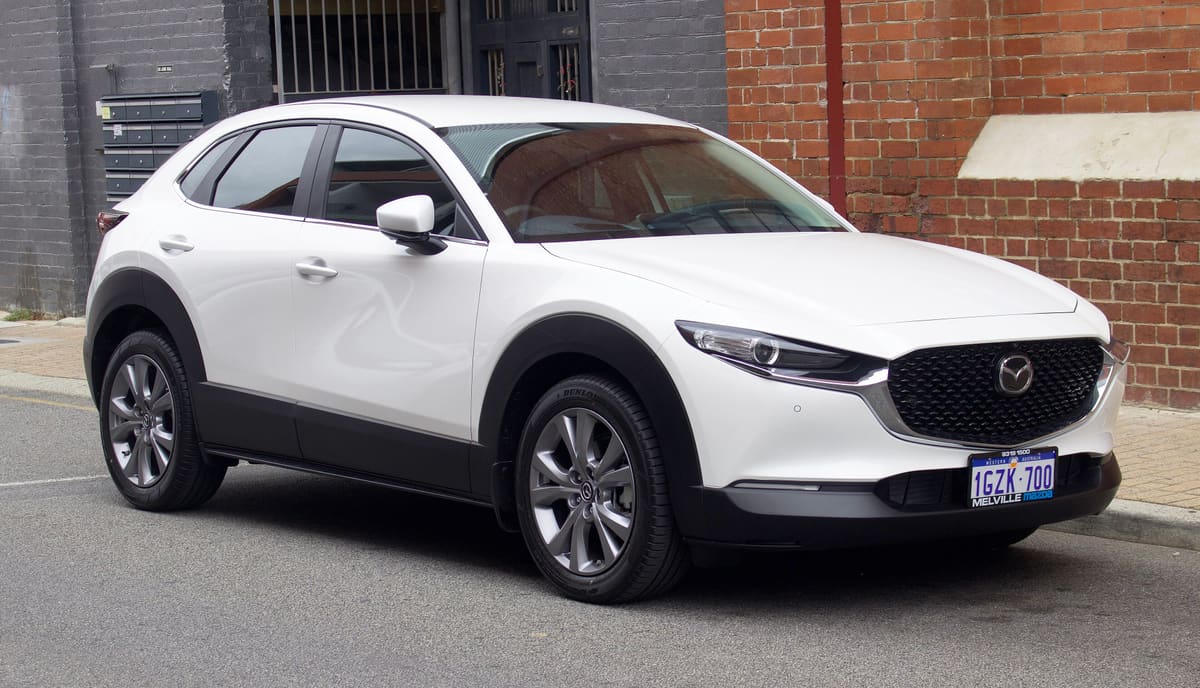
The Mazda CX-30’s running costs are influenced by factors such as its engine size and emissions, which affect road tax, its insurance group classification, servicing requirements, and depreciation. Overall, it tends to be reasonably economical to run for a compact SUV, with moderate tax and insurance costs, manageable servicing intervals, and decent residual values that help keep ownership costs in check.
How Vehicle Tax Affects the Mazda CX-30
The amount of vehicle tax you pay on a Mazda CX-30 depends primarily on its CO2 emissions and fuel type. Petrol and diesel engines are taxed differently, with diesel models often facing higher rates due to stricter emissions regulations. The government’s system links tax bands to emissions levels, so lower-emission variants attract less tax.
For the Mazda CX-30, the specific engine and trim you choose will determine the exact tax band it falls into. Models with smaller, more efficient engines generally benefit from lower tax rates, while more powerful or higher-emission versions incur higher charges. Plug-in hybrid versions, if available, may enjoy reduced or zero tax in the first year, followed by lower rates thereafter, reflecting government incentives for greener vehicles.
It is important to check the official government website for the latest tax rates and how they apply to the particular CX-30 model you are interested in, as these rates can change and vary according to the vehicle’s registration date and emissions profile.
Insurance Group and Its Impact on Running Costs
Insurance premiums for the Mazda CX-30 are influenced by its assigned insurance group, which reflects factors such as repair costs, safety features, engine size, and theft risk. The CX-30 typically falls into a moderate insurance group for compact SUVs, balancing reasonable premiums with good safety credentials.
Higher trim levels or models with larger engines may be placed in higher insurance groups, leading to increased premiums. Conversely, entry-level versions with smaller engines and fewer expensive extras may be cheaper to insure. Safety features like autonomous emergency braking and lane-keeping assist can help reduce insurance costs by lowering the risk of accidents.
Prospective buyers should obtain insurance quotes tailored to their personal circumstances and chosen CX-30 variant. This will provide a clearer picture of expected insurance costs, as factors such as driver age, location, and claims history also play a significant role.
Servicing and Maintenance Demands
The Mazda CX-30 benefits from relatively straightforward servicing requirements, typical of a modern compact SUV. Regular maintenance includes oil and filter changes, brake checks, tyre inspections, and fluid top-ups, usually scheduled at manufacturer-recommended intervals. Mazda’s servicing intervals are generally competitive, neither overly frequent nor too sparse, helping to keep running costs reasonable.
Servicing costs can vary depending on whether you use a main dealer or an independent garage. Main dealers may charge more but offer specialist knowledge and genuine parts, while independents can provide good value for standard maintenance. The availability of parts and the simplicity of the CX-30’s mechanical layout mean that repairs and servicing are unlikely to be prohibitively expensive.
It is also worth considering that the CX-30’s warranty and servicing plans, if purchased, can help spread the cost of maintenance and provide peace of mind. Regular servicing is essential to maintain the vehicle’s reliability and resale value.
Fuel Economy and Its Influence on Running Costs
Fuel consumption plays a significant role in the Mazda CX-30’s running costs. The vehicle’s engine size, fuel type, and driving style all affect how much fuel it uses. Smaller petrol engines and hybrid variants tend to offer better economy, while larger engines or all-wheel-drive versions may consume more fuel.
Driving conditions also impact fuel efficiency. Urban stop-start traffic generally leads to higher consumption than steady motorway cruising. The CX-30’s modern engine technology and aerodynamic design help optimise fuel use, but actual economy will vary depending on the specific model and how it is driven.
To get an accurate idea of fuel costs, it is advisable to check the official fuel economy figures for the exact CX-30 trim and engine you are considering, and factor in your typical driving patterns.
Depreciation and Residual Values
Depreciation is a key factor in the total cost of owning a Mazda CX-30. This compact SUV tends to hold its value reasonably well compared to some rivals, thanks to Mazda’s reputation for build quality, reliability, and appealing design. Models with popular engine options and trim levels usually retain value better than niche or less common variants.
Factors that influence depreciation include mileage, condition, service history, and market demand for SUVs of this size. Keeping the car well-maintained and choosing a sought-after specification can help maximise resale value.
While depreciation is inevitable, the CX-30’s balanced appeal and solid reputation mean it is less likely to suffer severe value drops, which helps reduce the overall cost of ownership when it comes time to sell or part-exchange.
Tyres, Repairs, and Other Running Costs
Tyre wear and replacement costs depend on the CX-30’s wheel size and driving habits. Larger alloy wheels fitted on higher trims may require more expensive tyres, while smaller steel wheels on entry-level models are generally cheaper to maintain. Regular checks and proper tyre maintenance can extend tyre life and improve safety.
Repairs tend to be straightforward for the CX-30, with parts widely available and a simple mechanical layout. The vehicle’s reliability record suggests that unexpected repairs should be infrequent, but it is sensible to budget for occasional wear-and-tear items such as brake pads, discs, and suspension components.
Other running costs include MOT tests, which are mandatory for vehicles over three years old, and any parking or congestion charges depending on where you live and drive. These are standard expenses for any car owner but should be factored into the overall cost of running a CX-30.
The Mazda CX-30 offers a balanced package in terms of running costs, with moderate tax and insurance expenses, manageable servicing demands, and decent fuel economy. Its ability to hold value well helps keep long-term ownership costs reasonable, making it a practical choice for those seeking a compact SUV that is economical to run in the UK.
Mazda CX-30 recall record
3 recalls have been issued for the Mazda CX-30, between 2020 and 2023.
On affected vehicles the images from the rear view / 360 cameras may not display.
R/2023/312Issued 6 November 2023
On affected vehicles the images from the rear view / 360� cameras may not display.
Remedy:Re-program the View Monitor Control (VMC) module with improved software.
Affects cars built Jun 2023 to Sept 2023
THE POWERED TAILGATE MAY PARTIALLY LOWER UNEXPECTEDLY FROM THE FULLY OPENED POSITION IN CERTAIN SITUATIONS
R/2021/077Issued 12 April 2021
The powered tailgate may partially lower unexpectedly from the fully opened position in certain situations.
Remedy:Inspect the production information and update the software of the power tailgate drive unit. Where necessary replace the power tailgate drive unit.
Affects cars built Apr 2019 to Oct 2020
VEHICLES MAY UNEXPECTEDLY STOP DUE TO INADVERTENT ACTIVATION OF THE AUTOMATED SMART BRAKE SUPPORT (SBS) SYSTEM
R/2020/009Issued 29 January 2020
Vehicles may unexpectedly stop due to inadvertent activation of the automated Smart Brake Support (SBS) system
Remedy:The vehicle control module is reprogrammed with modified software.
Affects cars built Apr 2019 to Oct 2019
A recall applies to a build range, not to every car of this model. Check a registration to see whether one specific vehicle has an outstanding recall.
Mazda CX-30 MOT record
From 20,411 recorded MOT tests, 6.3% failed.
| Registered | Tests | Failed | Median mileage |
|---|---|---|---|
| 2023 | 246 | 3.3% | 18,794 mi |
| 2022 | 5,943 | 5.1% | 21,902 mi |
| 2021 | 7,884 | 6.2% | 27,924 mi |
| 2020 | 6,108 | 7.7% | 32,395 mi |
| 2019 | 230 | 12.6% | 35,027 mi |
Most common reasons for failure
- Tyre tread depth not in accordance with the requirements31.2%
- a brake lining or pad worn below 1.5mm20.6%
- A tyre seriously damaged19.7%
- Brake disc or drum excessively weakened, insecure or fractured15.7%
- A shock absorber damaged to the extent that it does not function or showing signs of severe leakage12.7%
Figures cover every Mazda CX-30 tested in the DVSA dataset, not this specific car. Check a registration for the actual history of one vehicle.
Mazda CX-30 official figures
Median across 67 variants on sale, petrol electric.
- Combined economy
- 49.6 mpg
- WLTP median across variants
- CO2 emissions
- 129 g/km
- Sets the first-year tax rate
Official figures for new cars. Real economy varies with driving, load and conditions.
Frequently asked questions
How often should I service the Mazda CX-30 to keep running costs low?
Mazda recommends servicing the CX-30 at regular intervals to maintain the condition of components like the oil filter and spark plugs. Checking the condition of brake pads during each service can also prevent costly repairs later.
What are typical maintenance tasks that affect the Mazda CX-30’s running costs?
Replacing the air filter and engine oil are routine jobs that help the engine run efficiently. Additionally, keeping an eye on tyre wear and ensuring correct tyre pressure can improve fuel economy and extend tyre life.
Are there any warning lights specific to the Mazda CX-30 that I should watch for?
The CX-30 features a warning light for the i-Stop system, which indicates issues with the engine start-stop function. If this light stays on, it’s advisable to have the battery and related sensors checked by a garage.
How does the Mazda CX-30’s hybrid system impact running costs?
The mild hybrid system uses a 24-volt battery to assist the engine, reducing fuel consumption. Keeping the 12-volt battery and hybrid battery terminals clean and free from corrosion can help maintain system efficiency.
What should I check to avoid unexpected repairs on a Mazda CX-30?
Regularly inspect the condition of the timing chain tensioner and listen for unusual engine noises. A rattling sound on cold starts can indicate tensioner wear, which requires prompt attention to avoid engine damage.
Does the Mazda CX-30 require special tyres that affect running costs?
The CX-30 typically uses standard all-season tyres, but some trims may come with low rolling resistance tyres to improve fuel economy. Checking the tyre sidewall for the correct specification ensures you maintain the intended performance and efficiency.
How can I check if the Mazda CX-30’s brake system is affecting running costs?
Listen for squealing noises when braking, which often means the brake pads need replacing. Also, check the brake fluid level regularly as low fluid can cause the ABS warning light to illuminate, signalling a need for a garage inspection.
What role does the Mazda CX-30’s air conditioning system play in running costs?
A well-maintained air conditioning system reduces engine load and fuel use. Make sure the cabin air filter is replaced as recommended, and if the AC feels weak, have the refrigerant levels checked to avoid unnecessary strain on the compressor.
Sources
- DVSA anonymised MOT tests and results (Open Government Licence v3.0)
- VCA new car fuel consumption and emissions data (Open Government Licence v3.0)
- DVSA vehicle safety recalls (Open Government Licence v3.0)