Buying guide
Buying a used Land Rover Defender: what to check before you pay
A complete used-buyer checklist for the Land Rover Defender. Engine, gearbox, electrics, paperwork.
Updated 23rd June 2026 DVSA data: Across 112,215 recorded MOT tests, 22.1% failed.
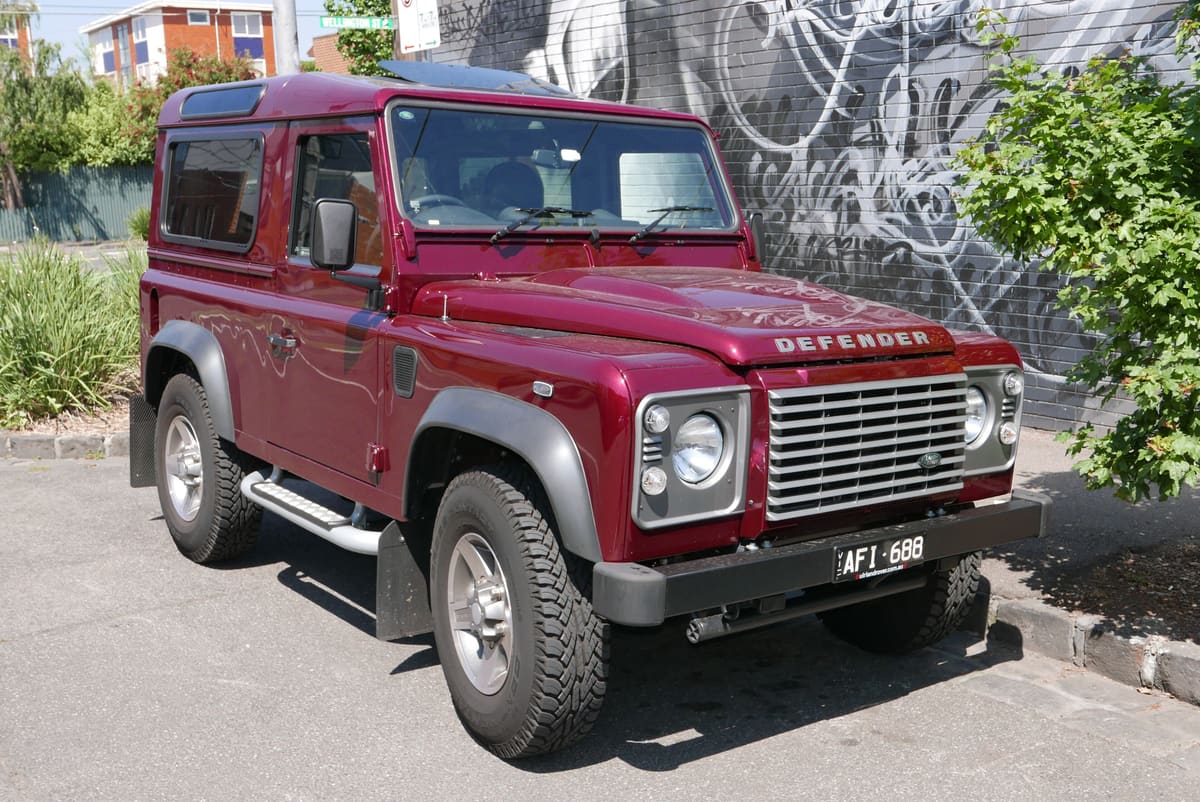
When considering a used Land Rover Defender, it’s essential to conduct a thorough inspection and research. This iconic vehicle is known for its ruggedness and off-road capabilities, but potential buyers should be aware of common issues and maintenance requirements.
Understanding the Model Variants
The Land Rover Defender has undergone several transformations over the years, with distinct model variants. Familiarising yourself with these differences is crucial. The classic Defender, produced until 2016, is celebrated for its utilitarian design and off-road prowess, while the newer models, launched in 2020, offer modern technology and comfort.
Each variant has its own strengths and weaknesses. Older models may have a more simplistic design but could require more maintenance. In contrast, newer models come equipped with advanced features, but they may also come with a higher price tag. Knowing which model suits your needs will help narrow down your options.
Checking the Service History
A comprehensive service history is vital when buying a used Defender. This documentation provides insight into how well the vehicle has been maintained and whether it has undergone necessary repairs. Look for regular servicing records, including oil changes, brake replacements, and any major work performed.
Pay attention to any outstanding recalls or issues noted in the service history. The DVSA MOT data can be a useful resource for checking past MOT results, which can indicate the vehicle’s reliability and any recurring problems. A well-documented history can significantly enhance the vehicle’s resale value.
Inspecting the Bodywork and Chassis
The Defender’s bodywork and chassis should be thoroughly inspected for signs of rust, damage, or previous repairs. Pay particular attention to the wheel arches, sills, and undercarriage, as these areas are prone to corrosion. A thorough visual inspection can reveal hidden issues that may not be immediately apparent.
If possible, use a magnet to check for body filler, which could indicate past accidents. Additionally, look for uneven panel gaps or misaligned doors, which may suggest previous collision damage. A solid chassis is crucial for the Defender’s off-road capabilities, so ensure it is in good condition.
Evaluating the Engine and Mechanical Components
The engine is the heart of any vehicle, and the Defender is no exception. When inspecting a used Defender, listen for unusual noises such as knocking or ticking, which could indicate underlying issues. Check for oil leaks around the engine and transmission, as these can lead to costly repairs.
It’s also essential to examine the vehicle’s cooling system, including the radiator and hoses, for any signs of wear or leaks. A well-maintained engine should have a smooth idle and responsive acceleration. If possible, take the vehicle for a test drive to assess its performance and handling.
Assessing the Interior Condition
The interior of a used Defender should be inspected for wear and tear, particularly on the seats, dashboard, and controls. Look for signs of water damage or mould, which can indicate leaks or poor maintenance. The upholstery should be in good condition, with no significant rips or stains.
Check that all electrical components, such as lights, windows, and infotainment systems, are functioning correctly. A well-kept interior not only enhances comfort but also adds to the vehicle’s overall value.
Reviewing Tyres and Suspension
Tyres play a crucial role in the Defender’s performance, especially when off-roading. Inspect the tread depth and condition of all four tyres, looking for uneven wear patterns that could indicate alignment or suspension issues. Ensure that the tyres are suitable for the type of driving you plan to do, whether on-road or off-road.
The suspension system should also be evaluated for wear. Look for any signs of leaks from shock absorbers and listen for unusual noises when driving over bumps. A well-maintained suspension system is essential for a smooth ride and optimal handling, particularly in challenging terrains.
Understanding Ownership Costs
Owning a Land Rover Defender comes with various costs, including insurance, fuel, and maintenance. Research insurance quotes specific to the Defender model you are considering, as premiums can vary significantly. Fuel consumption is another important factor; older models may be less fuel-efficient than newer ones.
Maintenance costs can also be higher for Defenders due to their off-road capabilities and the need for specialised parts. It’s advisable to budget for regular servicing and potential repairs. Understanding these costs upfront will help you make a more a confident decision about your purchase.
By following this full checklist, you can ensure that your used Land Rover Defender purchase is a sound investment. Whether you are drawn to its classic charm or modern capabilities, being well-informed will enhance your ownership experience.
Land Rover Defender recall record
31 recalls have been issued for the Land Rover Defender, between 2000 and 2026.
AJ20-D6 Idler Pulley Clash
R/2026/241Issued 26 June 2026
A concern has been identified on certain AJ20-D6 engines where the Front End Auxiliary Drive (FEAD) belt idler pulley may over-rotate following a high torsion input and lead to a clash with and damage to the oil pressure and temperature sensor. A damaged oil pressure and temperature sensor can lead to an oil leak from the engine which can result in a slip hazard for following road users particularly two-wheeled vehicles.
Remedy:Vehicles will have the Front-End Auxiliary Drive (FEAD) idler pulley replaced.
Affects cars built Jun 2024 to Apr 2026
Driver’s Airbag Potential Non-Deployment
R/2026/245Issued 19 June 2026
A concern has been identified where the connector to the driver’s airbag at the clockspring may experience fretting corrosion over time. This can lead to an increased resistance in the driver’s airbag circuit potentially resulting in the airbag failing to deploy when requested to do so. An airbag which fails to deploy as-intended will increase the risk of injury in the event of a crash.
Remedy:Vehicles will have a protective lubricant gel applied to the driver’s airbag connector terminals.
Affects cars built Apr 2019 to Jun 2026
E-PACE F-PACE Defender Discovery Sport Range Rover Evoque and Range Rover Velar PHEV Traction Battery Fire Risk
R/2025/553Issued 12 June 2026
Vehicles have experienced thermal overload which may manifest in smoke or fire that may occur underneath the rear of the vehicle where the high voltage traction battery is located. The root cause is not yet known and investigations are continuing. A vehicle thermal overload condition such as fire or smoke can result in increased risk of occupant injury and/or injury to persons outside the vehicle as well as property damage.
Remedy:Vehicles will be inspected by the retailer and as required at-risk battery packs will be replaced.
Affects cars built Oct 2020 to Jan 2025
Defender and Discovery 2026 Model Year Fuel Tank Wall Thickness
R/2026/177Issued 12 June 2026
A concern has been identified where the fuel tank wall thickness may be below design specification near the inlet check valve. A fuel tank with a thinner-than-designed wall may not perform adequately in the event of a crash leading to increased risk of fuel spillage and potentially fire.
Remedy:Affected vehicles will have the fuel tank replaced.
Affects cars built Jan 2026 to Jan 2026
27 older recalls not shown.
A recall applies to a build range, not to every car of this model. Check a registration to see whether one specific vehicle has an outstanding recall.
Land Rover Defender MOT record
From 112,215 recorded MOT tests, 22.1% failed.
| Registered | Tests | Failed | Median mileage |
|---|---|---|---|
| 2023 | 501 | 2.6% | 24,328 mi |
| 2022 | 9,663 | 6.5% | 28,569 mi |
| 2021 | 8,439 | 7.3% | 38,707 mi |
| 2020 | 4,143 | 9.2% | 45,211 mi |
| 2016 | 1,737 | 10.9% | 32,670 mi |
| 2015 | 6,389 | 15.0% | 46,914 mi |
| 2014 | 5,635 | 17.9% | 57,820 mi |
| 2013 | 4,197 | 20.7% | 65,629 mi |
Most common reasons for failure
- Fluid leaking excessively and likely to harm the environment or to pose a safety risk to other road users25.9%
- Brake pipe damaged or excessively corroded25.5%
- A shock absorber bush excessively worn16.5%
- A seat belt webbing or flexible stalk significantly stretched, damaged or weakened16.3%
- A suspension pin, bush or joint excessively worn15.8%
Figures cover every Land Rover Defender tested in the DVSA dataset, not this specific car. Check a registration for the actual history of one vehicle.
Frequently asked questions
What should I look for when buying a used Land Rover Defender?
Check the vehicle's service history, condition of the bodywork, and the state of the chassis. It's also important to inspect the interior for wear and tear and ensure all electronics are functioning.
Are there any common issues with the Land Rover Defender?
Yes, some common issues include electrical faults, rust on older models, and problems with the gearbox. It's advisable to have a thorough inspection done before purchasing.
What is the best model year for the Land Rover Defender?
The best model year can vary based on personal preference and intended use. The newer models offer modern features, while older models are favoured for their classic design and off-road capability.
How much should I expect to pay for a Land Rover Defender?
Prices can vary widely depending on the model year, condition, and mileage. It's best to research current market prices for the specific model you are interested in.
Is the Land Rover Defender reliable?
The Land Rover Defender has a reputation for being rugged and capable, but reliability can vary by model year and maintenance history. Regular servicing can help maintain its reliability.
What are the running costs of a Land Rover Defender?
Running costs can include fuel, insurance, and maintenance. Generally, Defenders may have higher fuel consumption compared to smaller vehicles, so it's important to factor this into your budget.
Can I finance a Land Rover Defender?
Yes, many dealerships offer financing options for purchasing a Land Rover Defender. You can also explore personal loans or leasing options depending on your financial situation.
What should I know about insurance for a Land Rover Defender?
Insurance costs can vary based on the model, your driving history, and where you live. It's advisable to get quotes from multiple insurers to find the best coverage and price.
Sources
- DVSA anonymised MOT tests and results (Open Government Licence v3.0)
- DVSA vehicle safety recalls (Open Government Licence v3.0)