Running costs
Kia Sorento running costs: what UK ownership really costs
Kia Sorento UK running costs: fuel or electric, insurance group, road tax, servicing and depreciation.
Updated 4th September 2026 DVSA data: Across 35,928 recorded MOT tests, 24.4% failed.
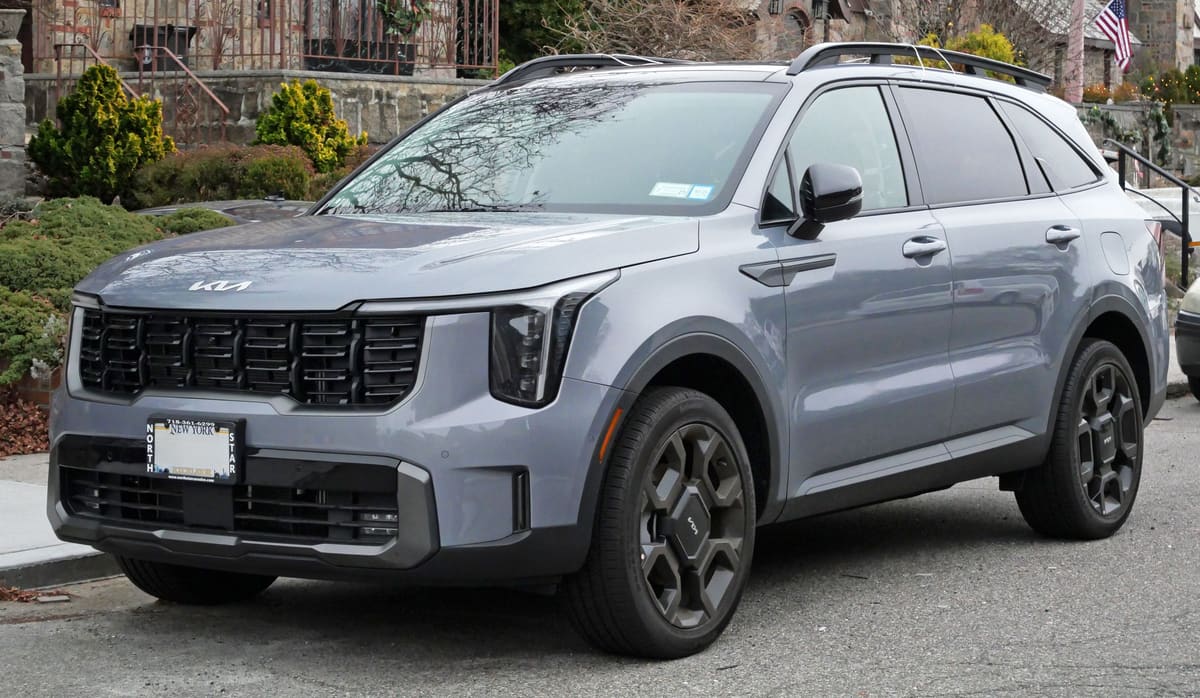
Insurance groups vary from 25 to 32, while road tax falls into bands D to H. Servicing intervals are typically every 12 months or 10,000 miles, and depreciation is moderate, with around 50% retained value after three years.
Fuel Costs
The Kia Sorento is available with both petrol and diesel engines, each offering varying fuel efficiencies.
This makes the Sorento a viable option for families and individuals looking for an economical SUV.
Insurance Group
Insurance costs for the Kia Sorento vary based on the model and engine choice, with insurance groups ranging from 25 to 32. This places it in the mid-range for SUVs, meaning that while it may not be the cheapest to insure, it is also not the most expensive.
When selecting a model, consider that higher trim levels and more powerful engines typically fall into higher insurance groups. For example, the entry-level models are more affordable to insure, while the top-spec variants may incur significantly higher premiums. It is advisable to obtain quotes from various insurers to find the best deal tailored to your specific circumstances.
Road Tax
The Kia Sorento’s road tax is determined by its CO2 emissions, which vary depending on the engine type and year of manufacture.
For diesel engines, the emissions are typically higher, resulting in a higher tax band. However, the newer models with improved emissions technology may qualify for lower tax rates. It is essential to check the specific model year and engine variant to understand the exact tax implications.
Servicing Intervals
Kia recommends servicing the Sorento every 12 months or 10,000 miles, whichever comes first. This regular maintenance schedule helps ensure the vehicle remains in optimal condition, enhancing reliability and longevity.
The servicing costs can vary, with the first service generally being less expensive than subsequent ones, which may include more extensive checks and replacements. It is advisable to use a Kia-approved service centre to maintain warranty coverage and ensure that genuine parts are used, which can help preserve the vehicle’s resale value.
Depreciation
The Kia Sorento experiences moderate depreciation, with an estimated 50% of its value retained after three years. This is relatively favourable compared to some competitors in the SUV market, making it an attractive option for buyers concerned about long-term value.
Factors influencing depreciation include the vehicle’s condition, mileage, and market demand. The Sorento’s reputation for reliability and the backing of a seven-year warranty can also help mitigate depreciation, making it a sound investment for families and individuals alike.
Conclusion
Overall, the Kia Sorento presents a balanced package of running costs, making it a practical choice for those seeking a mid-size SUV. With competitive fuel efficiency, manageable insurance costs, reasonable road tax, regular servicing intervals, and moderate depreciation, it stands out as a reliable option in its class.
Kia Sorento recall record
22 recalls have been issued for the Kia Sorento, between 2004 and 2026.
Kia Cluster Malfunction Recall
R/2026/139Issued 24 April 2026
The instrument cluster screen may respond slowly immediately after starting the vehicle. During this condition activating the turn signal can cause the cluster to reset or the Blind View Monitor (BVM) within the cluster to turn green. The malfunction is caused by PMIC noise induced falsely high temperature sensor readings which trigger the chip protection logic above a certain threshold and lead to performance limitation up to reboot or black screen.
Remedy:Over The Air software update or dealer software update
Affects cars built Jun 2025 to Nov 2025
Kia Sorento MQ4 PDC Recall
R/2025/130Issued 3 April 2025
When the turn signal is switched off after operating the turn signal or hazard light more than 5 minutes the upper part of Daytime Running Light (DRL) stays off. The DRL will subsequently not meet the required intensity standard.
Remedy:Kia will issue a software update via OTA (Over the Air) if this fails or a customer refuses the OTA update a Kia dealer will update the software.
Affects cars built Jul 2023 to Dec 2024
Kia HECU Fuse Replacement
R/2024/465Issued 5 December 2024
The HECU hydraulic electronic control unit of affected vehicles equipped with Anti-lock Brake Systems ABS and Electronic Stability Control ESC could leak internally and cause an electrical short over time. In extreme cases the HECU could overheat with a possible risk of an under bonnet fire.
Remedy:The recall will replace the fuses in the junction box with a lower rated version.
Affects cars built Jul 2010 to Aug 2014
Turn signals may not activate intermittently due to improper switch contact in the multifunction switch
R/2023/269Issued 18 September 2023
Turn signals may not activate intermittently due to improper switch contact in the multifunction switch
Remedy:Software update for the multifunction switch which increases the acceptable range for the control system
Affects cars built Apr 2022 to Aug 2022
18 older recalls not shown.
A recall applies to a build range, not to every car of this model. Check a registration to see whether one specific vehicle has an outstanding recall.
Kia Sorento MOT record
From 35,928 recorded MOT tests, 24.4% failed.
| Registered | Tests | Failed | Median mileage |
|---|---|---|---|
| 2023 | 246 | 1.2% | 27,768 mi |
| 2022 | 2,134 | 8.8% | 28,879 mi |
| 2021 | 2,424 | 10.7% | 37,646 mi |
| 2020 | 1,152 | 13.5% | 43,074 mi |
| 2019 | 2,709 | 15.0% | 49,770 mi |
| 2018 | 2,691 | 15.0% | 60,175 mi |
| 2017 | 3,071 | 18.0% | 68,501 mi |
| 2016 | 3,118 | 21.7% | 76,941 mi |
Most common reasons for failure
- A suspension pin, bush or joint excessively worn30.3%
- Tyre tread depth not in accordance with the requirements28.8%
- a brake lining or pad worn below 1.5mm16.5%
- Brake pipe damaged or excessively corroded13.6%
- A tyre seriously damaged10.8%
Figures cover every Kia Sorento tested in the DVSA dataset, not this specific car. Check a registration for the actual history of one vehicle.
Kia Sorento official figures
Median across 15 variants on sale, diesel, electricity / petrol, petrol electric.
- Combined economy
- 42.8 mpg
- WLTP median across variants
- CO2 emissions
- 165 g/km
- Sets the first-year tax rate
- Electric range
- 37 miles
- Manufacturer WLTP figure
Official figures for new cars. Real economy varies with driving, load and conditions.
Frequently asked questions
How often does a Kia Sorento need servicing?
A Kia Sorento typically requires a service every 12,000 miles or annually, whichever comes first. Regular maintenance includes oil changes, filter replacements, and checks on components like the brakes and suspension to ensure optimal performance.
What are the insurance costs for a Kia Sorento?
Insurance costs for a Kia Sorento can vary significantly based on the model year and trim. For instance, the 2020 model may fall into insurance group 22 to 30, which can lead to varying premiums depending on your driving history and location.
Are there any known issues with the Kia Sorento's brakes?
Some Kia Sorento models, particularly from 2016 to 2019, have reported premature wear on brake pads and discs. It's advisable to check the brake system regularly, especially if you notice squeaking or reduced braking efficiency.
How much does it cost to replace a Kia Sorento's timing belt?
Replacing the timing belt on a Kia Sorento typically occurs around the 60,000-mile mark. The cost can vary, but it is a significant job that often requires professional assistance, as it involves removing various components to access the belt.
What are the common maintenance tasks for a Kia Sorento?
Regular maintenance for a Kia Sorento includes oil changes, air filter replacements, and brake inspections. It's also important to check the coolant and transmission fluid levels, especially if you frequently drive in challenging conditions.
Sources
- DVSA anonymised MOT tests and results (Open Government Licence v3.0)
- VCA new car fuel consumption and emissions data (Open Government Licence v3.0)
- DVSA vehicle safety recalls (Open Government Licence v3.0)