Top fixes
Top Kia Niro fixes every owner should know
Cheap, practical fixes for the Kia Niro faults you actually meet, with rough costs and what a garage will charge.
Updated 4th September 2026 DVSA data: Across 103,084 recorded MOT tests, 8.8% failed.
TL;DR
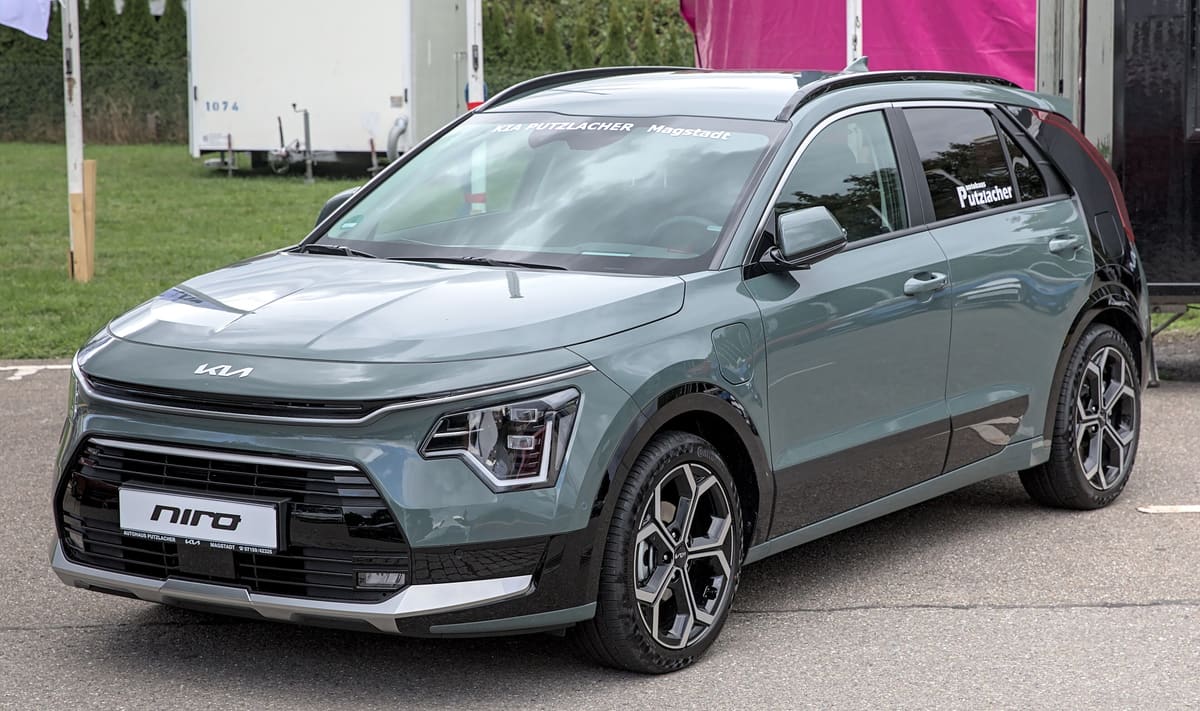
Kia Niro owners should be aware of common faults such as battery issues, faulty sensors, air conditioning problems, brake wear, and electrical issues. Practical DIY fixes can save time and money, with parts ranging from £20 to £300 and garage labour costs typically between £50 and £100 per hour.
Battery Issues
The Kia Niro, especially models from 2017 to 2020, may experience battery problems. Symptoms include warning lights and reduced performance. A DIY replacement of the 12V battery costs around £100, while a garage might charge £150 for the battery and labour.
Faulty Sensors
Faulty parking and proximity sensors are common, particularly in 2018 to 2021 models. These can cause false alarms or non-responsiveness. You can clean or replace the sensors yourself for about £30, while a garage may charge £100 for diagnostics and replacement.
Air Conditioning Problems
Air conditioning issues are reported in Niros from 2016 to 2021. Common problems include weak airflow or odd smells. A DIY recharge of the AC system can cost about £50, whereas professional servicing might range from £100 to £200, depending on the issue.
Brake Wear
Brake wear is a typical issue for Niro owners, especially those from 2017 onwards. Check for squeaking or reduced braking power. Replacing brake pads can be a DIY job costing around £50, while a garage will likely charge £150 to £250 for parts and labour.
Electrical Issues
Electrical problems can arise in various Niro models, often related to the infotainment system or dashboard lights. Simple fixes like resetting the system might work temporarily. For serious issues, a garage diagnostic will start around £50, with repairs possibly costing £200 or more.
Kia Niro recall record
6 recalls have been issued for the Kia Niro, between 2018 and 2025.
Kia Niro HCA Fuse Replacement
R/2025/059Issued 2 March 2025
The printed circuit board (PCB) in the Hydraulic Clutch Actuator (HCA) may become contaminated with fluid. A fluid contaminated PCB may lead to an electrical short circuit which in extreme cases may potentially result in a fire in the engine compartment while driving.
Remedy:Check vehicle for Diagnostic Trouble Codes (DTC) if HCA related codes are found replace the HCA the connector and reduced amperage fuse. If no related DTC are recorded fit reduced amperage fuse only.
Affects cars built Oct 2015 to Jun 2022
Kia EV9 and Niro SG2 Gear Drive Unit Recall
R/2024/276Issued 30 August 2024
On affected vehicles due to Improper torque applied to the Gear Drive Unit during assembly by the differential gear supplier they may exhibit a grinding noise while driving which can result in a loss of motive power and/or cause the differential to lock up.
Remedy:On the affected vehicles the Gear Drive Unit will be replaced.
Affects cars built Nov 2022 to Jul 2023
Kia EV6 and Niro SG2 Driveshaft Recall
R/2024/163Issued 11 April 2024
On affected vehicles an improperly treated driveshaft may break under load resulting in the loss of drive
Remedy:On affected vehicles the driveshaft will be replaced
Affects cars built Jun 2023 to Jul 2023
A combination of the instrument cluster software and electrical noise while the vehicle is starting may result in cluster booting errors
R/2023/211Issued 21 July 2023
A combination of the instrument cluster software and electrical noise while the vehicle is starting may result in cluster booting errors.
Remedy:The software of the digital instrument cluster of your vehicle must be upgraded.
Affects cars built Sept 2022 to Mar 2023
2 older recalls not shown.
A recall applies to a build range, not to every car of this model. Check a registration to see whether one specific vehicle has an outstanding recall.
Kia Niro MOT record
From 103,084 recorded MOT tests, 8.8% failed.
| Registered | Tests | Failed | Median mileage |
|---|---|---|---|
| 2024 | 1,905 | 2.5% | 26,552 mi |
| 2023 | 3,529 | 5.2% | 41,564 mi |
| 2022 | 26,592 | 8.0% | 29,881 mi |
| 2021 | 27,313 | 8.3% | 40,210 mi |
| 2020 | 20,081 | 9.8% | 43,668 mi |
| 2019 | 10,509 | 9.7% | 54,462 mi |
| 2018 | 7,389 | 10.3% | 67,222 mi |
| 2017 | 4,499 | 13.0% | 65,426 mi |
Most common reasons for failure
- Tyre tread depth not in accordance with the requirements37.0%
- A tyre seriously damaged31.2%
- A tyre cords visible or damaged12.9%
- Wiper blade missing or obviously not clearing the windscreen10.6%
- Brake disc or drum excessively weakened, insecure or fractured8.3%
Figures cover every Kia Niro tested in the DVSA dataset, not this specific car. Check a registration for the actual history of one vehicle.
Kia Niro official figures
Median across 13 variants on sale, electricity, electricity / petrol, petrol electric.
- Combined economy
- 61.4 mpg
- WLTP median across variants
- CO2 emissions
- 105.5 g/km
- Sets the first-year tax rate
- Electric range
- 286 miles
- Manufacturer WLTP figure
Official figures for new cars. Real economy varies with driving, load and conditions.
Frequently asked questions
What are the common faults in the Kia Niro?
Common faults include battery issues, faulty sensors, air conditioning problems, brake wear, and electrical issues.
Can I fix these issues myself?
Many issues can be tackled with basic DIY skills, but some may require professional help.
Are there temporary fixes for these problems?
Some fixes can be temporary, like using sealants or cleaning sensors, but permanent repairs are recommended.
Sources
- DVSA anonymised MOT tests and results (Open Government Licence v3.0)
- VCA new car fuel consumption and emissions data (Open Government Licence v3.0)
- DVSA vehicle safety recalls (Open Government Licence v3.0)