Running costs
Kia EV6 running costs: what UK ownership really costs
Kia EV6 UK running costs: fuel or electric, insurance group, road tax, servicing and depreciation.
Updated 4th September 2026 DVSA data: Across 6,416 recorded MOT tests, 6.5% failed.
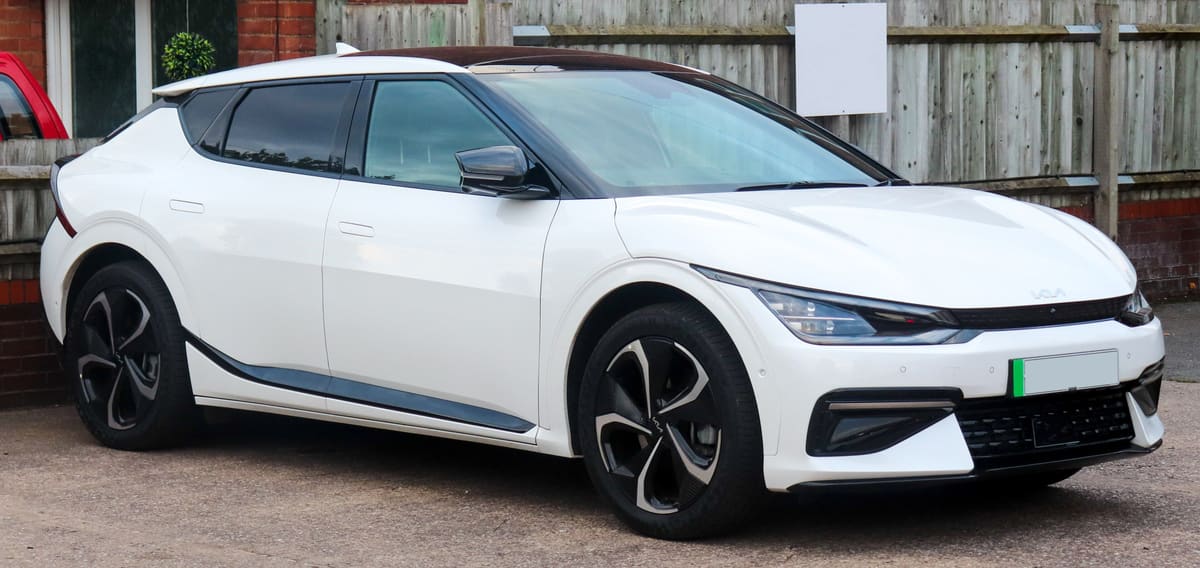
The Kia EV6 offers competitive running costs, making it an attractive option for drivers looking for an electric vehicle. With low electricity costs, affordable insurance, no road tax, and minimal servicing needs, the overall ownership expenses are reasonable. Additionally, depreciation rates are favourable compared to many other electric vehicles.
Fuel and Electricity Costs
The Kia EV6 is an electric vehicle, meaning it runs on electricity rather than petrol or diesel. Charging costs will vary depending on your energy provider and whether you charge at home or use public charging stations. This translates to an impressive cost per mile compared to traditional fuel vehicles, making it economical for daily commuting and long journeys.
However, many drivers find that home charging remains the most economical option. The availability of various home charging solutions also allows for convenient overnight charging, further reducing running costs.
Insurance Group
The Kia EV6 falls into insurance groups that typically range from 30 to 40, depending on the specific model and trim level. This places it in a relatively affordable insurance bracket for an electric vehicle. Factors such as your driving history, location, and the level of coverage you choose will ultimately affect your premium.
Electric vehicles often benefit from lower insurance costs due to fewer moving parts and generally lower repair costs. Additionally, many insurers offer discounts for electric vehicle owners, recognising the lower risk associated with these cars. It’s advisable to shop around for insurance quotes to find the best deal tailored to your circumstances.
Tax Band
One of the significant advantages of owning a Kia EV6 is that it is exempt from road tax, also known as Vehicle Excise Duty (VED). This exemption applies to all fully electric vehicles, making them an appealing choice for environmentally conscious drivers. The zero-emission status not only helps reduce your overall ownership costs but also supports the UK government’s efforts to promote electric vehicle adoption.
As the government continues to push for greener transport solutions, the tax benefits associated with electric vehicles are likely to remain in place for the foreseeable future. This makes the EV6 an attractive option for those looking to minimise their tax liabilities while contributing to a more sustainable future.
Servicing Intervals
The Kia EV6 has a recommended servicing interval of 12 months or 10,000 miles, whichever comes first. This is relatively standard for electric vehicles, which typically require less frequent servicing than their petrol or diesel counterparts. The absence of an internal combustion engine means fewer components that need regular maintenance, such as oil changes or exhaust system checks.
During servicing, technicians will focus on key areas such as brake systems, battery health, and software updates. Some owners may also choose to have their tyres rotated or replaced, depending on wear and tear. Overall, the servicing costs for the EV6 are expected to be lower than those for traditional vehicles, contributing to its overall affordability.
Typical Depreciation
Depreciation is an essential factor to consider when evaluating the total ownership cost of any vehicle, including the Kia EV6. Generally, electric vehicles depreciate at a slower rate than traditional petrol or diesel cars, thanks to increasing demand and government incentives. The EV6 is expected to retain a good portion of its value over the years, making it a wise investment.
While specific depreciation rates can vary based on factors such as mileage, condition, and market demand, electric vehicles are becoming more desirable as charging infrastructure improves and battery technology advances. This trend is likely to benefit the EV6, ensuring that it remains a competitive option in the used car market.
Conclusion
The Kia EV6 presents an attractive ownership proposition in terms of running costs. With low electricity costs, affordable insurance, no road tax, minimal servicing requirements, and favourable depreciation rates, it stands out as a practical and economical choice for drivers looking to transition to electric vehicles. As the market for electric cars continues to grow, the EV6 is well-positioned to meet the needs of modern drivers while keeping costs manageable.
Kia EV6 recall record
5 recalls have been issued for the Kia EV6, between 2022 and 2026.
Kia EV6 HV Battery Cell Misalignment
R/2026/309Issued 25 August 2026
Due to a quality deviation by the supplier certain battery cells within the High Voltage Battery System Assembly manufactured in limited production periods may have been produced with a misaligned electrode. A misaligned electrode may over time result in an internal short circuit in certain situations thereby increasing the risk of fire.
Remedy:If the HV battery State of Health is greater than 90% Kia UK will replace the defective module in the pack if 90% or lower the complete battery pack assembly will be replaced.
Affects cars built Sept 2021 to Jan 2024
Kia Cluster Malfunction Recall
R/2026/139Issued 24 April 2026
The instrument cluster screen may respond slowly immediately after starting the vehicle. During this condition activating the turn signal can cause the cluster to reset or the Blind View Monitor (BVM) within the cluster to turn green. The malfunction is caused by PMIC noise induced falsely high temperature sensor readings which trigger the chip protection logic above a certain threshold and lead to performance limitation up to reboot or black screen.
Remedy:Over The Air software update or dealer software update
Affects cars built Jul 2025 to Dec 2025
Kia EV6 Intergrated Charge Control Unit Recall
R/2024/197Issued 20 May 2024
On affected vehicles The Integrated Charging Control Unit (ICCU) may become damaged over time and may not be able to charge the 12-volt battery which can discharge gradually while driving with a progressive reduction of motive power.
Remedy:On affected vehicles check for DTC P1A9096. If not present update the software in the ICCU. If the DTC is present replace the ICCU the fuse and check the software version is correct.
Affects cars built Apr 2021 to Feb 2024
Kia EV6 and Niro SG2 Driveshaft Recall
R/2024/163Issued 11 April 2024
On affected vehicles an improperly treated driveshaft may break under load resulting in the loss of drive
Remedy:On affected vehicles the driveshaft will be replaced
Affects cars built Jan 2023 to Apr 2023
1 older recall not shown.
A recall applies to a build range, not to every car of this model. Check a registration to see whether one specific vehicle has an outstanding recall.
Kia EV6 MOT record
From 6,416 recorded MOT tests, 6.5% failed.
| Registered | Tests | Failed | Median mileage |
|---|---|---|---|
| 2024 | 952 | 3.8% | 29,349 mi |
| 2023 | 362 | 3.3% | 35,960 mi |
| 2022 | 4,243 | 7.0% | 29,813 mi |
| 2021 | 859 | 8.7% | 32,426 mi |
Most common reasons for failure
- Tyre tread depth not in accordance with the requirements48.0%
- A tyre seriously damaged22.6%
- Wiper blade missing or obviously not clearing the windscreen21.5%
- A tyre cords visible or damaged4.5%
- Wiper blade defective3.4%
Figures cover every Kia EV6 tested in the DVSA dataset, not this specific car. Check a registration for the actual history of one vehicle.
Kia EV6 official figures
Median across 15 variants on sale, electricity.
- Electric range
- 348 miles
- Manufacturer WLTP figure
Official figures for new cars. Real economy varies with driving, load and conditions.
Frequently asked questions
How often does the Kia EV6 require servicing?
The Kia EV6 typically requires servicing every 12 months or 10,000 miles, whichever comes first. Regular checks include brake fluid replacement and battery coolant inspection. Keeping up with these intervals helps maintain warranty coverage and ensures optimal performance.
What is the insurance group for the Kia EV6?
The Kia EV6 falls into various insurance groups depending on the model. For instance, the EV6 GT-Line is in group 34. It's advisable to check with your insurer for specific quotes, as premiums can vary significantly based on your driving history.
Are there any specific maintenance costs associated with the Kia EV6?
Maintenance costs for the Kia EV6 are generally lower than traditional petrol vehicles due to fewer moving parts. However, you should budget for brake pad replacements, which may be needed every 30,000 miles, especially if you use regenerative braking less frequently.
What is the road tax band for the Kia EV6?
The Kia EV6 is classified in the zero-emission road tax band, meaning you won't pay any road tax for the first year. This is a significant saving compared to many petrol and diesel vehicles, making it an attractive option for eco-conscious drivers.
How does the Kia EV6 perform in terms of tyre wear?
Tyre wear on the Kia EV6 can vary based on driving style and conditions. Generally, you might expect to replace tyres every 25,000 to 40,000 miles. Regularly checking tyre pressure and alignment can help extend their lifespan.
What warranty coverage does the Kia EV6 come with?
The Kia EV6 comes with a comprehensive seven-year warranty, covering the vehicle and its battery. This warranty provides peace of mind regarding major components, including the electric motor and battery management system, ensuring you are protected against unexpected repairs.
Sources
- DVSA anonymised MOT tests and results (Open Government Licence v3.0)
- VCA new car fuel consumption and emissions data (Open Government Licence v3.0)
- DVSA vehicle safety recalls (Open Government Licence v3.0)