Top fixes
Jeep Grand Cherokee top fixes: how owners handle the common issues
Practical fixes for the common Jeep Grand Cherokee faults owners run into.
Updated 23rd June 2026 DVSA data: Across 7,573 recorded MOT tests, 19.4% failed.
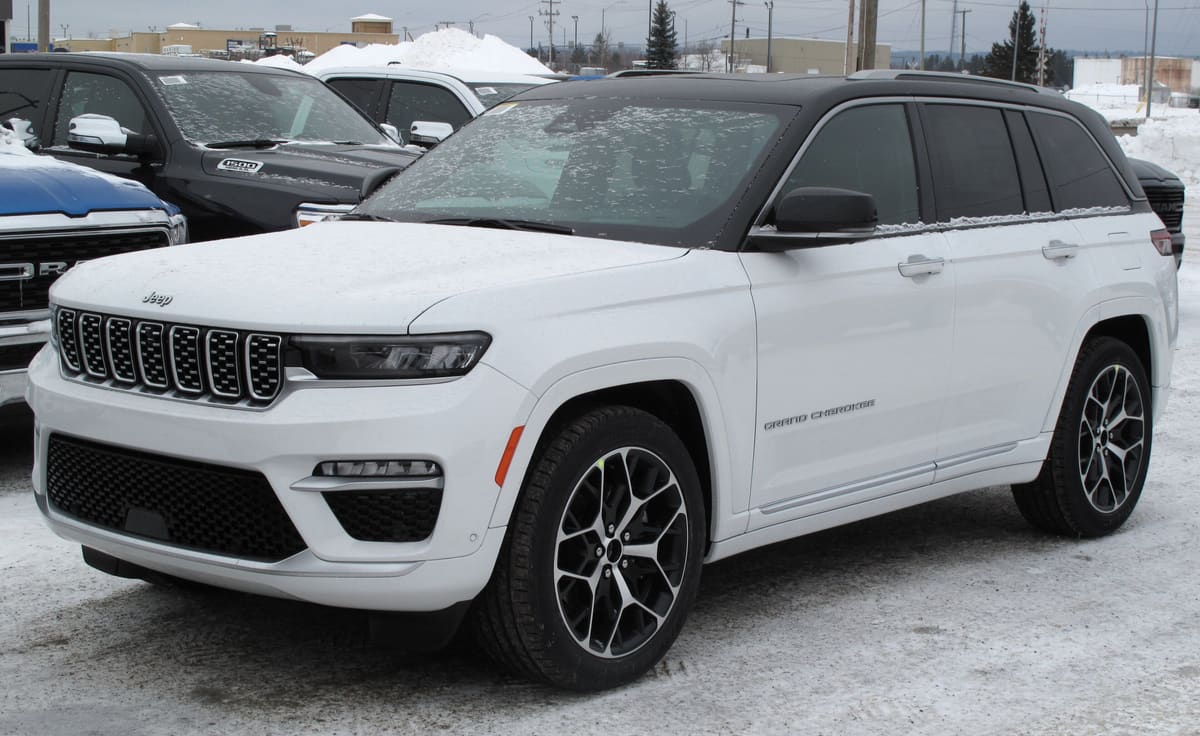
Jeep Grand Cherokee owners often face a range of common issues, but many can be resolved with practical fixes. From electrical problems to suspension wear, understanding these issues can help owners maintain their vehicles effectively and avoid costly repairs.
Electrical System Problems
One of the most frequently reported issues with the Jeep Grand Cherokee is electrical system malfunctions. Owners often experience problems with the battery, alternator, or wiring. If the vehicle struggles to start or the dashboard lights flicker, it may indicate a failing battery or alternator.
To address these issues, begin by checking the battery terminals for corrosion and ensuring they are tightly connected. If the battery is old, consider replacing it with a new one. Additionally, inspect the alternator for any signs of wear or damage. Regularly cleaning the electrical connections can also prevent future problems.
Suspension Wear and Tear
Suspension issues are another common complaint among Grand Cherokee owners. Over time, components such as shocks, struts, and bushings can wear out, leading to a bumpy ride and poor handling. If you notice excessive bouncing or a decrease in ride comfort, it may be time to inspect the suspension system.
To fix suspension problems, start by visually inspecting the shocks and struts for leaks or damage. If they appear worn, replacing them can significantly improve ride quality. Additionally, check the bushings for signs of cracking or deterioration. Regular maintenance, including alignment checks, can also prolong the life of the suspension components.
Transmission Issues
Transmission problems can be a significant concern for Jeep Grand Cherokee owners. Symptoms may include slipping gears, delayed shifting, or unusual noises. These issues can stem from low transmission fluid levels or a failing transmission.
To address transmission issues, first, check the fluid level and condition. If the fluid is low, topping it up may resolve the problem. However, if the fluid is dark or has a burnt smell, a transmission fluid change is necessary. In some cases, a complete transmission rebuild or replacement may be required, so seeking professional advice is advisable if issues persist.
Engine Performance Problems
Engine performance issues are not uncommon in the Grand Cherokee, with owners reporting problems such as rough idling, decreased power, or poor fuel economy. These issues can often be linked to faulty spark plugs, air filters, or fuel injectors.
To improve engine performance, start by replacing old spark plugs and ensuring the air filter is clean. A clogged air filter can restrict airflow, leading to reduced power and efficiency. Additionally, consider using a fuel injector cleaner to remove any build-up that may be affecting fuel delivery. Regular servicing can help maintain optimal engine performance.
Brake System Concerns
The brake system is crucial for safety, and many Grand Cherokee owners report issues such as squeaking, grinding, or a spongy brake pedal. These symptoms can indicate worn brake pads, damaged rotors, or air in the brake lines.
To fix brake issues, start by inspecting the brake pads and rotors for wear. If the pads are worn down, replacing them is essential. Additionally, check the brake fluid level and look for any leaks in the brake lines. If the brake pedal feels spongy, it may be necessary to bleed the brake system to remove air. Regular brake inspections can prevent more severe problems down the line.
Cooling System Failures
Cooling system failures can lead to overheating, which is a serious issue for any vehicle. Jeep Grand Cherokee owners often report problems with the radiator, water pump, or thermostat. Signs of cooling system issues include coolant leaks, steam from the engine, or fluctuating temperature gauges.
To address cooling system problems, start by checking the coolant level and inspecting for leaks around the radiator and hoses. If the water pump is making noise or the thermostat is stuck, these components may need to be replaced. Regularly flushing the cooling system can also help prevent build-up and maintain efficiency.
By being proactive and addressing these common issues, Jeep Grand Cherokee owners can enjoy a more reliable driving experience. Regular maintenance and timely repairs are key to keeping this versatile vehicle in top condition.
Jeep Grand Cherokee recall record
37 recalls have been issued for the Jeep Grand Cherokee, between 1996 and 2026.
2020-2025 Jeep Wrangler and 2022-2026 Jeep Grand Cherokee PHEV vehicles. High voltage battery.
R/2026/029Issued 16 February 2026
On affected vehicles the High Voltage (HV) battery may have been built with a battery pack which contains cells which are susceptible to separator damage which combined with other complex interactions within the cells may lead to a vehicle fire.
Remedy:Reprogram the battery pack control module with modified software and check and if necessary replace the HV Battery.
Affects cars built Apr 2021 to Oct 2025
JEEP GRAND CHEROKEE PHEV 2022-2026 HYBRID CONTROL PROCESSOR SOFTWARE UPDATE
R/2025/492Issued 21 November 2025
On a number of 2022-2026 Jeep Grand Cherokee Plug-In Hybrid Electric Vehicles (PHEV) due to a software error the Hybrid Control Processor (HCP) may incorrectly interpret a signal from the Battery Pack Control Module (BPCM). This condition can cause a loss of drive power. An unexpected loss of drive power can cause a vehicle crash without prior warning.
Remedy:The permanent repair is your dealer will reprogram the BPCM with updated software.
Affects cars built May 2021 to Aug 2025
2014-2020 Jeep Grand Cherokee 3.0L diesel. Loss of crankshaft reference position. Software update.
R/2025/485Issued 19 November 2025
On affected vehicles there is a risk of the loss of crankshaft reference position that can result in an engine stall as well as loss of the ability to restart the engine. A loss of motive power can cause a vehicle crash without prior warning.
Remedy:Install modified software to the Powertrain Control Module (PCM).
Affects cars built Oct 2012 to Sept 2020
Jeep Grand Cherokee 2023-2024. 2nd row head restraints.
R/2025/384Issued 25 September 2025
Vehicle reliability and your safety are a major concern for Jeep. The 2nd row head restraints on some 2023-2024 Grand Cherokee vehicles may contain an internal locking mechanism which can prevent the headrest from locking upright. A head restraint that does not lock may increase the risk of injury to seat occupants in certain types of crashes.
Remedy:The free of charge permanent repair is the Jeep dealer will inspect and if necessary replace each head restraint.
Affects cars built May 2023 to May 2024
33 older recalls not shown.
A recall applies to a build range, not to every car of this model. Check a registration to see whether one specific vehicle has an outstanding recall.
Jeep Grand Cherokee MOT record
From 7,573 recorded MOT tests, 19.4% failed.
| Registered | Tests | Failed | Median mileage |
|---|---|---|---|
| 2019 | 256 | 11.7% | 43,502 mi |
| 2018 | 406 | 11.3% | 59,227 mi |
| 2017 | 832 | 15.1% | 63,970 mi |
| 2016 | 1,028 | 18.1% | 74,154 mi |
| 2015 | 1,349 | 17.6% | 80,743 mi |
| 2014 | 1,404 | 22.1% | 90,686 mi |
| 2013 | 937 | 21.3% | 95,548 mi |
| 2012 | 491 | 21.8% | 101,033 mi |
Most common reasons for failure
- Tyre tread depth not in accordance with the requirements30.2%
- A suspension pin, bush or joint excessively worn24.5%
- Brake disc or drum excessively weakened, insecure or fractured18.2%
- a brake lining or pad worn below 1.5mm14.1%
- A tyre seriously damaged13.0%
Figures cover every Jeep Grand Cherokee tested in the DVSA dataset, not this specific car. Check a registration for the actual history of one vehicle.
Frequently asked questions
What are common issues with the Jeep Grand Cherokee?
Common issues include electrical problems, transmission issues, and suspension wear. Regular maintenance can help prevent some of these problems.
How can I tell if my Jeep Grand Cherokee needs repairs?
Look for warning lights on the dashboard, unusual noises, or changes in handling. If you notice any of these signs, it's best to have it checked by a professional.
Are Jeep Grand Cherokees expensive to maintain?
Maintenance costs can vary, but some owners report higher expenses due to parts and labour. Regular servicing can help manage these costs.
What should I check before buying a used Jeep Grand Cherokee?
Check the service history, look for signs of rust, and inspect the interior and exterior condition. A vehicle history report can also provide valuable information.
How often should I service my Jeep Grand Cherokee?
It is generally recommended to service your Jeep every 6,000 to 8,000 miles or annually, whichever comes first. Always refer to the owner's manual for specific guidelines.
Is it worth getting a warranty for a used Jeep Grand Cherokee?
A warranty can provide peace of mind and help cover unexpected repairs. Consider the vehicle's age and condition when deciding if a warranty is worth it.
What are the signs of a failing transmission in a Jeep Grand Cherokee?
Signs include slipping gears, delayed shifting, or unusual noises when changing gears. If you experience these symptoms, it is advisable to seek a mechanic's opinion.
Can I perform basic maintenance on my Jeep Grand Cherokee myself?
Yes, many owners can handle basic tasks like oil changes and filter replacements. However, for more complex issues, it is best to consult a professional mechanic.
Sources
- DVSA anonymised MOT tests and results (Open Government Licence v3.0)
- DVSA vehicle safety recalls (Open Government Licence v3.0)