Running costs
Jaguar F-Type running costs: what UK ownership really costs
Jaguar F-Type UK running costs: fuel or electric, insurance group, road tax, servicing and depreciation.
Updated 4th September 2026 DVSA data: Across 15,330 recorded MOT tests, 7.4% failed.
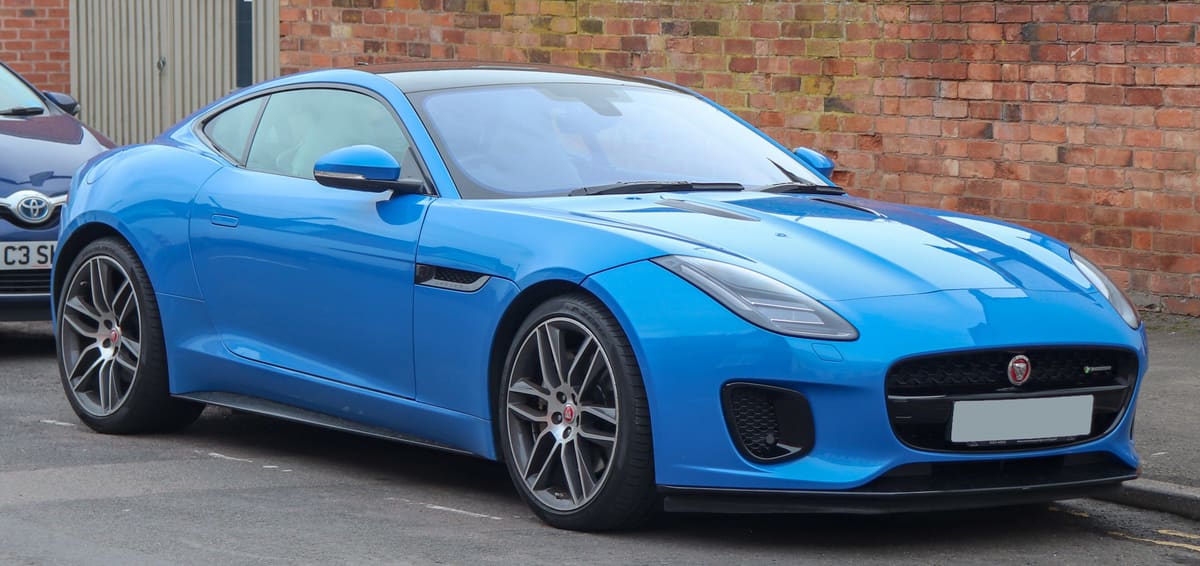
The running costs of a Jaguar F-Type can be significant, with fuel, insurance, tax, servicing, and depreciation all contributing to the total ownership expenses. Fuel economy varies depending on the engine choice, while insurance and tax costs are influenced by the model and specifications. Regular servicing is essential to maintain performance and reliability.
Fuel Costs
The fuel economy of the Jaguar F-Type varies significantly depending on the engine choice.
For those considering the F-Type as a daily driver, it is essential to factor in fuel costs as part of the overall budget. The choice of petrol engine will directly impact how much you spend at the pumps, so it’s worth considering your driving style and frequency of use. Additionally, the price of premium unleaded fuel, which is required for the F-Type, can further influence running costs.
Insurance Group
Insurance for the Jaguar F-Type falls into higher groups, reflecting its performance capabilities and luxury status. Depending on the specific model, insurance groups can range from 40 to 50, meaning premiums can be substantial.
When purchasing an F-Type, it is advisable to obtain insurance quotes from various providers to find the best deal. Factors such as driving history, location, and security features can influence premiums. Additionally, considering a higher excess or advanced driving courses may help reduce costs.
Tax Band
The Jaguar F-Type is subject to higher road tax bands due to its performance and emissions. The exact amount depends on the engine size and CO2 emissions, with higher emissions resulting in increased tax costs.
As part of your ownership costs, it’s essential to factor in road tax when budgeting for an F-Type. The first-year tax can be particularly steep, so understanding the specific tax band for your chosen model will help you plan your finances more effectively. Additionally, considering the potential for changes in tax regulations could impact future costs.
Servicing Intervals
Regular servicing is crucial for maintaining the performance and reliability of the Jaguar F-Type.
It is advisable to keep up with the recommended servicing schedule to avoid costly repairs down the line. Using an authorised Jaguar service centre ensures that the vehicle is maintained to the manufacturer’s standards, which can also help preserve its resale value. Additionally, some owners may opt for extended warranties or service plans to help manage these costs.
Typical Depreciation
Depreciation is a significant factor in the total ownership costs of a Jaguar F-Type. On average, luxury sports cars can lose around 50-60% of their value over the first three years.
When considering the purchase of an F-Type, it is essential to factor in depreciation as part of the overall cost of ownership. Choosing a well-maintained model with a comprehensive service history can help mitigate some depreciation effects. Additionally, limited edition models or those with unique specifications may hold their value better than standard variants.
Conclusion
Owning a Jaguar F-Type comes with considerable running costs, including fuel, insurance, tax, servicing, and depreciation. Understanding these costs can help potential buyers make informed decisions about their purchase and ensure they are prepared for the financial implications of ownership. By considering factors such as engine choice, insurance options, and maintenance schedules, owners can better manage their expenses and enjoy the thrill of driving this iconic sports car.
Jaguar F-Type recall record
16 recalls have been issued for the Jaguar F-Type, between 2014 and 2025.
Security Guidance
R/2025/488Issued 2 December 2025
Jaguar Land Rover in conjunction with law enforcement and insurance bodies is aware of the increase in thefts of vehicles in specific geographical locations within the United Kingdom. There is no fault with Jaguar Land Rover's security systems and they continue to meet stringent automotive legislation. Jaguar Land Rover is offering owners guidance on how to maximise vehicle security and protect against theft
Remedy:Vehicle registered keepers will be sent a security guidance letter only - there is no repair action.
Affects cars built Aug 2012 to May 2024
A DAMAGED FRONT SEAT BELT PRE TENSIONER TUBE MAY HAVE BEEN INSTALLED ON THE SEAT BELT RETRACTOR
R/2022/223Issued 19 August 2022
Damaged front seat belt pretensioner tube may have been installed on the seat belt retractor.
Remedy:Inspect the seat belt pretensioner tube for damage and if damage is identified the seat belt retractor will be replaced.
Affects cars built Jan 2022 to Mar 2022
THE PASSENGER AIRBAG DEPLOYMENT DOOR INTEGRATED IN THE INSTRUMENT PANEL FACIA CONTAINS AN ADDITIONAL MESH LAYER
R/2021/248Issued 16 July 2021
The passenger airbag deployment door integrated in the instrument panel facia contains an additional mesh layer.
Remedy:Replace the affected instrument panel facia with a part manufactured to the correct specification.
Affects cars built Jul 2018 to Sept 2018
AN INCORRECT FRONT BUMPER REINFORCEMENT PANEL HAS BEEN FITTED
R/2021/026Issued 5 February 2021
An incorrect front bumper reinforcement panel has been fitted at the manufacturing plant.
Remedy:Replace the necessary component with a modified part.
Affects cars built Jan 2020 to Jan 2020
12 older recalls not shown.
A recall applies to a build range, not to every car of this model. Check a registration to see whether one specific vehicle has an outstanding recall.
Jaguar F-Type MOT record
From 15,330 recorded MOT tests, 7.4% failed.
| Registered | Tests | Failed | Median mileage |
|---|---|---|---|
| 2022 | 873 | 7.1% | 13,635 mi |
| 2021 | 1,050 | 6.8% | 18,580 mi |
| 2020 | 922 | 8.6% | 20,560 mi |
| 2019 | 1,593 | 6.4% | 25,097 mi |
| 2018 | 1,792 | 8.3% | 28,840 mi |
| 2017 | 2,035 | 6.3% | 33,698 mi |
| 2016 | 2,009 | 5.7% | 34,438 mi |
| 2015 | 1,915 | 6.4% | 39,688 mi |
Most common reasons for failure
- Tyre tread depth not in accordance with the requirements43.3%
- A tyre seriously damaged25.2%
- a brake lining or pad worn below 1.5mm14.1%
- Wiper blade missing or obviously not clearing the windscreen10.1%
- Brake disc or drum excessively weakened, insecure or fractured7.3%
Figures cover every Jaguar F-Type tested in the DVSA dataset, not this specific car. Check a registration for the actual history of one vehicle.
Frequently asked questions
How much does insurance cost for a Jaguar F-Type?
Insurance for a Jaguar F-Type typically falls into higher brackets due to its performance nature. For example, a 2021 model might be in insurance group 50, leading to premiums that can range significantly based on driver history and location.
Are there any specific maintenance issues to be aware of?
The F-Type's supercharged V6 and V8 engines can experience issues with the water pump, particularly in models from 2014 to 2016. Regular checks can help catch any leaks early, preventing more significant damage.
What is the road tax band for the Jaguar F-Type?
The road tax band for the Jaguar F-Type varies by model year and engine size. For instance, the 2021 F-Type with a 5.0-litre engine falls into Band M, which incurs a higher annual tax due to its CO2 emissions.
How often does the Jaguar F-Type need new tyres?
Tyre replacement for the Jaguar F-Type depends on driving style and conditions. Typically, you might need to replace tyres every 10,000 to 15,000 miles, especially if you opt for performance tyres that wear faster.
What are the warranty options for a used Jaguar F-Type?
Used Jaguar F-Types may still be under the manufacturer's warranty if purchased within the warranty period, which is usually three years. Extended warranties are also available, covering components like the engine and transmission for added peace of mind.
Sources
- DVSA anonymised MOT tests and results (Open Government Licence v3.0)
- DVSA vehicle safety recalls (Open Government Licence v3.0)