Top fixes
Top Hyundai Tucson fixes every owner should know
Cheap, practical fixes for the Hyundai Tucson faults you actually meet, with rough costs and what a garage will charge.
Updated 4th September 2026 DVSA data: Across 166,243 recorded MOT tests, 14.0% failed.
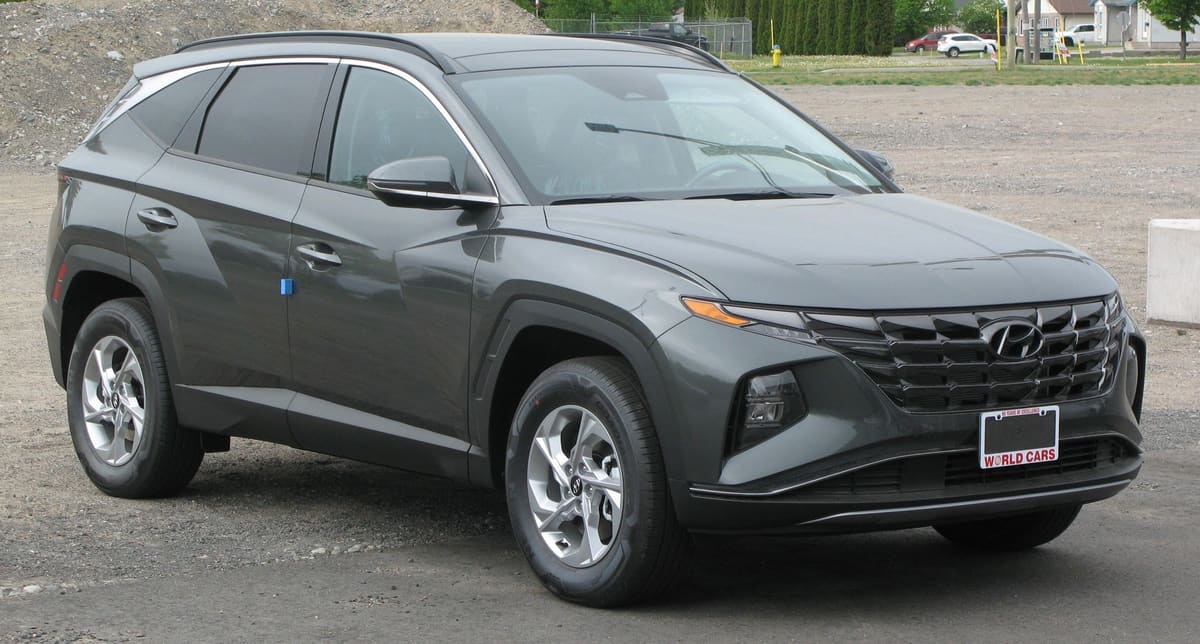
The Hyundai Tucson is generally a reliable SUV, but like any vehicle, it can develop common issues that need practical fixes. Many problems relate to wear and tear parts such as brakes, suspension, and electrical components. Some repairs can be tackled by confident DIYers, while others require a garage’s expertise due to complexity or safety concerns.
Brake Noise and Wear
Brake noise, such as squealing or grinding, is a frequent complaint on the Tucson and usually signals worn brake pads or issues with the discs. The likely cause is normal wear or contamination from dirt and moisture.
Replacing brake pads involves removing the wheel, caliper, and old pads, then fitting new pads and sometimes resurfacing or replacing the discs if they are damaged. This job can be DIY for those with basic mechanical skills and the right tools, but it requires care to avoid brake fluid leaks or improper installation. If unsure, a garage should handle it to ensure safety and correct brake performance.
Regularly checking brake pad thickness and listening for noises helps catch problems early. Brake fluid should also be checked and replaced as per the maintenance schedule to maintain braking efficiency.
Suspension Clunks and Uneven Tyre Wear
A common symptom of suspension issues on the Tucson is clunking noises over bumps or uneven tyre wear. The likely cause is worn suspension bushes, ball joints, or shock absorbers.
Repairing suspension components usually involves lifting the vehicle and removing the affected parts for replacement. Shock absorbers and bushes wear out over time and need swapping to restore ride comfort and handling. This is generally a garage job because it requires specialist tools like spring compressors and alignment equipment.
Ignoring suspension faults can lead to poor handling and increased tyre wear, so addressing these symptoms promptly is important. After suspension repairs, a wheel alignment is recommended to ensure tyres wear evenly and the vehicle tracks straight.
Electrical Glitches and Warning Lights
Some Tucson owners experience intermittent electrical glitches such as dashboard warning lights flickering, infotainment system freezes, or faulty sensors. The root cause is often loose wiring connections, faulty sensors, or software issues.
Troubleshooting starts with scanning the vehicle’s onboard diagnostics to identify error codes. Simple fixes like reconnecting loose plugs or replacing a faulty sensor can sometimes be DIY if you have basic electrical knowledge and access to diagnostic tools. However, complex electrical faults or software updates are best left to a garage with Hyundai-specific diagnostic equipment.
Regular battery health checks and ensuring all connectors are clean and secure can prevent many electrical problems. If warning lights persist, professional diagnosis is advisable to avoid overlooking serious issues.
Engine Hesitation or Rough Running
Engine hesitation, rough idling, or loss of power can be caused by various factors including dirty fuel injectors, faulty ignition coils, or clogged air filters. These symptoms often occur gradually and may be accompanied by a check engine light.
Cleaning or replacing the air filter is a straightforward DIY task that can improve engine breathing and performance. Fuel injector cleaning requires specialist equipment but some additives may help maintain injector cleanliness. Ignition coils or spark plugs replacement is moderately challenging and can be DIY if you have some mechanical experience and the right tools.
If problems persist, a garage should perform a full engine diagnostic to pinpoint faults such as sensor failures or fuel system issues. Timely attention prevents more serious engine damage and keeps the Tucson running smoothly.
Air Conditioning Not Cooling Properly
When the Tucson’s air conditioning does not cool effectively, it is often due to low refrigerant levels, a faulty compressor, or blocked condenser fins. The symptom is warm air blowing even when the system is set to cold.
Recharging the refrigerant is a common fix and can sometimes be done at home using a recharge kit, but it requires care to avoid overfilling or releasing refrigerant into the atmosphere. Compressor replacement or condenser cleaning is more complex and requires a garage with proper tools and environmental controls.
Regularly cleaning the condenser and ensuring the system is serviced as recommended helps maintain air conditioning performance and comfort in all seasons.
Door Lock and Handle Issues
Some Hyundai Tucson owners report problems with door locks or handles sticking or failing to operate smoothly. The cause is often worn lock mechanisms, broken cables, or dried-out lubricants.
Fixing door lock issues typically involves removing the door panel to access the locking mechanism. Lubricating moving parts with a suitable spray can resolve minor stiffness and is a simple DIY job. Replacing broken cables or lock actuators is more involved and may require a garage if you lack experience removing door trim and handling delicate components.
Regular lubrication and gentle use of door handles can extend the life of these parts and prevent inconvenient lock failures.
Hyundai Tucson recall record
14 recalls have been issued for the Hyundai Tucson, between 2005 and 2026.
Some vehicles may have an instrument cluster operational concern whilst driving the vehicle
R/2026/147Issued 2 April 2026
Some vehicles may face a concern where the instrument cluster panel may reboot during vehicle operation potentially resulting in a blank instrument cluster display screen.
Remedy:To correct this an ‘Over the Air ‘ software update to the vehicles will be deployed remotely.
Affects cars built Aug 2025 to Nov 2025
The subject vehicles may experience a loss of brake assistance and brake performance may e reduced. The foot brake will still operate but in a manner of a vehicle without a functioning brake booster (less assistance)
R/2024/489Issued 20 January 2025
The subject vehicles may experience a loss of brake assistance and brake performance may be reduced. The foot brake will still operate but in a manner of a vehicle without a functioning brake booster (less assistance).
Remedy:Engine control unit software update
Affects cars built Sept 2022 to Sept 2023
The side curtain airbag could potentially be assembled in a twisted condition.
R/2024/036Issued 18 March 2024
The side curtain airbag could potentially be assembled in a twisted condition
Remedy:Check the installation of the side curtain airbag installation and rectify or replace the curtain airbag as required.
Affects cars built Apr 2021 to Aug 2023
Certain Tucson vehicles equipped with rear door power windows may experience a malfunction of the anti-pinch function during its operation.
R/2023/184Issued 7 August 2023
Certain Tucson vehicles equipped with rear door power windows may experience a malfunction of the anti-pinch function during its operation.
Remedy:Both left-hand and right-hand rear door power window regulator motors will be replaced.
Affects cars built Mar 2023 to Apr 2023
10 older recalls not shown.
A recall applies to a build range, not to every car of this model. Check a registration to see whether one specific vehicle has an outstanding recall.
Hyundai Tucson MOT record
From 166,243 recorded MOT tests, 14.0% failed.
| Registered | Tests | Failed | Median mileage |
|---|---|---|---|
| 2024 | 342 | 4.1% | 27,093 mi |
| 2023 | 1,519 | 5.8% | 24,078 mi |
| 2022 | 27,153 | 7.7% | 25,168 mi |
| 2021 | 21,237 | 8.3% | 31,950 mi |
| 2020 | 12,884 | 13.0% | 37,765 mi |
| 2019 | 26,477 | 13.1% | 44,041 mi |
| 2018 | 24,690 | 15.0% | 52,510 mi |
| 2017 | 23,728 | 17.7% | 63,668 mi |
Most common reasons for failure
- Tyre tread depth not in accordance with the requirements32.4%
- a brake lining or pad worn below 1.5mm25.0%
- A tyre seriously damaged20.2%
- A suspension pin, bush or joint excessively worn11.9%
- Brake disc or drum excessively weakened, insecure or fractured10.6%
Figures cover every Hyundai Tucson tested in the DVSA dataset, not this specific car. Check a registration for the actual history of one vehicle.
Hyundai Tucson official figures
Median across 100 variants on sale, electricity / petrol, petrol, petrol electric.
- Combined economy
- 40.9 mpg
- WLTP median across variants
- CO2 emissions
- 157 g/km
- Sets the first-year tax rate
Official figures for new cars. Real economy varies with driving, load and conditions.
Frequently asked questions
What are common issues with the Hyundai Tucson?
Common issues include electrical faults, air conditioning problems, and suspension wear.
Can I fix the Tucson myself?
Many issues can be DIY fixes, especially minor electrical or cosmetic problems.
What should I do if my Tucson has a recall?
Recalls are issued against individual vehicles rather than a model as a whole, so a model-level yes or no would be guesswork. Enter the registration on Honest Car Check and we check the DVSA record for that specific car. Where DVSA holds no status, confirm it with a franchised dealer using the VIN.
How reliable is the Hyundai Tucson?
The Tucson generally scores well for reliability but can have specific issues depending on the model year.
Sources
- DVSA anonymised MOT tests and results (Open Government Licence v3.0)
- VCA new car fuel consumption and emissions data (Open Government Licence v3.0)
- DVSA vehicle safety recalls (Open Government Licence v3.0)