Running costs
Honda Civic running costs: what UK ownership really costs
Honda Civic UK running costs: fuel or electric, insurance group, road tax, servicing and depreciation.
Updated 4th September 2026 DVSA data: Across 258,563 recorded MOT tests, 25.6% failed.
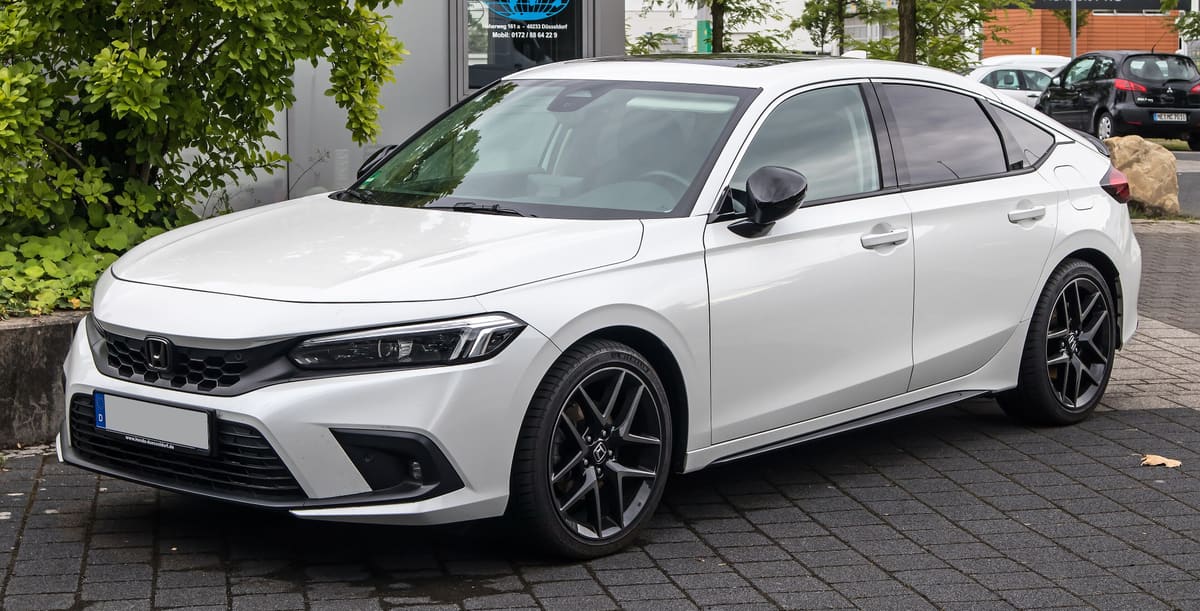
The Honda Civic is known for its reliability and efficiency, making it a popular choice among UK drivers. Running costs vary depending on the model and engine type, but generally, the Civic offers competitive fuel economy, reasonable insurance premiums, and manageable servicing costs, contributing to a low total ownership cost.
Fuel and Electric Costs
Fuel costs for the Honda Civic depend largely on the engine variant chosen.
With petrol prices fluctuating, the annual fuel cost can vary significantly. Electric models, where available, can offer even lower running costs, especially with the growing number of charging points across the UK.
Insurance Group
The insurance group for the Honda Civic varies by model and trim level, generally ranging from group 15 to group 30. This makes it relatively affordable to insure compared to other vehicles in the same class.
For example, the entry-level models tend to fall into the lower insurance groups, making them attractive for younger drivers or those looking for budget-friendly options. Higher performance models, such as the Type R, sit in the upper groups, reflecting their increased value and performance capabilities. It is advisable to shop around for insurance quotes, as premiums can differ significantly between providers.
Tax Band
The Honda Civic’s tax band is determined by its CO2 emissions, which vary by model.
The latest hybrid models, boasting lower emissions, may qualify for reduced tax rates or even exemption from road tax altogether. This can be a significant saving for owners, especially in urban areas where low emissions are increasingly encouraged. Always check the specific emissions figures for the model you are considering to understand the tax implications fully.
Servicing Intervals
Servicing intervals for the Honda Civic are typically set at 12,000 miles or annually, whichever comes first. Regular maintenance is crucial for keeping the vehicle in good condition and ensuring longevity.
Major services, which include more extensive checks and replacements, can cost more. It is advisable to follow the manufacturer’s service schedule to maintain warranty coverage and resale value.
Typical Depreciation
Depreciation for the Honda Civic is generally moderate, with the vehicle retaining around 50-60% of its value after three years. This is relatively good compared to other vehicles in the compact car segment.
Factors influencing depreciation include mileage, condition, and market demand. The Civic’s reputation for reliability helps it hold its value well, making it a smart choice for buyers concerned about long-term ownership costs. When purchasing a used model, consider the service history and condition to maximise value retention.
Summary of Ownership Costs
Overall, the Honda Civic presents a strong case for low running costs and total ownership expenses. With competitive fuel efficiency, reasonable insurance premiums, manageable servicing costs, and moderate depreciation, it is an economical choice for many UK drivers.
Whether you opt for a petrol, diesel, hybrid, or electric model, the Civic’s reputation for reliability and efficiency makes it a sound investment. Understanding these costs can help you make an informed decision when considering your next vehicle.
Honda Civic recall record
45 recalls have been issued for the Honda Civic, between 1994 and 2026.
Civic Wheel Steel Bushes Missing (Accessory)
R/2026/025Issued 16 February 2026
On affected vehicles the alloy steel bushes may be missing in all five positions of the alloy wheel. This may result in the wheel nuts falling off or in the worst-case scenario wheel detachment.
Remedy:Inspect the wheels for the presence of bush and replace wheel(s) in case of missing bushes.
Affects cars built Feb 2017 to May 2018
22-25M Civic and Other Models EPS Gear Box Worm Wheel Swelling Failure 6JP
R/2025/024Issued 31 March 2025
On affected vehicles due to decrease of the grease amount in the worm wheel gear meshing area of the EPS gear box during use the sliding resistance at the meshing area increases and the torque fluctuation when turning the steering becomes larger resulting in an abnormal noise or a dangerous sticking occurs when turning the steering.
Remedy:For the Honda Civic (FL4 FE1) CR-V and ZR-V models replace the worm gear pre-load spring with a countermeasure part and add grease. For the Honda Civic Type R (FL5) model replace the Steering Gearbox with a countermeasure part.
Affects cars built Oct 2021 to Sept 2023
23-25M High Pressure Fuel Pump Solenoid Component Part Breakage - 6YP
R/2024/476Issued 9 December 2024
On affected vehicles due to manufacturing issues the high pressure fuel pump could leak
Remedy:On the affected vehicles check for leaks and replace the high pressure pump if necessary
Affects cars built Oct 2021 to Aug 2024
23YM Civic Lithium-Ion Battery Negative Terminal Defect
R/2024/389Issued 5 December 2024
On affected vehicles the Hybrid HV battery may develop a fault where battery electrolyte leakage occurs that may result in a vehicle fire in a worst-case scenario.
Remedy:Replace the Hybrid HV battery with a modified component.
Affects cars built Jun 2022 to Jan 2023
41 older recalls not shown.
A recall applies to a build range, not to every car of this model. Check a registration to see whether one specific vehicle has an outstanding recall.
Honda Civic MOT record
From 258,563 recorded MOT tests, 25.6% failed.
| Registered | Tests | Failed | Median mileage |
|---|---|---|---|
| 2022 | 1,392 | 4.0% | 21,464 mi |
| 2021 | 4,777 | 8.1% | 28,063 mi |
| 2020 | 5,457 | 9.8% | 34,430 mi |
| 2019 | 12,445 | 10.9% | 43,102 mi |
| 2018 | 13,338 | 12.1% | 51,052 mi |
| 2017 | 14,372 | 12.9% | 55,236 mi |
| 2016 | 16,002 | 14.5% | 65,308 mi |
| 2015 | 14,834 | 15.7% | 75,163 mi |
Most common reasons for failure
- Tyre tread depth not in accordance with the requirements28.2%
- A suspension pin, bush or joint excessively worn22.9%
- A tyre seriously damaged19.3%
- a brake lining or pad worn below 1.5mm15.7%
- The aim of a headlamp is not within limits laid down in the requirements13.9%
Figures cover every Honda Civic tested in the DVSA dataset, not this specific car. Check a registration for the actual history of one vehicle.
Honda Civic official figures
Median across 14 variants on sale, petrol, petrol electric.
- Combined economy
- 56.5 mpg
- WLTP median across variants
- CO2 emissions
- 113.5 g/km
- Sets the first-year tax rate
Official figures for new cars. Real economy varies with driving, load and conditions.
Frequently asked questions
How often do I need to replace the brake pads on a Honda Civic?
Brake pads on a Honda Civic generally need replacing every 20,000 to 40,000 miles, depending on driving style and conditions. If you notice squeaking or grinding noises when braking, it’s a good idea to have them checked sooner.
Are there any known issues with the Honda Civic's engine?
Some Honda Civic models, particularly the 2016-2019 versions with the 1.5-litre turbo engine, have reported issues with oil dilution. If you notice a strong fuel smell in the oil, it’s advisable to consult a mechanic to prevent further damage.
How reliable is the Honda Civic compared to other cars?
The Honda Civic is generally regarded as a reliable vehicle, often praised for its longevity. Many owners report minimal issues up to 100,000 miles, especially with models like the 2015 Civic, which has a reputation for durability and low maintenance costs.
Sources
- DVSA anonymised MOT tests and results (Open Government Licence v3.0)
- VCA new car fuel consumption and emissions data (Open Government Licence v3.0)
- DVSA vehicle safety recalls (Open Government Licence v3.0)