Running costs
Ford Galaxy running costs: what UK ownership really costs
Ford Galaxy UK running costs: fuel or electric, insurance group, road tax, servicing and depreciation.
Updated 4th September 2026 DVSA data: Across 54,367 recorded MOT tests, 28.5% failed.
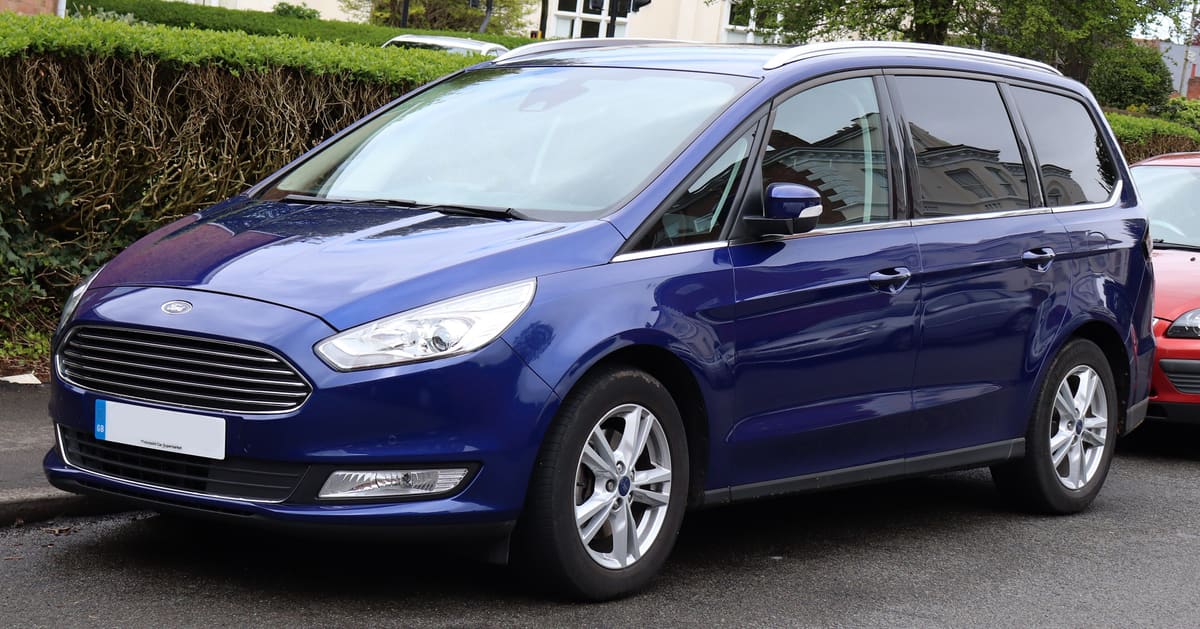
The Ford Galaxy is a practical choice for families, offering reasonable running costs. Fuel efficiency varies by engine type, with diesel options generally more economical. Insurance groups range from 22 to 30, while road tax depends on emissions.
Fuel and Electric Costs
The Ford Galaxy’s fuel costs can vary significantly based on the engine choice. The cost of diesel is often lower than petrol, making diesel models a more economical choice for long-distance driving.
Electric models, if available, would offer lower running costs in terms of charging compared to petrol or diesel. However, the Galaxy is primarily known for its traditional combustion engines, so potential buyers should consider their driving habits and fuel prices when calculating overall fuel costs.
Insurance Groups
Insurance for the Ford Galaxy falls within groups 22 to 30, depending on the specific model and trim level. Generally, the lower the insurance group, the cheaper the premiums. Factors influencing insurance costs include the vehicle’s value, repair costs, and safety ratings.
For families, it is advisable to compare insurance quotes from multiple providers, as premiums can vary significantly. Additionally, opting for a model with advanced safety features may help lower insurance costs over time.
Road Tax Bands
The road tax for the Ford Galaxy is determined by its CO2 emissions, which means it falls into different tax bands. Models with lower emissions will benefit from reduced road tax rates, while those with higher emissions will incur higher costs.
Typically, the Galaxy’s diesel engines tend to have lower emissions compared to petrol engines, placing them in more favourable tax bands. It’s essential for potential buyers to check the specific emissions figures for the model they are considering to accurately estimate road tax expenses.
Servicing Intervals
Regular servicing is crucial for maintaining the vehicle’s performance and reliability. During a service, essential components such as oil, filters, and brakes are checked and replaced as necessary.
Owners should also consider additional maintenance tasks, such as tyre rotation and brake fluid changes, which may not be included in the standard service. Keeping up with these intervals can help prevent more significant issues and unexpected costs down the line.
Typical Depreciation
Depreciation for the Ford Galaxy is moderate compared to other vehicles in its class. Typically, a new Galaxy will lose around 50-60% of its value over the first three years. Factors affecting depreciation include mileage, condition, and market demand.
As a family vehicle, the Galaxy tends to hold its value relatively well, especially if it is well-maintained and comes with a good service history. Buyers looking for a used model should consider the age and condition of the vehicle to ensure they are making a sound investment.
Conclusion
Overall, the Ford Galaxy presents a balanced option for families regarding running costs. With reasonable fuel efficiency, manageable insurance premiums, and moderate depreciation, it is a practical choice for those seeking a spacious and reliable vehicle. Regular servicing and attention to road tax can further enhance the ownership experience, making it a sensible investment for family transport.
Ford Galaxy recall record
29 recalls have been issued for the Ford Galaxy, between 1996 and 2026.
Multi Vehicle Line (MVL): Telecommunications Control Module (TCU) loss of Function Software Update
R/2026/181Issued 5 May 2026
Affected vehicles may experience a loss of emergency call system (eCall) functionality which impacts both automatic and manual eCall events.
Remedy:Update the Telematics Control Unit software to the latest level.
Affects cars built Jan 2021 to Mar 2023
CrossCar: Sync3 Rear-View Camera Software Update
R/2025/359Issued 8 September 2025
On affected vehicles a software problem may result in issues with the rear-view camera that reduce the driver’s view or with it remaining on after a reversing event.
Remedy:Update the vehicle software to the latest level.
Affects cars built May 2019 to May 2019
25S54 Kuga S-Max and Galaxy - Powertrain Control Module (PCM) Software Update
R/2025/243Issued 7 July 2025
Certain Kuga S-Max and Galaxy vehicles equipped with a 2.5L HEV/PHEV Engine may not have the remedy for Safety Recall 23S27 installed correctly but were recorded as having received the repair successfully. Because the correct software update may not have been installed on these vehicles the underlying condition specified in Safety Recall 23S27 potential under hood fire may still exist.
Remedy:Dealers are to update the Powertrain Control Module (PCM) software.
Affects cars built Jul 2021 to Jul 2022
X-Car Powertain Control Module (PCM) Software Update
R/2025/094Issued 19 December 2024
Affected vehicles may develop a crack in the Diesel Particulate Filter (DPF).
Remedy:Update software to prevent a cracked DPF. Test and replace DPFs that are already cracked.
Affects cars built Feb 2018 to Jan 2019
25 older recalls not shown.
A recall applies to a build range, not to every car of this model. Check a registration to see whether one specific vehicle has an outstanding recall.
Ford Galaxy MOT record
From 54,367 recorded MOT tests, 28.5% failed.
| Registered | Tests | Failed | Median mileage |
|---|---|---|---|
| 2022 | 1,192 | 13.7% | 22,536 mi |
| 2021 | 1,406 | 17.3% | 48,764 mi |
| 2020 | 1,647 | 14.2% | 43,458 mi |
| 2019 | 2,554 | 16.1% | 63,045 mi |
| 2018 | 3,468 | 14.6% | 83,067 mi |
| 2017 | 5,150 | 16.8% | 82,952 mi |
| 2016 | 4,651 | 17.3% | 92,551 mi |
| 2015 | 2,396 | 28.8% | 108,040 mi |
Most common reasons for failure
- Tyre tread depth not in accordance with the requirements33.3%
- A suspension pin, bush or joint excessively worn24.3%
- A suspension component excessively damaged or corroded15.9%
- a brake lining or pad worn below 1.5mm14.6%
- A lamp missing, inoperative or in the case of a multiple light source more than 1/2 not functioning12.0%
Figures cover every Ford Galaxy tested in the DVSA dataset, not this specific car. Check a registration for the actual history of one vehicle.
Frequently asked questions
What are the insurance costs for a Ford Galaxy?
Insurance costs for a Ford Galaxy can vary significantly based on the model year and engine type. Generally, it falls within insurance groups 15 to 20, meaning premiums can range widely, so it's advisable to get quotes based on your specific model.
Are there any specific parts that are expensive to replace?
Replacing the dual mass flywheel on a Ford Galaxy can be quite costly, especially in older models. This component is essential for smooth engine operation, and if it fails, it can lead to noticeable vibrations and performance issues.
How reliable is the Ford Galaxy in terms of running costs?
The Ford Galaxy is generally considered reliable, with many owners reporting low running costs over time. Regular checks on the EGR valve and DPF can help maintain performance and prevent costly repairs, especially in diesel models from 2015 onwards.
Sources
- DVSA anonymised MOT tests and results (Open Government Licence v3.0)
- DVSA vehicle safety recalls (Open Government Licence v3.0)