Running costs
Ford Focus running costs: what UK ownership really costs
Ford Focus UK running costs: fuel or electric, insurance group, road tax, servicing and depreciation.
Updated 4th September 2026 DVSA data: Across 891,804 recorded MOT tests, 25.3% failed.
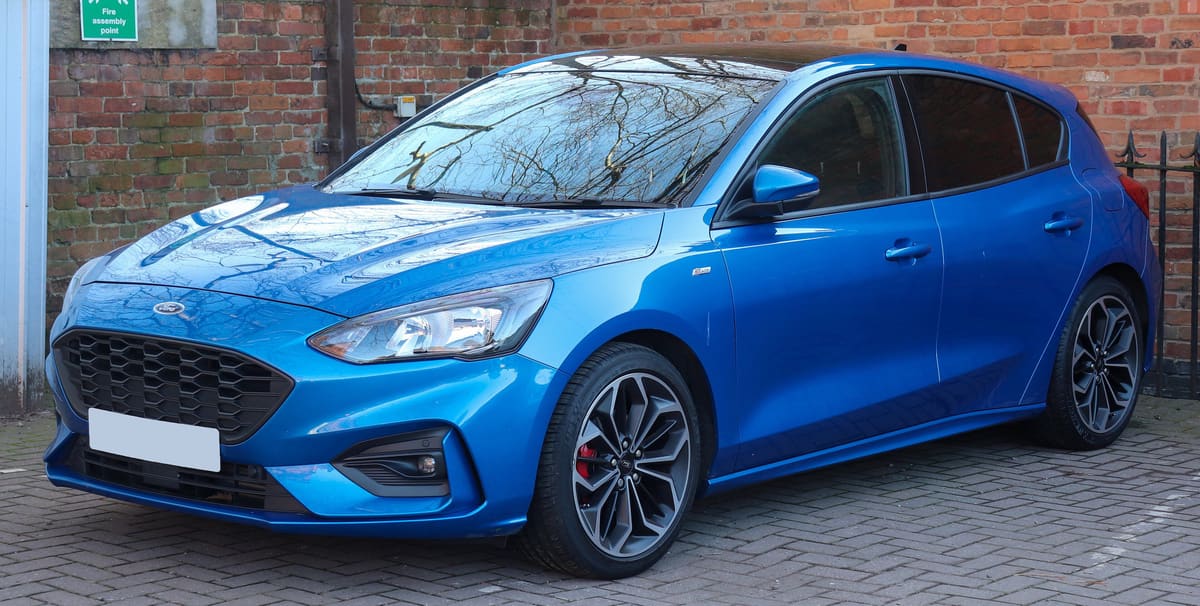
The running costs of a Ford Focus can vary significantly based on the model, engine type, and individual driving habits. Generally, owners can expect reasonable fuel efficiency, manageable insurance costs, and typical servicing requirements, making it a cost-effective choice for many drivers in the UK.
Fuel Costs
Fuel costs for the Ford Focus depend on the engine type and driving style. The hybrid and electric versions provide even greater efficiency, with electric models costing significantly less to run per mile.
Diesel engines, while slightly more expensive to purchase, can offer savings over time due to their better fuel economy.
Insurance Group
The insurance group for the Ford Focus varies by model and trim level, typically ranging from group 10 to group 30. Lower-spec models like the Focus Style or Zetec are generally cheaper to insure, while higher-spec versions such as the ST or RS can be more expensive due to their performance capabilities.
When considering insurance costs, it is essential to factor in your personal driving history, age, and location, as these elements can significantly influence premiums. Many drivers find that the Focus strikes a good balance between affordability and features, making it a popular choice among young and experienced drivers alike.
Tax Band
Vehicle Excise Duty (VED), commonly known as road tax, for the Ford Focus is determined by CO2 emissions. The lower emission models, particularly hybrids and electrics, may qualify for tax exemptions or reduced rates.
For example, a Ford Focus with CO2 emissions under 100g/km may incur no tax, while models emitting over 200g/km can attract the maximum tax rate. It is advisable to check the specific emissions data for the model you are considering to accurately assess the tax implications.
Servicing Intervals
Servicing intervals for the Ford Focus are generally set at 12,500 miles or annually, whichever comes first. Regular servicing is crucial for maintaining the vehicle’s performance and reliability. The cost of servicing can vary based on whether you choose a main dealer or an independent garage.
More comprehensive services, such as timing belt replacements or brake inspections, may incur higher costs. Keeping up with servicing can help prevent more significant issues down the line, ultimately saving money.
Typical Depreciation
Depreciation is an important factor to consider when assessing the total ownership cost of a Ford Focus. Generally, new cars lose around 20% to 30% of their value in the first year and continue to depreciate at a slower rate thereafter. The Focus, being a popular model, tends to hold its value reasonably well compared to other vehicles in its class.
On average, a Ford Focus may lose around 50% of its value after three years. Factors influencing depreciation include mileage, condition, and market demand. Buyers looking for a used Focus can often find good deals, as the car’s reputation for reliability and practicality helps maintain interest in the second-hand market.
Conclusion
The Ford Focus presents a well-rounded option for drivers seeking a balance between performance and running costs. With reasonable fuel efficiency, manageable insurance and tax rates, and predictable servicing needs, it remains a popular choice in the UK. Understanding these costs can help potential buyers make informed decisions and enjoy the benefits of ownership.
Ford Focus recall record
59 recalls have been issued for the Ford Focus, between 1999 and 2026.
Transit Courier: Diesel DV-Neo Engine Coolant Pump Update
R/2026/237Issued 15 June 2026
Affected vehicles may have been repaired using a coolant pump with a potential issue. This issue may lead to incorrect engine timing resulting in an engine failure causing a sudden loss of power without prior warning. The engine cannot be restarted.
Remedy:Check and replace the water pump and timing belt if necessary.
Affects cars built Oct 2020 to Oct 2020
Multi Vehicle Line (MVL): Telecommunications Control Module (TCU) loss of Function Software Update
R/2026/181Issued 5 May 2026
Affected vehicles may experience a loss of emergency call system (eCall) functionality which impacts both automatic and manual eCall events.
Remedy:Update the Telematics Control Unit software to the latest level.
Affects cars built Oct 2019 to Oct 2022
25C75 Focus - Lane Centering Assist Software Update
R/2026/111Issued 18 March 2026
Certain affected vehicles may not have the remedy for Compliance Recall 24C12 installed correctly
Remedy:Dealers will update Audio Front Control Module (ACM) software to the latest level available.
Affects cars built Apr 2024 to Apr 2024
25C77 Focus Telematics Control Unit Software Update
R/2026/059Issued 13 February 2026
On affected vehicles the software repair for previous recall 20C22 may not have been delivered properly and the Telematics Control Unit (TCU) in these vehicles may disconnect from Ford’s Service Delivery Network and become unresponsive.
Remedy:Update the TCU software and perform an additional verification process to ensure the configuration has been installed correctly.
Affects cars built Aug 2018 to Aug 2018
55 older recalls not shown.
A recall applies to a build range, not to every car of this model. Check a registration to see whether one specific vehicle has an outstanding recall.
Ford Focus MOT record
From 891,804 recorded MOT tests, 25.3% failed.
| Registered | Tests | Failed | Median mileage |
|---|---|---|---|
| 2023 | 1,088 | 6.7% | 20,049 mi |
| 2022 | 15,456 | 7.8% | 23,042 mi |
| 2021 | 20,446 | 9.1% | 31,668 mi |
| 2020 | 37,538 | 12.0% | 38,652 mi |
| 2019 | 54,522 | 15.3% | 45,966 mi |
| 2018 | 46,681 | 14.2% | 50,979 mi |
| 2017 | 62,698 | 14.7% | 60,474 mi |
| 2016 | 62,812 | 17.3% | 69,176 mi |
Most common reasons for failure
- Tyre tread depth not in accordance with the requirements30.3%
- A suspension pin, bush or joint excessively worn24.3%
- A tyre seriously damaged16.3%
- A spring or spring component fractured or seriously weakened14.6%
- A suspension component excessively damaged or corroded14.4%
Figures cover every Ford Focus tested in the DVSA dataset, not this specific car. Check a registration for the actual history of one vehicle.
Ford Focus official figures
Median across 8 variants on sale, petrol, petrol electric.
- Combined economy
- 40.5 mpg
- WLTP median across variants
- CO2 emissions
- 161.5 g/km
- Sets the first-year tax rate
Official figures for new cars. Real economy varies with driving, load and conditions.
Frequently asked questions
What are the insurance costs for a Ford Focus?
Insurance costs for a Ford Focus depend on the model and trim level. For example, the 2018 Focus Zetec might fall into insurance group 14, which generally offers more affordable premiums compared to higher-performance variants.
How reliable is the Ford Focus in terms of running costs?
The Ford Focus is generally considered reliable, with many owners reporting minimal issues. However, components like the dual-clutch transmission in the 2016 model can lead to higher repair costs if not maintained properly.
Sources
- DVSA anonymised MOT tests and results (Open Government Licence v3.0)
- VCA new car fuel consumption and emissions data (Open Government Licence v3.0)
- DVSA vehicle safety recalls (Open Government Licence v3.0)